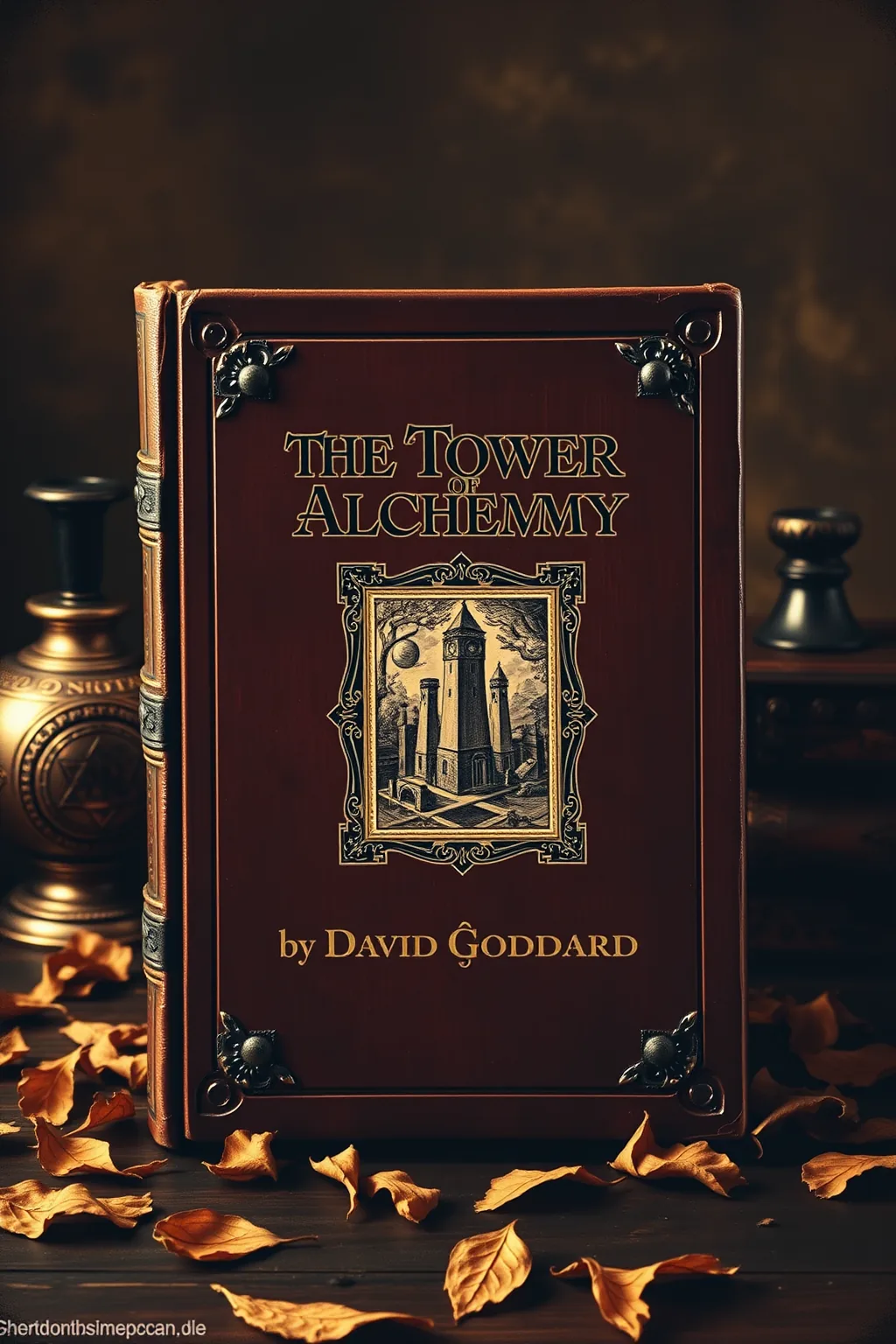
The Tower of Alchemy
 71
71

The Tower of Alchemy
David Goddard's The Tower of Alchemy attempts a commendable feat: to render the arcane discipline of alchemy intelligible to a modern audience without sacrificing its inherent complexity. Goddard succeeds admirably in dissecting the symbolic lexicon of the art, particularly in his detailed exposition of the *prima materia* and the stages of the *Magnum Opus*. His chapter on the philosophical mercury, for instance, offers a nuanced perspective that clarifies its dual nature as both a physical agent and a spiritual principle. However, the book's strength in theoretical explication occasionally becomes a limitation. While the historical context is present, it sometimes feels like a secondary concern, with less emphasis on the societal impact or the lives of alchemists beyond their textual contributions. Goddard’s prose, while clear, can at times lean towards academic dryness, which may deter readers seeking a more experiential or narrative account. Despite this, the work’s meticulous organization and focus on the core symbolic framework make it a valuable addition to esoteric studies. Goddard provides a solid foundation for understanding alchemy's internal logic, offering a lucid guide through its intricate pathways.
📝 Description
71
David Goddard's 2021 book unpacks the core ideas and practices of alchemy.
The Tower of Alchemy examines alchemical theory, moving beyond the common image of turning lead into gold. David Goddard argues that alchemy is also a discipline for inner change, teaching universal laws. He aims to make the complex language and symbols of alchemy clear, connecting ancient texts to modern understanding. This work is for those interested in esoteric philosophy, occult studies, or the history of science and spirituality.
Goddard's writing is both informed and easy to follow. It serves as a guide to alchemical ideas for readers who want more than a simple explanation. Those who study psychology, mythology, or spiritual growth will find connections here. The book is especially helpful for people who have seen alchemical symbols elsewhere and want to know their deeper meaning and history.
Published in 2021, The Tower of Alchemy appears during a renewed academic and popular interest in Western Esotericism. This field, which gained academic attention in the late 20th century, examines traditions like Hermeticism and alchemy. Goddard's work follows scholars like Frances Yates and Antoine Faivre, who helped bring these subjects into wider discussion. The book traces alchemy's history from ancient Egypt through the Middle Ages and Renaissance, noting figures such as Paracelsus and Nicolas Flamel. It contributes to current views that see alchemy as a symbolic language and psychological allegory.
💡 Why Read This Book?
• Gain a clear understanding of the *prima materia*, the foundational substance of alchemical transformation, and its symbolic representation in the Great Work, offering a unique lens on creation myths. • Learn to interpret the complex symbolic language of alchemy, including the elements and the union of opposites, providing a framework for understanding esoteric symbolism beyond just historical texts. • Grasp the historical trajectory of alchemical thought from its Hellenistic origins to the Renaissance, contextualizing its influence on Western philosophy and science, a perspective not readily available in general histories.
⭐ Reader Reviews
Honest opinions from readers who have explored this book.
❓ Frequently Asked Questions
What is the primary goal of alchemy as presented in The Tower of Alchemy?
The book emphasizes that alchemy's primary goal, beyond material transmutation, is inner spiritual transformation and the attainment of enlightenment, understood as the Great Work (*Magnum Opus*).
Does The Tower of Alchemy cover practical laboratory techniques?
Yes, David Goddard's work addresses historical laboratory practices and the philosophical underpinnings, providing context for the symbolic interpretations of alchemical operations.
Who were key historical figures mentioned in relation to alchemy that David Goddard discusses?
The book references influential figures such as Paracelsus and Nicolas Flamel, placing their contributions within the broader historical development of alchemical thought.
What is the significance of the 'Philosophical Mercury' in alchemical texts discussed by Goddard?
Goddard elucidates the dual nature of Philosophical Mercury as both a physical agent and a spiritual principle, crucial for understanding the transformative processes in alchemy.
Is The Tower of Alchemy suitable for beginners in esoteric studies?
Yes, the book is designed to be accessible, demystifying alchemical concepts and symbolism for those new to esoteric philosophy while offering depth for experienced practitioners.
What does 'Magnum Opus' refer to in the context of this book?
The 'Magnum Opus', or Great Work, refers to the ultimate goal of the alchemical process, encompassing both the transmutation of metals and profound spiritual purification and enlightenment.
🔮 Key Themes & Symbolism
The Great Work Unveiled
Goddard meticulously unpacks the *Main work*, the Great Work of alchemy. This is presented not just as the transmutation of base metals into gold, but as a profound allegory for spiritual purification and the attainment of gnosis. The book details the sequential stages, from the initial dissolution of the *prima materia* to the final exaltation, providing a framework for understanding the alchemist's inner journey as mirrored by external processes. This theme is central to grasping alchemy as a path to self-knowledge and union with the divine.
Symbolic Language of Transformation
A core part of the book is the elucidation of alchemy's rich symbolic lexicon. Goddard explains the meaning behind diverse motifs: the four elements (earth, air, fire, water), the union of opposites (solar/lunar, king/queen), and the symbolic animals and celestial bodies. These symbols are presented as keys to unlocking the hidden processes of both nature and the human psyche, offering a unique hermeneutic tool for decoding esoteric texts and understanding the interconnectedness of the cosmos.
Prima Materia and the Philosopher's Stone
The book delves deeply into the concepts of the *prima materia* and the Philosopher's Stone. Goddard explores the *prima materia* as the undifferentiated, primordial substance from which all existence arises, and the Stone as the catalyst for perfection and spiritual realization. This exploration moves beyond simplistic notions, presenting them as fundamental principles of creation and consciousness, central to the alchemist's quest for understanding the very essence of being.
Alchemy as Psycho-Spiritual Discipline
Goddard re-frames alchemy as a sophisticated psycho-spiritual discipline rather than purely a proto-scientific endeavor. The text emphasizes the internal work of the alchemist, where the laboratory operations serve as a metaphor for the transformation of the soul. This perspective aligns with modern psychological interpretations, viewing alchemical symbols as archetypal representations of the individuation process and the integration of the shadow self, leading to wholeness.
💬 Memorable Quotes
Direct passages from the work, attributed to the author.
“The *prima materia* is not merely a substance to be found, but a state of consciousness to be realized.”
— This statement expresses Goddard's view of alchemy as an internal process. It suggests that the foundational element of transformation is less about external manipulation and more about achieving a specific state of awareness or spiritual potential.
“The union of opposites is the engine of creation, both in the cosmos and within the adept.”
— This highlights the alchemical principle of *coniunctio*. It posits that the reconciliation of dualistic forces (e.g., masculine/feminine, spirit/matter) is essential for generating new forms and achieving spiritual integration within the practitioner.
“Alchemy teaches that perfection is not an external goal, but an inherent potential waiting to be actualized.”
— This interpretation frames the Philosopher's Stone not as an object to be manufactured, but as the realization of an innate capacity for wholeness and spiritual attainment within the individual.
“The language of the laboratory is the language of the soul.”
— This suggests a direct correspondence between the physical processes described in alchemical texts and the internal, psychological, and spiritual development of the alchemist. The external work mirrors the inner transformation.
“Understanding the elements is the first step towards mastering the forces that shape reality.”
— This points to the foundational role of the four classical elements (earth, air, fire, water) in alchemical cosmology. Mastering their interplay and symbolic meaning is presented as crucial for comprehending and influencing the material and spiritual worlds.
🌙 Esoteric Significance
Tradition
The Tower of Alchemy firmly resides within the Hermetic tradition, drawing heavily on its principles of correspondence, microcosm/macrocosm, and the pursuit of gnosis. It aligns with the broader Western Esoteric lineage that includes Kabbalah, Rosicrucianism, and later Theosophy, by emphasizing inner transformation through symbolic understanding and ritualistic processes. Goddard's work departs from purely historical accounts by focusing on the practical and psychological applications of alchemical theory, presenting it as a living discipline rather than a relic of the past.
Symbolism
Central to the book's symbolic exploration are the concepts of the *prima materia* and the Philosopher's Stone. The *prima materia* represents the undifferentiated potential from which all things arise, a symbol of primordial chaos and divine possibility. The Philosopher's Stone, conversely, signifies perfected matter and spiritual enlightenment, the ultimate goal of the Great Work. The four elements (earth, air, fire, water) are also discussed extensively, representing fundamental states of existence and modes of transformation within both the material world and the human psyche.
Modern Relevance
Contemporary thinkers and practitioners in fields like depth psychology (particularly Jungian analysis, which extensively explored alchemical symbolism), comparative mythology, and modern Hermetic orders find value in Goddard's work. It provides a clear exposition of alchemical principles that can be applied to personal development, spiritual practice, and understanding archetypal patterns in human experience. The book's accessibility makes it relevant for those seeking to integrate ancient wisdom traditions into contemporary life and consciousness studies.
👥 Who Should Read This Book
• Students of Hermeticism and Western Esotericism seeking a clear, structured understanding of alchemical principles and their symbolic meanings. • Practitioners of occult arts interested in the theoretical underpinnings of transmutation and spiritual transformation as explored through historical alchemical texts. • Scholars of religious studies and the history of science who wish to gain insight into alchemy as a complex philosophical and psychological system beyond its proto-scientific aspects.
📜 Historical Context
The Tower of Alchemy, published in 2021, arrives during a period of renewed academic and popular interest in Western Esotericism. This field, significantly advanced by scholars like Frances Yates in the mid-20th century and later Antoine Faivre, brought subjects like Hermeticism and alchemy into mainstream intellectual discourse. Goddard's work engages with this scholarly tradition, situating alchemy not just as a historical precursor to modern chemistry, but as a complex symbolic system deeply embedded in philosophical, religious, and psychological traditions. The book acknowledges the lineage tracing back to Hellenistic Egypt and the medieval period, referencing figures like Paracelsus, whose embrace of Hermetic principles profoundly influenced later alchemical thought. In contrast to purely materialistic or rationalist philosophies that dominated earlier centuries, Goddard's re-examination aligns with contemporary schools of thought that explore the symbolic and psychological dimensions of spiritual traditions, a departure from the strict empiricism that often sidelined alchemical studies.
📔 Journal Prompts
Reflect on the concept of the *prima materia* as a state of consciousness.
How does the symbolic union of opposites relate to your own experiences of integration?
Consider the stages of the *Main work* in relation to personal growth challenges.
Analyze the alchemical principle of 'As Above, So Below' in your daily life.
Explore the symbolism of the four elements in a recent personal challenge.
🗂️ Glossary
Prima Materia
The fundamental, undifferentiated substance from which all things are believed to originate in alchemical theory. It represents primordial potential and the starting point of the Great Work.
Main work
Latin for 'Great Work,' referring to the entire alchemical process of transformation, encompassing both the transmutation of metals and the spiritual enlightenment of the alchemist.
Philosopher's Stone
The legendary alchemical substance said to be capable of turning base metals into gold and silver, and often associated with immortality or spiritual perfection.
Coniunctio
The alchemical union of opposites, such as masculine and feminine principles, or spirit and matter, symbolizing integration and the creation of a new, perfected whole.
Hermeticism
A philosophical tradition based on the writings attributed to Hermes Trismegistus, emphasizing principles like 'As Above, So Below' and the pursuit of spiritual wisdom through understanding the cosmos.
Adept
An individual who has achieved a high level of spiritual or alchemical attainment; one who has successfully undergone the transformative processes of the Great Work.
Transmutation
In alchemy, the process of changing one substance into another, particularly the transformation of base metals into noble metals like gold, and metaphorically, the transformation of the human soul.
🔮 Readers Also Liked
Browse all →







More by David Goddard
All books →

More Free Alchemy & Hermeticism Books
View all →