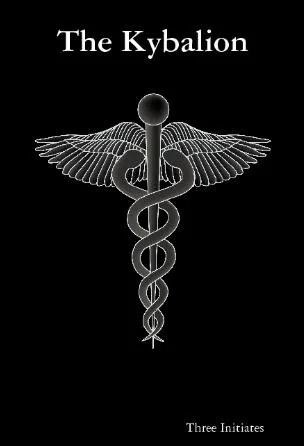
The Kybalion
 76
76

The Kybalion
The Kybalion's enduring appeal rests on its clarity and systematic presentation of complex ideas, a feat considering its 1908 publication. Its strength lies in distilling Hermeticism's seven core principles into a remarkably concise and accessible format. The principle of Mentalism, that "The All is Mind," is particularly potent, offering a radical reorientation of one's perception of reality. However, its brevity is also a limitation; the explanations, while clear, often lack the depth and nuance found in primary Hermetic texts like the Corpus Hermeticum. The section on "The Mental Key" feels somewhat underdeveloped, offering a glimpse into practical application without fully elaborating on the 'how'. Despite this, The Kybalion remains a foundational text for modern esotericists, offering a potent, albeit introductory, map of the Hermetic cosmos. It serves as an excellent primer, urging further exploration.
📝 Description
76
The Kybalion, published anonymously in 1908, distills seven Hermetic principles.
This 1908 work presents seven principles of the Hermetic Philosophy, attributed to Hermes Trismegistus. It is not a historical study but a guide to understanding universal laws. The authors aimed to condense a large body of occult knowledge into a format accessible to newcomers to esoteric studies. Its concise nature belies its ambition to explain fundamental metaphysical concepts.
The book is written for those beginning their study of Western esotericism, especially Hermeticism and alchemy. Readers seeking a structured introduction to metaphysical laws, rather than an in-depth look at historical Hermetic writings, will find its systematic arrangement useful. It also attracts those interested in the origins of New Thought philosophy and its metaphysical roots.
The Kybalion appeared in 1908, a time of significant interest in spiritualism and esoteric movements. It emerged alongside Theosophy and the New Thought movement, sharing their metaphysical outlooks. The book's anonymous presentation of wisdom reflects the era's fascination with rediscovered occult traditions. William Walker Atkinson, writing as Yogi Ramacharaka, was the likely publisher and editor, aiming to synthesize and popularize Hermetic ideas for a contemporary audience.
💡 Why Read This Book?
• Gain an understanding of the Seven Hermetic Principles, including Mentalism and Correspondence, as outlined in the 1908 publication, providing a foundational framework for metaphysical thought. • Explore the concept of "The All is Mind" and its implications for personal reality creation, offering a unique perspective on consciousness and manifestation not found in standard psychological texts. • Grasp the principle of "As Above, So Below" and its relevance to understanding interconnectedness across different planes of existence, a core tenet of Hermeticism since antiquity.
⭐ Reader Reviews
Honest opinions from readers who have explored this book.
❓ Frequently Asked Questions
What is the origin of The Kybalion?
The Kybalion was first published in 1908, attributed to an anonymous author or group of authors. It is widely believed to have been written or compiled by William Walker Atkinson, a prominent figure in the New Thought movement.
Who was Hermes Trismegistus?
Hermes Trismegistus is a legendary, syncretic figure combining the Greek god Hermes and the Egyptian god Thoth. He is considered the mythical founder of Hermeticism, an esoteric tradition based on philosophical and religious texts dating from the Hellenistic period.
What are the Seven Hermetic Principles?
The seven principles presented in The Kybalion are Mentalism, Correspondence, Vibration, Polarity, Rhythm, Cause and Effect, and Gender. They form the core tenets of the Hermetic philosophy as interpreted by the book's authors.
Is The Kybalion a primary Hermetic text?
No, The Kybalion is not considered a primary Hermetic text like the Corpus Hermeticum. It is a modern interpretation and distillation of Hermetic principles, published in 1908, intended to make the philosophy more accessible.
How does The Kybalion relate to the New Thought movement?
The Kybalion heavily influenced the New Thought movement. Its emphasis on mental creation, the power of thought, and universal laws aligns closely with core New Thought doctrines, particularly the principle of Mentalism.
Where can I find The Kybalion?
The Kybalion is widely available in print and as an ebook. As it was published in 1908, it is in the public domain in many countries, making it accessible through various online archives and libraries.
🔮 Key Themes & Symbolism
The Seven Hermetic Principles
The bedrock of The Kybalion, these principles offer a framework for understanding the universe. Mentalism posits that all is mind, the fundamental basis of reality. Correspondence, "As Above, So Below," highlights the interconnectedness of all planes. Vibration explains that nothing rests, everything moves, everything vibrates. Polarity shows that opposites are merely different degrees of the same thing. Rhythm dictates the ebb and flow of all phenomena. Cause and Effect asserts that every cause has its effect. Gender is present in all things, with masculine and feminine principles at play. These are presented not as dogma, but as fundamental laws governing existence.
The Power of the Mind
Central to The Kybalion is the principle of Mentalism, which asserts that the All (the ultimate reality) is Mind. This implies that the universe is a mental construct, and our own thoughts and consciousness play an important role in shaping our perceived reality. The book explores how understanding and mastering one's own mind is key to influencing one's circumstances and achieving spiritual growth. This concept aligns with the broader Hermetic goal of achieving gnosis, or knowledge, of the divine and one's place within the cosmos.
The Great Work
The Kybalion alludes to the "Great Work" (Major work), a term often associated with alchemy and spiritual transformation. While not explicitly detailed, the book implies that the study and application of the Hermetic Principles constitute this Great Work. It is a process of self-mastery, purification, and the attainment of higher consciousness, leading to a more profound understanding of oneself and the universe. The journey involves aligning one's individual will with the Universal Will.
The Art of Transmutation
Related to alchemy, the concept of transmutation in The Kybalion refers to the ability to change one's mental and spiritual state. By applying the Hermetic Principles, particularly those of Vibration and Polarity, individuals can shift their consciousness from lower to higher states, transforming negative patterns into positive ones. This mental alchemy is presented as a means of overcoming limitations and achieving personal liberation, moving from a state of ignorance to one of wisdom.
💬 Memorable Quotes
Direct passages from the work, attributed to the author.
“The lips of wisdom are closed, except to the ears of Understanding.”
— This aphorism emphasizes that true knowledge is not passively received but requires an active state of receptivity and comprehension. Wisdom is only accessible to those prepared to truly listen and grasp its meaning.
“The All is Mind; The Universe is Mental.”
— This is the first and most fundamental Hermetic Principle. It asserts that the ultimate reality is consciousness, and the entire cosmos is a manifestation of this universal Mind. Our perceived reality is therefore a mental construct.
“As Above, So Below; As Below, So Above.”
— The Principle of Correspondence illustrates the interconnectedness of all things. What happens on the macrocosmic level (the universe) is reflected in the microcosmic level (individuals and the Earth), and vice versa.
“Nothing rests; Everything moves; Everything vibrates; Everything returns.”
— This expresses the Principle of Vibration and hints at the Principle of Rhythm. It describes the dynamic, ever-changing nature of the universe, where constant motion and cyclical patterns are fundamental.
“Every effect has its Cause; Every Cause has its Effect.”
— This statement of the Principle of Cause and Effect underscores the law of karma and consequence. It suggests that events do not happen randomly but are the result of preceding actions and conditions.
🌙 Esoteric Significance
Tradition
The Kybalion is firmly rooted in the Western Esoteric Tradition, specifically Hermeticism. It presents itself as a modern interpretation of teachings attributed to Hermes Trismegistus, a figure central to Hermetic philosophy since antiquity. While drawing from ancient Hermetic texts like the Corpus Hermeticum, its structured, principle-based approach also aligns with the syncretic tendencies of 19th and early 20th-century occultism, particularly the New Thought movement.
Symbolism
While The Kybalion is more conceptual than symbolic, it references the alchemical "Great Work" and the concept of "transmutation." The figure of Hermes Trismegistus himself is a potent symbol of wisdom and divine knowledge. The Seven Principles can be seen as symbolic representations of fundamental cosmic forces and laws, offering a symbolic map of reality rather than specific icons.
Modern Relevance
The Kybalion continues to be a foundational text for modern practitioners of Hermeticism, Western esotericism, and the Law of Attraction. Its principles are frequently cited in contemporary self-help and spiritual development circles. Thinkers and authors within the fields of consciousness studies, metaphysics, and even quantum physics sometimes draw parallels to its core ideas about mind and reality.
👥 Who Should Read This Book
• Aspiring students of Hermeticism seeking a clear, concise introduction to its core principles without studying dense historical texts. • Practitioners of the Law of Attraction and New Thought who wish to understand the philosophical underpinnings of mental creation and universal laws. • Individuals interested in comparative religion and esoteric philosophy looking to grasp a key text that bridged ancient wisdom with modern metaphysical movements.
📜 Historical Context
Published in 1908, The Kybalion arrived during a fertile period for esoteric thought in the West, a time when spiritualism, Theosophy, and New Thought were gaining significant traction. Helena Blavatsky's Theosophical Society, founded in 1875, had already popularized Eastern philosophies and occult concepts. The Kybalion, however, focused specifically on distilling Hermeticism, a tradition with roots stretching back to ancient Egypt and Greece. Its anonymous authorship and systematic presentation of principles were characteristic of the era's approach to disseminating occult knowledge, aiming for accessibility over scholarly rigor. The work's publisher, William Walker Atkinson, was a prolific author within the New Thought movement, which shared the Hermetic emphasis on mental power and universal laws. While distinct from the more academic or devotional approaches to Hermeticism, The Kybalion offered a pragmatic, principle-based framework that resonated deeply with those seeking practical application of metaphysical ideas.
📔 Journal Prompts
The Principle of Mentalism: Explore the implications of the universe being fundamentally mental for your daily experiences.
The concept of Correspondence: How does the principle "As Above, So Below" manifest in your personal life and relationships?
The Principle of Vibration: Reflect on how changing your mental state (vibration) could alter your perception of circumstances.
The Principle of Polarity: Identify a situation where understanding opposing forces can reveal a hidden unity or solution.
The Great Work: Consider one small step you can take today to advance your personal 'Great Work' of self-mastery.
🗂️ Glossary
Hermetic Principles
The seven fundamental laws of the universe as presented in The Kybalion: Mentalism, Correspondence, Vibration, Polarity, Rhythm, Cause and Effect, and Gender. They are considered immutable laws governing all phenomena.
Mentalism
The First Hermetic Principle, stating "The All is Mind; The Universe is Mental." It posits that the fundamental reality of the universe is consciousness or mind.
Correspondence
The Second Hermetic Principle, often summarized as "As Above, So Below; As Below, So Above." It signifies the analogy and interconnectedness between different planes of existence.
Vibration
The Third Hermetic Principle, asserting that "Nothing rests; Everything moves; Everything vibrates." It explains the dynamic nature of reality and the differences between phenomena as variations in vibratory rates.
Polarity
The Fourth Hermetic Principle, stating "Everything is Dual; Everything has poles; Everything has its pair of opposites." Opposites are understood as different degrees of the same thing.
Rhythm
The Fifth Hermetic Principle, describing the regular "swing" or "ebb and flow" of phenomena. It governs cycles of action and reaction, advance and retreat, in all aspects of existence.
Cause and Effect
The Sixth Hermetic Principle, which states that "Every Cause has its Effect; Every Effect has its Cause." It implies a universal chain of causation and the operation of natural law.
🔮 Readers Also Liked
Browse all →








More by Unknown
All books →




More Free Alchemy & Hermeticism Books
View all →