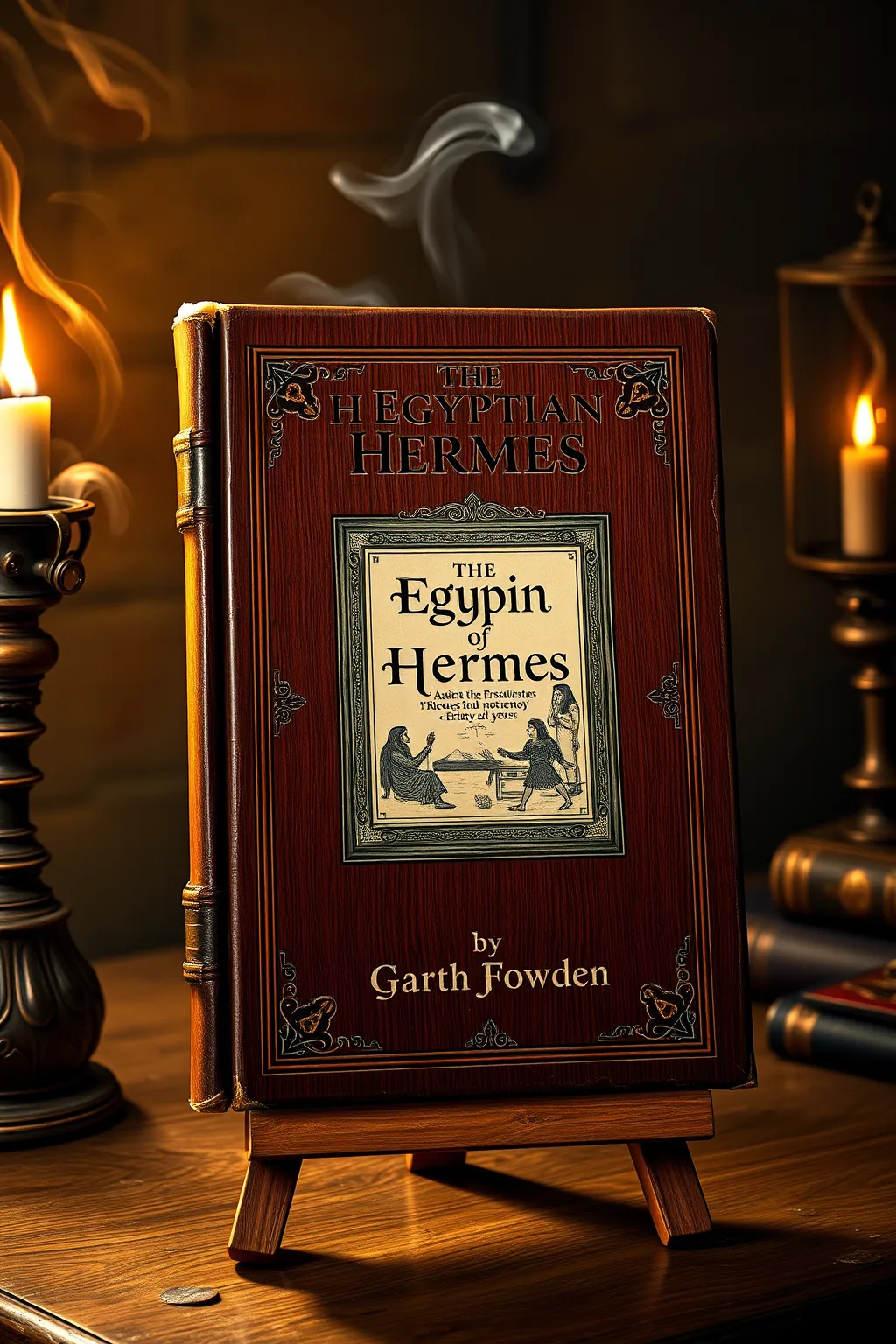
The Egyptian Hermes
 74
74

The Egyptian Hermes
Garth Fowden's "The Egyptian Hermes" offers a meticulously researched account of the Hermetic tradition's journey through antiquity and the Middle Ages. Its strength lies in its rigorous textual analysis and its careful contextualization of Hermetic thought within the broader intellectual currents of the Hellenistic and Roman worlds. Fowden avoids sensationalism, presenting a sober academic evaluation of the material. One notable aspect is his detailed exploration of the Syriac and Arabic intermediaries that played a crucial role in preserving and transmitting Hermetic ideas, a point often overlooked in less specialized studies. A potential limitation for some readers might be the book's dense academic prose, which demands close attention. The section discussing the Renaissance reception, particularly the debate surrounding the *Corpus Hermeticum*'s perceived Platonic overtones, exemplifies Fowden's balanced approach. It’s a foundational text for understanding the historical development of a pivotal esoteric lineage.
📝 Description
74
Garth Fowden's 1993 book examines the transmission of Hermetic philosophy from antiquity to the Renaissance.
This study traces the reception and transformation of Hermetic philosophy across late antiquity, the Middle Ages, and the Renaissance. Fowden investigates the figure of Hermes Trismegistus and the body of texts attributed to him, detailing how different intellectual traditions interpreted and adapted these ideas. The focus rests on the textual history and philosophical arguments concerning the authenticity and meaning of the Hermetic corpus. This approach prioritizes intellectual history over the practical applications of Hermeticism.
The book is aimed at advanced students and scholars in classical philosophy, late antiquity, Renaissance humanism, and the history of esotericism. It is particularly useful for those interested in the intellectual currents of Western thought and how ancient concepts persist, change, and are debated over time. Readers seeking a thorough academic perspective on the origins of Hermeticism will find this work valuable.
Published in 1993, 'The Egyptian Hermes' arrived during a resurgence of academic study in Western esotericism. Fowden's work engaged with scholarship that reassessed the Hellenistic roots of Hermeticism, including debates on the cultural context of its texts. The book synthesizes these findings, placing the Hermetic tradition within the broader context of late antique philosophy and religious syncretism, moving away from singular, nationalistic origins.
💡 Why Read This Book?
• Understand the complex textual lineage of Hermeticism, tracing its path from Hellenistic Egypt through medieval Arabic scholarship to the Renaissance, a journey crucial for grasping its philosophical evolution. • Gain insight into the academic debates surrounding the origins and authenticity of the *Corpus Hermeticum*, particularly the scholarly work from the mid-20th century onward that shaped our understanding. • Appreciate the role of Syriac and Arabic translations in preserving and transmitting Hermetic wisdom, revealing a critical, often under-acknowledged, phase in its historical survival and eventual re-emergence.
⭐ Reader Reviews
Honest opinions from readers who have explored this book.
❓ Frequently Asked Questions
When was Garth Fowden's "The Egyptian Hermes" first published?
Garth Fowden's "The Egyptian Hermes" was first published in 1993. This date places its scholarly contribution within a significant period of academic re-evaluation of Western esoteric traditions.
What is the primary focus of "The Egyptian Hermes"?
The book primarily focuses on the historical reception and transmission of Hermetic philosophy and texts from antiquity through the medieval period, examining how ideas attributed to Hermes Trismegistus evolved and were interpreted across different cultures and eras.
Does the book cover the practical aspects of Hermeticism?
No, the book's focus is scholarly and historical, examining the intellectual history and textual transmission of Hermeticism. It is less concerned with the practical or magical applications of Hermetic doctrines.
What role do Syriac and Arabic translations play in Fowden's analysis?
Fowden highlights the critical role of Syriac and Arabic translations in preserving and disseminating Hermetic texts during periods when Greek originals were scarce, acting as vital conduits to later European intellectual history.
Who would benefit most from reading "The Egyptian Hermes"?
Scholars, advanced students of religious studies, classical philosophy, and the history of esotericism, as well as anyone interested in the deep historical roots and intellectual evolution of Western esoteric thought, would find this book highly beneficial.
Is "The Egyptian Hermes" considered a primary source for Hermetic teachings?
No, "The Egyptian Hermes" is a secondary scholarly work analyzing the historical development and reception of Hermeticism. It is not a primary source of Hermetic teachings themselves but a critical study of their transmission.
🔮 Key Themes & Symbolism
Hermetic Textual Transmission
This work meticulously traces the journey of the Hermetic corpus, emphasizing its survival and adaptation through Syriac and Arabic translations during the medieval period. Fowden details how these crucial linguistic and cultural bridges enabled the preservation of texts that might otherwise have been lost, significantly impacting their later reception in Renaissance Europe. The book illustrates the complex, non-linear path of esoteric knowledge across vast geographical and temporal divides, highlighting the active role of scribes and translators in shaping intellectual history.
The Evolving Figure of Hermes Trismegistus
Fowden analyzes how the mythical figure of Hermes Trismegistus was not static but transformed over centuries. Initially associated with Egyptian wisdom, he became a composite figure in the Hellenistic world, later interpreted through Gnostic, Neoplatonic, and even Christian and Islamic lenses. The book examines how different eras projected their own philosophical and religious concerns onto this ancient sage, creating a complex legacy that influenced thinkers from antiquity to the modern era, demonstrating the plasticity of spiritual archetypes.
Hermeticism in Late Antiquity
The book situates the Hermetic tradition within the vibrant intellectual and religious field of late antiquity, particularly the Hellenistic period. It explores the syncretic nature of this era, where Greek philosophy, Egyptian religion, and nascent Gnostic ideas intermingled. Fowden investigates the philosophical underpinnings of early Hermetic texts, such as the *Asclepius* and the *Corpus Hermeticum*, and their engagement with prevailing cosmological and theological debates of the time, revealing Hermeticism as a product of its specific historical milieu.
Renaissance Reception of Hermeticism
Fowden critically examines the rediscovery and reinterpretation of Hermetic texts during the Italian Renaissance, particularly following the discovery of the *Corpus Hermeticum* in 1460. He discusses how Renaissance humanists, including figures like Marsilio Ficino, engaged with these texts, often viewing them as ancient wisdom predating even Plato. The book analyzes the impact of this reception on Renaissance philosophy, magic, and the occult sciences, showcasing how Hermeticism fueled new intellectual and spiritual explorations.
💬 Memorable Quotes
Direct passages from the work, attributed to the author.
“The figure of Hermes Trismegistus was already a composite one in the Hellenistic world.”
— This observation underscores that the Hermes of the Hermetic texts was not a single, ancient Egyptian deity but a syncretic creation, blending Greek Mercurius with Egyptian Thoth, reflecting the cultural fusion of the Hellenistic era.
“Syriac and Arabic translations played a vital role in the transmission of Hermetic texts.”
— This highlights the crucial, often overlooked, function of the Near Eastern intellectual traditions in preserving and passing on the Hermetic corpus during periods when its Greek origins were less accessible in the West.
“Renaissance interpreters often attributed a Platonic character to the Hermetic writings.”
— This points to how Renaissance scholars, eager to find ancient philosophical authority, frequently saw parallels between Hermetic doctrines and Neoplatonism, influencing their understanding and dissemination of the *Corpus Hermeticum*.
“The concept of Hermeticism evolved significantly from antiquity to the medieval period.”
— This emphasizes that "Hermeticism" is not a monolithic entity but a dynamic tradition whose philosophical content, symbolic language, and perceived origins were continually reinterpreted and reshaped by successive generations of thinkers.
“The authenticity of the Hermetic corpus was a subject of ongoing debate.”
— This reflects the historical reality that the authorship and true antiquity of the texts attributed to Hermes Trismegistus were frequently questioned and analyzed by scholars across different eras, shaping academic and esoteric discourse.
🌙 Esoteric Significance
Tradition
This work is situated within the study of Western Esotericism, specifically focusing on the Hermetic tradition, one of its foundational pillars. It examines the historical development and textual lineage of ideas attributed to Hermes Trismegistus, a figure central to Hermeticism, Gnosticism, and later Renaissance occult philosophy. Fowden's analysis provides scholars and practitioners with a critical understanding of how this lineage was constructed, transmitted, and interpreted, offering a scholarly counterpoint to purely devotional or magical approaches.
Symbolism
While not a manual of practice, the book implicitly engages with the symbolic weight of Hermes Trismegistus himself as a syncretic figure representing divine wisdom bridging disparate cultures. It also touches upon the symbolic significance of the *Corpus Hermeticum* and the *Asclepius* as textual repositories of gnosis and cosmic understanding, viewed by later traditions as embodying profound truths about the divine, the cosmos, and humanity's place within it.
Modern Relevance
Contemporary Hermetic orders and scholars of Western esotericism frequently cite Fowden's work as a critical historical foundation. Thinkers and practitioners interested in the roots of alchemy, astrology, and magical philosophy often reference his meticulous research on the transmission of texts. The book's emphasis on the historical fluidity of Hermetic concepts is relevant for modern esotericists seeking to understand the diverse interpretations and historical layers within their chosen traditions.
👥 Who Should Read This Book
• Advanced students and scholars of religious studies, classical antiquity, and the history of Western esotericism seeking a rigorous academic analysis of Hermeticism's origins and transmission. • Researchers interested in the intellectual history of the Middle Ages and the Renaissance, particularly how ancient philosophical and religious ideas were preserved and reinterpreted through textual intermediaries. • Practitioners of Hermetic arts who wish to understand the historical and scholarly context of the traditions they engage with, moving beyond myth to historical scholarship.
📜 Historical Context
Published in 1993, Garth Fowden's "The Egyptian Hermes" emerged in an academic climate increasingly open to studying Western esotericism with scholarly rigor. It responded to and contributed to a re-evaluation of the origins of Hermeticism, moving beyond simplistic Egyptian or purely Greek attributions. Fowden engaged with scholarship following the mid-20th century reassessment of the *Corpus Hermeticum*, particularly the work that debated its Hellenistic dating and syncretic nature, contrasting with earlier views that saw it as purely ancient Egyptian wisdom. He specifically addresses the crucial role of Syriac and Arabic translations in preserving and transmitting these texts, acting as intermediaries between late antiquity and the Renaissance. This focus on transmission implicitly engaged with competing schools of thought that might isolate traditions, emphasizing instead the cross-cultural flow of ideas during the early centuries CE and the Middle Ages.
📔 Journal Prompts
The composite nature of Hermes Trismegistus in the Hellenistic world.
The role of Syriac and Arabic translations in preserving Hermetic wisdom.
Early Renaissance interpretations of the *Corpus Hermeticum*.
How late antique intellectual currents shaped early Hermetic thought.
The evolution of the Hermetic corpus across different cultural contexts.
🗂️ Glossary
Hermetic Corpus
A collection of ancient philosophical and religious writings attributed to Hermes Trismegistus, a legendary figure merging Greek Hermes and Egyptian Thoth. Key texts include the *Corpus Hermeticum* and the *Asclepius*.
Hermes Trismegistus
A syncretic figure, revered as the author of Hermetic literature. He represents divine wisdom, bridging Greek and Egyptian thought, and profoundly influenced Gnosticism, alchemy, astrology, and Renaissance occultism.
Hellenistic Period
The era in ancient history spanning from the death of Alexander the Great (323 BCE) to the rise of the Roman Empire (roughly 30 BCE). It was characterized by the spread of Greek culture and syncretism of various religious and philosophical ideas.
Gnosticism
A complex set of religious ideas and systems originating in the first centuries CE, characterized by a belief in salvation through esoteric knowledge (gnosis) and often featuring a dualistic worldview.
Neoplatonism
A school of philosophy founded by Plotinus in the 3rd century CE, based on the teachings of Plato. It emphasizes a hierarchical cosmology leading from a transcendent 'The One' to the material world.
Syncretism
The merging or blending of different religious, philosophical, or cultural beliefs and practices. This was a common phenomenon in the ancient world, particularly during the Hellenistic period.
Asclepius
A dialogue within the Hermetic corpus, featuring Asclepius conversing with Hermes Trismegistus. It discusses cosmology, theology, and the relationship between the divine and the human.
🔮 Readers Also Liked
Browse all →








More by Garth Fowden
All books →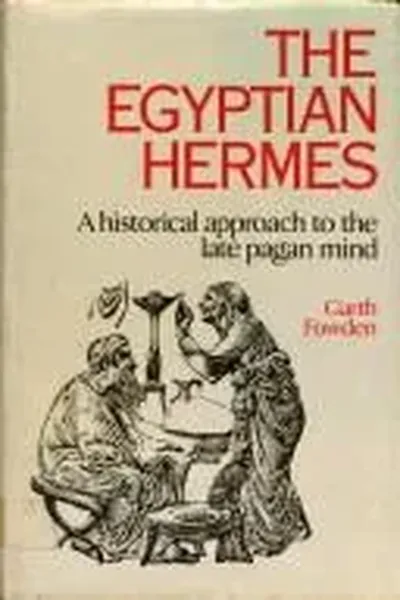
More Free Alchemy & Hermeticism Books
View all →