Mysticism And Alchemy Through The Ages The Quest For Transformation

 76
76

Mysticism And Alchemy Through The Ages The Quest For Transformation
Gary Edson's "Mysticism And Alchemy Through The Ages" presents a valuable synthesis, particularly in its detailed exploration of alchemical symbolism as a mirror to mystical states. The section discussing the symbolic correspondence between the stages of the Great Work and inner spiritual development is particularly well-articulated, avoiding overly romanticized portrayals. However, the work occasionally suffers from a dense prose style that can obscure its more compelling arguments, especially in the earlier chapters. A more dynamic engagement with the reception of alchemical ideas in the Renaissance, beyond mere mention, would have strengthened its historical contextualization. Despite these minor drawbacks, Edson's scholarly approach offers a solid foundation for understanding the deep connections between these two ancient disciplines.
📝 Description
76
Gary Edson's 2012 book traces mysticism and alchemy from ancient Egypt to modern times.
Gary Edson's "Mysticism And Alchemy Through The Ages: The Quest For Transformation" examines the shared histories of mystical thought and alchemical practice. The book charts their development from early philosophical ideas in Hellenistic Egypt through their expressions in medieval Europe and later periods. Edson investigates how both traditions pursued an understanding of the cosmos and aimed for personal or external change, frequently employing symbolic language and ritual.
This work is suited for students of esotericism, comparative religion, and the history of science and philosophy. It appeals to those interested in historical spiritual quests and alchemical pursuits of purification, transmutation, and hidden knowledge. Readers seeking a scholarly yet accessible overview of these connected fields will find substantial material.
Edson places mysticism and alchemy within broader intellectual currents, noting their shared roots in Hellenistic Egypt. The book likely engages with movements such as Neoplatonism, Gnosticism, and Hermeticism, which shaped Western esotericism. It explores how these traditions sought to understand the universe and achieve inner or outer change through symbolic means and ritual processes, reflecting a long history of spiritual and philosophical inquiry.
💡 Why Read This Book?
• Gain a structured understanding of the historical relationship between mystical philosophy and alchemical practice, exploring how figures like Zosimos of Panopolis in the 3rd century CE used symbolic language for both. • Discern the symbolic parallels between the alchemical *Magnum Opus* (Great Work) and stages of spiritual purification, as Edson details the transformation of the *prima materia*. • Appreciate the interconnectedness of the microcosm and macrocosm, understanding how alchemists and mystics viewed human spiritual journeys as reflections of universal processes.
⭐ Reader Reviews
Honest opinions from readers who have explored this book.
❓ Frequently Asked Questions
What is the primary focus of "Mysticism And Alchemy Through The Ages"?
The book focuses on the historical and symbolic connections between mystical traditions and alchemical practices, tracing their development and shared goals of transformation from antiquity through the early modern period.
When was Gary Edson's "Mysticism And Alchemy Through The Ages" first published?
Gary Edson's "Mysticism And Alchemy Through The Ages: The Quest For Transformation" was first published in 2012.
Does the book discuss specific alchemical processes?
Yes, the work explores key alchemical concepts and processes such as the *prima materia* and the *Magnum Opus*, interpreting them through both material and spiritual lenses.
Who would benefit most from reading this book?
Students of esoteric history, comparative religion, philosophy, and those interested in the symbolic language of alchemy and mysticism will find this book particularly beneficial.
What is the "Great Work" as discussed in the book?
The *Magnum Opus*, or Great Work, refers to the alchemical pursuit of transforming base metals into gold, but also, more importantly, the spiritual purification and perfection of the alchemist's soul.
Are there connections made to ancient philosophical schools?
Indeed, Edson likely draws connections to ancient schools such as Neoplatonism and Hermeticism, highlighting their influence on later mystical and alchemical thought.
🔮 Key Themes & Symbolism
The Quest for Transformation
Central to Edson's work is the shared drive for transformation inherent in both mysticism and alchemy. This is not merely about material change but a profound inner metamorphosis. The book details how alchemists sought to purify the *prima materia* as a symbolic representation of the soul's journey toward divine union. This quest involved understanding hidden correspondences and the cyclical nature of creation and dissolution, mirroring mystical paths of detachment and enlightenment.
Symbolic Language of Alchemy
Edson examines the rich symbolic lexicon of alchemy, presenting it not as a primitive precursor to chemistry but as a sophisticated language of spiritual and psychological exploration. Symbols like the Ouroboros, the hermaphroditic androgyne, and the stages of calcination, dissolution, and coagulation are examined for their esoteric meanings. These symbols served as keys to unlocking the secrets of both the cosmos and the human psyche, facilitating a deeper understanding of existence.
Microcosm and Macrocosm
A fundamental principle explored is the Hermetic axiom "As above, so below." Edson illustrates how mystics and alchemists viewed the human being (microcosm) as a reflection of the entire universe (macrocosm). The processes occurring in the heavens and the earth were seen as mirrored within the individual's spiritual and psychological landscape. This interconnectedness underscored the belief that understanding oneself was intrinsically linked to understanding the divine order of reality.
Intertwined Histories
The book meticulously traces the historical convergence and divergence of mystical traditions and alchemical practices. It highlights their shared roots in ancient philosophies, particularly Neoplatonism and Gnosticism, and their development through distinct historical periods. Edson demonstrates how these fields, though often pursued separately, frequently informed and influenced one another, creating a complex intellectual and spiritual heritage.
💬 Memorable Quotes
Direct passages from the work, attributed to the author.
“The alchemical pursuit of the philosopher's stone mirrored the mystic's journey towards spiritual illumination.”
— This statement expresses the core thesis: that the material goals of alchemy were symbolic of deeper, spiritual aspirations shared with mystical traditions, suggesting a unified quest for ultimate truth or perfection.
“Transformation was understood as a process of purification and reintegration, both of matter and spirit.”
— This highlights the dual nature of alchemical and mystical work, emphasizing that achieving a higher state involved cleansing impurities and restoring a lost, perfect harmony, applicable to both the physical world and the human soul.
“The language of alchemy was a coded system for expressing esoteric knowledge.”
— This points to the deliberate use of symbolism and allegory in alchemical texts, suggesting that their true meaning was accessible only to initiates who understood the underlying spiritual or philosophical principles.
“The Great Work encompassed both material transmutation and spiritual evolution.”
— This concisely defines the dual objective of alchemy as presented in the book: the physical alteration of substances and the profound inner development and spiritual attainment of the practitioner.
💡 Key Ideas
Editorial paraphrase of the work's core concepts — not direct quotes.
Understanding the microcosm was key to comprehending the macrocosm.
This paraphrases the Hermetic principle, emphasizing the belief that by studying the human being—their inner workings and potential—one could gain insight into the structure and workings of the entire universe.
🌙 Esoteric Significance
Tradition
This work firmly belongs within the study of Western Esotericism, particularly focusing on the Hermetic and Gnostic traditions that heavily influenced both mysticism and alchemy. It explores how these ancient philosophical systems provided a framework for understanding spiritual realities and manipulating the material world through symbolic correspondence, a hallmark of Hermetic thought.
Symbolism
Key symbols explored include the *prima materia*, representing primordial, undifferentiated potential, and the Ouroboros, symbolizing cyclicality, wholeness, and the self-devouring nature of existence. The transformation of metals into gold in alchemy is presented as a metaphor for the soul's purification and ascent towards spiritual perfection, a common motif in mystical traditions.
Modern Relevance
Contemporary thinkers and practitioners in fields like depth psychology (especially Jungian analysis), comparative mythology, and spiritual alchemy continue to draw on the symbolic language and philosophical underpinnings discussed by Edson. The book provides essential context for understanding modern interpretations of alchemical imagery and its application to personal transformation and consciousness studies.
👥 Who Should Read This Book
• Students of comparative religion and philosophy seeking to understand the historical dialogue between mystical and alchemical worldviews. • Researchers of Western Esotericism interested in the development of symbolic systems and their application to spiritual and material transformation. • Individuals exploring the history of science and its relationship with non-rational or symbolic modes of inquiry and understanding.
📜 Historical Context
Published in 2012, Gary Edson's work emerges in an era of renewed academic and popular interest in the history of Western esotericism. The book is situated within a lineage of scholarship that examines the complex relationship between occult philosophy and intellectual history, building upon the foundations laid by scholars like Frances Yates and Antoine Faivre. Edson likely engages with the intellectual currents of Hermeticism, Neoplatonism, and Gnosticism, which provided fertile ground for both mystical contemplation and alchemical experimentation. While this period saw significant scholarly engagement with figures like Paracelsus and Nicolas Flamel, Edson's work likely seeks to synthesize these threads, offering a cohesive narrative. Contemporary reception of such works in the early 21st century often focuses on their contribution to understanding alternative epistemologies and their impact on art, science, and philosophy, moving beyond earlier, more dismissive historical treatments.
📔 Journal Prompts
The alchemical concept of the *prima materia* and its mystical parallels.
Reflecting on the symbolic meaning of the Ouroboros in relation to cyclical transformation.
The interconnectedness of microcosm and macrocosm as explored by Edson.
Stages of the *Major work* and their spiritual interpretation.
The coded language of alchemy and its esoteric purpose.
🗂️ Glossary
Prima Materia
The fundamental, undifferentiated substance from which all matter is believed to originate in alchemical theory. Mystically, it represents primordial potential or the unmanifest divine.
Major work
The "Great Work" of alchemy, referring to the process of creating the philosopher's stone. It is often interpreted as a metaphor for spiritual purification and the attainment of enlightenment.
Philosopher's Stone
A legendary alchemical substance said to be capable of turning base metals into gold and producing the elixir of life. Symbolically, it represents ultimate spiritual perfection.
Ouroboros
An ancient symbol depicting a serpent or dragon eating its own tail, representing cyclicality, eternity, unity, and the eternal return.
Microcosm
The concept of the human being as a small-scale reflection of the universe (macrocosm), embodying similar principles and structures.
Macrocosm
The universe considered as a complex, ordered whole, often seen as a reflection of the divine or a larger spiritual reality.
Hermeticism
A philosophical and religious tradition based on writings attributed to Hermes Trismegistus, emphasizing principles like "As above, so below" and the interconnectedness of all things.
🔮 Readers Also Liked
Browse all →







More by Gary Edson
All books →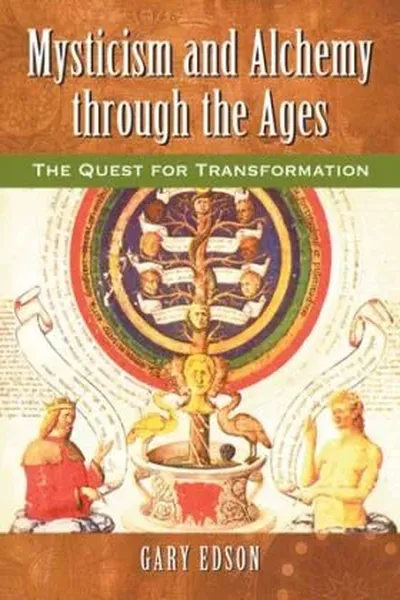

More Free Alchemy & Hermeticism Books
View all →