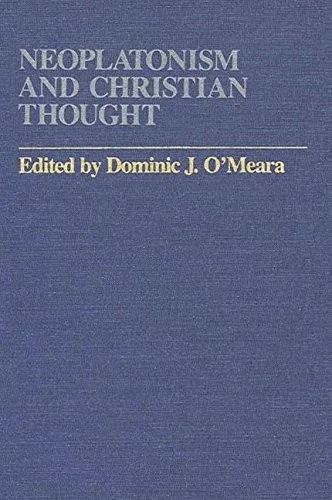
Liber viginti quattuor philosophorum

 72
72

Liber viginti quattuor philosophorum
Françoise Hudry's 2006 edition of the Liber Viginti Quattuor Philosophorum presents a challenging but rewarding engagement with a pivotal alchemical text. The work’s strength lies in its concentrated philosophical assertions, offering a dense, symbolic exploration of the Great Work. Hudry’s scholarly apparatus, though essential, can also be a hurdle; the text demands significant prior knowledge of Hermetic and alchemical traditions. A particularly striking passage discusses the 'two natures' of the Stone, which, while cryptic, invites deep reflection on duality and unity central to alchemical philosophy. Its limitation is its sheer inaccessibility to the uninitiated; this is not an introductory primer. Nevertheless, for those dedicated to the study of Western esotericism, it provides a vital, albeit demanding, primary source.
📝 Description
72
Françoise Hudry's 2006 critical edition presents the Liber Viginti Quattuor Philosophorum, a medieval alchemical text.
The Liber Viginti Quattuor Philosophorum is a collection of aphorisms and dialogues attributed to alchemical and philosophical traditions. Françoise Hudry's 2006 edition makes this work accessible to modern scholars. The text offers a look into how medieval and Renaissance thinkers understood reality, the cosmos, and the divine. It is not a story but a set of condensed ideas meant for careful thought and study.
This book is for serious students of alchemy, Hermeticism, and early modern philosophy. Readers who enjoy dense, symbolic language and are prepared for detailed interpretation will find it valuable. It is especially useful for those researching the history of alchemical ideas and their philosophical roots. Engaging with this text requires patience and a readiness to grapple with complex concepts instead of looking for simple answers.
The Liber Viginti Quattuor Philosophorum's origins are debated, but its manuscripts circulated from the late Middle Ages. The work connects to the Hermetic tradition, which saw a resurgence during the Renaissance, particularly in 15th-century Florence with figures like Marsilio Ficino. Hudry's edition provides a scholarly view of a text reflecting a time when alchemy merged with theology, philosophy, and science, often existing outside mainstream academic or religious practice.
💡 Why Read This Book?
• Gain insight into the symbolic language of alchemy, understanding concepts like the Prima Materia and the Philosopher's Stone as presented in this historical corpus, which differs from modern interpretations. • Explore the philosophical underpinnings of transmutation, learning how the text connects material processes to spiritual perfection and divine science. • Engage with a primary source from the Western esoteric tradition, as documented through manuscript circulation since the late medieval period, offering a direct link to historical alchemical thought.
⭐ Reader Reviews
Honest opinions from readers who have explored this book.
❓ Frequently Asked Questions
What is the 'Liber Viginti Quattuor Philosophorum'?
The Liber Viginti Quattuor Philosophorum, meaning 'Book of the Twenty-Four Philosophers,' is a significant text in Western esotericism. It comprises aphorisms and dialogues concerning alchemy and philosophy, with its influence traceable through manuscripts from the late medieval period onward.
Who is Françoise Hudry and why is her edition important?
Françoise Hudry is the scholar responsible for the first critical modern edition of the Liber Viginti Quattuor Philosophorum, published in 2006. Her work provides a scholarly presentation and contextualization of the text, making it accessible to contemporary researchers.
What are the main themes explored in the book?
The book delves into core alchemical concepts such as the Prima Materia, the nature of transmutation, the unity of opposites, and the spiritual dimension of the Great Work. It emphasizes divine grace and intellectual illumination.
Is this book suitable for beginners in esotericism?
While valuable, the Liber Viginti Quattuor Philosophorum is not recommended for absolute beginners. Its dense, symbolic language and philosophical depth require a foundational understanding of Hermeticism and alchemical traditions.
When was the 'Liber Viginti Quattuor Philosophorum' first widely circulated?
Manuscript copies of the Liber Viginti Quattuor Philosophorum began circulating widely from the late medieval period, indicating its presence and importance in intellectual circles long before the modern edition.
What historical intellectual movements influenced this text?
The text is influenced by and contributes to the Hermetic tradition and Renaissance Neoplatonism. It reflects an era where alchemy was deeply intertwined with theology and philosophy, particularly evident during the 15th-century revival in Florence.
🔮 Key Themes & Symbolism
The Great Work as Spiritual Perfection
The text frames the alchemical Great Work not merely as a process of material transmutation but as a path toward spiritual perfection and ultimate knowledge. It posits that the Philosopher's Stone symbolizes this state of attainment. This perspective aligns with Hermetic principles emphasizing the correspondence between the microcosm (human) and the macrocosm (universe), suggesting that inner transformation is mirrored in external processes. The pursuit is therefore deeply intertwined with divine grace and intellectual illumination, moving beyond mere laboratory procedure to a holistic endeavor.
Unity of Opposites
A recurring theme is the reconciliation of apparent opposites, such as the 'two natures' of the Stone or the interplay of masculine and feminine principles. The Liber Viginti Quattuor Philosophorum suggests that true understanding and alchemical success lie in recognizing the underlying unity that binds these dualities. This concept is fundamental to many esoteric traditions, where paradox is seen as a gateway to deeper truth. The text encourages contemplation on how contraries can coexist and ultimately merge to form a singular, perfected substance or state of being.
Divine Science and Illumination
The text consistently refers to alchemy as a 'divine science,' emphasizing that its secrets are not solely attainable through empirical observation but require divine revelation and intellectual insight. The process of understanding and achieving the alchemical goals is presented as a form of illumination. This elevates the practice from a craft to a sacred art, accessible only to those who cultivate wisdom, purity of intention, and a receptive mind capable of receiving higher knowledge. The interplay between human effort and divine favor is crucial.
The Prima Materia
Central to the alchemical discourse within the Liber Viginti Quattuor Philosophorum is the concept of the Prima Materia, or First Matter. This primordial substance is understood as the fundamental essence from which all things are derived. The text explores its elusive nature, often describing it paradoxically as both simple and complex, common and rare. Understanding and correctly manipulating the Prima Materia is presented as the initial and most critical step in the alchemical process, requiring profound wisdom and discernment.
💬 Memorable Quotes
Direct passages from the work, attributed to the author.
“The Stone has two natures, which are one nature.”
— This aphorism expresses the alchemical principle of the unity of opposites. It suggests that the ultimate goal, the Philosopher's Stone, embodies the reconciliation of contraries, representing a perfected state where dualities are harmonized into a singular essence.
“Know that the art is divine science.”
— This statement highlights the sacred and intellectual nature of alchemy as presented in the text. It positions the alchemical pursuit not as mere craft but as a form of divinely inspired knowledge requiring wisdom and spiritual insight.
“Seek the First Matter which is common to all things.”
— This refers to the Prima Materia, the fundamental substance underlying all creation. The quote emphasizes its universality and the alchemist's primary task: to identify and work with this primordial essence.
“Without grace, the Work cannot be achieved.”
— This highlights the crucial role of divine assistance in the alchemical process. It underscores that human effort alone is insufficient; spiritual favor and enlightenment are necessary components for success in the Great Work.
“The wise man makes one from two.”
— This concisely illustrates the core alchemical operation of conjunction and separation. It refers to the process of resolving complex substances back to their fundamental components and then recombining them in a perfected form.
🌙 Esoteric Significance
Tradition
The Liber Viginti Quattuor Philosophorum is firmly rooted in the Western Hermetic and alchemical tradition. It aligns with the Hermetic principle of 'As Above, So Below,' positing a correspondence between the celestial and terrestrial realms and the inner and outer lives of the practitioner. The text's emphasis on transmutation and the Philosopher's Stone places it within the lineage of alchemical literature that seeks not just material transformation but spiritual perfection. It departs from purely materialistic interpretations of alchemy, stressing the role of divine grace and intellectual illumination, a hallmark of more spiritually oriented alchemical schools.
Symbolism
Key symbols include the 'Philosopher's Stone,' representing ultimate knowledge and spiritual perfection, often depicted paradoxically as both simple and complex. The 'Prima Materia' is another vital symbol, signifying the undifferentiated, primordial substance from which all creation arises, demanding profound wisdom to identify and work with. The concept of 'two natures' becoming one also signifies the alchemical process of resolving dualities (like male/female, sulfur/mercury) into a unified, perfected whole, reflecting cosmic harmony.
Modern Relevance
Contemporary practitioners of Western esotericism, particularly those engaged with Hermeticism and modern alchemy, continue to draw upon the Liber Viginti Quattuor Philosophorum. Its dense philosophical content makes it a subject of study for scholars of comparative religion and intellectual history. The text's exploration of symbolic language and the integration of material and spiritual processes also finds echoes in certain psychological and philosophical approaches that examine transformation and consciousness.
👥 Who Should Read This Book
• Students of Western Esotericism: Those seeking to understand the historical development and core tenets of alchemy and Hermeticism will find this text offers foundational, albeit challenging, insights. • Comparative Religion Scholars: Researchers interested in the intersection of philosophy, mysticism, and early scientific thought will appreciate its contribution to understanding medieval and Renaissance worldviews. • Dedicated Alchemical Practitioners: Individuals committed to the serious study of alchemical philosophy, who are prepared for dense symbolism and require a primary source for deep interpretive work, will benefit from its direct engagement.
📜 Historical Context
The Liber Viginti Quattuor Philosophorum emerged from a rich intellectual milieu that saw a resurgence of interest in Hermeticism and Neoplatonism, particularly during the Renaissance. While its exact origins are debated, manuscript copies circulated widely from the late medieval period, influencing thinkers and practitioners. This era, spanning from the 14th to the 17th centuries, was characterized by a complex interplay between emerging humanism, traditional scholasticism, and esoteric philosophies. Figures like Marsilio Ficino in 15th-century Florence played a key role in reviving ancient texts, including those attributed to Hermes Trismegistus, which provided a conceptual framework for alchemical thought. The Liber Viginti Quattuor Philosophorum resonated within this context, offering a dense distillation of alchemical principles often intertwined with theological and philosophical speculation. It existed alongside, and sometimes in tension with, more orthodox philosophical currents, reflecting a period where boundaries between science, religion, and mysticism were more fluid than they are today. The work's continued circulation and eventual critical edition by Hudry in 2006 attest to its enduring significance in the study of Western esoteric traditions.
📔 Journal Prompts
The concept of the 'two natures' of the Stone: how might this relate to personal dualities?
Reflecting on 'divine science': what distinguishes it from empirical study in your own path?
Contemplating the 'Prima Materia': what does this primordial substance symbolize in your understanding of creation?
The role of 'grace' in achievement: how does this text's perspective challenge or affirm your views on effort and outcome?
Meditating on the 'wise man makes one from two': identify a personal paradox and explore its potential resolution.
🗂️ Glossary
Prima Materia
The fundamental, undifferentiated substance from which all matter is believed to originate in alchemical philosophy. It is considered the base material for all transformations in the Great Work.
Philosopher's Stone
The legendary alchemical substance capable of transmuting base metals into gold or silver. Esoterically, it symbolizes spiritual perfection, enlightenment, and the completion of the Great Work.
Great Work (Main work)
The entire process of alchemical transformation, encompassing both material operations and spiritual development, aimed at achieving perfection, often symbolized by the Philosopher's Stone.
Transmutation
In alchemy, the process of changing one substance into another, particularly base metals into gold. Esoterically, it refers to the transformation of the imperfect self into a perfected spiritual state.
Divine Science
A term used to denote alchemy or other esoteric arts when viewed as divinely inspired knowledge, requiring spiritual insight and revelation in addition to practical skill.
Unity of Opposites
A philosophical and alchemical concept suggesting that apparent contraries (e.g., male/female, spirit/matter) are ultimately interconnected and can be reconciled into a higher, unified whole.
Conjunction
In alchemy, the process of uniting two distinct principles or substances, often representing the male and female, or sulfur and mercury, as a crucial step in the Great Work.
🔮 Readers Also Liked
Browse all →








More Free Alchemy & Hermeticism Books
View all →