Il pendolo di Foucault
 78
78

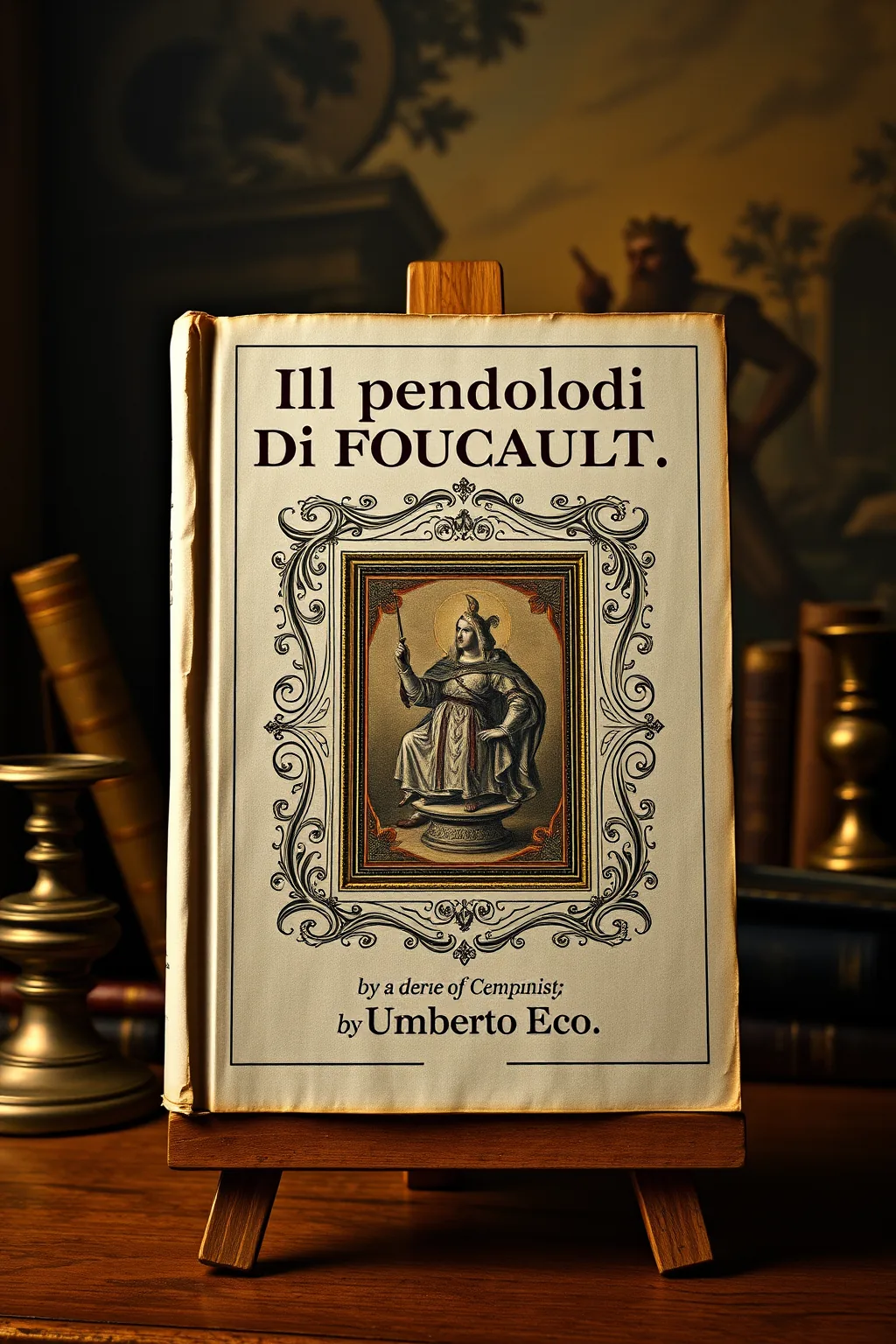
Il pendolo di Foucault
Umberto Eco’s "Il pendolo di Foucault" is a monumental undertaking, a dense intellectual puzzle disguised as a thriller. The sheer scope of its erudition, referencing everything from medieval chivalry to the Knights Templar and the Kabbalah, is staggering. One particularly striking passage involves the detailed deconstruction of a supposed occult ritual, showcasing Eco's meticulous research and his ability to create a compelling, albeit fictional, historical narrative. However, this very density can also be its primary limitation. The narrative occasionally becomes bogged down in its own intellectualism, potentially alienating readers seeking a more straightforward plot. The characters, while serving their thematic purpose, sometimes feel more like vectors for Eco's ideas than fully realized individuals. Nevertheless, the novel’s exploration of how fabricated conspiracies can gain traction and affect reality remains its potent, unsettling strength. "Foucault's Pendulum" is an unparalleled literary experiment in the architecture of belief.
📝 Description
78
Umberto Eco's 1988 novel, Foucault's Pendulum, concerns three editors who invent a conspiracy theory that takes on a life of its own.
Foucault's Pendulum tracks three editors at a Milanese publishing house who, as a game, fabricate a vast conspiracy linking the Knights Templar, Rosicrucians, and other occult groups. Their fictional creation, however, begins to manifest with terrifying consequences, blurring the lines between game and reality. The narrative unfolds as a complex exploration of how human pattern recognition can lead to the construction of elaborate, and often dangerous, belief systems. Readers engage with a story that questions the nature of knowledge, the power of narrative, and the potential for shared delusion to shape perceived truth. It demands careful attention to its dense prose and elaborate plotting.
Published in 1988, Foucault's Pendulum emerged during a period when postmodernism and metafiction questioned grand narratives and historical authenticity. Eco's work engages with a cultural fascination for hidden histories and conspiracy theories, deconstructing how disparate elements of occult lore and historical figures are woven into overarching, often fabricated, systems of belief. The novel reflects on the human propensity to find patterns, particularly in the esoteric traditions, and how these perceived connections can forge communities and shape reality.
💡 Why Read This Book?
• You will learn how the construction of fabricated conspiracies, like the invented "Plan" in the novel, can mimic real historical narratives and influence collective perception, offering a unique lens on modern disinformation. • You will gain an understanding of semiotics and the power of signs, particularly through the novel's intricate connections between symbols, historical events, and secret societies, as explored by the character Belbo. • You will experience the intellectual thrill of tracing connections between diverse historical periods and esoteric traditions, from the Knights Templar to the Kabbalah, a core element of the book's intricate plot.
⭐ Reader Reviews
Honest opinions from readers who have explored this book.
❓ Frequently Asked Questions
What is the significance of Foucault's Pendulum in Umberto Eco's novel?
The Foucault's Pendulum in the book symbolizes the seemingly deterministic yet arbitrary nature of history and belief. It reflects how historical narratives and conspiracy theories can swing between connecting disparate points, creating a grand, albeit constructed, pattern.
Who are the main characters in 'Il pendolo di Foucault'?
The central characters are three editors: Casaubon, Belbo, and Diotallevi. They work at a Milanese publishing house and are the architects of the fictional conspiracy that drives the novel's plot.
What historical periods and groups are referenced in the book?
The novel references a vast array of historical periods and groups, including the Knights Templar, the Rosicrucians, the Kabbalah, Gnosticism, and various medieval and Renaissance secret societies.
Is 'Il pendolo di Foucault' based on a true conspiracy theory?
No, the novel is a work of fiction. While it draws upon numerous real historical events, figures, and esoteric traditions, the overarching conspiracy and the "Plan" are invented by the characters within the book.
When was Umberto Eco's 'Il pendolo di Foucault' first published?
Umberto Eco's "Il pendolo di Foucault" was first published in Italy in 1988.
What is the philosophical basis of the novel?
The novel is deeply rooted in semiotics, postmodernism, and epistemology. It explores how meaning is constructed, how narratives shape reality, and the human tendency to find patterns, even where none exist.
🔮 Key Themes & Symbolism
The Architecture of Conspiracy
The novel meticulously constructs the genesis of a grand conspiracy theory, illustrating how disparate historical facts, occult symbols, and fictional narratives can be interwoven to create a seemingly coherent, all-encompassing "Plan." This exploration highlights the human mind's drive to find order and causality, often leading to the fabrication of elaborate secret histories that gain a life of their own, echoing the dangerous allure of groups like the Knights Templar and their alleged hidden knowledge.
Semiotics and the Construction of Meaning
Eco, a renowned semiotician, uses the narrative to dissect how signs and symbols acquire meaning and how these meanings can be manipulated or reinterpreted. The characters' game of inventing connections between historical events and esoteric traditions becomes a profound commentary on how meaning is not inherent but is constructed through shared understanding and narrative frameworks. This applies to everything from alchemical symbols to the supposed communications of secret societies.
The Power of Narrative
"Il pendolo di Foucault" demonstrates how narratives, whether historical accounts or invented conspiracies, possess immense power to shape perception and reality. The editors' fictional "Plan" begins to exert a real-world influence, blurring the lines between fiction and fact. This theme questions the authority of traditional historical accounts and the pervasive impact of storytelling on individual and collective consciousness, particularly concerning hidden traditions like Kabbalah or Gnosticism.
Belief and Its Consequences
The novel probes the psychological and social consequences of belief, especially when that belief is rooted in fabricated theories. It shows how shared conviction can create communities and drive actions, sometimes with fatal results. The characters' descent into the labyrinth of their own creation serves as a cautionary tale about the seductive power of certainty and the dangers of mistaking invented patterns for objective truth, especially when dealing with esoteric lore.
💬 Memorable Quotes
Direct passages from the work, attributed to the author.
“We were aware that we were playing with fire.”
— This reflects the editors' dawning realization that their intellectual game of inventing a conspiracy had moved beyond mere fiction, entering a dangerous territory where their fabricated reality began to have tangible, potentially harmful consequences.
“The world is a metaphor.”
— This concept, central to Eco's thinking, implies that reality is understood through layers of interpretation and symbolic representation, a principle the characters apply, often disastrously, to historical and esoteric phenomena.
“We had invented the Templars.”
— This statement underscores the novel's meta-fictional element, where the characters actively create and manipulate historical narratives, demonstrating how easily grand historical myths, like those surrounding the Knights Templar, can be constructed and believed.
💡 Key Ideas
Editorial paraphrase of the work's core concepts — not direct quotes.
The computer screen was a window onto the world, but the world was only a window onto the computer screen.
This quote captures the novel's exploration of mediated reality and the blurring lines between the digital or textual world and lived experience, a prescient observation on information overload and the nature of truth.
To know is to connect.
This paraphrased concept highlights the novel's semiotic underpinnings, suggesting that knowledge itself is constructed through the act of making connections between signs, symbols, and events, a process the characters exploit and are ultimately consumed by.
🌙 Esoteric Significance
Tradition
The novel critically engages with a broad spectrum of Western esoteric traditions, including Hermeticism, Kabbalah, Gnosticism, Templarism, and Rosicrucianism. It doesn't adhere to a single lineage but rather deconstructs the very act of assembling these disparate elements into a unified, often conspiratorial, worldview. Eco treats these traditions not as pathways to hidden truth, but as symbolic systems ripe for reinterpretation and, in the novel's context, for inventive fabrication.
Symbolism
Key symbols include the Foucault's Pendulum itself, representing historical determinism and the swinging pendulum of belief; the D.E.S.I.R.E. machine, a metaphor for the obsessive pattern-seeking that drives conspiracy invention; and various alchemical symbols and sigils used by the characters to connect disparate historical events and occult groups, illustrating how these signs are repurposed in their invented "Plan."
Modern Relevance
Contemporary thinkers and practitioners in fields like digital humanities, media studies, and critical theory draw parallels between Eco's depiction of constructed realities and the spread of online disinformation and conspiracy theories. The novel remains a touchstone for understanding how narratives gain traction in the digital age and how the internet facilitates the cross-pollination of esoteric ideas and fringe beliefs.
👥 Who Should Read This Book
• Students of semiotics and literary theory: To analyze Eco's masterful application of sign theory and deconstruction to explore how meaning is constructed and manipulated through narrative. • Enthusiasts of Western Esotericism: To examine a fictionalized, critical dissection of various traditions like the Kabbalah and Templar myths, understanding how they are historically aggregated and mythologized. • Readers interested in the philosophy of history and knowledge: To engage with a complex narrative questioning objective truth, the nature of belief, and the powerful role of storytelling in shaping reality.
📜 Historical Context
Published in 1988, "Il pendolo di Foucault" emerged in the twilight of postmodernism's dominance in literary circles, a period characterized by skepticism towards grand narratives and a fascination with intertextuality and simulation. Umberto Eco, already a celebrated semiotician and author of "The Name of the Rose" (1980), leveraged this intellectual climate to craft a novel that deconstructed conspiracy theories with the same rigor he applied to medieval manuscripts. The era was marked by a burgeoning interest in occultism and secret societies, fueled by popular culture and a growing distrust of established institutions. Eco's work engaged with this trend, but also critiqued it by exposing the mechanisms of creating such beliefs. It gained significant attention, though its labyrinthine structure and dense philosophical underpinnings meant it was more often discussed in academic and intellectual circles than as a bestseller. Its reception was largely positive, with critics praising its intellectual ambition, though some noted its challenging complexity. The novel implicitly engaged with thinkers like Jean Baudrillard, whose ideas on simulacra and hyperreality resonated with Eco's depiction of constructed truths.
📔 Journal Prompts
The D.E.S.I.R.E. machine's function in connecting disparate texts and symbols.
Casaubon's initial motivations for engaging with esoteric lore.
The symbolic weight of a pendulum's swing across historical periods.
Belbo's creation of the "Plan" and its emergent properties.
The role of the publishing house as a site for constructing narratives.
🗂️ Glossary
Semiotics
The study of signs and symbols and their interpretation. Umberto Eco was a prominent semiotician, and this field deeply informs his novel's exploration of how meaning is created and manipulated.
Kabbalah
A system of Jewish mysticism concerned with the nature of God and the universe. The novel references Kabbalistic concepts and symbols as part of the fabricated conspiracy.
Knights Templar
A Catholic military order founded in the 12th century. Their history and supposed secret knowledge are central elements in many conspiracy theories referenced in the book.
Rosicrucians
Members of a secret society, rumored to have existed in the early 17th century, associated with esoteric knowledge and mysticism. They feature prominently in the novel's invented conspiracy.
Gnosticism
A collection of religious ideas and systems related to a belief that the material world is created by a lesser divinity and that salvation is achieved through secret knowledge (gnosis). It's referenced within the book's web of esoteric connections.
Meta-fiction
Fiction that self-consciously draws attention to its status as an artifact in order to pose questions about the relationship between fiction and reality. Eco's novel is a prime example.
The "Plan"
The grand, overarching conspiracy invented by the novel's protagonists, linking historical events and secret societies. It represents the ultimate product of their pattern-seeking game.
🔮 Readers Also Liked
Browse all →








More by Umberto Eco
All books →




More Free Alchemy & Hermeticism Books
View all →