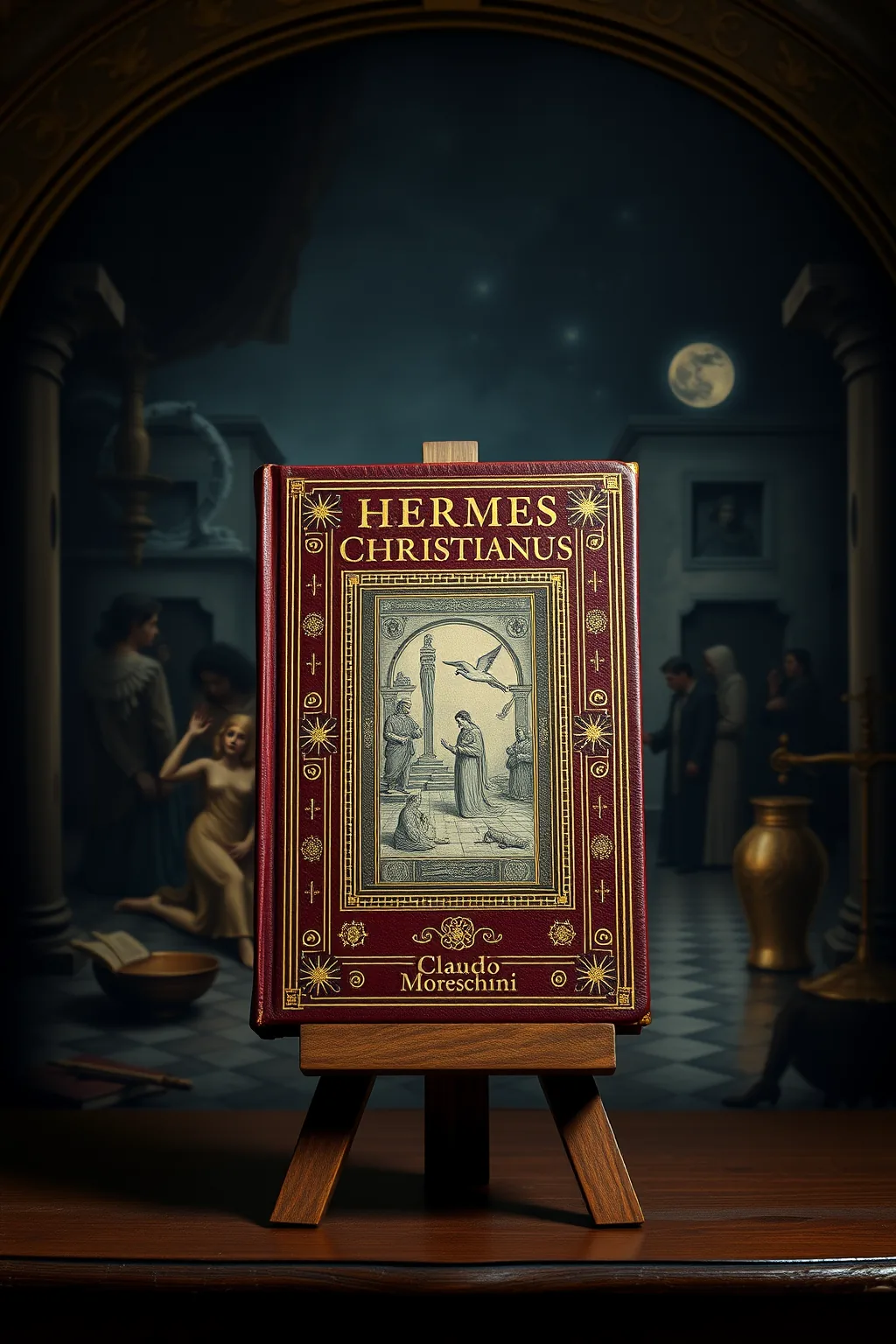
Hermes Christianus
 79
79

Hermes Christianus
Claudio Moreschini's *Hermes Christianus* offers a meticulous dissection of the confluence between Hermetic philosophy and Christian theology, a subject often obscured by later doctrinal divisions. Moreschini excels in charting the historical reception of Hermetic texts, particularly from the Renaissance onward, demonstrating how figures like Marsilio Ficino wrestled with the implications of *prisca theologia*. The book's strength lies in its detailed philological and philosophical analysis, revealing the subtle ways Hermetic concepts were assimilated or reinterpreted. A limitation, however, is the dense academic prose, which may prove challenging for readers less accustomed to specialized theological and philosophical discourse. The section examining Hermes as a Christological parallel, particularly the nuanced discussion of how this figure was perceived across different Christian interpretations, stands out as a particularly insightful exploration of religious syncretism. Ultimately, *Hermes Christianus* is an indispensable, albeit demanding, resource for understanding a crucial, often overlooked, dimension of Western religious thought.
📝 Description
79
Claudio Moreschini's Hermes Christianus analyzes the complex links between Hermeticism and early Christianity.
This book examines the relationship between Hermetic philosophy and early Christian thought, using Hermes Trismegistus as a central figure. Moreschini investigates how Christian thinkers, particularly from the Renaissance onward, encountered and interpreted Hermetic texts. The study looks at the integration, reinterpretation, or rejection of key Hermetic ideas, including divine wisdom, the concept of Nous (divine mind), and the notion of human potential, within Christian theology and mysticism.
The work traces the history of Hermes Trismegistus from his rediscovery in the 15th century, noting the influence of figures like Marsilio Ficino who saw Hermetic writings as an ancient theology. Moreschini places his analysis within this historical context, considering how later intellectual currents, from Enlightenment skepticism to modern esoteric movements, engaged with this tradition. The book also touches upon the ongoing scholarly discussion about the origins and dating of the Hermetic texts.
Hermes Christianus situates itself within the study of Western esotericism, specifically focusing on the historical and philosophical interactions between Hellenistic Hermeticism and Christianity. This tradition explores the concept of a hidden or revealed wisdom, often drawing parallels between ancient pagan philosophies and later religious developments. The book engages with the idea of a continuous, albeit often veiled, spiritual lineage that connects classical antiquity with medieval and Renaissance Christian mystical and philosophical traditions.
💡 Why Read This Book?
• Gain a nuanced understanding of the *prisca theologia* concept, exploring how Renaissance scholars like Marsilio Ficino integrated ancient Hermetic wisdom with Christian doctrine, a perspective not easily found elsewhere. • Analyze the complex Christological interpretations of Hermes Trismegistus, appreciating how this pagan figure was perceived as a potential precursor or parallel to Christ in different historical Christian contexts. • Grasp the philosophical underpinnings of Western esotericism by examining specific Hermetic concepts like divine mind (Nous) and their integration into Christian mystical traditions, offering a distinct lens on religious history.
⭐ Reader Reviews
Honest opinions from readers who have explored this book.
❓ Frequently Asked Questions
When was Hermes Christianus first published?
The original publication of *Hermes Christianus* by Claudio Moreschini dates to 2011, marking a significant contribution to the scholarly understanding of Hermeticism's influence on Christian thought.
What is the 'Corpus Hermeticum' and its relation to this book?
The *Corpus Hermeticum* is a collection of Greco-Egyptian philosophical and religious writings attributed to Hermes Trismegistus. *Hermes Christianus* extensively analyzes how these texts, rediscovered in the 15th century, were interpreted by Christian thinkers.
Who was Marsilio Ficino and why is he important in this context?
Marsilio Ficino was a pivotal figure in the Florentine Renaissance who translated the *Corpus Hermeticum* into Latin. His work is central to *Hermes Christianus* for its role in reintroducing Hermeticism and framing it as an ancient theology.
Does the book argue that Hermeticism is a form of Christianity?
No, the book explores the historical *interaction* and *interpretation* between Hermeticism and Christianity, not an identity. It examines how Christian thinkers engaged with Hermetic ideas, often reinterpreting them within their own theological frameworks.
What does 'prisca theologia' mean in the context of Hermes Christianus?
'Prisca theologia' translates to 'ancient theology.' In *Hermes Christianus*, it refers to the Renaissance belief that a single, true divine wisdom existed in antiquity, exemplified by Hermetic texts, which was seen as a precursor to Christian revelation.
Is this book suitable for beginners in esoteric studies?
While valuable, *Hermes Christianus* is a scholarly work with dense academic prose. It is best suited for advanced students, scholars, or those with a strong background in religious studies, philosophy, or intellectual history, rather than absolute beginners.
🔮 Key Themes & Symbolism
Hermes as Christological Parallel
This theme investigates the historical perception of Hermes Trismegistus as a figure analogous to Christ. Moreschini examines how certain Christian thinkers, particularly during the Renaissance, viewed Hermes not merely as a pagan sage but as a divinely inspired prophet or even a prefiguration of the Savior. The analysis explores how Hermetic texts were scrutinized for prophecies or concepts that could be interpreted through a Christological lens, revealing a complex process of syncretism and theological negotiation within Western esoteric traditions.
Prisca Theologia and Ancient Wisdom
The concept of *prisca theologia*, or ancient theology, is central to understanding the reception of Hermeticism. This theme focuses on the Renaissance belief that a singular, pure form of divine wisdom existed in antiquity, predating even Platonic philosophy, and that Hermetic writings were a primary repository of this knowledge. Moreschini details how scholars like Ficino utilized this concept to legitimize Hermetic philosophy, positioning it as a divinely sanctioned precursor that harmonized with Christian revelation, thereby bridging the gap between classical paganism and Christian doctrine.
Integration of Hermetic Concepts
This theme addresses the specific philosophical and cosmological ideas within Hermeticism that found resonance or were adapted by Christian thinkers. It includes concepts such as the divine mind (Nous), the macrocosm-microcosm relationship ('as above, so below'), and the potential for human spiritual ascent or deification. The work meticulously traces how these Hermetic notions were either integrated into Christian mystical frameworks, reinterpreted to align with orthodox theology, or sometimes seen as fundamentally incompatible, highlighting the dynamic intellectual exchange across religious boundaries.
Renaissance Hermetic Revival
The book places significant emphasis on the 15th and 16th centuries, a period of intense revival for Hermetic texts. This theme explores the intellectual milieu of the Renaissance, the rediscovery and translation of the *Corpus Hermeticum*, and the impact these texts had on philosophy, magic, and theology. Moreschini illustrates how this revival was not merely an academic curiosity but a profound engagement that shaped the trajectory of Western esotericism and influenced figures beyond Ficino, creating a lasting legacy for Hermes Christianus.
💬 Memorable Quotes
Direct passages from the work, attributed to the author.
“The figure of Hermes Trismegistus emerged in Christian thought as a complex interlocutor.”
— This statement captures the book's central argument: Hermes was not simply a pagan deity but was actively engaged with and interpreted by Christian thinkers, becoming a significant figure in their theological and philosophical discourse.
“The Renaissance rediscovery of the Corpus Hermeticum fueled the notion of a prisca theologia.”
— This highlights a key historical moment, emphasizing how the translation and study of these ancient texts during the Renaissance led scholars to believe in a singular, ancient divine wisdom that harmonized with Christian truths.
“The interpretation of Hermes as a Christ-like messenger presented a theological challenge and opportunity.”
— This reflects the book's exploration of how Hermes Trismegistus was sometimes seen as a precursor or parallel to Christ, a perspective that required significant theological interpretation and often served to validate Hermeticism within a Christian framework.
“Scholarly debate continued regarding the origins and dating of the Hermetic texts.”
— This points to the ongoing critical engagement with the source material, acknowledging that even during periods of intense study, the precise historical context and authorship of the Hermetic writings remained subjects of scholarly inquiry.
💡 Key Ideas
Editorial paraphrase of the work's core concepts — not direct quotes.
Hermetic ideas concerning the divine mind and human ascent were selectively assimilated.
This paraphrased concept points to the nuanced process of integration, where specific Hermetic philosophical concepts were adopted by Christian traditions, but often modified or reinterpreted to fit within existing theological doctrines.
🌙 Esoteric Significance
Tradition
This work primarily engages with the Western Esoteric Tradition, specifically the Hermetic lineage. It examines how Hermeticism, originating from Greco-Egyptian syncretism, was integrated into Christian Neoplatonism and later Renaissance occult philosophy. Moreschini details the complex relationship, showing how Hermetic ideas were not merely adopted but often reinterpreted through a Christian lens, creating a unique synthesis that departed from purely pagan Hermeticism while retaining core philosophical tenets.
Symbolism
Key symbols explored include Hermes Trismegistus himself, often depicted as a wise, prophetic figure analogous to Christ or John the Baptist, bridging divine and human realms. The concept of the divine mind (Nous) represents the ultimate creative intelligence, a fundamental principle in Hermetic cosmology. Additionally, the recurring motif of spiritual ascent, the soul's journey back to its divine source, is analyzed as a core Hermetic aspiration that found echoes and reinterpretations within Christian mystical practices.
Modern Relevance
Contemporary esoteric scholars and practitioners continue to draw on the complex interplay between Hermeticism and Christianity discussed in *Hermes Christianus*. Thinkers in fields like comparative religion, depth psychology (particularly Jungian analysis of archetypes), and modern occultism find value in understanding this historical synthesis. The work informs current discussions on religious syncretism, the evolution of mystical thought, and the enduring influence of ancient wisdom traditions on contemporary spiritual and philosophical inquiry.
👥 Who Should Read This Book
• Scholars of Renaissance intellectual history seeking to understand the impact of newly rediscovered classical texts on theological and philosophical discourse. • Students of Western Esotericism interested in the historical connections and syncretic developments between Hermetic philosophy and Christian doctrine. • Comparative religion researchers examining how different religious traditions interact, adapt, and influence one another across historical periods.
📜 Historical Context
The intellectual field of the Renaissance, particularly the 15th century, was profoundly shaped by the rediscovery and translation of ancient texts. The acquisition of the *Corpus Hermeticum* in Florence around 1460 and its subsequent Latin translation by Marsilio Ficino in 1471 marked an important moment. Ficino and his contemporaries viewed these texts as evidence of a *prisca theologia*, an ancient, unified divine wisdom that predated Christianity and Platonism, thereby lending Hermeticism immense authority. This era saw a fervent engagement with Hermetic philosophy, magic, and alchemy, influencing figures like Pico della Mirandola and Giordano Bruno. Moreschini situates *Hermes Christianus* within this context, analyzing how Christian thinkers grappled with Hermetic concepts. While Ficino sought synthesis, later periods, such as the Enlightenment, brought increased skepticism regarding the authenticity and theological value of Hermetic writings, a contrast to the Renaissance reception.
📔 Journal Prompts
The concept of *prisca theologia* as presented by Ficino.
Hermes Trismegistus as a Christological parallel in Christian interpretation.
The integration of the concept of the divine mind (Nous) into Christian thought.
The Renaissance reception of the *Corpus Hermeticum*.
Comparing Hermetic ideas of soul ascent with Christian doctrines of salvation.
🗂️ Glossary
Hermes Trismegistus
A legendary Hellenistic figure, syncretic fusion of the Greek god Hermes and the Egyptian god Thoth. He is the reputed author of the Hermetic corpus, a body of esoteric and philosophical writings central to Western esotericism.
Corpus Hermeticum
A collection of twenty-one philosophical and religious treatises attributed to Hermes Trismegistus, written in Greek between the 2nd and 3rd centuries AD. It explores a wide range of topics including cosmology, astrology, alchemy, and theology.
Prisca Theologia
Latin for 'ancient theology'. A Renaissance concept positing that a single, true, divine theology existed in antiquity, common to all true religions, and that Hermetic writings were a primary source of this ancient wisdom.
Nous
Greek term for 'mind' or 'intellect'. In Hermetic philosophy, it often refers to the divine mind or intellect, the source of creation and the intermediary between God and the material world.
As Above, So Below
A fundamental Hermetic principle stating that the macrocosm (the universe) and the microcosm (humanity) are reflections of each other, implying a correspondence between the celestial and terrestrial realms.
Syncretism
The merging or blending of different, often contradictory, beliefs, cultures, or schools of thought. In this context, it refers to the fusion of Hermetic and Christian ideas.
Deification (Theosis)
In Christian theology, the process by which a believer becomes more like God, often through divine grace. Hermetic concepts of human spiritual ascent share similarities with this idea.
🔮 Readers Also Liked
Browse all →








More by Claudio Moreschini
All books →
More Free Alchemy & Hermeticism Books
View all →