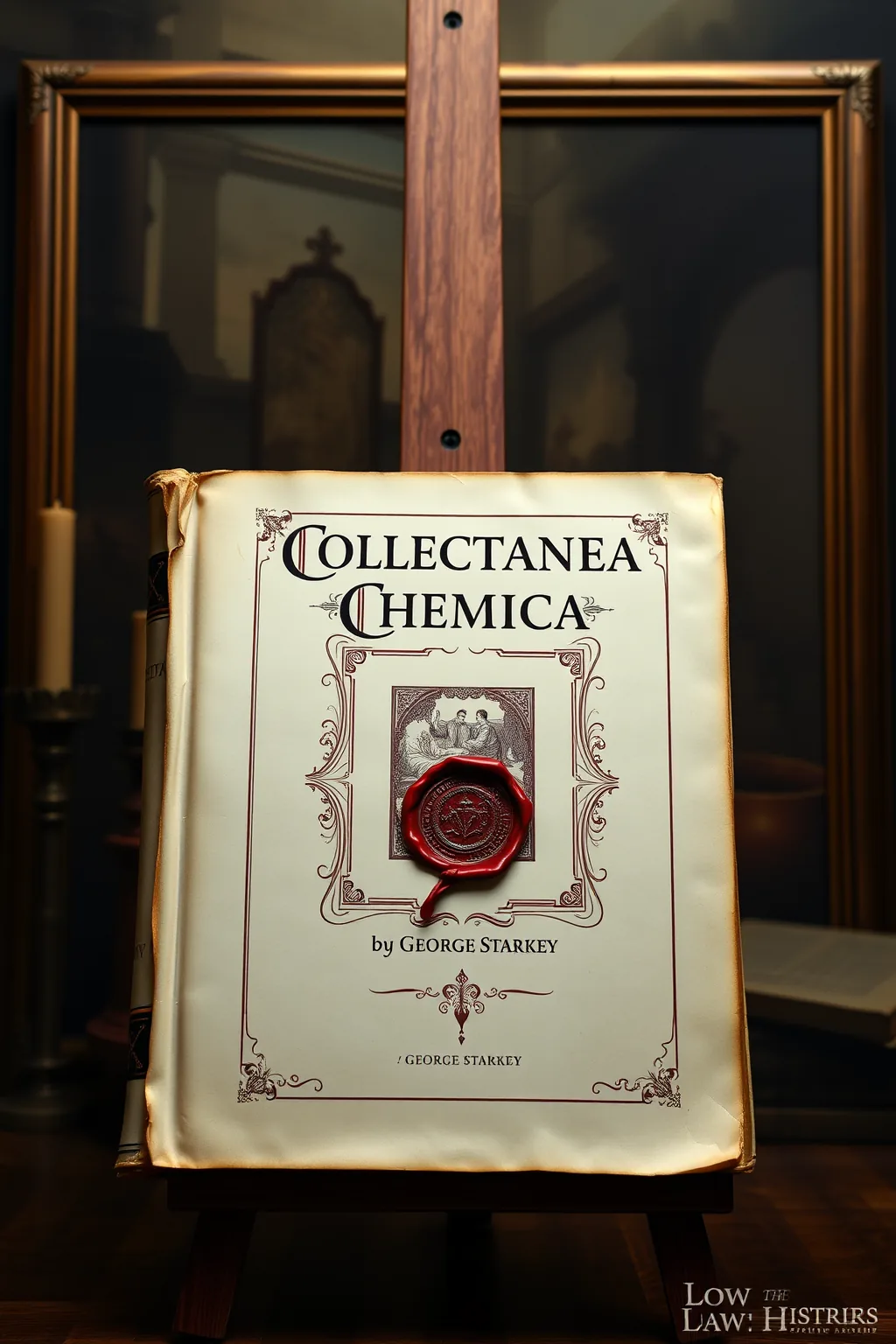
Collectanea Chemica
 79
79

Collectanea Chemica
George Starkey's "Secrets Revealed," the centerpiece of this collection, offers a fascinating, if sometimes opaque, window into the purported alchemical endeavors of John Dee and Edward Kelley. Starkey's detailed, almost feverish, descriptions of apparatus and processes, particularly concerning the "philosophical mercury" and "philosophical sulphur," are compelling. However, the density of alchemical jargon, even with Arthur Edward Waite's editorial hand, can present a barrier to entry. A standout passage is Starkey's account of the "calcination" process, which hints at more than mere material reduction. While the historical context provided by Waite is invaluable for situating these texts, the book's original lack of a clear blurb or explicit thematic guidance means readers must actively piece together its significance. Collectanea Chemica serves as a crucial, albeit demanding, resource for understanding the practical and theoretical dimensions of 17th-century English alchemy.
📝 Description
79
Collectanea Chemica compiles alchemical texts, including George Starkey's account of John Dee and Edward Kelley's experiments.
This volume gathers significant alchemical writings, notably George Starkey's "Secrets Revealed." Starkey's work purports to document the alchemical experiments of John Dee and Edward Kelley, placing the collection firmly within the context of 16th and 17th-century occult and natural philosophy.
The book details fundamental principles and practices of Western alchemy, offering insight into the historical pursuit of transmutation and the philosophical ideas behind this ancient practice. The compilation aims to preserve and make accessible important alchemical texts that have influenced esoteric thought for centuries.
It is a valuable resource for serious students of Western esotericism, scholars of Hermeticism, and researchers of Renaissance occultism. Individuals interested in primary source material on alchemical philosophy, or those fascinated by figures like John Dee and Edward Kelley, will find much of interest. The work also serves practitioners seeking to understand the theoretical roots of modern alchemical traditions.
The texts in Collectanea Chemica emerge from the vibrant alchemical milieu of the late medieval and Renaissance periods. George Starkey, a 17th-century physician, played a role in documenting and translating these works. His "Secrets Revealed" connects the volume to a time of intense experimentation where alchemy often merged with natural philosophy and nascent scientific inquiry. This era was influenced by figures like Paracelsus, and John Dee, a noted mathematician and advisor to Queen Elizabeth I, highlights the intellectual currents of the time.
💡 Why Read This Book?
• Gain direct exposure to George Starkey's 17th-century alchemical methods and observations concerning John Dee and Edward Kelley, offering a specific historical perspective on the Magnum Opus. • Understand the symbolic lexicon of Western alchemy through concrete examples of terms like Prima Materia and Philosopher's Stone, as presented in the original texts. • Appreciate the intellectual landscape of the Renaissance, where figures like John Dee navigated the intersection of natural philosophy, mathematics, and occult pursuits.
⭐ Reader Reviews
Honest opinions from readers who have explored this book.
❓ Frequently Asked Questions
What is the primary source material presented in Collectanea Chemica?
The book primarily features George Starkey's "Secrets Revealed," detailing alleged alchemical experiments of John Dee and Edward Kelley, alongside other alchemical writings.
Who was George Starkey and what was his connection to alchemy?
George Starkey was a 17th-century English chemist and physician who wrote extensively on alchemy, most notably documenting the supposed work of Dee and Kelley.
What is the significance of John Dee and Edward Kelley in alchemical history?
John Dee was a prominent mathematician and occultist, while Edward Kelley was an alleged medium and scryer. Their purported alchemical collaboration is a subject of much historical and esoteric interest.
What does 'Magnum Opus' refer to in the context of this book?
The Magnum Opus, or Great Work, is the central process in alchemy aiming for the creation of the Philosopher's Stone and the achievement of spiritual perfection or material transmutation.
Is Collectanea Chemica suitable for beginners in alchemy?
While valuable, the book's dense language and historical context may make it more accessible to those with some prior familiarity with esoteric traditions or alchemical concepts.
When was the original material compiled or written?
The core material, particularly Starkey's writings, originates from the 17th century, though the compilation was first published in 2018.
🔮 Key Themes & Symbolism
The Great Work and Transmutation
The collection centers on the alchemical pursuit known as the Great Work (Main work), the complex process aimed at creating the Philosopher's Stone. Starkey's writings detail stages such as calcination, dissolution, and conjunction, presented as necessary steps for achieving both material transmutation and spiritual enlightenment. The texts explore the idea that by manipulating base matter, one could uncover hidden virtues and achieve a higher state of being, reflecting a holistic worldview prevalent in Renaissance esotericism.
Philosophical Mercury and Sulphur
Central to the alchemical theories presented are the concepts of Philosophical Mercury and Philosophical Sulphur. These are not the common elements but rather the spiritual or subtle principles believed to be the active agents in transmutation. Starkey's account emphasizes the extraction and purification of these essences from the Prima Materia. Understanding these symbolic substances is key to deciphering the operational aspects of the alchemical process as described in the text.
The Role of John Dee and Edward Kelley
A significant aspect of Collectanea Chemica is its focus on the alleged alchemical activities of John Dee and Edward Kelley. Starkey positions himself as a witness and documentarian of their experiments, offering a rare, albeit potentially embellished, glimpse into their theoretical frameworks and practical attempts at the alchemical arts. This connection places the work within the context of Elizabethan and Jacobean occultism and natural philosophy.
Alchemical Symbolism and Language
The texts are rich with the unique symbolic language of alchemy, employing metaphors drawn from metallurgy, astronomy, and biology. Terms like 'dragon,' 'lion,' 'eagle,' and various metals represent stages, substances, or forces within the alchemical process. Deciphering this allegorical framework is crucial for grasping the deeper philosophical and spiritual meanings attributed to the material operations described by Starkey and others.
💬 Memorable Quotes
Direct passages from the work, attributed to the author.
“The Work requires a most exact and diligent Observation of the Degrees of Fire.”
— This statement highlights the critical importance of precise control over heating processes in alchemy, suggesting that subtle variations in temperature are fundamental to successful transmutation and spiritual development.
“We have seen the Philosophical Mercury become a white and shining body.”
— This refers to a specific stage in the alchemical process where the subtle principle of mercury is believed to have been purified and stabilized, indicating progress towards the Great Work.
“The Prima Materia contains all things potentially.”
— This interpretation emphasizes the foundational concept that the base substance of all matter holds within it the potential for all forms and transformations, a core tenet of alchemical philosophy.
“The Art is a doctrine of the Senses, and not of Arguments.”
— This suggests that true understanding in alchemy comes from direct experience and empirical observation rather than abstract theorizing, valuing practical application and sensory evidence.
“Seek first the Stone, and all other things shall be added unto you.”
— This maxim underscores the supreme importance of achieving the Philosopher's Stone, implying that its attainment unlocks not only material wealth but also profound knowledge and spiritual fulfillment.
🌙 Esoteric Significance
Tradition
This work is firmly situated within the Western Hermetic and alchemical tradition, a lineage stretching back to Hellenistic Egypt and amplified through Arabic and medieval European scholarship. It represents a practical and theoretical exploration of transformation, mirroring the Hermetic principle of "As Above, So Below." Collectanea Chemica functions as a primary source document for understanding the continuation of these esoteric arts through the Renaissance and into the early modern period, bridging classical Hermeticism with burgeoning chemical investigations.
Symbolism
Key symbols include the 'Philosopher's Stone,' representing not just material transmutation but spiritual perfection and gnosis. 'Philosophical Mercury' and 'Philosophical Sulphur' denote the active and passive principles, or spirit and soul, within the alchemical process. The 'Great Work' (Main work) itself symbolizes the arduous journey of purification and unification required to achieve ultimate realization, often depicted through allegorical processes like the conjunction of the Sun and Moon or the King and Queen.
Modern Relevance
Contemporary practitioners of Hermeticism and ceremonial magic often engage with texts like Collectanea Chemica to understand the historical roots of their disciplines. Modern alchemists, both philosophical and laboratory-based, draw inspiration from Starkey's detailed accounts. Furthermore, scholars of Renaissance esotericism and the history of science continue to analyze these texts for insights into the intellectual currents that bridged medieval mysticism and early modern scientific thought.
👥 Who Should Read This Book
• Students of Western Esotericism: Those seeking primary source material on alchemy, particularly the Hermetic tradition and its practitioners from the 17th century. • Researchers of John Dee and Edward Kelley: Individuals interested in the historical and alleged occult activities of these enigmatic figures, as documented by contemporary alchemists. • Aspiring Alchemists: Practitioners looking to study the theoretical underpinnings and documented processes of the Great Work, as understood and practiced in earlier centuries.
📜 Historical Context
Collectanea Chemica emerges from the fertile, yet often secretive, alchemical field of 17th-century England. George Starkey, a physician and chemist, was active during a period when figures like Robert Boyle were pioneering more empirical methods in chemistry, yet Starkey remained deeply rooted in traditional alchemical philosophy. His "Secrets Revealed" purports to document the alchemical experiments of the more famous duo, John Dee and Edward Kelley, who themselves operated in the late 16th century, advising figures like Queen Elizabeth I. This era was characterized by a complex interplay between emerging scientific inquiry and deeply ingrained Hermetic, Kabbalistic, and Neoplatonic traditions. While figures like Paracelsus had earlier synthesized alchemical and medical thought, Starkey's work represents a later generation grappling with the practical and theoretical aspects of the Art, often in coded language to avoid persecution or ridicule. The intellectual climate was one where natural philosophy was not yet strictly separated from metaphysics, allowing for such extensive alchemical exploration.
📔 Journal Prompts
Reflect on Starkey's description of "degrees of Fire" and its potential metaphorical meaning in personal development.
Consider the concept of "Philosophical Mercury" as presented in Starkey's work and its symbolic representation of active principle.
Analyze the claimed relationship between John Dee, Edward Kelley, and George Starkey as depicted in the text.
Explore the symbolic significance of the "Prima Materia" as the potential source of all transformation.
Meditate on the alchemical goal of the "Great Work" in relation to achieving inner balance and perfection.
🗂️ Glossary
Prima Materia
The fundamental, undifferentiated substance from which all matter is derived, considered the starting point of the Great Work in alchemy. It is believed to contain all potential elements.
Main work
Latin for 'Great Work,' referring to the process of creating the Philosopher's Stone and achieving transmutation, often understood as a metaphor for spiritual purification and enlightenment.
Philosopher's Stone
A legendary alchemical substance believed to be capable of transmuting base metals into gold or silver, and also to produce the elixir of life, granting immortality or longevity.
Philosophical Mercury
Not the common element, but a subtle, active principle in alchemy, often representing spirit or the masculine force, essential for initiating the alchemical process.
Philosophical Sulphur
The passive, generative principle in alchemy, often representing soul or the feminine force, which combines with Philosophical Mercury to effect transformation.
Calcination
An alchemical process involving heating a substance to a high temperature to reduce it to a powder or ash, often symbolizing purification and the breaking down of gross matter.
Transmutation
The alchemical process of changing one element or substance into another, most famously the conversion of base metals into gold, but also metaphorically referring to spiritual transformation.
🔮 Readers Also Liked
Browse all →









More by George Starkey, George Ripley, Arthur Edward Waite
All books →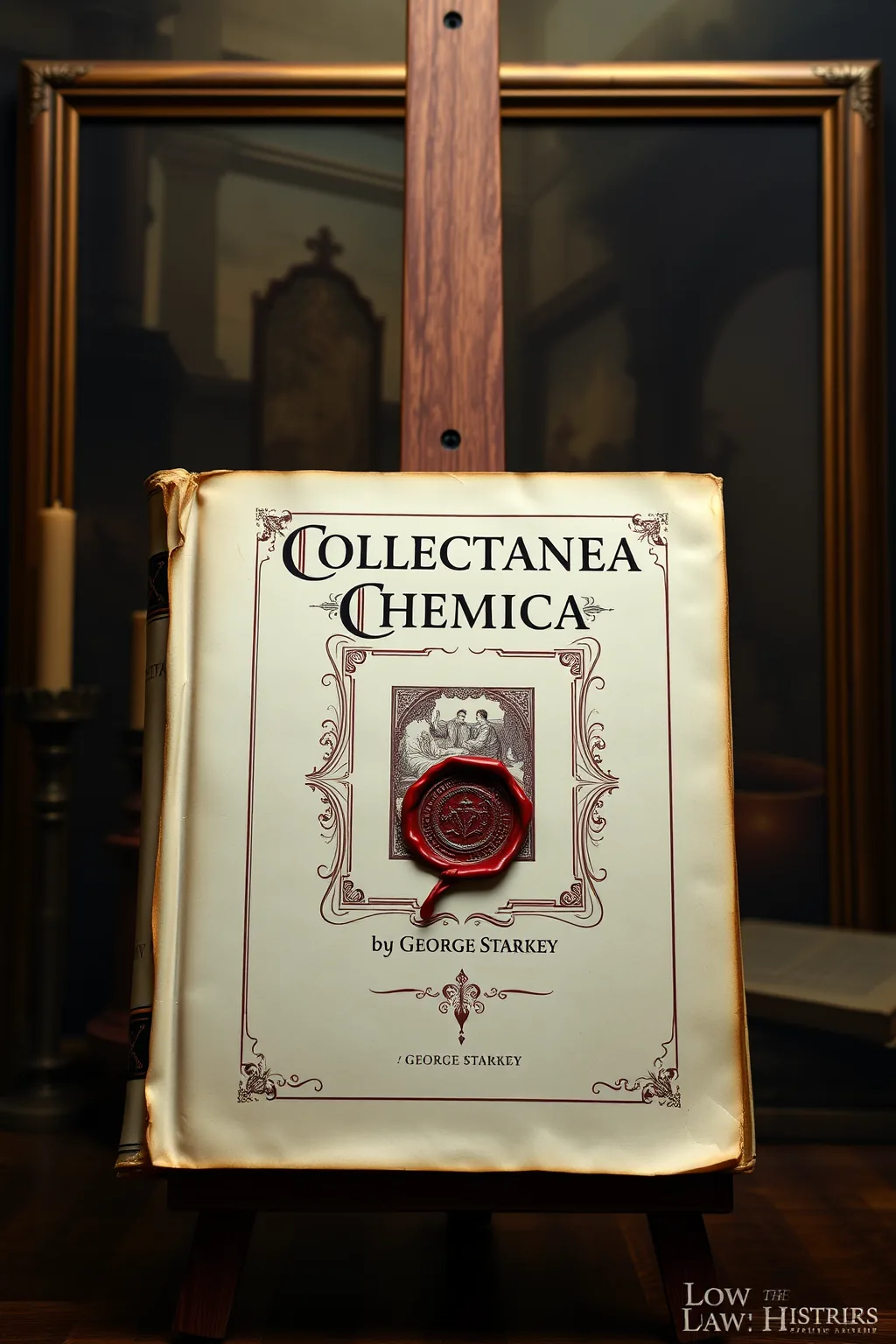
More Free Alchemy & Hermeticism Books
View all →