Alchemy and Alchemists

 71
71

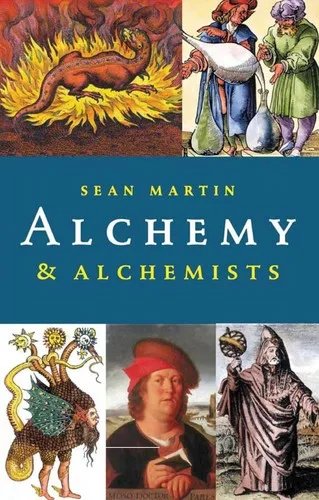
Alchemy and Alchemists
Sean Martin's Alchemy and Alchemists provides a refreshingly direct account of a subject frequently obscured by mystification. The author avoids sensationalism, presenting a clear, chronological survey of alchemical practices and philosophies. Particularly strong is the examination of alchemical symbolism, demystifying terms like 'Prima Materia' by grounding them in historical texts. One limitation, however, is the book's tendency to remain at a high level, occasionally leaving the reader wishing for deeper dives into specific alchemical lineages or figures. The discussion of Paracelsus's contributions, for instance, while accurate, feels somewhat condensed. Nonetheless, Martin succeeds in offering a solid, accessible introduction for those new to the field. It's a valuable primer that clarifies the historical trajectory of alchemical thought.
📝 Description
71
Sean Martin's Alchemy and Alchemists traces alchemical thought from Hellenistic Egypt to Renaissance Europe.
Sean Martin's work provides a thorough look at alchemy, examining its history and philosophy. The book follows how alchemical ideas developed from their early origins through different eras and societies. It shows alchemy as both an early form of scientific inquiry and a deep spiritual practice, noting its impact on later science and philosophy.
This book is suitable for students and those interested in esoteric history, Western esotericism, and the history of science. Readers who want to grasp alchemy's symbolic language and philosophical basis, beyond just the idea of making gold, will find it valuable. It offers a serious, scholarly perspective on a subject often misunderstood.
Martin places alchemy within its historical context, from Hellenistic Egypt and medieval Islamic scholarship to Renaissance Europe. The book considers the intellectual environment that fostered alchemical ideas, often alongside developing scientific thought. It recognizes that alchemical texts changed over time and were reinterpreted by practitioners.
This book situates alchemy within the broader currents of Western esotericism. It acknowledges alchemy's role as a tradition that sought both material transformation and spiritual illumination, a dual purpose common in hermetic traditions. By detailing concepts like the Magnum Opus and the Philosopher's Stone, Martin connects alchemical practice to a lineage of quests for hidden knowledge and perfected existence that influenced later occult and philosophical systems.
💡 Why Read This Book?
• Gain a clear understanding of the historical progression of alchemical thought from ancient origins to its later European development, offering context absent in more specialized texts. • Learn to decipher core alchemical symbols and concepts like the 'Magnum Opus' and 'Prima Materia', moving beyond superficial interpretations of gold-making. • Appreciate alchemy's dual role as an early experimental science and a spiritual path, recognizing its influence on Western esoteric traditions.
⭐ Reader Reviews
Honest opinions from readers who have explored this book.
❓ Frequently Asked Questions
What is the historical origin of alchemy as presented in Sean Martin's book?
Sean Martin's 'Alchemy and Alchemists' traces alchemical origins to Hellenistic Egypt, particularly Alexandria, around the 1st century CE. It highlights the fusion of Egyptian metallurgy, Greek philosophy, and mystical traditions.
Who were some key figures discussed in Alchemy and Alchemists?
The book references numerous alchemists, including early figures like Zosimos of Panopolis, medieval scholars such as Jabir ibn Hayyan (Geber), and Renaissance figures like Paracelsus and Nicolas Flamel.
Does the book cover the spiritual aspect of alchemy?
Yes, 'Alchemy and Alchemists' thoroughly explores the esoteric and spiritual dimensions of alchemy, distinguishing the 'Great Work' as a process of inner transformation alongside its material aims.
What is the 'Philosopher's Stone' according to the book?
According to Sean Martin's work, the 'Philosopher's Stone' is depicted not just as a substance for transmuting base metals into gold, but also as a symbol of spiritual perfection and enlightenment.
Is 'Alchemy and Alchemists' suitable for beginners?
Yes, the book is structured to be accessible to newcomers, providing a solid historical and conceptual foundation without assuming prior specialized knowledge of esoteric traditions.
What distinguishes the exoteric from the esoteric in alchemy?
Sean Martin explains that the exoteric aspect of alchemy refers to the physical processes and material transformations, while the esoteric dimension pertains to spiritual development, purification, and achieving gnosis.
🔮 Key Themes & Symbolism
The Great Work
The central focus of alchemical pursuit, the Main work, is presented not merely as the creation of the Philosopher's Stone for transmuting metals, but more importantly as a profound spiritual journey. Sean Martin explores how this 'Great Work' symbolized the purification and perfection of the alchemist's own soul, aiming for spiritual enlightenment or 'gnosis'. The process involved stages of dissolution, purification, and reintegration, mirroring cosmic cycles and the alchemist's internal transformation.
Alchemical Symbolism
Alchemy employed a rich and often deliberately obscure symbolic language. This book deciphers key motifs such as the Prima Materia (the chaotic, undifferentiated substance from which all things arise), the union of opposites (often represented by Sun and Moon, King and Queen, or sulfur and mercury), and the serpent or dragon (ouroboros) signifying cyclical processes. Understanding these symbols is crucial to grasping the deeper philosophical and spiritual meanings embedded in alchemical texts.
Historical Evolution
Martin traces the lineage of alchemy from its ancient Egyptian and Hellenistic roots through its development in the Islamic Golden Age and its subsequent transmission and adaptation in medieval and Renaissance Europe. This historical perspective highlights how alchemical theories and practices were not static but evolved, influenced by prevailing philosophical currents, scientific discoveries, and the cultural contexts of different eras.
Alchemy and Science
The book examines the intricate relationship between alchemy and the nascent sciences. It acknowledges the experimental techniques and observational methods developed by alchemists, which laid groundwork for modern chemistry. However, it also emphasizes that for many practitioners, the ultimate goals were spiritual rather than purely material, positioning alchemy as a complex precursor to both science and esoteric philosophy.
💬 Memorable Quotes
Direct passages from the work, attributed to the author.
“The goal of the alchemist was often spiritual perfection, not just material wealth.”
— This highlights the esoteric aim of the 'Great Work', suggesting that the transformation of metals was a metaphor for the alchemist's own inner purification and ascent towards enlightenment.
“Alchemical symbolism was intentionally veiled to protect its secrets.”
— This points to the deliberate use of allegory and coded language in alchemical texts, intended to obscure the true meaning from the uninitiated while guiding serious practitioners.
“The Prima Materia represents the chaotic potential of the universe.”
— This interpretation underscores the concept of the formless, primordial substance from which all creation originates, a fundamental starting point in the alchemical process of ordering and transformation.
“Alchemy bridged the gap between ancient mystical traditions and early scientific inquiry.”
— This suggests alchemy's unique position in history, acting as a conduit for both spiritual wisdom and practical experimentation that influenced later philosophical and scientific developments.
“The 'Great Work' involved both external laboratory processes and internal spiritual discipline.”
— This emphasizes the dual nature of alchemical practice, where the manipulation of substances in the laboratory mirrored and facilitated the alchemist's own psychological and spiritual evolution.
🌙 Esoteric Significance
Tradition
This work fits squarely within the Western Esoteric Tradition, particularly its Hermetic and Gnostic branches. It examines alchemy as a spiritual path aimed at achieving a form of gnosis or divine knowledge, aligning it with traditions that seek direct experience of the divine or ultimate reality. Martin presents alchemy not as a fringe curiosity but as a sophisticated philosophical system deeply embedded in a lineage of mystical and cosmological thought.
Symbolism
Central to the book's exploration of esoteric significance is its detailed examination of alchemical symbols. The 'Prima Materia,' for instance, represents not just a physical substance but the undifferentiated potential of creation and the alchemist's own psyche before spiritual refinement. The 'Philosopher's Stone' symbolizes perfected consciousness, spiritual enlightenment, and the union of opposites, representing the ultimate goal of the 'Main work' or Great Work.
Modern Relevance
Contemporary practitioners of Western esotericism, including modern Hermeticists and ceremonial magicians, continue to draw on the symbolic language and philosophical frameworks presented in *Alchemy and Alchemists*. The book's accessible yet scholarly approach makes it a valuable resource for understanding how alchemical principles are reinterpreted in modern spiritual psychology, Jungian analysis, and various contemporary occult practices seeking inner transformation.
👥 Who Should Read This Book
• Students of Western Esotericism: Those seeking a clear, historically grounded overview of alchemy's development and its place within broader mystical traditions. • History of Science Enthusiasts: Readers interested in the transition from ancient proto-scientific practices to modern chemistry, understanding alchemy's experimental and theoretical contributions. • Spiritual Seekers: Individuals exploring paths of inner transformation who want to understand the symbolic language and philosophical underpinnings of the alchemical 'Great Work'.
📜 Historical Context
Published in 2007, Sean Martin's *Alchemy and Alchemists* emerged in a period of renewed academic and popular interest in Western esotericism. The work builds upon decades of scholarship that re-evaluated alchemy beyond its popular association with mere gold-making. It implicitly engages with the intellectual currents established by historians like Frances Yates and Allen G. Debus, who highlighted alchemy's role in the Scientific Revolution and its connections to Hermeticism and Neoplatonism. Martin situates alchemical practice within the context of medieval Islamic scholarship, particularly the work of figures like Jabir ibn Hayyan (Geber), and its subsequent flourishing in Renaissance Europe. The book acknowledges the intellectual climate that often saw alchemical pursuits existing alongside, and sometimes in tension with, emerging empirical science and established religious doctrines, particularly during periods like the 17th century when figures like Robert Boyle were active.
📔 Journal Prompts
The symbolic representation of the Prima Materia in alchemical texts.
Reflect on the dual nature of the 'Great Work' as both material and spiritual.
Consider the historical context of alchemical experimentation in Renaissance Europe.
Analyze the concept of the Philosopher's Stone beyond its literal interpretation.
Explore the connection between alchemical symbolism and personal psychological development.
🗂️ Glossary
Prima Materia
The fundamental, undifferentiated substance from which all things are created in alchemical theory. It represents chaos, potential, and the starting point of the Great Work.
Main work
Latin for 'Great Work,' referring to the entire process of alchemical transformation, encompassing both the physical transmutation of metals and the spiritual purification of the alchemist.
Philosopher's Stone
The legendary alchemical substance said to be capable of transmuting base metals into gold or silver, and often associated with the elixir of life or spiritual enlightenment.
Transmutation
In alchemy, the process of changing one substance into another, most famously the conversion of base metals into noble metals like gold. Esoterically, it signifies spiritual transformation.
Elixir of Life
A mythical potion believed to grant immortality or extend life indefinitely, often considered a byproduct or aspect of the Philosopher's Stone.
Exoteric
Relating to or denoting methods or principles intended for external, public application; the outward or literal meaning.
Esoteric
Intended for or likely to be understood by only a small number of people with a specialized knowledge or interest; the inner, hidden meaning.
🔮 Readers Also Liked
Browse all →








More by Sean Martin
All books →


More Free Alchemy & Hermeticism Books
View all →

![" A Self Powered Psychotronic Generator"...rch [ Vol. 35, No. 2, March April 1979]](/img/thumb/a-self-powered-psychotronic-generator-rch-vol-35-no-2-march-april-1979.webp)