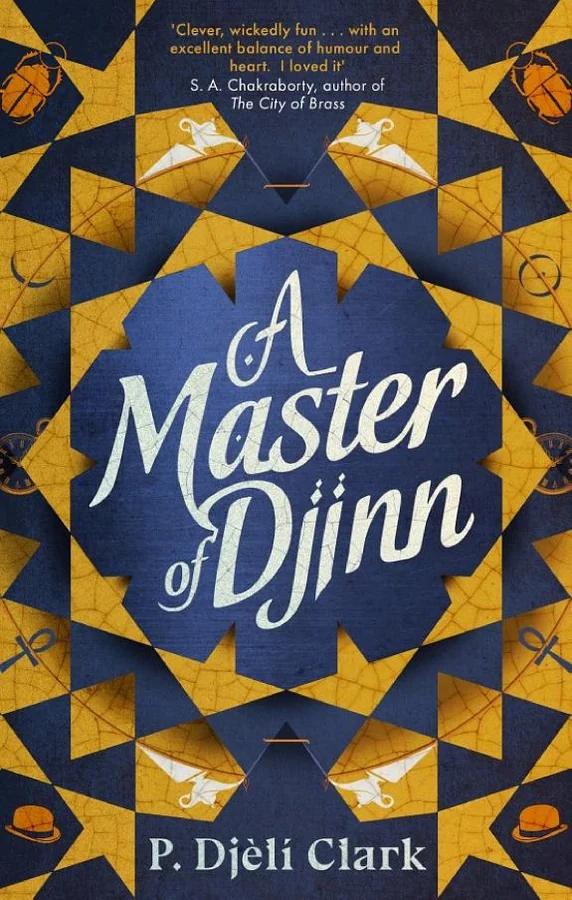
A Master of Djinn
 76
76

A Master of Djinn
P. Djèlí Clark's "A Master of Djinn" presents a Cairo where djinn are not myth but an integrated, if often marginalized, part of society. The novelette shines in its meticulous world-building, particularly in how it weaves industrial-era technology with sophisticated magical practices. Fatma El-Sha'arawi, our protagonist, is a compelling figure, embodying a pragmatic approach to her work as an inspector. The central mystery, while engaging, occasionally feels secondary to the richly depicted setting. The limitation lies in the novelette format itself; some plot threads and character nuances feel somewhat compressed. However, the depiction of the Ministry of Alchemy, a fascinating blend of arcane bureaucracy and governmental function, is a standout achievement, offering a glimpse into a world governed by rules both magical and mundane.
This is a potent entry into alternate history fantasy.
📝 Description
76
In an alternate 1912 Cairo, Fatma El-Sha'arawi investigates a murder that could shatter the city's magical order.
P. Djèlí Clark's novelette, set in an alternate 1912 Cairo, places readers in a city where magic and early 20th-century technology coexist. Fatma El-Sha'arawi, an inspector for the Ministry of Alchemy, is tasked with solving the murder of a powerful wizard. This murder is not a simple crime; it threatens to unravel the fragile political and magical balance that governs the city. The narrative weaves detective work with the unique socio-political atmosphere of a Cairo under colonial influence but rich with arcane power.
The story grounds itself in this reimagined history, blending the aesthetics of the early 20th century with pervasive magical elements. Readers will find a world where ancient forces and nascent industrialism clash and combine. The investigation Fatma undertakes forces her to confront not only the immediate threat of the murder but also the deeper currents of power and control operating within the city's guilds and societal structures. It is a world where djinn are integrated into everyday life and where ancient beliefs contend with the march of modernity.
This novelette operates within a tradition of speculative fiction that reimagines history through the lens of the supernatural. It draws on occult themes by positing a world where magic is a tangible force, managed by institutions and integrated into the fabric of society. The presence and societal role of djinn, ancient beings from Arabic folklore, anchor it in specific esoteric traditions. The narrative explores how these supernatural elements interact with historical periods, specifically the colonial era, creating a unique blend of real-world historical tensions and fantastical elements.
💡 Why Read This Book?
• Gain insight into a unique blend of 1912 Cairo's historical atmosphere and pervasive djinn magic, offering a perspective far removed from typical Western fantasy settings. • Experience the intricate world-building of magical guilds and the Ministry of Alchemy, revealing how societal structures adapt to integrate arcane forces. • Follow Fatma El-Sha'arawi's investigation, appreciating a detective narrative that uses magical elements to explore themes of power, tradition, and social order.
⭐ Reader Reviews
Honest opinions from readers who have explored this book.
❓ Frequently Asked Questions
What is the primary setting of A Master of Djinn?
The novelette is primarily set in an alternate 1912 Cairo, a city where magical elements and early 20th-century technology coexist, featuring a prominent role for djinn within society.
Who is the main protagonist investigating the crime?
The central investigator is Fatma El-Sha'arawi, an agent from the Ministry of Alchemy, tasked with solving the murder of a prominent wizard.
What blend of genres does A Master of Djinn represent?
It masterfully blends alternate history with urban fantasy and detective fiction, creating a unique narrative centered around magic and political intrigue in a historical setting.
What historical period does the book's alternate reality draw from?
The book draws from the early 20th century, specifically an alternate 1912, integrating elements of that era's burgeoning industrialism and colonial dynamics with fantastical magic.
Are djinn depicted as mythical beings or integrated members of society?
In the world of A Master of Djinn, djinn are depicted as integrated members of society, though their presence and roles are complex and often subject to societal structures and prejudice.
What is the significance of the Ministry of Alchemy?
The Ministry of Alchemy represents the bureaucratic and governmental integration of magical practices within the alternate 1912 Cairo, acting as a law enforcement agency for arcane matters.
🔮 Key Themes & Symbolism
Integrated Magic Systems
The novelette excels in presenting a world where magic is not an anomaly but a functional, integrated part of society, akin to technology. The Ministry of Alchemy, for instance, functions as a bureaucratic body managing magical affairs, much like a modern government agency. This approach grounds the fantastical elements, exploring how magical guilds and practices would interact with societal structures, laws, and even industrial advancements in an alternate 1912.
Cultural and Societal Structures
P. Djèlí Clark crafts a Cairo that feels lived-in, where the presence of djinn and various magical practitioners shapes cultural norms and social hierarchies. The narrative touches upon the complexities of integrating different beings and powers within a city already reading through the tensions of the early 20th century. It explores how power dynamics shift and how established orders react to disruptive forces, whether magical or mundane.
The Nature of Justice and Investigation
Fundamentally, , "A Master of Djinn" is a mystery. The investigation into the murder of a wizard serves as a vehicle to explore the nature of justice within this unique setting. Fatma El-Sha'arawi's role as an inspector for the Ministry of Alchemy highlights the challenges of applying law and order when arcane forces are involved. The story probes how different factions and individuals perceive justice and accountability in a world where the lines between the natural and supernatural are blurred.
Alternate History as a Lens
By setting the story in an alternate 1912 Cairo, the author uses historical context as a foundation for imaginative world-building. This allows for commentary on themes relevant to the period, such as colonialism, technological change, and cultural identity, but filtered through a magical lens. The juxtaposition of historical reality with fantastical elements creates a unique space for exploring societal dynamics and power structures.
💬 Memorable Quotes
Direct passages from the work, attributed to the author.
“Cairo in 1912 was a city of steam, magic, and djinn.”
— This interpretation emphasizes the core conceit of the alternate history: the fusion of early industrial technology (steam) with supernatural elements (magic and djinn), painting a vivid picture of the unique setting.
“Guilds wielded influence that rivaled the government's.”
— This interpretation suggests a complex power dynamic in the setting, where non-governmental organizations specializing in magic hold considerable sway, creating a multi-polar political landscape.
💡 Key Ideas
Editorial paraphrase of the work's core concepts — not direct quotes.
Fatma El-Sha'arawi, a woman of the Ministry of Alchemy, was not easily impressed.
This line establishes the protagonist's professional demeanor and the extraordinary nature of her work, suggesting she operates within a highly regulated and perhaps dangerous environment where mundane standards do not apply.
The Ministry of Alchemy was a labyrinth of arcane bureaucracy.
This paraphrased concept highlights the institutionalization of magic within the story's world. It implies that even magical practices are subject to rules, procedures, and hierarchical structures, much like any governmental or corporate entity.
The murder of Al-Jahiz threatened to unravel the fragile peace.
This paraphrased concept points to the central conflict of the plot, indicating that the death of a significant magical figure has far-reaching consequences, destabilizing the established order of the city.
🌙 Esoteric Significance
Tradition
While not explicitly tied to a single esoteric lineage like Hermeticism or Gnosticism, "A Master of Djinn" draws heavily from the body of Islamic folklore and mythology, particularly concerning djinn. Its approach can be seen as a form of magical realism or urban fantasy that grounds supernatural elements within a specific cultural and historical context, rather than adhering to established Western esoteric systems. It reinterprets folkloric beings through a lens of societal integration and arcane bureaucracy.
Symbolism
The djinn themselves are central symbols, representing ancient, powerful, and often misunderstood forces that persist alongside modernity. The Ministry of Alchemy serves as a symbol of institutional control over the arcane, representing the human attempt to categorize, regulate, and utilize supernatural power. The city of Cairo itself symbolizes a nexus of old and new, tradition and progress, where these diverse elements clash and coalesce.
Modern Relevance
Contemporary authors and readers exploring decolonized fantasy, urban fantasy with non-Western settings, and magical realism find resonance in "A Master of Djinn." Its intricate world-building and the integration of folklore into a narrative structure appeal to those seeking alternatives to Eurocentric fantasy tropes. Thinkers and creators interested in how magic might function within bureaucratic and technological frameworks, as depicted in the Ministry of Alchemy, also find value here.
👥 Who Should Read This Book
• Readers interested in alternate history that diverges significantly from Western settings, particularly those fascinated by early 20th-century Cairo. • Fans of urban fantasy who appreciate detailed world-building where magic is an established, functional part of society, not an anomaly. • Mystery and detective fiction enthusiasts looking for a unique setting and magical elements that enhance, rather than overshadow, the investigative plot.
📜 Historical Context
P. Djèlí Clark's "A Master of Djinn" is set in an alternate 1912 Cairo, a period when Egypt was under British influence and the world was on the cusp of major technological and political shifts. This historical backdrop, marked by burgeoning industrialism and colonial tensions, serves as a fertile ground for speculative fiction. The novelette imagines a Cairo where djinn are integrated into society, and magic coexists with early 20th-century technology, a departure from the dominant Western-centric narratives of the era. This imaginative leap places it in conversation with speculative works that reimagined history, though few explored the Middle East with such detail. Contemporaries like the burgeoning pulp science fiction and fantasy authors in the West were exploring different facets of the fantastical, but Clark's specific focus on a non-Western metropolis infused with magical realism offers a distinct perspective. The work's reception highlights a growing interest in diverse voices and settings within speculative fiction.
📔 Journal Prompts
The Ministry of Alchemy's structure and its role in Fatma El-Sha'arawi's investigation.
Reflect on the societal integration of djinn in alternate 1912 Cairo.
Consider the blend of technology and magic presented in the novelette.
Analyze the motivations behind the murder of Al-Jahiz.
Explore the symbolic significance of Cairo as a setting.
🗂️ Glossary
Djinn
Supernatural creatures from Arabian and Islamic mythology, often depicted as beings made of smokeless fire, capable of interacting with the human world and possessing various powers.
Hapworth Inspector
An investigator, likely within the Ministry of Alchemy, tasked with solving crimes that involve magical elements or practitioners.
Ministry of Alchemy
A governmental or quasi-governmental body in the alternate 1912 Cairo responsible for overseeing, regulating, and potentially utilizing alchemical and magical practices.
Al-Jahiz
A prominent outsider wizard whose murder serves as the inciting incident for the plot, driving the investigation by Fatma El-Sha'arawi.
Magical Guilds
Organizations or associations of individuals who practice specific forms of magic, often holding significant influence and operating within defined territories or specializations.
Alternate 1912 Cairo
The primary setting, reimagining the historical city of Cairo in 1912 with the inclusion of widespread magic, djinn, and advanced technological elements alongside historical realities.
Outsider Wizard
A wizard who does not belong to the established magical guilds or institutions within Cairo, potentially possessing different practices or origins.
🔮 Readers Also Liked
Browse all →









More Free Alchemy & Hermeticism Books
View all →