Rav Michael Laitman
Kabbalah is a Jewish mystical tradition offering esoteric interpretations of religious texts and observances.
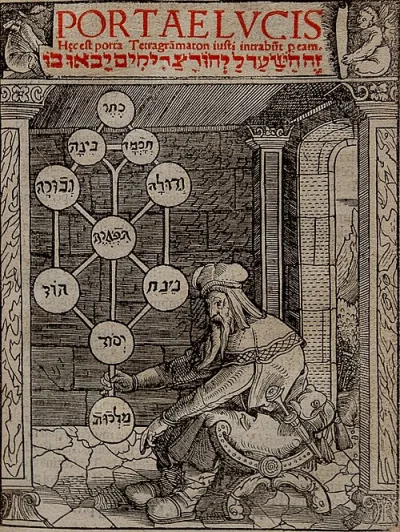
Kabbalah, meaning 'act of receiving,' is a school of thought within Jewish mysticism that provides esoteric interpretations of religious texts and observances. It emerged in 12th- to 13th-century Occitania and Spain, with foundational texts like the Bahir and the Zohar. Later developments, particularly Lurianic Kabbalah from the 16th century, introduced significant metaphysical concepts. Kabbalah is traditionally understood through four levels of interpretation: Peshat (literal), Remez (allusive), Derash (midrashic), and Sod (secret/esoteric). The tradition encompasses theosophical, meditative, and practical (magical) streams, though the latter has often been viewed with caution. Academic interest in Kabbalah grew significantly in the 20th century.
Origins and Development of Jewish Mysticism
Jewish mysticism, with Kabbalah as a prominent form, has roots stretching back to biblical figures like Elijah and Ezekiel, evolving through apocalyptic literature and Hekhalot/Merkabah texts. Kabbalah itself solidified in the medieval period in Southern France and Spain, drawing upon earlier mystical sensibilities. Key texts such as the Bahir and the Zohar emerged during this era, providing a framework for understanding the divine and the cosmos through symbolic interpretations of Jewish scriptures. The movement of Jewish communities across regions influenced the dissemination and evolution of these mystical ideas.
The Four Levels of Kabbalistic Interpretation
Kabbalistic thought often utilizes a framework of four interpretive levels, known as 'pardesim' (orchard), derived from the Hebrew acronym PRDS. These levels are Peshat, the straightforward, literal meaning of a text; Remez, allegorical interpretations conveyed through hints; Derash, midrashic meanings found through seeking connections and comparisons; and Sod, the inner, secret, or esoteric and metaphysical meanings central to Kabbalah. This multi-layered approach allows for a deeper, mystical engagement with the Torah and other Jewish religious literature, revealing concealed dimensions of meaning.
Streams within Kabbalah
Kabbalah is understood to encompass several distinct traditions. The Theosophical tradition, central to texts like the Zohar and Luria's teachings, focuses on understanding and describing the divine realm through mythic symbols and human psychological experiences, offering a mystical alternative to rationalist philosophy. The meditative tradition seeks union with God through contemplative practices, exemplified by figures like Abraham Abulafia. A third stream, Practical Kabbalah, involves magical aims to influence the divine and worldly realms, though this has often been a more marginal and sometimes shunned aspect of the tradition due to concerns about misuse.
Key Ideas
- Kabbalah as an esoteric method within Jewish mysticism.
- Four levels of textual interpretation: Peshat, Remez, Derash, Sod.
- Theosophical, Meditative, and Practical streams of Kabbalah.
- Kabbalah's role in understanding the inner meaning of Jewish scriptures and observances.
Books by Rav Michael Laitman
36 free public domain books · Read online or download