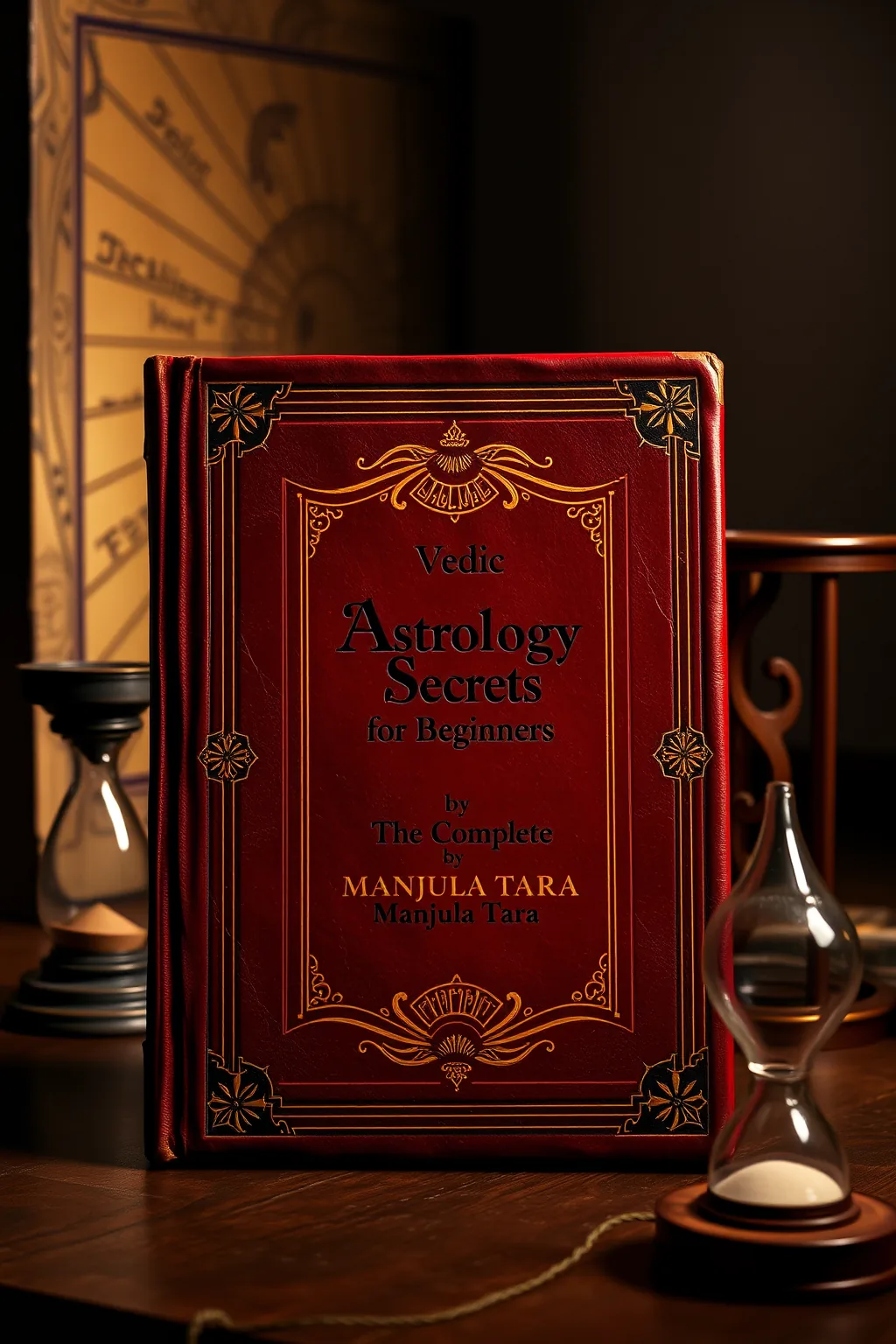
Vedic Astrology Secrets for Beginners : the Complete Guide on Jyotish and Traditional Indian and Hindu Astrology
 62
62

Vedic Astrology Secrets for Beginners : the Complete Guide on Jyotish and Traditional Indian and Hindu Astrology


Sophia Crane, Associate Editor — Manjula Tara's 'Vedic Astrology Secrets for Beginners' is a luminous beacon for those drawn to the profound depths of Jyotish. Tara's approach is both accessible and deeply insightful, demystifying complex astrological concepts without sacrificing their inherent esoteric power. She expertly guides the reader through the symbolic language of the cosmos, revealing its potential for personal growth and spiritual awakening. This text is ideal for beginners seeking a solid foundation, but its nuanced explanations will also resonate with seasoned practitioners looking to deepen their understanding of this ancient, sacred science. A truly illuminating work.
📝 Description
62
Manjula Tara's 2023 book explains Jyotish, the traditional Indian astrological system.
This guide introduces Jyotish, the astrological system originating in India. Author Manjula Tara breaks down the core principles of this tradition, moving beyond simple horoscopes to examine the influence of planets, stars, and cosmic patterns on individual lives and spiritual development. The book explains how these celestial elements are believed to shape destiny and offer insights.
Tara's aim is to make the fundamental concepts of Vedic astrology accessible. She covers the symbolic meanings within the system and how they connect to a larger cosmic order. The text suggests that understanding these connections can lead to greater self-awareness and a clearer perception of one's role in the universe. It is written for those interested in learning the basics of this ancient practice.
Jyotish, or Vedic astrology, is a system of divination and self-understanding rooted in ancient Indian traditions. It is distinct from Western astrology in its philosophical underpinnings and interpretive methods. This tradition views celestial bodies not merely as distant objects but as active forces that influence earthly life and consciousness. Its study is often integrated with other Indian philosophical schools, such as Vedanta and yoga, aiming for a holistic understanding of existence and karma. The practice seeks to illuminate an individual's life path and spiritual potential through the analysis of birth charts.
💡 Why Read This Book?
Embark on a transformative journey into the ancient art of Jyotish. This book offers a clear, accessible path to understanding Vedic astrology's profound wisdom, revealing its relevance to your life's journey. Ideal for spiritual seekers, astrology enthusiasts, and anyone yearning for deeper self-knowledge and cosmic connection.
⭐ Reader Reviews
Honest opinions from readers who have explored this book.
❓ Frequently Asked Questions
What is Vedic Astrology (Jyotish)?
Jyotish, or Vedic Astrology, is an ancient Indian system of astrology that uses planetary positions and celestial movements to understand an individual's karma, destiny, and life path. It's a spiritual science focused on self-awareness and spiritual growth.
Is this book suitable for complete beginners?
Absolutely. Manjula Tara's writing is designed for those with no prior knowledge, breaking down complex concepts into easy-to-understand lessons, making it an ideal starting point for anyone curious about Jyotish.
What are the key differences between Vedic and Western astrology?
While both systems use celestial bodies, Vedic astrology is sidereal (based on the fixed stars) and deeply rooted in Vedic philosophy, focusing more on karma and spiritual evolution, whereas Western astrology is tropical and often more psychologically oriented.
Can Vedic Astrology help with personal growth?
Yes, Jyotish is fundamentally a tool for self-discovery. By understanding your astrological chart, you can gain insights into your strengths, challenges, and life purpose, empowering you to navigate your journey with greater awareness and intention.
What is a 'natal chart' in Vedic Astrology?
A natal chart, or Janam Kundali, is a snapshot of the heavens at the exact moment and location of your birth. It's a unique cosmic fingerprint that reveals the influences and potentials shaping your life.
🔮 Key Themes & Symbolism
The Cosmic Dance of Planets
Explore the profound influence of the nine planets (Navagrahas) and twelve zodiac signs (Rashis) as they engage in an eternal cosmic dance. This section looks at the archetypal energies each celestial body embodies, their symbolic meanings, and how their positions at birth create a unique blueprint for an individual's life. Understand the subtle yet powerful interplay of planetary forces that shape karma, destiny, and personal experiences, revealing the intricate interconnectedness of the microcosm and macrocosm.
Decoding the Birth Chart (Janam Kundali)
Journey into the heart of Jyotish by learning to interpret the natal chart, the sacred map of your soul's journey. This theme unravels the secrets held within the houses (Bhavas) and planetary placements, illustrating how they reveal your innate talents, life lessons, relationships, and spiritual inclinations. Discover the art of reading this celestial document as a guide for understanding past karmic patterns and navigating future potentials with wisdom and clarity.
Jyotish as a Path to Spiritual Evolution
Vedic Astrology is more than a predictive tool; it is a profound spiritual science designed to facilitate self-realization. This theme explores how Jyotish guides individuals toward understanding their dharma (life purpose) and achieving liberation. Learn how to use astrological insights to harmonize with cosmic energies, overcome karmic obstacles, and cultivate inner peace and spiritual growth, transforming celestial knowledge into a catalyst for profound personal transformation.
💬 Memorable Quotes
Direct passages from the work, attributed to the author.
“Jyotish is the divine science of light, informative the path of karma.”
— This highlights the spiritual essence of Vedic Astrology, portraying it as a sacred discipline that uses celestial 'light' to reveal and understand the workings of cause and effect in our lives.
“Your birth chart is a cosmic echo of your soul's journey.”
— This evocative phrase suggests that the astrological chart is a reflection of deeper spiritual and karmic experiences, a map of the soul's unfolding across lifetimes.
“Understand the celestial dance, and you begin to understand yourself.”
— This promotes self-discovery through astrological study, positing that by deciphering planetary movements and influences, we gain clear insights into our own nature and purpose.
“The universe is a grand symphony, and your chart is your unique note.”
— This metaphor illustrates the interconnectedness of all things, positioning the individual's astrological chart as an essential and unique part of the larger cosmic composition.
💡 Key Ideas
Editorial paraphrase of the work's core concepts — not direct quotes.
The stars whisper your destiny, if you only learn to listen.
This quote emphasizes that celestial bodies are not mere astronomical objects but carriers of profound wisdom that can guide our lives, suggesting an intuitive and spiritual connection to astrology.
🌙 Esoteric Significance
Tradition
Jyotish belongs to the ancient Vedic esoteric tradition, a holistic system of knowledge that encompasses philosophy, spirituality, and the sciences. It is considered one of the six Vedangas (auxiliary limbs of the Vedas), essential for understanding and applying Vedic rituals and wisdom. Its esoteric nature lies in its symbolic language, its connection to karma and reincarnation, and its aim of spiritual liberation rather than mere prediction.
Symbolism
Key symbols in Jyotish include the planets (Grahas), representing divine energies and archetypes; the zodiac signs (Rashis), embodying distinct qualities and manifestations; and the houses (Bhavas), denoting different areas of life. The Nakshatras (lunar mansions) add another layer of intricate symbolism, representing subtle cosmic divisions. These symbols are not literal but represent profound psychological and spiritual forces influencing human experience.
Modern Relevance
In the modern era, Jyotish offers a powerful framework for understanding the self amidst a rapidly changing world. Its focus on karma, destiny, and spiritual purpose provides solace and direction. For many, it serves as a tool for self-awareness, helping to navigate life's challenges, identify strengths, and foster personal growth. Its ancient wisdom offers a counterbalance to materialistic pursuits, encouraging a more meaningful and connected existence.
👥 Who Should Read This Book
This informative guide is crafted for a diverse audience. For the absolute **beginner**, it provides a clear, step-by-step introduction to the fundamental principles of Jyotish, explaining its complex terminology. **Spiritual seekers** will find a profound connection to the cosmic underpinnings of existence, gaining insights into their life's purpose and karmic journey. **Aspiring astrologers** will benefit from a solid foundational understanding, equipping them to delve deeper into more advanced texts. Even **seasoned practitioners** may find fresh perspectives and a renewed appreciation for the nuanced wisdom offered by Manjula Tara's accessible yet comprehensive approach.
📜 Historical Context
Vedic Astrology, or Jyotish, emerged from the ancient Vedic civilization of India, with its roots deeply embedded in the philosophical and spiritual traditions of Hinduism. Its earliest mentions can be found in the Vedas, the oldest scriptures of Hinduism, dating back to around 1500 BCE. Over centuries, it evolved and was systematized by sages like Parashara, Varahamihira, and Aryabhata, who compiled comprehensive texts that form the bedrock of modern Jyotish. During periods of flourishing Indian empires, astrology was highly respected and patronized by rulers and scholars alike, influencing decision-making in politics, warfare, and personal life. Its transmission through oral traditions and manuscript preservation ensured its continuity. The system's enduring influence is evident in its continued practice across India and its growing popularity worldwide, a proof of its perceived efficacy and profound spiritual depth.
📔 Journal Prompts
Reflect on the planetary energies that resonate most strongly with your personality. How do they manifest in your daily life?
What does the concept of 'karma' mean to you, and how might your astrological chart shed light on your karmic patterns?
Consider your birth chart as a cosmic map. What areas of your life feel most illuminated or most mysterious based on your initial understanding?
How can understanding the 'houses' in astrology help you navigate specific areas of your life, such as career, relationships, or personal growth?
What spiritual insights or personal revelations have you gained from exploring the symbolic language of Vedic Astrology?
🗂️ Glossary
Jyotish
The traditional Indian system of astrology, also known as Vedic Astrology. It is considered a 'science of light' used for understanding cosmic influences and guiding human life.
Graha
In Vedic Astrology, the term 'Graha' refers to the nine celestial bodies (Sun, Moon, Mars, Mercury, Jupiter, Venus, Saturn, Rahu, Ketu) that are believed to influence human affairs and karma.
Rashi
The twelve zodiac signs (Aries, Taurus, Gemini, Cancer, Leo, Virgo, Libra, Scorpio, Sagittarius, Capricorn, Aquarius, Pisces) in Vedic Astrology. Each Rashi possesses distinct characteristics and energies.
Bhava
The twelve 'houses' in a Vedic birth chart, each representing a different aspect or area of life, such as self, wealth, siblings, home, children, health, relationships, etc.
Nakshatra
Lunar mansions; these are 27 divisions of the ecliptic, each with its own ruling deity, symbol, and characteristics, offering a more detailed layer of astrological interpretation.
This book appears in 2 collections
🔮 Readers Also Liked
Browse all →








More by Manjula Tara
All books →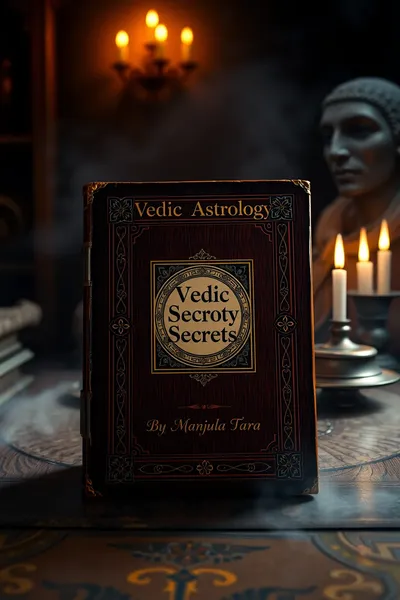




From the “Astrology” Collection
View all →









More Free Astrology & Cosmology Books
View all →