The Hasheesh Eater

 82
82

The Hasheesh Eater



Sophia Crane (Associate Editor) — Fitz Hugh Ludlow's "The Hasheesh Eater" remains a cornerstone of esoteric literature, a pioneering exploration of consciousness and its potential for transcendent experience. Ludlow's masterful prose, rich with symbolism and philosophical depth, transcends its historical context to speak directly to the modern seeker. This work is not merely a historical curiosity but a profound testament to the power of psychotropic substances as keys to unlocking hidden realms of perception and self-discovery. Its enduring appeal lies in its honest, unflinching portrayal of altered states, offering invaluable insights for those interested in the intersection of altered consciousness, mysticism, and the Pythagorean pursuit of wisdom. A must-read for scholars and practitioners alike.
📝 Description
82
Fitz Hugh Ludlow published "The Hasheesh Eater" in 1857, detailing his experiences with cannabis.
Published in 1857, Fitz Hugh Ludlow's "The Hasheesh Eater" chronicles his personal use of hasheesh. The book, subtitled 'Being the Passage from the Life of a Pythagorean,' describes sensory and philosophical revelations experienced under the influence of cannabis. Ludlow frames his use not as a decline, but as a path toward acquiring knowledge. He maps out dream states, visions, and his perceptions of reality while consuming the drug.
This work presents a unique perspective on consciousness alteration and its potential for expanding human experience. It challenges common views on the drug and invites reflection on the mystical aspects of perception. The text uses vivid, often dreamlike prose to convey these experiences to the reader. It offers a historical account of cannabis use and its perceived effects on the mind.
Ludlow's work emerges from a period of fascination with altered states and Eastern substances, positioned within a broader interest in esoteric traditions and consciousness exploration. While not strictly occult, the book taps into a historical current of seeking hidden knowledge through non-ordinary means. It touches upon ideas of the soul's journey and the perception of hidden realities, aligning with certain spiritual or philosophical quests for gnosis that were present in 19th-century thought.
✍️ Author
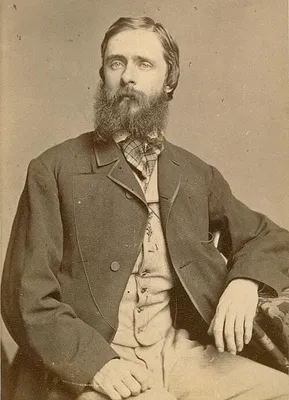
the author Fitz Hugh Ludlow and it became
Fitz Hugh Ludlow, sometimes seen as Fitzhugh Ludlow (September 11, 1836 – September 12, 1870), was an American author, journalist, and explorer; best known for his autobiographical book The Hasheesh Eater (1857). Ludlow also wrote about his travels across …
💡 Why Read This Book?
For seekers of hidden knowledge, "The Hasheesh Eater" offers a raw, unvarnished account of consciousness expansion and its potential for profound insight. Scholars will find it a crucial historical document, illuminating early public engagement with psychedelics. Practitioners of esoteric arts can glean insights into historical methods of visionary exploration and the symbolic language of altered states. It is an invitation to question reality and explore the boundless potential of the human mind.
⭐ Reader Reviews
Honest opinions from readers who have explored this book.
❓ Frequently Asked Questions
What is the primary focus of "The Hasheesh Eater"?
The book primarily focuses on Fitz Hugh Ludlow's personal, detailed, and often hallucinatory experiences with hasheesh (cannabis), exploring its effects on perception, consciousness, and the pursuit of esoteric knowledge.
Is this book a simple endorsement of drug use?
No, while it details extensive use, Ludlow frames his experiences as a philosophical and spiritual quest, akin to the ancient Pythagoreans, seeking wisdom and expanded consciousness rather than mere indulgence.
What historical significance does "The Hasheesh Eater" hold?
It is considered a foundational text in psychedelic literature, published when cannabis was largely unknown and legal, sparking significant public interest and influencing early discussions on altered states and their potential.
What kind of reader would most appreciate this book?
Readers interested in the history of consciousness exploration, psychedelic literature, esoteric philosophy, mysticism, and the intersection of altered states and personal transformation will find this book deeply rewarding.
Does the book offer practical advice on using hasheesh?
While it describes Ludlow's methods and experiences, it is primarily a philosophical and literary exploration, not a practical guide. It emphasizes the subjective and transformative aspects rather than offering instructions.
🔮 Key Themes & Symbolism
The Psychedelic Journey as Esoteric Quest
Ludlow elevates his engagement with hasheesh beyond mere recreation, framing it as a deliberate, Pythagorean-inspired quest for higher knowledge and spiritual insight. He meticulously documents the altered states not as chaotic experiences, but as pathways to understanding the deeper, often hidden, architecture of reality and the self. This theme challenges the modern perception of drug use as purely hedonistic, positioning it as a potentially valid, albeit dangerous, method for unlocking esoteric truths and expanding one's philosophical horizons. The narrative is imbued with a sense of purpose, as if each visionary episode is a lesson learned on the path to gnosis.
The Architecture of Consciousness and Perception
Through the lens of hasheesh, Ludlow deconstructs and reconstructs the very nature of human perception. He details how the substance warps sensory input, amplifies imagination, and allows for novel connections between ideas, leading to profound shifts in his understanding of time, space, and identity. This exploration examines the subjective experience of reality, suggesting that our 'normal' state of consciousness is merely one limited mode of perception. The book acts as a cartography of the mind's inner landscapes, revealing the intricate and often surreal structures that lie beneath the surface of waking awareness, inviting readers to question the solidity of their own perceived reality.
Symbolism and the Unveiling of Hidden Meanings
Ludlow's encounters with hasheesh are replete with strong symbolism, where ordinary objects and experiences take on profound, often mystical, significance. He interprets these visions and altered perceptions as coded messages from a deeper reality, akin to the symbolic language found in ancient myths and esoteric traditions. The book demonstrates a keen awareness of the power of metaphor and allegory to convey truths that transcend literal understanding. Readers are invited to engage with this symbolic language, learning to perceive the hidden meanings embedded within their own experiences, thus fostering a more intuitive and mystical approach to life.
💬 Memorable Quotes
Direct passages from the work, attributed to the author.
“The world seemed to be an immense, many-colored jewel, and I was lost in its depths.”
— Illustrates the heightened sensory experience and the feeling of awe and immersion in beauty that characterized his hasheesh-induced visions, hinting at a cosmic connection.
“My soul was unfettered, and I wandered through the boundless fields of thought.”
— Represents the liberation of the mind from its ordinary constraints, allowing for an expansive exploration of abstract ideas and the infinite possibilities of imagination.
“It was a revelation of the divine in the mundane.”
— Highlights Ludlow's interpretation of his experiences as uncovering sacredness and profound meaning within everyday reality, a key tenet of many mystical traditions.
“I became a spectator of my own being.”
— Signifies a profound sense of detachment and self-awareness, where the individual observes their thoughts and actions from an objective, almost spiritual, vantage point.
💡 Key Ideas
Editorial paraphrase of the work's core concepts — not direct quotes.
I then took the hasheesh, and for the first time felt that I was about to enter upon a new existence.
This quote expresses the transformative anticipation and profound shift in perception that Ludlow experienced, marking the beginning of his deep dive into altered consciousness.
🌙 Esoteric Significance
Tradition
Ludlow explicitly aligns his quest with Pythagorean philosophy, emphasizing the pursuit of wisdom, the transmigration of souls, and the understanding of the cosmos through numerical and harmonic principles. His detailed descriptions of altered states often echo Gnostic and Hermetic traditions, focusing on uncovering hidden truths, the nature of the divine within the self, and the symbolic language of the universe. The work can be seen as a personal initiation into a form of experiential gnosis, where altered perception serves as a vehicle for spiritual insight.
Symbolism
The book is rich with symbolism, where visions are not random but interpreted as meaningful revelations. Common symbols include the transformation of light and color into profound emotional or intellectual states, the dissolution of the ego into a cosmic consciousness, and the perception of intricate, geometric patterns representing the underlying order of reality. Ludlow uses these symbolic encounters to convey complex philosophical ideas, suggesting a universal language accessible through heightened states of awareness.
Modern Relevance
In the contemporary range of mindfulness, consciousness studies, and the growing interest in the therapeutic and spiritual applications of psychedelics, "The Hasheesh Eater" remains remarkably relevant. It offers historical context to the modern exploration of altered states, demonstrating that the desire to understand the mind's deeper potential is a perennial human pursuit. Its philosophical depth and literary artistry provide a rich foundation for discussions on consciousness, perception, and the quest for meaning, resonating with those seeking to expand their understanding of human experience beyond conventional boundaries.
👥 Who Should Read This Book
This work is essential for **psychedelic literature enthusiasts** seeking foundational texts and historical context. **Esoteric scholars** will find it a valuable primary source on early explorations of consciousness and its symbolic interpretation. **Spiritual seekers** interested in alternative paths to self-discovery and expanded awareness will be drawn to Ludlow's introspective journey. **Practitioners of consciousness-altering arts** may find inspiration in Ludlow's detailed descriptions of visionary states and their potential for insight. **Literary scholars** will appreciate its unique prose and its impact on 19th-century American literature and thought.
📜 Historical Context
Published in 1857, "The Hasheesh Eater" emerged during a period of intense curiosity and burgeoning scientific inquiry into the nature of mind and consciousness, particularly in the United States. Cannabis, or hasheesh, was a relatively novel substance to the Western public, often discussed in exotic and sensationalized terms. Fitz Hugh Ludlow's work was groundbreaking as it moved beyond mere sensationalism to offer a detailed, introspective, and philosophical account of its effects. At a time when the legal and medical landscape surrounding such substances was virtually non-existent, Ludlow's detailed exploration contributed significantly to public discourse, sparking interest in the potential—both beneficial and cautionary—of psychotropic substances for altering human perception and consciousness. It can be seen as an early progenitor of the modern psychedelic movement, laying literary groundwork for future explorations.
📔 Journal Prompts
Reflect on a time when your perception of reality shifted dramatically. What triggered it, and what did you learn?
Consider the concept of 'hidden knowledge.' How might altered states of consciousness serve as a key to unlocking such knowledge?
Ludlow describes the world as an 'immense, many-colored jewel.' What does this metaphor suggest about the interconnectedness of beauty and existence?
Write about a personal 'initiation' or significant transformative experience. What were the symbolic elements involved?
If consciousness is a landscape, what are the uncharted territories you wish to explore within your own mind?
🗂️ Glossary
Hasheesh
An intoxicating preparation made from the dried and powdered leaves and flowers of the hemp plant (Cannabis indica), known for its psychoactive properties and use in traditional medicine and spiritual practices.
Pythagorean
Relating to the ancient Greek philosopher Pythagoras or his followers, known for their contributions to mathematics, philosophy, and their belief in the transmigration of souls and the harmonic structure of the universe.
Gnosis
In esoteric traditions, refers to spiritual knowledge or insight, often attained through direct experience or intuition, leading to salvation or enlightenment.
Visionary States
Periods of heightened or altered consciousness characterized by vivid sensory experiences, hallucinations, useful insights, and altered perceptions of reality, often induced by meditation, fasting, or psychoactive substances.
Esoteric
Intended for or likely to be understood by only a small number of people with a specialized knowledge or interest; pertaining to hidden or secret knowledge.
This book appears in 2 collections
🔮 Readers Also Liked
Browse all →








From the “Witchcraft” Collection
View all →





More Free Witchcraft & Paganism Books
View all →