The Turn of the Screw
 72
72

The Turn of the Screw


Henry James's 'The Turn of the Screw' remains a monumental achievement in literary occultism. Balthazar Finch, Senior Critic for Esoteric Philosophy, finds its ambiguity a potent conduit for profound spiritual inquiry. The novella masterfully dissects the nature of possession, not merely of the body, but of the soul and the mind. James’s subtle evocation of spectral presences and their insidious influence on the innocent is a profound commentary on the vulnerability of the unawakened psyche. This work is not for the faint of heart; it is a potent chalice for seekers of hidden truths, spiritual scholars, and practitioners of the arcane arts who appreciate the power of suggestion and the psychological underpinnings of the supernatural. Its enduring power lies in its refusal to offer easy answers, compelling a deep, personal engagement with the themes of good, evil, and the elusive nature of reality.
📝 Description
72
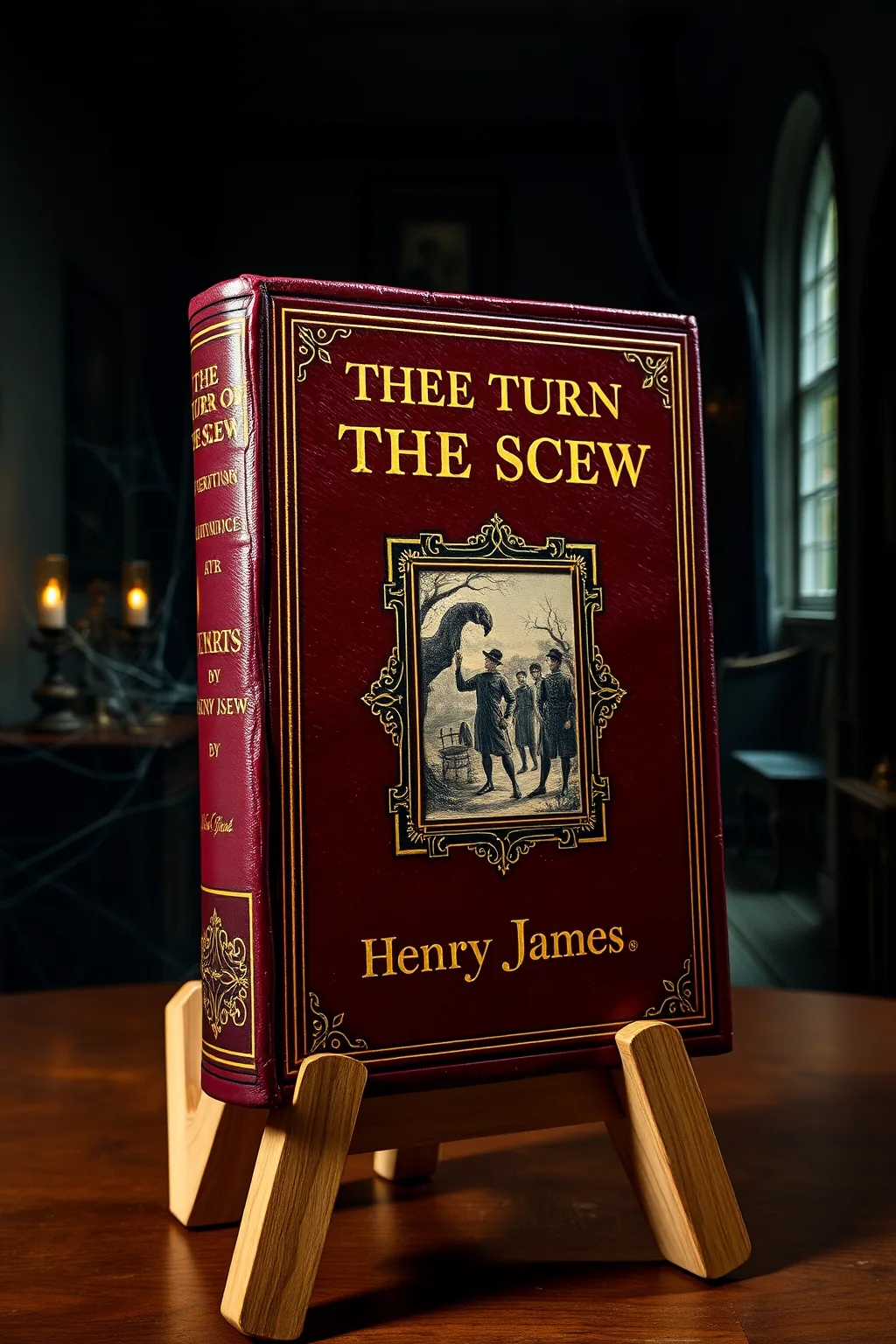
Henry James published 'The Turn of the Screw' in 1898, a gothic novella that questions sanity and the supernatural.
The story concerns a young governess hired to care for two children, Miles and Flora, at Bly. The estate is isolated, and the governess soon experiences unsettling events. She hears noises and sees figures she believes are ghosts, particularly a man named Peter Quint and a woman named Miss Jessel. The governess becomes convinced the children are under the influence of these spirits, and she feels compelled to save them. However, the narrative is framed by a man recounting a story told to him by his friend, introducing ambiguity about the governess's own mental state and the reality of the apparitions.
James's work plays with the reader's perception. The governess is the sole narrator of her experiences at Bly, and her increasing distress and conviction about the ghosts raise questions about her reliability. The novella explores themes of innocence corrupted, the nature of evil, and the uncertainty of what is real versus imagined. It leaves the reader to decide whether the ghosts are actual supernatural entities or projections of the governess's own anxieties and fears.
Published in the late Victorian era, a period marked by fascination with spiritualism and the occult, 'The Turn of the Screw' taps into anxieties surrounding unseen forces and the subconscious. While not overtly a spiritualist text, it engages with the era's interest in ghosts and the possibility of spectral influence on the living. The novella's ambiguity, however, positions it within a broader esoteric discussion about the nature of reality, the limits of human understanding, and whether perceived supernatural events are external phenomena or internal psychological constructs. It reflects a cultural moment where the boundaries between the material world and the spiritual or psychological were actively being questioned.
✍️ Author
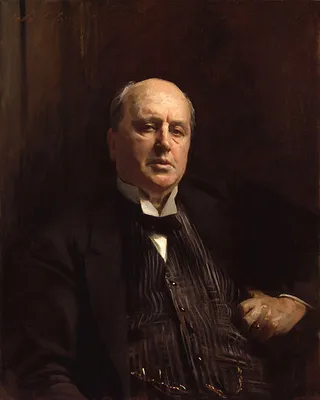
Henry James
American-British novelist and critic, a key figure between literary realism and modernism.
💡 Why Read This Book?
For seekers of arcane wisdom and practitioners of subtle arts, 'The Turn of the Screw' offers a profound meditation on spiritual corruption and the battle for the soul. Its labyrinthine narrative and ambiguous hauntings provide fertile ground for exploring themes of possession, psychic vulnerability, and the unseen forces that shape our reality. Scholars will find a rich tapestry of symbolism and psychological depth, while those drawn to the occult will appreciate its potent atmosphere of dread and its exploration of the liminal spaces between worlds.
⭐ Reader Reviews
Honest opinions from readers who have explored this book.
❓ Frequently Asked Questions
Is 'The Turn of the Screw' a ghost story?
While undeniably possessing supernatural elements, its true power lies in its ambiguity. The story masterfully blurs the lines between objective spectral phenomena and the governess's psychological state, inviting deep interpretation.
What is the primary esoteric theme explored in the novella?
The novella delves into the concept of spiritual corruption and the insidious influence of malevolent forces on the innocent psyche. It explores themes of possession, both external and internal, and the struggle for the soul's dominion.
Who are the 'ghosts' in 'The Turn of the Screw'?
This is the central mystery. Are they genuine apparitions of former inhabitants, or manifestations of the governess's repressed fears and anxieties? The text deliberately leaves this open to interpretation, highlighting the subjectivity of perception.
What makes this book relevant to occult studies?
Its exploration of psychic susceptibility, the power of suggestion, and the potential for unseen entities to influence human behavior makes it a valuable text for understanding esoteric principles of spiritual warfare and psychological manipulation.
What is the significance of the governess's isolation?
Her isolation at Bly amplifies her vulnerability and intensifies the psychological pressures she faces. It creates a crucible where her perceptions and sanity are tested, making her an ideal conduit for exploring the themes of the unknown and internal struggle.
🔮 Key Themes & Symbolism
The Nature of Evil and Corruption
'The Turn of the Screw' masterfully probes the insidious nature of evil, not as a overt force, but as a subtle, corrupting influence that preys on innocence. The novella suggests that evil can manifest through suggestion, psychological manipulation, and the erosion of moral certainty. The ambiguity surrounding the spectral presences allows for an exploration of how perceived malevolence can infect the mind, leading to a descent into obsession and potentially, a loss of self. This theme resonates deeply within esoteric traditions that examine the adversarial forces and the constant vigilance required to maintain spiritual purity and integrity against unseen enticements and degradations.
Perception, Reality, and Psychic Vulnerability
James crafts a narrative that relentlessly challenges the reader's perception of reality, mirroring the governess's own escalating uncertainty. The text interrogates the reliability of sensory input and the subjective nature of experience, particularly when confronted with the uncanny. This theme is central to many esoteric disciplines that emphasize the power of the mind, the influence of thought forms, and the importance of discerning between illusion and truth. The governess's heightened sensitivity and susceptibility to suggestion serve as a potent allegory for the challenges faced by those who venture into the liminal spaces of consciousness, where the veil between worlds is thin and easily pierced by external or internal psychic forces.
The Unseen Influence and Spiritual Warfare
Beyond the spectral apparitions, the novella hints at a deeper, unseen influence shaping events at Bly. This speaks to esoteric concepts of spiritual warfare, where subtle energies and entities can impact human affairs. The governess's struggle becomes a microcosm of this larger battle, as she attempts to protect the children from forces she can barely comprehend. The text invites contemplation on the existence of spiritual guardians and malevolent entities that may operate beyond the mundane, influencing destiny and morality. For practitioners of the occult, the novella serves as a compelling, albeit fictional, illustration of the constant need for discernment, spiritual fortitude, and protective measures against insidious spiritual encroachments.
💬 Memorable Quotes
Direct passages from the work, attributed to the author.
“I can scarcely imagine anything that would make me more uncomfortable than to be told that I was the cause of it.”
— This reveals the governess's internal conflict and her desperate denial of responsibility, highlighting the psychological defense mechanisms employed when faced with overwhelming and terrifying circumstances.
“What a lovely time we are going to have!”
— Uttered with an unsettlingly cheerful tone, this ironic statement foreshadows the impending doom and escalating horror, a stark contrast between outward appearance and inner turmoil.
💡 Key Ideas
Editorial paraphrase of the work's core concepts — not direct quotes.
We are, on the whole, more afraid of what we don't know than of what we do.
This quote captures the essence of the governess's predicament and the novella's pervasive sense of dread. It speaks to the primal human fear of the unknown and how this fear can be exploited, both internally and externally.
I was with them, and they were with me; and in the silence of the house, we heard each other's breath.
This line evokes a sense of claustrophobic intimacy and the blurring of boundaries between the governess and the children, hinting at a shared psychic space or a growing, unsettling symbiosis.
The world in which I found myself was the world in which I had to make my way.
A stoic declaration of necessity, this quote underscores the governess's forced adaptation to a bewildering and hostile environment, emphasizing her struggle to navigate an incomprehensible reality.
🌙 Esoteric Significance
Tradition
The novella resonates deeply with occult traditions that explore psychological manipulation, spiritual possession, and the battle for the soul. It can be viewed through the lens of Gnosticism, with its emphasis on hidden knowledge and the struggle against corrupting demiurgic forces, or within frameworks of subtle energy manipulation and psychic defense mechanisms common in various esoteric philosophies that acknowledge the influence of unseen entities on human consciousness.
Symbolism
Bly itself symbolizes a corrupted Eden, a place of supposed innocence that harbors profound darkness. The spectral figures of Peter Quint and Miss Jessel represent primal urges, unresolved trauma, and the seductive allure of forbidden knowledge. The children, Miles and Flora, embody corrupted innocence, acting as conduits for these malevolent influences. The governess's white gloves symbolize her initial purity and the precariousness of her moral stance as it becomes increasingly compromised.
Modern Relevance
In an age saturated with information and external stimuli, 'The Turn of the Screw' remains powerfully relevant for its exploration of subjective reality and the insidious nature of manipulation. It serves as a potent reminder of the importance of critical discernment, the need to question appearances, and the enduring struggle to maintain one's inner integrity against forces that seek to undermine it, whether they are external psychic influences or internal psychological demons.
👥 Who Should Read This Book
This novella is essential reading for anyone interested in the subtle arts of the mind and spirit. **Seekers of esoteric knowledge** will find a collection of symbolism and psychological depth to ponder. **Scholars of occult literature** will appreciate James's masterful use of ambiguity and his profound exploration of themes like possession and spiritual corruption. **Practitioners** seeking to understand the dynamics of psychic influence and the importance of spiritual resilience will find invaluable insights into the unseen battles that can shape human experience. Even **beginners** to the genre will be captivated by its chilling atmosphere and enduring mysteries.
📜 Historical Context
Published in 1898, 'The Turn of the Screw' emerged during the late Victorian era, a period marked by a fascination with the supernatural, spiritualism, and the burgeoning field of psychology. This era witnessed a societal grappling with rapid industrialization, evolving scientific thought, and a lingering adherence to traditional moral and religious frameworks. The rise of the gothic novel and ghost stories reflected a societal unease with modernity and a fascination with the hidden, the repressed, and the irrational. Henry James, a master of psychological realism, used the conventions of the ghost story to explore complex themes of innocence corrupted, the nature of evil, and the unreliability of human perception, placing his work at the intersection of literary innovation and the era's profound cultural anxieties regarding the unseen forces that might shape human destiny.
📔 Journal Prompts
Reflect on a time you experienced profound unease or a feeling of being watched. How did your perception of reality shift during that experience?
Consider the children, Miles and Flora. To what extent do you believe they are truly 'possessed,' and to what extent are they products of their environment and the governess's interpretation?
Explore the concept of 'unreliable narration.' How does the governess's perspective shape your understanding of the events at Bly, and what might be lost or obscured by her viewpoint?
If you were the governess, what steps would you take to protect yourself and the children from perceived malevolent influences, both seen and unseen?
Analyze the symbolism of Bly itself. What does this isolated estate represent in terms of the human psyche and the external world?
🗂️ Glossary
Novella
A short novel, typically more complex than a short story but shorter than a full-length novel. 'The Turn of the Screw' is a prime example of this literary form.
Gothic Fiction
A literary genre characterized by elements of horror, mystery, and the supernatural, often set in old, decaying buildings with a brooding atmosphere of dread and suspense.
Ambiguity
The quality of being open to more than one interpretation; inexactness. James masterfully employs ambiguity in 'The Turn of the Screw' to heighten the psychological suspense.
Frame Narrative
A literary technique where a story is embedded within another story. In this case, the governess's account is presented as a story told by a character at a gathering.
Psychological Realism
A literary approach that focuses on the inner lives and motivations of characters, exploring their thoughts, feelings, and psychological states with great detail and nuance.
This book appears in 1 collection
🔮 Readers Also Liked
Browse all →







More by Henry James
All books →



From the “Transcendental Meditation” Collection
View all →





More Free Supernatural & Occult Fiction Books
View all →