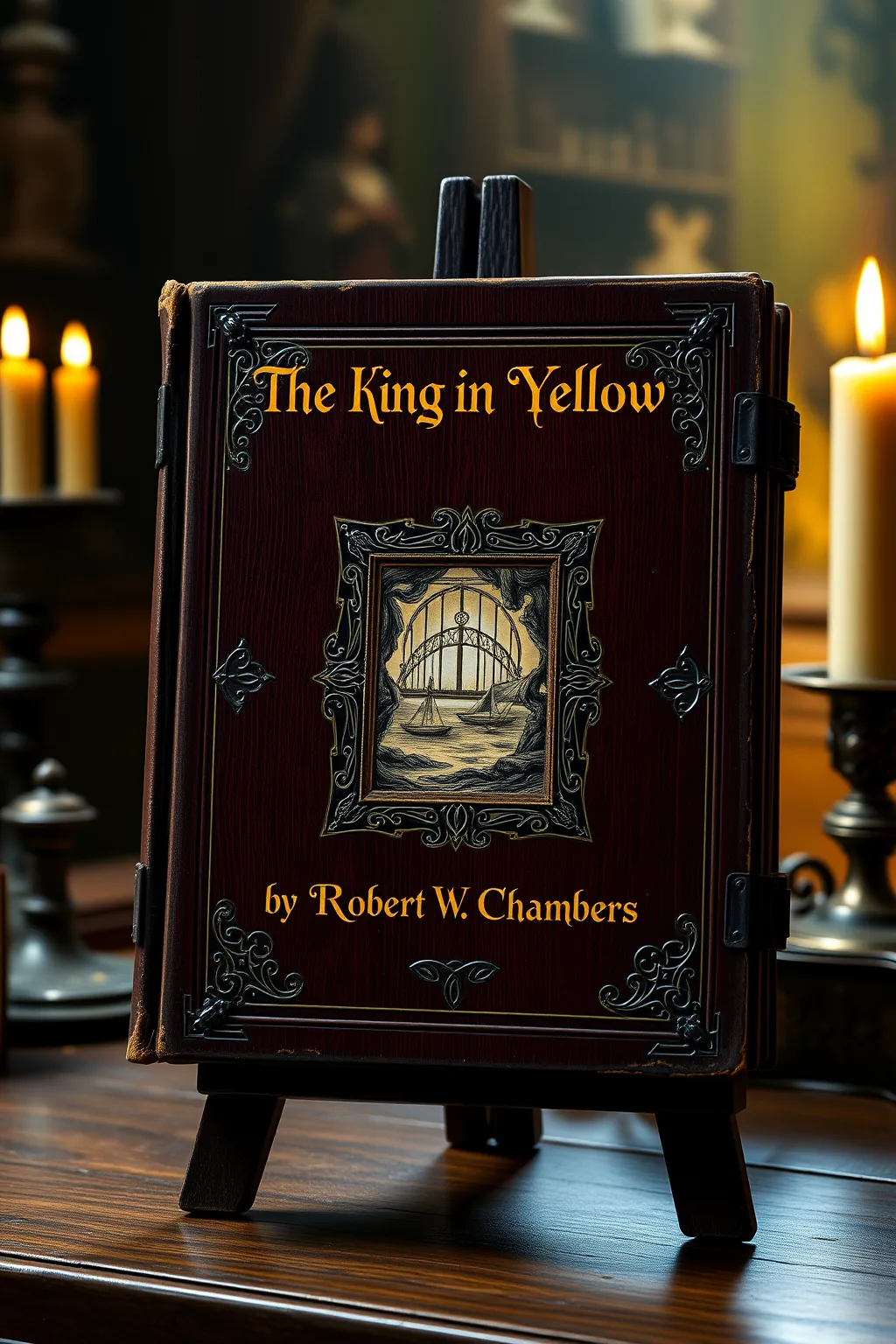
The King in Yellow
 84
84

The King in Yellow


Cassian Rothmann, Senior Critic, Ancient Wisdom: 'The King in Yellow' remains a seminal work for those plumbing the abyss of existential dread and cosmic horror. Chambers' genius lies in his subtle evocation of unseen forces and the corrosive power of art that touches upon forbidden truths. The interconnected narratives, bound by the titular play, create a potent, cumulative effect, suggesting a deeper, occult stratum beneath the veneer of normalcy. This collection is a vital text for understanding the lineage of Lovecraftian dread and the philosophical implications of confronting the unknowable. Highly recommended for serious students of the esoteric and the psychologically profound.
📝 Description
84
Robert W. Chambers published 'The King in Yellow' in 1895, a collection of linked stories.
This collection presents ten interconnected stories, many of which are affected by a mysterious play titled 'The King in Yellow.' The play, and its associated symbols like the Yellow Sign, seem to drive characters toward madness or a disturbing form of revelation. Chambers builds an atmosphere of dread and psychological unease throughout these tales. The characters often encounter the play and its strange power, leading to their mental deterioration or a confrontation with unsettling cosmic ideas. The book examines how forbidden knowledge and art can impact the human mind, blurring the lines between sanity and a terrifying, unknown reality.
Several stories focus on the effects of the play on artists and intellectuals. They grapple with its cryptic verses and the unsettling implications of its narrative. Chambers uses these elements to create a sense of creeping horror that is more psychological than physical. The narrative often hints at a larger, malevolent force associated with the King in Yellow itself, a presence that operates beyond normal human understanding. The book does not offer simple answers, instead leaving the reader to ponder the nature of the play's influence and the fragility of the characters' minds.
Published in the late 19th century, 'The King in Yellow' taps into a fin de siècle fascination with the occult and the darker aspects of human psychology. It reflects a literary interest in decadence, symbolism, and the uncanny, common in supernatural fiction of the period. The concept of a cursed text or play, whose contents lead to spiritual or mental ruin, echoes older esoteric traditions concerning forbidden lore and its dangers. The book's ambiguity regarding the nature of the King in Yellow allows it to resonate with occult interpretations of unseen forces and altered states of consciousness.
✍️ Author
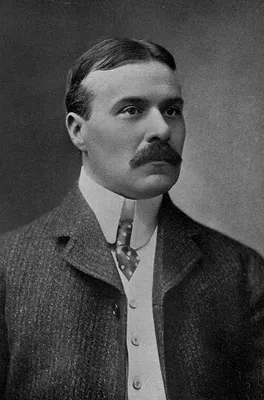
Robert W Chambers
Robert William Chambers (May 26, 1865 – December 16, 1933) was an American artist and fiction writer, best known for his book of short stories titled The King in Yellow, published in 1895..
💡 Why Read This Book?
Embark on a descent into the uncanny with 'The King in Yellow.' This collection is essential for seekers of esoteric lore who wish to explore the psychological effects of forbidden knowledge and the unsettling power of symbols. Scholars of occult literature and practitioners of symbolic interpretation will find fertile ground for contemplation. If you are drawn to narratives that blur the lines between sanity and madness, and hint at vast, unseen cosmic forces, this book offers a profound and disquieting experience.
⭐ Reader Reviews
Honest opinions from readers who have explored this book.
❓ Frequently Asked Questions
What is the significance of 'The King in Yellow' play?
The play within the collection acts as a conduit for a malevolent cosmic entity, the King in Yellow. Its narrative and symbolism are deeply unsettling, capable of inducing despair, madness, and a profound existential crisis in those who engage with it.
What is the Yellow Sign?
The Yellow Sign is a cryptic symbol associated with the King in Yellow. Its appearance often portends doom and psychological unraveling, serving as a tangible manifestation of the entity's influence and a key element in the unfolding horror.
Are the stories connected?
Yes, the first four stories are loosely connected by the existence of the play, the King in Yellow entity, and the Yellow Sign. Subsequent stories explore related themes and motifs, creating a fragmented yet cohesive tapestry of dread.
What kind of horror does Chambers employ?
Chambers utilizes a subtle, psychological, and cosmic horror. It's less about jump scares and more about a creeping sense of unease, existential dread, and the breakdown of perceived reality, often driven by forbidden knowledge.
Is this book suitable for beginners in the occult?
While accessible, its themes are profound and can be unsettling. Beginners interested in the psychological and symbolic aspects of occultism will find it rewarding, but should approach with an open, yet discerning, mind.
🔮 Key Themes & Symbolism
The Corrosive Nature of Forbidden Knowledge
Chambers masterfully illustrates how the pursuit of hidden truths, particularly those revealed through the spectral play 'The King in Yellow,' can lead to the erosion of sanity. The book suggests that certain knowledge is inherently dangerous, not because it is evil, but because it shatters the illusion of a stable, comprehensible reality, leaving the seeker adrift in a sea of existential despair and cosmic indifference.
The Unseen Architect of Reality
The King in Yellow and its associated symbols hint at a malevolent, perhaps indifferent, cosmic intelligence that operates beyond human understanding. This theme explores the profound sense of insignificance and dread that arises when individuals glimpse the vast, uncaring universe and the forces that may subtly manipulate human destiny, suggesting that our perceived reality is but a fragile construct.
Art as a Catalyst for Metaphysical Transformation
The play itself serves as a potent artistic artifact, capable of initiating profound psychological and metaphysical shifts. Chambers explores the idea that art, particularly when imbued with esoteric or forbidden themes, can act as a key to unlocking hidden dimensions of consciousness, for better or, more often in this collection, for worse, blurring the lines between fiction and lived, terrifying experience.
💬 Memorable Quotes
Direct passages from the work, attributed to the author.
“The King in Yellow...”
— This phrase, uttered with dread, signifies the awakening of a terrible, cosmic awareness that shatters the reader's perception of reality and sanity.
“It is a place of shadows and dreams.”
— Suggests a liminal state, a psychic landscape where the boundaries between the conscious and subconscious, reality and illusion, become dangerously blurred.
“The Yellow Sign is not for you.”
— A dire warning, implying that encountering this symbol brings inevitable mental and spiritual peril, marking the recipient for a fate of madness or destruction.
“We have all looked upon the King.”
— Implies a shared, terrible experience that binds individuals in their descent into madness, suggesting a collective awakening to a disturbing truth.
“The colour of the skin is yellow.”
— A chilling detail that links the titular entity and its influence to a physical manifestation of decay and corruption, both literal and psychological.
🌙 Esoteric Significance
Tradition
While not directly aligned with a single, codified esoteric tradition, 'The King in Yellow' deeply appeals to themes found in Gnosticism and certain strains of Hermeticism. It explores the concept of hidden, malevolent demiurges, the corrupting influence of worldly illusions, and the perilous journey towards gnosis (knowledge) that can lead to spiritual liberation or utter destruction. The play acts as a forbidden text, akin to apocryphal scriptures, promising enlightenment through dangerous revelation.
Symbolism
The color yellow, often associated with decay, madness, and the divine in some ancient traditions, is central. The Yellow Sign itself functions as a sigil, a potent symbol that acts as a key or a curse, capable of opening minds to the King's influence. The recurring motif of the play within the stories serves as a meta-symbol for art's power to reflect and transmit profound, often destructive, metaphysical truths, blurring the lines between creator, audience, and the 'reality' depicted.
Modern Relevance
'The King in Yellow' remains profoundly relevant in its exploration of psychological fragility, the seductive danger of forbidden knowledge, and the unsettling feeling that underlying our perceived reality are forces beyond our control. In an age saturated with information and often disorienting narratives, Chambers' work serves as a potent allegory for the potential descent into madness when confronted with overwhelming, incomprehensible truths, making it a timeless study of the human mind's encounter with the truly alien.
👥 Who Should Read This Book
This collection is a must-read for scholars of early 20th-century supernatural fiction and those interested in the psychological underpinnings of horror. Seekers of esoteric lore will find potent symbolism and thematic resonance with ideas of forbidden knowledge and cosmic dread. Practitioners of occult studies may find inspiration in the exploration of sigils, symbolic influence, and the dangers of confronting hidden realities. For the curious reader, it offers a disquieting yet intellectually stimulating journey into the darker corners of imagination and the human psyche.
📜 Historical Context
Published in 1895, 'The King in Yellow' emerged during a fin-de-siècle period rife with societal anxieties, spiritual questioning, and a burgeoning interest in the occult, symbolism, and the darker aspects of the human psyche. The era saw the rise of decadent literature and a fascination with the uncanny, fueled by advancements in science that challenged traditional beliefs and opened doors to new, often unsettling, philosophical inquiries. Chambers' work tapped into this zeitgeist, offering a combination of psychological horror and metaphysical speculation that resonated with readers seeking to explore the boundaries of consciousness and the hidden forces shaping existence. Its influence can be traced through subsequent generations of horror and speculative fiction writers.
📔 Journal Prompts
Reflect on a time when a piece of art or literature significantly altered your perception of reality. How did it feel?
Consider the color yellow. What associations, both positive and negative, does it evoke for you? How might these relate to the themes in 'The King in Yellow'?
If you were to encounter a mysterious, potentially dangerous symbol, what would be your first impulse: to understand it, or to flee from it? Explain why.
Explore the concept of 'forbidden knowledge.' What makes certain knowledge dangerous, and what are the potential consequences of seeking it?
Imagine you have read the play 'The King in Yellow.' Describe the lingering feeling or the subtle changes you might experience in your everyday life afterwards.
🗂️ Glossary
The King in Yellow
A malevolent, supernatural entity, often depicted as a spectral king, whose influence spreads through a forbidden play and its associated symbols, driving those exposed to madness and despair.
The Yellow Sign
A cryptic and ominous symbol associated with the King in Yellow. Its appearance signifies impending doom and often precedes psychological unraveling or contact with the supernatural entity.
Carcosa
A mysterious and desolate city or realm often mentioned in connection with the King in Yellow. It represents a place of dread, madness, and cosmic horror, existing beyond conventional understanding.
Hali
Another enigmatic location or entity mentioned alongside Carcosa, often perceived as a dark or cosmic counterpart. Its significance is veiled, contributing to the overall sense of mystery and dread.
Decadent Literature
A literary movement of the late 19th century characterized by an emphasis on artificiality, aestheticism, morbidity, and a fascination with the perverse or the forbidden, often exploring themes of decay and disillusionment.
This book appears in 1 collection
🔮 Readers Also Liked
Browse all →




From the “Transcendental Meditation” Collection
View all →





More Free Supernatural & Occult Fiction Books
View all →