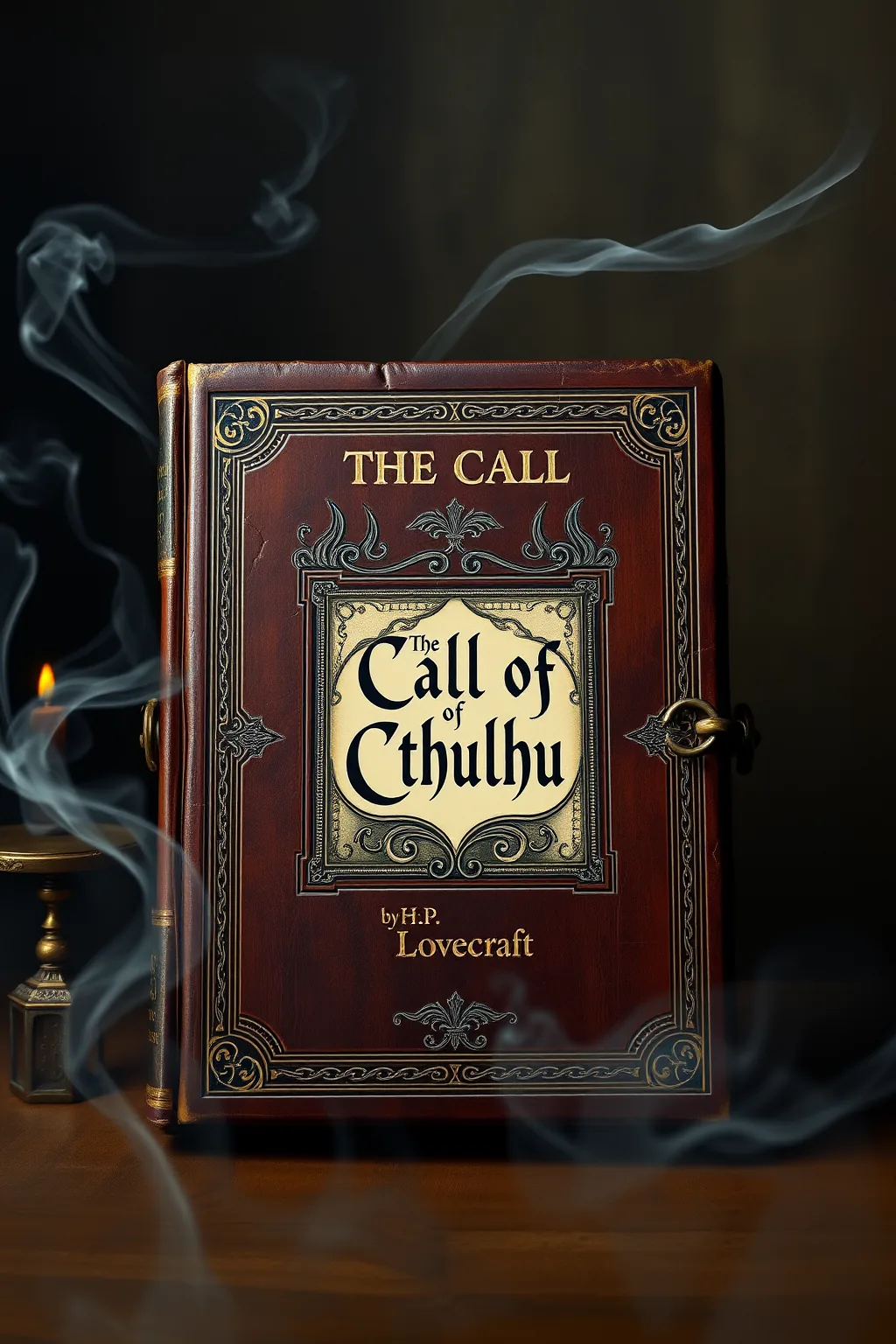
The Call of Cthulhu
 76
76

The Call of Cthulhu


Silas Hawthorne (Hermetic Studies Editor) — Lovecraft's 'The Call of Cthulhu' is a cornerstone of modern occult fiction, resonating with deep esoteric currents. Beyond its atmospheric horror, the story masterfully evokes the unsettling concept of ancient, non-human intelligences influencing our reality, a theme central to many mystic traditions. The narrative's structure, mirroring the piecing together of fragmented truths, mirrors the alchemical process of seeking hidden knowledge. Its strength lies in its evocation of a vast, indifferent cosmos and the fragile nature of human understanding. Essential reading for anyone interested in the intersection of cosmicism, ancient cults, and the philosophical implications of confronting humanity's true place in the universe.
📝 Description
76
H.P. Lovecraft's 1928 story 'The Call of Cthulhu' introduced the world to a slumbering cosmic entity.
The narrative begins with the posthumous discovery of notes belonging to Francis Wayland Thurston's great uncle, an antiquarian. These papers contain fragments of research into a disturbing cult. Thurston finds connections between a bizarre bas-relief sculpture, the dreams of its creator, and a series of worldwide reports detailing mass hysteria and strange events.
The story weaves together these disparate clues, suggesting a vast, ancient evil that predates human civilization. This entity, Cthulhu, slumbers in a sunken city but exerts a psychic influence on sensitive individuals. As Thurston uncovers more, he confronts the terrifying possibility that humanity is insignificant in a cosmos populated by incomprehensible powers.
This tale is a key text in the development of cosmic horror, a subgenre that draws on themes of the occult and forbidden lore. It posits that true understanding of the universe requires confronting truths that shatter human sanity and ego. The narrative taps into a tradition of exploring ancient, non-human intelligences and the esoteric dangers of uncovering their existence.
✍️ Author
💡 Why Read This Book?
This iconic story offers a gateway into cosmic horror and the philosophical implications of humanity's insignificance. It's ideal for seekers of hidden knowledge, scholars of the occult, and practitioners who explore the boundaries of consciousness and the unknown. If you crave narratives that provoke existential contemplation and challenge your perception of reality, 'The Call of Cthulhu' is an essential, mind-bending experience.
⭐ Reader Reviews
Honest opinions from readers who have explored this book.
❓ Frequently Asked Questions
What is the core premise of 'The Call of Cthulhu'?
The story centers on the narrator uncovering evidence of an ancient, malevolent cosmic entity named Cthulhu and the cults that worship it, hinting at its eventual awakening to threaten humanity.
Who is Francis Wayland Thurston?
He is the narrator who inherits his great uncle's research, leading him to piece together the disturbing truth about Cthulhu and its worshippers.
What is the significance of the R'lyeh?
R'lyeh is the sunken, cyclopean city where the great old one Cthulhu lies in slumber, waiting to be reawakened and to spread its madness across the globe.
Does Lovecraft's work have occult or esoteric connections?
Absolutely. Lovecraft's cosmicism, focus on forbidden knowledge, and ancient entities deeply resonate with occult and esoteric themes, influencing modern practitioners and scholars.
Where was 'The Call of Cthulhu' first published?
It was first published in the pulp magazine 'Weird Tales' in February 1928.
🔮 Key Themes & Symbolism
Cosmicism and Human Insignificance
Lovecraft's central tenet is cosmicism: the belief that humanity is a minuscule, insignificant speck in a vast, indifferent universe governed by ancient, unfathomable powers. This theme challenges anthropocentric views, suggesting our perceived reality is a thin veneer over a terrifying, chaotic abyss. The story forces readers to confront the profound existential dread that arises from understanding our cosmic irrelevance, a core tenet that resonates deeply within esoteric philosophies.
Forbidden Knowledge and Sanity
The pursuit of forbidden knowledge is a perilous path in Lovecraft's universe. 'The Call of Cthulhu' illustrates how uncovering truths that lie beyond human comprehension can shatter one's sanity. The fragmented notes and unsettling discoveries serve as a metaphor for the dangerous allure of esoteric secrets, suggesting that some truths are best left buried, lest they unleash madness upon the seeker. This reflects ancient warnings found in various mystical traditions about the dangers of premature or ill-prepared spiritual advancement.
Ancient Civilizations and Eldritch Entities
The narrative alludes to unimaginably ancient civilizations and cosmic entities that predate human existence. These 'Great Old Ones,' like Cthulhu, represent primal forces and alien consciousnesses that operate on principles utterly foreign to our understanding. Their slumbering presence and the cults that venerate them suggest a hidden history and a persistent, unseen influence on our world. This concept aligns with esoteric ideas of ancient, forgotten wisdom and subterranean spiritual lineages.
💬 Memorable Quotes
Direct passages from the work, attributed to the author.
“We are but a brief flicker of life in an eternity of darkness.”
— A stark articulation of cosmic insignificance, emphasizing the ephemeral nature of human existence against the backdrop of an endless, uncaring universe.
“The old ones were, and they dreamed, and when they dreamed, they created.”
— This implies a primordial, creative force inherent in the ancient entities, suggesting that reality itself may be a manifestation of their ancient consciousness or dreams.
“Ph'nglui mglw'nafh Cthulhu R'lyeh wgah'nagl fhtagn.”
— This iconic incantation, meaning 'In his house at R'lyeh, dead Cthulhu waits dreaming,' is a direct invocation of the slumbering entity and its terrifying potential.
💡 Key Ideas
Editorial paraphrase of the work's core concepts — not direct quotes.
The most merciful thing in the world, I think, is the inability of the human mind to correlate all its contents.
This quote highlights the protective ignorance that shields humanity from the full, horrifying truth of the cosmos, suggesting that madness would ensue if we fully grasped our true place and the nature of reality.
There are things in the universe that are far older than time itself.
This quote points to the existence of primordial, timeless forces and beings that dwarf human temporal understanding, hinting at a reality beyond our chronological perception.
🌙 Esoteric Significance
Tradition
Lovecraft's work deeply speaks to themes found in Gnosticism and Hermeticism, particularly the concept of a flawed or indifferent creator, the existence of hidden, ancient powers, and the perilous nature of seeking forbidden knowledge. The idea of humanity being deceived or unaware of the true cosmic order echoes Gnostic cosmology, while the exploration of ancient lore and the vastness of the universe aligns with Hermetic principles of correspondence and the hidden workings of creation.
Symbolism
Cthulhu himself is a potent symbol of primal chaos, the alien, and the overwhelming power of the subconscious. The cyclopean architecture of R'lyeh represents non-Euclidean geometry and alien dimensions, challenging our perception of space and order. The cults symbolize humanity's innate, often subconscious, attraction to the forbidden and the ancient, representing the shadow self or the primal urge to connect with primordial forces, even at the cost of sanity.
Modern Relevance
In an age saturated with information and rapidly advancing scientific understanding that continues to reveal the vastness of the cosmos, Lovecraft's themes of cosmic insignificance and the limits of human knowledge remain profoundly relevant. His work continues to inspire artists, writers, and thinkers, serving as a potent metaphor for confronting the unknown, the unsettling nature of existence, and the psychological impact of realizing our smallness in the face of immense, unfathomable forces.
👥 Who Should Read This Book
This foundational work is essential for anyone drawn to the darker currents of literature. **Beginners** will find it an accessible yet profoundly unsettling introduction to cosmic horror. **Scholars** of literature, philosophy, and comparative religion will appreciate its thematic depth and its influence on subsequent occult and horror narratives. **Seekers** of esoteric wisdom will find resonance in its exploration of forbidden knowledge and ancient powers. **Practitioners** interested in the psychological and archetypal aspects of the occult may find valuable insights into humanity's relationship with the unknown and the primal forces that lie dormant within and beyond our reality.
📜 Historical Context
Published in 1928, 'The Call of Cthulhu' emerged during a period of significant societal upheaval and burgeoning interest in the occult. The aftermath of World War I fostered a sense of disillusionment and a questioning of established order and human progress, creating fertile ground for themes of cosmic dread and existential insignificance. The era also saw a popular resurgence of spiritualism, occult societies, and esoteric philosophies, making Lovecraft's tales of ancient gods and forbidden lore particularly resonant. His work tapped into a collective subconscious anxiety about the unknown and humanity's precarious place in a rapidly changing, increasingly complex world, solidifying his legacy as a progenitor of modern horror.
📔 Journal Prompts
Reflect on a time you felt a sense of profound insignificance in the face of something vast or unknown. How did it impact your perspective?
Consider the allure of forbidden knowledge. What are the potential benefits and dangers of seeking truths that are deliberately hidden or difficult to comprehend?
Imagine an ancient entity or force that predates humanity. What might its motivations or nature be, and how could it subtly influence our world?
Explore the concept of dreams as a conduit for hidden realities or messages. How might dreams reveal truths that waking consciousness conceals?
Write about a modern-day cult or belief system that seems to worship or seek power from forces beyond conventional understanding. What drives their devotion?
🗂️ Glossary
Cosmicism
A philosophical viewpoint that emphasizes the vastness and indifference of the universe, suggesting that humanity is insignificant and that traditional values or beliefs are ultimately meaningless in the grand cosmic scheme.
Great Old Ones
Ancient, powerful, and often malevolent cosmic entities that predate humanity and exist outside the normal laws of nature and physics. Cthulhu is their most famous representative.
R'lyeh
A mythical, cyclopean city that lies sunken beneath the Pacific Ocean, serving as the prison and eventual awakening site for the Great Old One, Cthulhu.
Non-Euclidean Geometry
A type of geometry that challenges the axioms of Euclidean geometry, often leading to paradoxical or distorted spatial perceptions. In Lovecraft's fiction, it's used to describe alien architecture and dimensions.
Eldritch
An adjective used to describe something that is supernatural, unearthly, or horrifyingly strange and awe-inspiring, often associated with cosmic entities and their domains.
This book appears in 1 collection
🔮 Readers Also Liked
Browse all →









More by H P Lovecraft
All books →
From the “Transcendental Meditation” Collection
View all →





More Free Supernatural & Occult Fiction Books
View all →