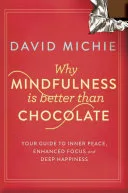
Why Mindfulness is Better than Chocolate
 77
77

Why Mindfulness is Better than Chocolate
David Michie's "Why Mindfulness is Better than Chocolate" offers a refreshingly pragmatic approach to a concept often shrouded in New Age jargon. Instead of abstract spiritual pronouncements, Michie grounds mindfulness in observable benefits, such as improved focus and stress reduction, making it accessible to a secular audience. The comparison to chocolate, while perhaps a touch quaint, effectively highlights the book's central thesis: the enduring satisfaction of mental discipline over fleeting sensory gratification. A particular strength lies in its clear articulation of how mindfulness can be applied in high-pressure environments, a concept explored when discussing its adoption by elite performers. However, the book occasionally leans too heavily on anecdotal evidence, and a deeper exploration of potential contraindications for certain psychological conditions would have added further depth. Despite this, the work provides a solid, actionable introduction for those seeking to cultivate greater presence and well-being.
📝 Description
77
<p>### What It Is</p><p>This volume presents mindfulness not as a fleeting trend, but as a practical discipline for enhancing daily existence. It offers an accessible entry point into understanding how focused attention can reshape our perception of time, stress, and performance. The core argument suggests that consistent mindfulness practice yields benefits that far surpass temporary pleasures, such as those derived from chocolate.</p><p></p><p>### Who It's For</p><p>Individuals seeking tangible methods to manage stress, improve concentration, and elevate their overall well-being will find this book particularly relevant. It is designed for beginners to mindfulness, including professionals, athletes, and artists who are exploring ways to optimize their performance and mental clarity. Those curious about the science and application of ancient contemplative practices in modern life will also benefit.</p><p></p><p>### Historical Context</p><p>The practice of mindfulness, while rooted in ancient contemplative traditions dating back millennia, has seen a significant resurgence in Western popular culture and scientific study since the late 20th century. Books like this, emerging in the 2010s, represent a wave of accessible guides aiming to translate complex meditative techniques into actionable strategies for everyday life. This period saw mindfulness integrated into therapeutic settings (like MBSR, developed by Jon Kabat-Zinn in the late 1970s) and corporate environments.</p><p></p><p>### Key Concepts</p><p>The book introduces fundamental mindfulness techniques, emphasizing present-moment awareness and non-judgmental observation. It explores how cultivating this awareness can alter one's relationship with challenging emotions and physical discomfort. The central thesis is that the sustained benefits of mindfulness, such as improved cognitive function and emotional regulation, offer a more profound and lasting satisfaction than transient sensory pleasures.</p>
⭐ Reader Reviews
Honest opinions from readers who have explored this book.
❓ Frequently Asked Questions
When was "Why Mindfulness is Better than Chocolate" first published?
The book was first published on May 28, 2014, making it a relatively recent addition to the popularization of mindfulness techniques.
What is the main argument of David Michie's book?
The central argument is that the sustained benefits of practicing mindfulness, such as stress reduction and improved performance, offer a more profound and lasting satisfaction than transient pleasures, exemplified by chocolate.
Who is David Michie?
David Michie is an author known for his work on mindfulness, meditation, and their application in modern life. He often draws on Buddhist philosophy and practices.
What are the benefits of mindfulness discussed in the book?
The book highlights benefits such as reduced stress, improved performance in various fields, better pain management, and increased overall well-being, citing its adoption by elite athletes and business leaders.
Is this book suitable for complete beginners to mindfulness?
Yes, the book is explicitly designed as a beginner's guide, offering accessible explanations and practical techniques for those new to the practice.
How does the book compare mindfulness to chocolate?
The comparison serves as a metaphor to illustrate that the enduring psychological and performance benefits derived from consistent mindfulness practice offer a deeper, more sustainable form of satisfaction than the temporary pleasure of eating chocolate.
🔮 Key Themes & Symbolism
Present Moment Awareness
The book centers on cultivating the ability to fully inhabit the present moment, a core tenet of Buddhist meditation traditions. It explains how this practice, by shifting focus away from rumination on the past or anxiety about the future, can lead to a significant reduction in stress and an increase in clarity. This theme is explored through practical exercises designed to train the mind, making it a foundational concept for readers seeking immediate application.
Mindfulness as Performance Enhancement
Michie details how mindfulness is increasingly adopted by high-achievers in fields like sports, arts, and business. The book illustrates that by training the mind to remain focused and calm under pressure, individuals can achieve peak performance. This section connects ancient contemplative practices to modern secular demands, showing how mental discipline translates into tangible results in competitive or demanding environments.
Enduring Satisfaction vs. Fleeting Pleasure
The title itself encapsulates this theme: the profound and lasting benefits of mindfulness are contrasted with the temporary gratification derived from sensory pleasures, such as eating chocolate. The book argues that while chocolate offers immediate enjoyment, mindfulness cultivates a deeper, more sustainable form of well-being and contentment that enriches life over the long term.
Stress Reduction and Emotional Regulation
A significant portion of the book is dedicated to how mindfulness practices can effectively mitigate the effects of chronic stress. By learning to observe thoughts and feelings without immediate reaction, readers can develop greater emotional resilience. This theme explores the psychological mechanisms through which mindfulness fosters a calmer, more balanced internal state, even amidst external challenges.
💬 Memorable Quotes
“Mindfulness practice can help you reduce stress, improve performance, manage pain and increase wellbeing.”
— This concise statement encapsulates the book's pragmatic approach, listing tangible benefits that resonate with modern concerns about health, productivity, and overall life quality.
“By reclaiming the present moment with mindfulness practice, you can improve performance and increase wellbeing.”
— This highlights the active, empowering nature of mindfulness, suggesting that intentional focus on the 'now' is key to unlocking potential in both professional and personal spheres.
“These are the reasons why elite athletes, performing artists and business leaders are taking up the practice.”
— This points to the growing acceptance and application of mindfulness in high-stakes environments, lending credibility to its effectiveness beyond purely spiritual contexts.
“Mindfulness is being introduced into the world's most successful companies, banks, business schools.”
— This illustrates the mainstream integration of mindfulness, indicating its perceived value in developing focus, resilience, and effective leadership in the corporate world.
“Mindfulness is better than chocolate.”
— This provocative statement, central to the book's title, serves as a memorable hook to emphasize the lasting, profound benefits of mental training over transient sensory pleasures.
🌙 Esoteric Significance
Tradition
While the book itself is written for a general audience and focuses on secular applications, the practice of mindfulness is deeply rooted in Buddhist contemplative traditions, particularly Vipassanā meditation. Its lineage stretches back over 2500 years. Michie's work can be seen as a modern, accessible conduit, translating core principles of awareness and equanimity from this ancient lineage into practical tools for contemporary Western life, thus democratizing access to these concepts.
Symbolism
The book primarily uses the metaphor of 'chocolate' not as a direct symbol, but as a representative of fleeting, sensory pleasures. In contrast, 'mindfulness' itself functions as a symbol for sustained inner peace, clarity, and control. The act of 'reclaiming the present moment' can be seen as a symbolic return to the eternal now, a concept explored in various mystical traditions that emphasize transcending linear time to find a more fundamental reality.
Modern Relevance
The work's relevance is evident in its alignment with contemporary trends in positive psychology, cognitive behavioral therapy (CBT), and the burgeoning field of neuroplasticity research. Thinkers and practitioners in areas like 'mindful leadership,' 'stress resilience training,' and even secularized contemplative practices continue to draw upon the principles popularized by books like this. Its accessibility makes it a foundational text for many exploring self-improvement and mental wellness tools today.
👥 Who Should Read This Book
['• Individuals new to meditation and mindfulness seeking a clear, practical introduction without overly spiritual or complex terminology.', '• Professionals, athletes, or students aiming to improve focus, manage stress, and enhance performance through mental discipline.', '• Anyone curious about how ancient contemplative practices can be applied to solve modern-day challenges related to well-being and productivity.']
📜 Historical Context
Published in 2014, "Why Mindfulness is Better than Chocolate" emerged during a period of intense popularization and scientific scrutiny of mindfulness meditation. The late 20th and early 21st centuries saw a significant shift, with practices historically rooted in Buddhism becoming integrated into secular contexts, notably through programs like Mindfulness-Based Stress Reduction (MBSR), developed by Jon Kabat-Zinn in the late 1970s. This era witnessed a burgeoning field of neuroscience research exploring the effects of meditation on the brain, lending empirical weight to claims about improved focus, emotional regulation, and well-being. Michie's work fits within this wave, offering an accessible guide that bridges traditional wisdom with contemporary needs. While not facing direct censorship, the widespread adoption of mindfulness sometimes drew criticism from more traditional Buddhist scholars who felt the secularization diluted its deeper philosophical underpinnings, or from skeptics questioning the efficacy of short-term interventions.
📔 Journal Prompts
The comparison between mindfulness and chocolate: what lasting satisfactions does it evoke for you?
Reflect on a specific instance where reclaiming the present moment could have altered an outcome.
How might applying mindfulness principles enhance your performance in a chosen field?
Consider the concept of stress reduction: what is your current relationship with stress?
Identify one area where increased well-being would most impact your daily life.
🗂️ Glossary
Mindfulness
A mental state achieved by focusing one's awareness on the present moment, while calmly acknowledging and accepting one's feelings, thoughts, and bodily sensations. It is a core practice derived from Buddhist traditions.
Present Moment Awareness
The practice of intentionally focusing one's attention on the here and now, without judgment. It involves observing thoughts, feelings, and sensory experiences as they arise and pass.
Stress Reduction
Techniques and practices aimed at mitigating the physiological and psychological effects of stress. Mindfulness is presented as a key method for achieving this.
Performance Enhancement
The improvement of skills and abilities in a specific area, such as sports, arts, or business. The book argues mindfulness contributes significantly to this.
Well-being
A state of being comfortable, healthy, or happy. The book posits that mindfulness cultivates a deeper and more sustainable form of well-being.
Vipassanā
An ancient Indian meditation technique, often translated as 'insight meditation,' which forms the basis for many modern mindfulness practices. It involves observing reality as it is.
Reclaiming the Present Moment
An active phrase suggesting the conscious effort required to bring one's attention back to the current experience, away from distractions of past regrets or future anxieties.