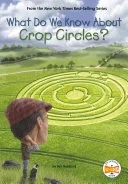
What Do We Know About Crop Circles?
 73
73

What Do We Know About Crop Circles?
Hubbard's "What Do We Know About Crop Circles?" offers a commendable primer on a subject that often devolves into either outright dismissal or wild speculation. The book’s strength lies in its balanced approach, presenting a factual overview of documented formations and the various theories proposed for their existence. A particularly strong passage details the early hoaxes, grounding the discussion in tangible human agency. However, the work occasionally leans too heavily on presenting theories as equally weighted possibilities without sufficiently emphasizing the scientific consensus or the preponderance of evidence pointing toward human creation for most modern circles. This leaves a slight imbalance for readers seeking a definitive, evidence-based understanding. Nonetheless, for its intended audience, it serves as an engaging introduction to a persistent modern mystery.
📝 Description
73
Ben Hubbard's 2006 book examines crop circles for young readers, starting with early accounts.
Published in 2006, Ben Hubbard's "What Do We Know About Crop Circles?" addresses the mystery of these formations for a young audience. The book traces the history of crop circles, from ancient folklore to their notable increase in complexity and frequency during the late 20th century, particularly in England. It details scientific investigations and the various theories that have emerged to explain their existence.
The work is designed for readers aged 8 to 12, making complex subjects accessible. It encourages critical thinking by looking at both natural and human explanations, such as hoaxes and natural phenomena, alongside speculative ideas about extraterrestrial intelligence or other unknown forces. The book aims to spark curiosity and promote a structured way of approaching unexplained events.
Central to understanding crop circles is the analysis of their patterns and the debate over their origins. Hubbard introduces the geometric precision and large scale of these designs, raising questions about who or what creates them. The book contrasts the view of crop circles as elaborate human art projects, citing Doug Bower and Dave Chorley's confessions, with beliefs in more mysterious or non human creators.
This book engages with the esoteric tradition by examining phenomena that lie outside conventional scientific explanation. Crop circles, often linked to UFO sightings and speculative theories about consciousness or energy fields, are a recurring subject in popular esoteric literature. Hubbard's work, while aimed at a younger demographic, touches upon these broader themes of the unexplained and the human fascination with mysteries that challenge established paradigms, placing it within a lineage of popularizations of fringe topics.
💡 Why Read This Book?
• Learn about the documented history of modern crop circles, including the early claims of Doug Bower and Dave Chorley in the late 20th century, to understand the evolution of the phenomenon. • Discover the range of explanations for crop circles, from natural occurrences and human hoaxes to more speculative theories, fostering a critical approach to unexplained events. • Explore the geometric complexity of crop circle designs, prompting an appreciation for patterns and precision in both natural and man-made phenomena.
⭐ Reader Reviews
Honest opinions from readers who have explored this book.
❓ Frequently Asked Questions
When did crop circles start appearing frequently?
While ancient folklore mentions strange field patterns, the phenomenon of modern, intricate crop circles gained widespread public attention primarily in the late 1970s and 1980s, particularly in the United Kingdom.
Who are Doug Bower and Dave Chorley?
Doug Bower and Dave Chorley were two English men who, in 1991, claimed responsibility for creating many of the crop circles that appeared in southern England starting in the late 1970s, using simple tools like planks and ropes.
Are crop circles natural phenomena?
While some minor field disturbances can be attributed to natural causes like wind or weather, the complex geometric patterns characteristic of modern crop circles are generally not considered natural phenomena by scientists.
What are some common theories about crop circle origins?
Theories range from elaborate hoaxes by humans, unusual weather events, and plasma vortices to more speculative ideas involving extraterrestrial spacecraft or unknown natural forces.
How does "What Do We Know About Crop Circles?" approach the mystery?
The book presents a balanced overview, exploring both scientific investigations and fanciful theories, encouraging young readers to consider various explanations and develop their own critical thinking.
Is this book suitable for adults interested in the topic?
While written for younger readers, the book provides a foundational overview of the crop circle phenomenon, its history, and the ongoing debate, making it a simple starting point for adult curiosity.
🔮 Key Themes & Symbolism
The Geometry of Mystery
The book delves into the precise geometric designs that characterize crop circles, ranging from simple circles to complex fractals and mandalas. It highlights the mathematical sophistication and scale of these formations, prompting questions about their creation. The exploration of these patterns invites contemplation on inherent universal geometries and the potential for intelligences, human or otherwise, to express themselves through such precise visual languages.
Hoax vs. Phenomenon
A central theme is the ongoing debate between crop circles as elaborate human-made illusions and genuine unexplained phenomena. Hubbard presents the confessions of artists like Doug Bower and Dave Chorley, who demonstrated how simple tools could create complex designs. This grounds the discussion in verifiable human ingenuity while still acknowledging the persistent fascination with more mysterious origins, including speculative theories about extraterrestrial involvement or unknown natural forces.
Investigating the Unexplained
The work encourages a methodical approach to investigating mysteries. It showcases how scientists, researchers, and enthusiasts have attempted to understand crop circles through observation, documentation, and theorizing. This theme emphasizes critical thinking, evidence evaluation, and the importance of distinguishing between rational explanation and fanciful speculation when confronting the unknown aspects of our world.
Folklore and Modern Mythology
Crop circles are presented as a modern manifestation of ancient folklore surrounding strange occurrences in agricultural landscapes. The book touches upon how these formations have become a contemporary myth, capturing public imagination and inspiring countless stories and theories. This connects the phenomenon to a long human tradition of seeking meaning in unusual natural events.
💬 Memorable Quotes
“Are the geometric field patterns fact, myth, or legend?”
— This rhetorical question frames the central inquiry of the book, inviting readers to consider the various interpretations and levels of certainty surrounding crop circle formations, from documented reality to folkloric tales.
“Read about all of the rational and fanciful explanations.”
— This statement promises a comprehensive exploration of crop circles, assuring readers that the book will cover both grounded, scientific theories and more imaginative, speculative ideas without bias.
“The phenomenon of crop circles... one of the most studied mysteries of the natural world.”
— This highlights the significant public and academic interest in crop circles, positioning them as a serious subject of investigation rather than mere curiosities, underscoring their enduring enigmatic quality.
“What Do We Know About: an exciting new addition to the #1 New York Times Best-Selling Who Was? series!”
— This positions the book within a successful educational series, suggesting its reliable approach to presenting factual information in an engaging manner for a young audience.
“Curious young readers learn about the phenomenon of crop circles.”
— This clearly defines the target audience and the book's primary educational goal: to inform and engage young people about the intriguing subject of crop circles.
🌙 Esoteric Significance
Tradition
While not explicitly tied to a specific esoteric lineage like Hermeticism or Kabbalah, crop circles resonate with traditions that emphasize sacred geometry and cosmic symbolism. The intricate patterns often echo mandalas, yantras, and celestial maps found in various mystical systems, suggesting a universal language of form. The phenomenon can be viewed through a lens of synchronicity and meaningful coincidence, concepts central to Jungian psychology and certain occult interpretations of reality.
Symbolism
The primary symbolism in crop circles lies in their geometric precision and scale, often incorporating elements like circles, spirals, and fractal patterns. These shapes are deeply symbolic across many traditions, representing unity, wholeness, cycles of creation, and the interconnectedness of all things. The act of their appearance in agricultural fields, places of sustenance and growth, adds layers of meaning related to fertility, harvest, and the earth's own messages.
Modern Relevance
Contemporary thinkers and practitioners in fields like sacred geometry, consciousness studies, and even some ufological circles continue to draw inspiration from crop circles. They are seen as potential communication from unknown intelligences, or as manifestations of planetary consciousness. The ongoing debate and the sheer artistry of many formations keep them relevant as subjects for contemplation on art, mystery, and the boundaries of human knowledge.
👥 Who Should Read This Book
• Young readers aged 8-12 with a curious mind and an interest in mysteries, unexplained phenomena, and the natural world. • Students of comparative folklore and modern mythology seeking accessible examples of contemporary legends and their cultural impact. • Educators and parents looking for engaging non-fiction resources that encourage critical thinking and discussion about evidence and belief.
📜 Historical Context
The modern crop circle phenomenon exploded into public consciousness in the late 1970s and 1980s, a period marked by increasing interest in the unexplained, UFOs, and alternative theories. This era saw a surge in pseudo-scientific investigation and popular fascination with mysteries that challenged conventional understanding. The work of Doug Bower and Dave Chorley, who famously confessed to creating many early designs in 1991, directly addressed the growing belief in non-human origins, injecting a dose of skepticism into the discourse. While figures like Jacques Vallée were exploring anomalous phenomena, the crop circle debate often existed on the fringes, fueled by media sensationalism and a public eager for extraordinary explanations. The book’s emergence in 2022 reflects a continuing cultural dialogue about perception, evidence, and the human drive to find meaning in puzzling natural occurrences, drawing parallels to earlier periods of intense interest in aerial anomalies.
📔 Journal Prompts
The geometric precision observed in crop circles and its potential implications.
Comparing the rational explanations for crop circles with more fanciful theories.
The role of Doug Bower and Dave Chorley in shaping the crop circle narrative.
Reflecting on how myths and legends emerge in the modern age.
The balance between skepticism and open-mindedness when encountering the unexplained.
🗂️ Glossary
Crop Circle
Geometric patterns or designs formed by flattening crops such as wheat, barley, or rapeseed, typically in agricultural fields.
Hoax
An act intended to deceive or trick someone, often for amusement or to create a false impression, as in deliberately creating crop circle formations.
Sacred Geometry
The study of geometric shapes and proportions that appear in nature and are believed to hold symbolic or spiritual significance across various cultures and traditions.
Phenomenon
An observable fact or event, especially one whose cause or explanation is in question or unknown.
Rational Explanation
An explanation for an event or phenomenon that is based on logic, reason, and observable evidence, as opposed to speculation or belief.
Fanciful Explanation
An explanation that is imaginative and whimsical, often involving elements of fantasy or speculation rather than concrete evidence.
Doug Bower and Dave Chorley
Two English artists who claimed in 1991 to have created many of the complex crop circles that appeared in the UK from the late 1970s onward, using simple tools.