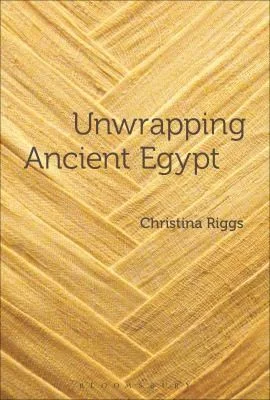
Unwrapping Ancient Egypt
 84
84

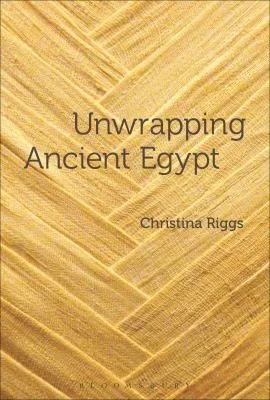
Unwrapping Ancient Egypt
Christina Riggs offers a refreshing perspective in *Unwrapping Ancient Egypt*, steering clear of the well-trodden paths of pyramidology and Tutankhamun’s tomb. Instead, she focuses on the tangible realities of Egyptian existence, a strength that grounds the narrative in verifiable archaeology. The exploration of the ‘House of Life’ (Per Ankh) as a center for scribal and religious activity is particularly illuminating, demonstrating the book's capacity to reveal the mundane alongside the monumental. However, the sheer breadth of topics, while comprehensive, occasionally leads to a somewhat fragmented feel, with certain sections feeling less developed than others. Riggs excels at presenting complex ideas without resorting to jargon, making the material accessible. Ultimately, *Unwrapping Ancient Egypt* provides a grounded, intelligent survey for those seeking substance over sensationalism.
📝 Description
84
### What It Is Unwrapping Ancient Egypt presents a scholarly yet accessible examination of Egyptian civilization, moving beyond common stereotypes to explore its intricate societal structures, religious beliefs, and artistic expressions. Christina Riggs’s work focuses on how Egyptians themselves perceived their world and their place within it, drawing on archaeological evidence and textual analysis. The book unpacks the materiality of ancient Egyptian life, from the construction of monuments to the personal adornments of its people.
### Who It's For This volume is ideal for readers interested in a nuanced understanding of ancient Egypt, particularly those seeking to grasp the daily lives, beliefs, and practices of its inhabitants beyond the grand narratives of pharaohs and pyramids. It caters to students of history, archaeology, and religious studies, as well as general readers with a curiosity for the ancient world who appreciate rigorous research presented clearly.
### Historical Context Riggs's work engages with the ongoing scholarly discourse surrounding ancient Egypt, a field historically shaped by colonial perspectives and sensationalized portrayals. The book emerged in 2014, a period of increased scholarly focus on social history and the lived experiences of non-elites within ancient societies. It contributes to a broader academic trend that seeks to deconstruct the 'mysterious Egypt' trope, emphasizing empirical evidence and critical interpretation over romanticized notions.
### Key Concepts The book explores concepts such as the Egyptian understanding of *maat* (cosmic order and justice), the significance of funerary rituals and beliefs about the afterlife, and the role of art and architecture in expressing power and identity. It also examines the practicalities of labor, administration, and the development of writing systems, providing a holistic view of this ancient civilization.
💡 Why Read This Book?
• Gain insight into the concept of *maat* and its pervasive influence on Egyptian daily life and cosmic understanding, as detailed in the book's exploration of social order. • Understand the practicalities and symbolic importance of Egyptian burial practices, moving beyond mere superstition to grasp their view of the afterlife as presented in the text. • Discover the function of the *Per Ankh* (House of Life) not just as a library but as a dynamic center for scribal training and religious innovation, as discussed by Riggs.
⭐ Reader Reviews
Honest opinions from readers who have explored this book.
❓ Frequently Asked Questions
What period of Ancient Egyptian history does Christina Riggs cover in 'Unwrapping Ancient Egypt'?
The book covers a broad sweep of Ancient Egyptian history, with a particular focus on the New Kingdom and later periods, though it draws examples from across millennia to illustrate core concepts like social structure and religious practice.
Does 'Unwrapping Ancient Egypt' discuss hieroglyphs?
Yes, the book addresses the development and use of hieroglyphs, examining their role in religious texts, monumental inscriptions, and administrative documents, and how they functioned within Egyptian society.
Are the pyramids and pharaohs central to 'Unwrapping Ancient Egypt'?
While pyramids and pharaohs are present, Riggs emphasizes a broader view of Egyptian life. The book prioritizes understanding the society, beliefs, and daily experiences of a wider range of people, not solely focusing on monumental structures or royal figures.
What kind of archaeological evidence does Riggs use?
Riggs draws upon a diverse range of archaeological evidence, including settlement remains, tomb goods, architectural analysis, and artistic representations, to reconstruct aspects of ancient Egyptian life and belief systems.
Is 'Unwrapping Ancient Egypt' suitable for beginners?
The book is written in an accessible style, making it suitable for both beginners and those with some existing knowledge of ancient Egypt. Riggs avoids overly academic jargon, explaining complex ideas clearly.
What is the significance of the title 'Unwrapping Ancient Egypt'?
The title suggests a process of revealing and understanding the layers of Egyptian civilization, moving past superficial or sensationalized images to uncover the deeper realities of its culture, society, and beliefs.
🔮 Key Themes & Symbolism
The Materiality of Belief
Riggs emphasizes how ancient Egyptians expressed their beliefs through tangible objects and structures. The book examines how amulets, tomb furnishings, and temple architecture were not merely decorative but were integral to enacting beliefs about the cosmos, divine power, and the afterlife. The careful arrangement of grave goods, for instance, reflects a deep-seated conviction in the continuation of life beyond death and the need to equip the deceased for that journey, demonstrating a direct correlation between physical artifacts and spiritual conviction.
Social Structures and Daily Life
A core focus is the intricate social hierarchy and the daily existence of Egyptians across different strata. The work explores the roles of scribes, artisans, farmers, and priests, detailing their contributions to society and the administrative systems that governed them. By examining evidence from settlements and workplaces, Riggs reconstructs the practicalities of labor, housing, and community life, offering a counterpoint to narratives solely centered on royalty and religious elites. This provides a grounded perspective on the functioning of a complex ancient civilization.
Cosmic Order and Ma'at
The concept of *maat*—representing truth, balance, order, harmony, law, morality, and justice—is presented as a foundational principle in the Egyptian worldview. Riggs illustrates how *maat* permeated religious rituals, legal systems, and even artistic conventions. Maintaining *maat* was considered essential for the stability of the cosmos and society, and the actions of pharaohs, gods, and individuals were measured against this ideal. The book shows how this concept shaped Egyptian ethical and political thought.
The Role of the Per Ankh
Riggs sheds light on the significance of the *Per Ankh*, or 'House of Life.' Far more than a simple library, these institutions served as vital centers for scribal training, the copying and creation of religious and magical texts, and scholarly pursuits. They were crucial in preserving and disseminating knowledge, influencing religious practice and administrative efficiency. The book highlights their role in the intellectual and spiritual life of Egypt, connecting the preservation of texts to the maintenance of cosmic order.
💬 Memorable Quotes
“The Egyptians' understanding of the world was deeply embedded in their material culture.”
— This highlights Riggs's focus on how physical objects—from amulets to buildings—were not just possessions but active components in expressing and maintaining religious and social order.
“The concept of 'maat' provided a framework for both individual ethics and cosmic stability.”
— This underscores the pervasive influence of the principle of *maat* (truth, order, justice) across all aspects of Egyptian life, acting as a guiding force for behavior and societal structure.
“Funerary rituals were not simply about death, but about ensuring the continuity of life.”
— This interpretation emphasizes that Egyptian afterlife beliefs and practices were geared towards facilitating a successful transition and continued existence, viewing death as a passage rather than an end.
“The 'House of Life' was a nexus of scribal activity and sacred knowledge.”
— This points to the crucial function of the *Per Ankh* as a center for learning, text production, and the transmission of religious and administrative wisdom within ancient Egypt.
“Archaeological evidence often reveals the everyday practices of ordinary Egyptians.”
— This statement reflects the book's commitment to using tangible findings from excavations to reconstruct the lives and routines of non-elite individuals, moving beyond elite-focused historical narratives.
🌙 Esoteric Significance
Tradition
While not overtly aligned with a specific esoteric school like Theosophy or Hermeticism, *Unwrapping Ancient Egypt* engages with themes often explored within esoteric traditions: the cyclical nature of existence, the profound connection between the material and spiritual realms, and the symbolic language of ancient cultures. It provides a scholarly grounding for concepts that esotericists frequently interpret through a mystical lens, offering a factual basis for understanding Egyptian cosmology and ritual practices.
Symbolism
Key symbols explored include the *ankh*, representing life, and the scarab beetle, symbolizing rebirth and the sun god Ra. The book examines how these symbols were integrated into religious iconography, amulets, and funerary objects, conveying complex theological ideas about creation, regeneration, and divine power. The pervasive imagery of the afterlife, with its trials and transformations, also holds deep symbolic weight, representing the soul's journey towards eternal order.
Modern Relevance
Contemporary practitioners of various esoteric paths, particularly those interested in ancient Egyptian magic, Kemeticism, or comparative mythology, often draw upon scholarly works like Riggs’s. It serves as a vital resource for understanding the original cultural and historical context of Egyptian deities, rituals, and symbols, enabling more informed and nuanced personal practices and interpretations. Modern occultists can use this work to differentiate between historical practices and later esoteric developments.
👥 Who Should Read This Book
• Aspiring Egyptologists and archaeology students seeking a comprehensive overview grounded in current scholarship. • Readers interested in the intersection of religion, society, and daily life in the ancient world, moving beyond popular sensationalism. • Individuals exploring comparative mythology or ancient spiritual traditions who require accurate historical context for Egyptian beliefs and practices.
📜 Historical Context
Christina Riggs’s *Unwrapping Ancient Egypt*, published in 2014, entered a scholarly landscape continually debating the interpretation of Egyptian civilization. The field has long grappled with the legacy of 19th-century Egyptology, which often prioritized monumental discoveries and exoticism. Riggs’s approach aligns with a 21st-century academic trend emphasizing social history, materiality, and the perspectives of the ancient Egyptians themselves, rather than imposing external frameworks. This contrasts with earlier, more speculative works that sought hidden meanings or universal spiritual truths. The book implicitly engages with scholars like Jan Assmann, who explored Egyptian concepts of memory and cosmic order, by providing detailed evidence for how these principles manifested. While not facing direct censorship, the work contributes to an ongoing academic re-evaluation, challenging simplistic notions prevalent in popular culture and some earlier scholarly traditions.
📔 Journal Prompts
Reflect on the Egyptian concept of *maat* and its potential application to modern ethical dilemmas.
Consider the role of the *Per Ankh* as a historical model for centers of knowledge preservation and creation.
Analyze the function of specific funerary objects mentioned in the text in relation to Egyptian beliefs about the afterlife.
Explore the relationship between monumental architecture and the expression of social hierarchy in ancient Egypt.
Examine how the material culture described in the book reflects the worldview of its creators.
🗂️ Glossary
Ma'at
The ancient Egyptian concept representing cosmic order, truth, balance, and justice. It was personified as a goddess and was fundamental to Egyptian religion, ethics, and governance.
Per Ankh
Literally 'House of Life,' these were ancient Egyptian institutions that functioned as centers for scribal training, the copying of religious and literary texts, and scholarly activities.
Hieroglyphs
The formal writing system used in ancient Egypt, combining logographic, syllabic, and alphabetic elements. It was used for religious texts, monumental inscriptions, and official documents.
New Kingdom
A period in ancient Egyptian history spanning from the 16th to the 11th century BCE, considered the peak of Egypt's power and influence. Many famous pharaohs and monumental structures date to this era.
Amulets
Objects worn or carried for protection against evil, danger, or disease, or to bring good luck. In ancient Egypt, they were often imbued with religious or magical significance.
Sarcophagus
A stone coffin, typically adorned with sculpture and inscriptions. In ancient Egypt, sarcophagi were elaborate final resting places for the deceased, particularly royalty and the wealthy.
Theology
The study of the nature of God and religious belief. In the context of ancient Egypt, it refers to the complex system of beliefs about deities, creation, and the afterlife.