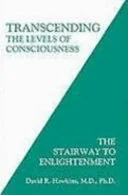
Transcending the Levels of Consciousness
 75
75

Transcending the Levels of Consciousness
Hawkins's "Transcending the Levels of Consciousness" offers a granular examination of the ego's self-imposed prisons. The strength lies in its systematic approach, directly addressing the experiential "blocks" that prevent spiritual advancement, a departure from more abstract spiritual texts. The detailed breakdown of consciousness levels, building on the "Map of Consciousness," provides a concrete framework for self-assessment. However, the highly specific, scalar nature of Hawkins's system can feel prescriptive, potentially leaving little room for individual variance in spiritual unfolding. A passage detailing how the "blockage" of Fear (calibrating at 100) manifests as resistance to truth is particularly illustrative of the book's direct, analytical style. It's a valuable diagnostic tool for the dedicated spiritual seeker, though its rigidity might not suit everyone.
📝 Description
75
### What It Is
David R. Hawkins's 2006 work, "Transcending the Levels of Consciousness," meticulously details the structure and limitations of the human ego. It serves as a practical guide for individuals seeking to advance their spiritual awareness. The book expands upon the author's established "Map of Consciousness," providing actionable steps to move beyond subjective blocks that impede spiritual growth. It focuses on the internal landscape, analyzing the experiential barriers encountered at each stage of awareness.
### Who It's For
This text is primarily for those engaged in serious self-inquiry and spiritual development. Individuals familiar with Hawkins's "Map of Consciousness" will find this book a direct extension, offering deeper dives into specific obstacles. It is suitable for practitioners who understand the concept of consciousness levels and are actively working to ascend them. Those seeking to understand the mechanics of the ego and its influence on perception will also benefit.
### Historical Context
Published in 2006, "Transcending the Levels of Consciousness" emerged during a period of burgeoning interest in consciousness studies and practical spirituality. Hawkins's "Map of Consciousness," first presented in his earlier work "Power vs. Force" (1995), had already gained significant traction. This book built upon that foundation, offering a more focused examination of the mechanics of spiritual ascent. It contributed to the broader New Age and self-help movements of the late 20th and early 21st centuries, differentiating itself through its specific scalar framework.
### Key Concepts
The core of the book revolves around the "Map of Consciousness," a logarithmic scale from 1 to 1000 that calibrates the relative levels of spiritual enlightenment. Hawkins categorizes these levels by dominant emotions and states of being, such as Shame (20), Guilt (30), Apathy (50), Grief (75), Fear (100), Anger (150), Pride (175), Courage (200), Neutrality (250), Willingness (310), Acceptance (350), Reason (400), Love (500), Peace (540), and Enlightenment (700-1000). The book explains how negative states correlate with lower consciousness levels and hinder spiritual progress, while positive states facilitate advancement.
💡 Why Read This Book?
• You will learn a precise method for identifying personal spiritual "blockages" by referencing the "Map of Consciousness," allowing for targeted self-correction. • You will gain an understanding of how specific negative emotions like "Fear" (calibrating at 100) create subjective limitations, as explored in the book's detailed level-by-level analysis. • You will discover practical instructions for transcending egoic limitations, moving from lower states like "Shame" (calibrating at 20) towards higher states like "Acceptance" (calibrating at 350).
⭐ Reader Reviews
Honest opinions from readers who have explored this book.
❓ Frequently Asked Questions
What is the "Map of Consciousness" as presented in David R. Hawkins's book?
The "Map of Consciousness" is a logarithmic scale from 1 to 1000, developed by David R. Hawkins, calibrating the relative levels of spiritual enlightenment and emotional states, ranging from Shame (20) to Enlightenment (700-1000).
How does "Transcending the Levels of Consciousness" expand on "Power vs. Force"?
While "Power vs. Force" (1995) introduced the "Map of Consciousness," this 2006 book provides more detailed explanations and instructions on how to actively transcend the limitations and egoic expressions associated with each specific level of consciousness.
What are the "subjective blocks" mentioned in the book?
Subjective blocks are the experiential, internal obstacles—rooted in specific negative emotions and egoic patterns like "Fear" or "Pride"—that prevent an individual from advancing their awareness to higher levels of consciousness.
Can this book help someone who is new to spiritual concepts?
The book is most effective for those already familiar with Hawkins's "Map of Consciousness" or who have a foundational understanding of spiritual concepts. It delves deeply into specific mechanics rather than broad introductions.
What is the significance of "Courage" on Hawkins's scale?
"Courage" calibrates at 200 on Hawkins's "Map of Consciousness," representing a pivotal shift from negative to positive states. It signifies the ability to face challenges and begin overcoming limitations, marking the entry into the level of "Power."
Does the book offer specific exercises for transcending consciousness levels?
Yes, the book provides detailed explanations and instructions for overcoming the specific experiential blocks and egoic limitations encountered at each level of consciousness, aiming for progressive spiritual advancement.
🔮 Key Themes & Symbolism
The Map of Consciousness
This central concept is a logarithmic scale from 1 to 1000, calibrating the relative levels of human consciousness. Each level is associated with specific emotions and belief systems, such as Shame (20), Fear (100), Anger (150), and Love (500). Hawkins posits that progress is made by moving up this scale, transcending lower, negative states to embrace higher, more positive ones, thereby increasing spiritual awareness and personal power.
Egoic Limitations and Blocks
The book meticulously examines how the ego, through its inherent limitations and identification with lower states of consciousness, creates "subjective blocks" to spiritual growth. These blocks manifest as specific fears, desires, and patterns of thought that keep individuals anchored at particular levels. Understanding these mechanisms is presented as the first step toward their dissolution and transcendence.
Spiritual Advancement Mechanics
Hawkins provides a systematic framework for advancing consciousness. This involves recognizing the specific experiential barriers at each level and applying principles to overcome them. The focus is on the practical, internal work required to shift from states of "Power over" others to states of "Inner Power," ultimately leading to higher states of awareness and enlightenment.
Levels of Consciousness Explained
The work elaborates on the distinct characteristics of each consciousness level, from the most basic survival instincts to the highest states of spiritual realization. It details the emotional signatures, perceptions, and typical behaviors associated with levels like Reason (400), Love (500), and Peace (540), offering a clear map for self-diagnosis and progress.
💬 Memorable Quotes
“The ego is a mechanism of the mind that has come into being through the process of identification.”
— This highlights the ego's constructed nature, emphasizing that it's not an inherent part of being but a product of mental processes and attachment to specific identities or viewpoints.
“All the suffering in the world is due to the avoidance of pain.”
— This statement points to the futility of escaping difficult emotions or situations. Hawkins suggests that true resolution comes from facing and processing these experiences rather than trying to suppress them.
“The higher the level of consciousness, the greater the capacity for love and compassion.”
— This interpretation links spiritual advancement directly to increased empathy and unconditional positive regard for oneself and others, core attributes of higher states of awareness.
“The avoidance of responsibility is the basic characteristic of the lower levels of consciousness.”
— This concept suggests that lower states of being are characterized by a reluctance to acknowledge one's role in their circumstances, often leading to blame and victimhood.
“Truth is not what you want it to be, but what it is.”
— This underscores the importance of objective reality over subjective desires or beliefs. It aligns with the principle that spiritual progress requires facing reality as it is, irrespective of personal preferences.
🌙 Esoteric Significance
Tradition
Hawkins's work draws heavily from the lineage of spiritual traditions that emphasize consciousness as the fundamental reality, including elements reminiscent of Vedanta and certain Gnostic ideas about overcoming illusion. However, his unique contribution is the quantification and mapping of these states, creating a pseudo-scientific, empirical framework for spiritual advancement that departs from purely mystical or devotional approaches.
Symbolism
The primary symbol is the "Map of Consciousness" itself – a linear, logarithmic scale representing a spiritual ascent. The numbers associated with emotions (e.g., Shame at 20, Love at 500) function as symbolic markers of spiritual 'altitude.' The concept of "Power vs. Force" also acts symbolically, contrasting destructive, low-level energies with constructive, high-level energies that facilitate spiritual growth.
Modern Relevance
Hawkins's work continues to influence contemporary consciousness researchers, spiritual teachers, and practitioners focused on personal development and emotional intelligence. His scalar model is often cited in discussions about mindfulness, emotional regulation, and the scientific study of spirituality, resonating with modern approaches that seek empirical validation for metaphysical concepts.
👥 Who Should Read This Book
• Students of David R. Hawkins's "Map of Consciousness": Those familiar with "Power vs. Force" will find this book offers deeper explanations and practical methods for applying the map. • Serious spiritual seekers: Individuals committed to self-inquiry and actively working to overcome personal limitations and negative emotional states will benefit from the detailed analysis. • Practitioners of esoteric psychology: Those interested in the mechanics of the mind, the ego, and the subjective experience of consciousness will find a structured framework for exploration.
📜 Historical Context
Published in 2006, "Transcending the Levels of Consciousness" arrived at a time when interest in consciousness studies and practical spirituality was significant, fueled by the New Age movement. David R. Hawkins, building on the success of his 1995 book "Power vs. Force," offered a quantifiable system for spiritual development. This work positioned itself within the broader self-help and esoteric landscape, distinguishing itself through its specific logarithmic scale and focus on the mechanics of consciousness. While authors like Eckhart Tolle were exploring presence and Ram Dass offered insights into spiritual journeys, Hawkins provided a more diagnostic, scalar framework. The reception was largely within his existing readership, reinforcing his established approach to spiritual science rather than sparking widespread debate in mainstream academic circles.
📔 Journal Prompts
The "Map of Consciousness" and its associated levels.
Identifying subjective blocks at the level of "Fear" (100).
The ego's role in maintaining specific consciousness levels.
Strategies for transcending "Shame" (20) and "Guilt" (30).
Personal experience of the shift from "Force" to "Power."
🗂️ Glossary
Map of Consciousness
A logarithmic scale from 1 to 1000, developed by David R. Hawkins, that calibrates the relative levels of spiritual enlightenment and emotional states, from Shame (20) to Enlightenment (700-1000).
Calibrates
In Hawkins's system, this refers to the process of assigning a specific numerical value on the Map of Consciousness to a person, object, statement, or phenomenon based on its energetic signature.
Subjective Blocks
Experiential, internal obstacles rooted in specific negative emotions and egoic patterns that prevent an individual from advancing their awareness to higher levels of consciousness.
Ego
A psychological construct, described as a mechanism of the mind that identifies with specific thoughts, beliefs, and states, often acting as a barrier to higher consciousness.
Power vs. Force
A core distinction in Hawkins's work, where 'Force' represents negative, destructive energy associated with lower consciousness levels (e.g., fear, anger), and 'Power' represents positive, constructive energy of higher consciousness (e.g., willingness, love).
Transcend
To go beyond the limitations of a particular level of consciousness or egoic pattern, moving towards higher states of awareness and spiritual realization.
Spiritual Advancement
The process of progressive growth in awareness, moving up the Map of Consciousness by overcoming negative states and embodying higher virtues and truths.