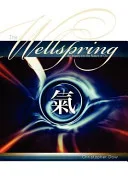
The Wellspring
 76
76

The Wellspring
Christopher Dow's "The Wellspring" grapples with the persistent, yet scientifically elusive, concept of a universal life force. The author commendably attempts to bridge the chasm between ancient esoteric traditions and modern skepticism, a task fraught with difficulty. Dow's strength lies in his thorough cataloging of how various cultures have perceived this energy, from mana to chi, providing a valuable historical overview. However, the book falters when it ventures into scientific explanation, often relying on speculative interpretations rather than concrete evidence. A particularly interesting section examines the energetic principles behind Eastern martial arts, offering a glimpse into practical applications. Despite its intellectual ambition, "The Wellspring" ultimately leaves the reader with more questions than answers, hovering on the precipice of proof without fully arriving. It is a commendable survey but falls short of definitive revelation.
📝 Description
76
### What It Is The Wellspring, first published in 2008 by Christopher Dow, investigates the concept of a universal creative life force, a notion present across numerous ancient and indigenous cultures. The book examines how this energy, known by various names such as mana, prana, ka, and chi, has been understood and utilized throughout history. It bridges the gap between ancient esoteric philosophies and modern scientific inquiry, exploring the tangible effects attributed to this vital energy in areas ranging from personal well-being to the foundations of Eastern martial arts like tai chi chuan.
### Who It's For This work is aimed at readers interested in the intersection of spirituality, philosophy, and science, particularly those curious about vitalistic theories of life and consciousness. It will appeal to students of comparative religion, practitioners of mind-body disciplines seeking a deeper theoretical understanding, and skeptics open to exploring phenomena that lie beyond conventional scientific explanation. Those who have encountered concepts like chi or prana in other contexts will find this book offers a rigorous, historically-informed perspective.
### Historical Context The Wellspring situates its exploration of life force within a long historical lineage, referencing prehistoric beliefs and tracing the concept through various global traditions. It acknowledges a rich history of discourse on vital energies, from the Vedic concept of prana to the Chinese notion of chi. The book implicitly engages with the ongoing debate between materialistic scientific paradigms and vitalistic philosophies that posit unseen energetic principles underpinning existence. Its publication in 2008 comes at a time when interest in alternative health and consciousness studies continues to grow.
### Key Concepts The book centers on the idea of a pervasive creative energy that animates all life. It explores how this energy is believed to influence physical health, mental clarity, and spiritual development. Dow discusses various methods and philosophies that aim to cultivate, direct, or harmonize with this life force, linking these practices to enhanced vitality and performance. The work also addresses the persistent question of scientific validation for these energetic concepts, examining why empirical evidence has been elusive despite widespread belief and reported effects.
💡 Why Read This Book?
• Understand the historical breadth of life force concepts: Learn how ancient cultures from various global regions, such as the Vedic concept of prana, conceptualized a universal animating energy, and how these ideas differ and overlap. • Explore practical applications of vital energy: Discover how the cultivation of chi, as discussed in relation to tai chi chuan, is believed by practitioners to enhance physical well-being and martial prowess. • Engage with the scientific debate on vitalism: Grasp the challenges and arguments surrounding the scientific validation of esoteric energetic principles, providing a foundation for critical evaluation.
⭐ Reader Reviews
Honest opinions from readers who have explored this book.
❓ Frequently Asked Questions
What is the central thesis of Christopher Dow's "The Wellspring"?
The central thesis is that a universal creative life force, known by many names like chi and prana, exists and influences life, well-being, and practices such as tai chi chuan, despite limited scientific consensus.
When was "The Wellspring" originally published?
"The Wellspring" by Christopher Dow was first published in 2008.
What ancient concepts of life force does the book explore?
The book explores ancient concepts including mana (Polynesian), prana (Vedic/Indian), ka (Egyptian), and chi (Chinese), among others, tracing their historical presence worldwide.
How does "The Wellspring" relate to Eastern martial arts?
It discusses how the concept of chi is foundational to many Eastern martial arts, particularly tai chi chuan, and how its cultivation is believed to enhance physical capabilities and internal balance.
Does the book offer scientific proof for life force?
The book addresses the lack of conventional scientific evidence for life force while exploring historical beliefs and theoretical frameworks that suggest its existence and effects.
Who is the author, Christopher Dow?
Christopher Dow is the author of "The Wellspring," first published in 2008. Information about his specific background or other works is not detailed in the provided summary.
🔮 Key Themes & Symbolism
Universal Life Force
The core theme is the existence of a ubiquitous creative energy that animates all living things. Dow examines how this force has been conceptualized across diverse cultures, from the Polynesian 'mana' to the Indian 'prana' and Chinese 'chi'. The book posits that understanding and harmonizing with this energy is central to life itself, influencing health, vitality, and spiritual awareness. It suggests that despite varying cultural interpretations, the underlying concept points to a fundamental aspect of existence that science has yet to fully grasp or acknowledge.
Historical & Cultural Perceptions
This theme focuses on the historical trajectory and cross-cultural manifestations of the life force concept. Dow details how different societies have named, described, and sought to harness this energy. From prehistoric animistic beliefs to more formalized philosophical systems, the book illustrates a persistent human intuition about an animating principle beyond the purely physical. It highlights the shared human endeavor to understand the source of life and consciousness through various spiritual and philosophical lenses.
Esotericism and Science
The book navigates the complex relationship between esoteric knowledge and scientific inquiry, particularly concerning vitalistic theories. Dow confronts the challenge of validating concepts like chi within a materialistic scientific framework, exploring why empirical evidence has been scarce. It engages with the historical tension between scientific reductionism and the holistic, energetic models found in many spiritual traditions, questioning the limitations of current scientific paradigms in explaining phenomena related to consciousness and life energy.
Practices for Cultivating Energy
Dow explores how various traditions have developed practices to cultivate, direct, and benefit from the life force. This includes examining the principles behind Eastern martial arts, such as tai chi chuan, where the manipulation of chi is central to physical prowess and internal balance. The discussion extends to other disciplines focused on energy work, suggesting that these practices offer tangible ways to enhance personal well-being, mental clarity, and overall vitality through conscious interaction with this fundamental energy.
💬 Memorable Quotes
“Much has been written about this energy and the ways in which it can be strengthened to enhance life and well-being as well as provide the basis for many of the Eastern martial arts, particularly tai chi chuan.”
— This statement highlights the book's focus on both the theoretical understanding and practical application of vital energies. It connects ancient concepts to observable benefits in health and physical disciplines, underscoring the enduring human interest in such forces.
“But if chi is real, why is there so little scientific evidence for its existence?”
— This rhetorical question encapsulates the central tension the book seeks to address: the disconnect between widespread belief in vital energies and their lack of validation within conventional scientific methodologies. It sets the stage for an exploration of why this discrepancy exists.
“Since prehistoric times, peoples the world over have believed in a creative force that inspires life.”
— This opening concept emphasizes the universality and antiquity of the idea of a life-giving force. It frames the discussion within a deep historical and anthropological context, suggesting that the exploration of such energies is a fundamental human pursuit.
“Throughout history it has been known by many names: mana, prana, ka, and chi, to name only a few.”
— This demonstrates the author's intent to survey diverse cultural expressions of the same underlying phenomenon. By listing these specific terms, Dow anchors his abstract concept in concrete historical and linguistic examples, illustrating the global reach of vitalistic thought.
“The work explores the concept of a creative force that inspires life.”
— This paraphrased concept directly addresses the book's primary subject matter, framing it as an investigation into the fundamental principle of animation and creation across existence. It serves as a concise summary of the book's overarching inquiry.
🌙 Esoteric Significance
Tradition
The Wellspring situates itself within the broad spectrum of vitalistic philosophies that underpin many esoteric traditions, particularly those influenced by Eastern thought and Neoplatonism. While not strictly adhering to a single lineage like Hermeticism or Gnosticism, it draws upon the universal concept of a subtle, animating energy found in Vedic, Taoist, and indigenous cosmologies. Dow's work departs from purely mystical interpretations by seeking to connect these concepts to observable phenomena and, crucially, to scientific inquiry, aiming to bridge the esoteric with the empirical.
Symbolism
The book implicitly engages with the symbolism of flow and connection inherent in concepts like chi and prana. Chi, often depicted as flowing water or wind, symbolizes dynamic, invisible forces that sustain life and consciousness. Prana, related to breath, symbolizes the vital spark that connects the material and the spiritual. These symbols represent the unseen architecture of existence, suggesting that understanding their flow and balance is key to health, vitality, and spiritual realization, mirroring the interconnectedness emphasized in many esoteric cosmologies.
Modern Relevance
Contemporary thinkers and practitioners in fields such as quantum biology, transpersonal psychology, and integrated medicine are increasingly open to concepts that challenge purely materialistic explanations of life and consciousness. Works like "The Wellspring" provide a historical and philosophical foundation for exploring subtle energies and vitalistic models that resonate with modern investigations into consciousness, biofields, and the mind-body connection, offering a counterpoint to reductionist scientific perspectives.
👥 Who Should Read This Book
• Students of comparative religion and philosophy: Those seeking to understand the diverse historical and cultural expressions of vitalistic beliefs across the globe will find a comprehensive overview. • Practitioners of mind-body disciplines: Individuals engaged with practices like tai chi chuan, yoga, or Qigong can gain a deeper theoretical appreciation for the energetic principles they work with. • Skeptics interested in esoteric concepts: Readers curious about phenomena outside conventional scientific paradigms, and who are open to exploring the historical and philosophical arguments for subtle energies, will find this work engaging.
📜 Historical Context
Published in 2008, "The Wellspring" emerged during a period of resurgent interest in consciousness studies and alternative healing modalities, often challenging the dominance of materialistic scientific paradigms. The work implicitly engages with the historical vitalist-materialist debate, which saw thinkers like Hans Driesch in the early 20th century championing 'élan vital' against purely mechanistic explanations of life. Dow's exploration of chi and prana places his work within a lineage that seeks to understand energetic principles absent from mainstream physics. While not directly engaging with contemporary figures like Rupert Sheldrake, whose work on morphic resonance also posits non-material influences, Dow's book contributes to a broader intellectual current questioning the sufficiency of reductionist science. The reception of such works often falls into two camps: esoteric circles embracing the concepts, and scientific communities demanding empirical validation, a dynamic that likely shaped the discourse surrounding "The Wellspring."
📔 Journal Prompts
The concept of mana as a pervasive life force.
The historical evolution of the term 'chi'.
The potential link between prana and physical well-being.
The scientific challenges in validating invisible energies.
The practical implications of cultivating life force for daily practice.
🗂️ Glossary
Chi
The fundamental life force or vital energy in traditional Chinese culture, believed to animate all living things and be central to martial arts and medicine.
Prana
A concept in Hinduism and other Indian traditions referring to the vital life force or energy that permeates the universe, often associated with breath.
Mana
A supernatural force believed to reside in people, animals, plants, and objects, particularly in Polynesian cultures, conferring power and prestige.
Ka
An ancient Egyptian concept often translated as 'life force' or 'spirit double', representing the vital essence that could survive death.
Vitalism
A philosophical viewpoint that life is a special force or principle distinct from all mechanical or chemical forces and which is not reducible to physical and chemical properties.
Tai Chi Chuan
An ancient Chinese martial art practiced for both defense training and health benefits, emphasizing slow, flowing movements and the cultivation of internal energy (chi).
Esoteric
Intended for or likely to be understood by only a small number of people with a specialized knowledge or interest; relating to the occult.