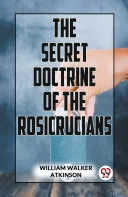
The Secret Doctrine of the Rosicrucians
 77
77

The Secret Doctrine of the Rosicrucians
Atkinson's meticulous approach to Rosicrucian lore, presented here as 'Magus Incognito,' offers a valuable counterpoint to sensationalist accounts. The strength lies in its systematic breakdown of what constitutes Rosicrucian doctrine, attempting to ground it in historical plausibility rather than pure myth. A notable limitation is the inherent difficulty in verifying claims about an order deliberately shrouded in secrecy, leading to some sections feeling speculative. The discussion of the Fama Fraternitatis and the initial stirrings of the Rosicrucian phenomenon in early 17th-century Germany provides a solid historical anchor. This work serves as a critical, if cautious, guide to a perennially fascinating subject.
📝 Description
77
### What It Is The Secret Doctrine of the Rosicrucians presents a comprehensive examination of the purported teachings and historical trajectory of the Rosicrucian order. William Walker Atkinson, writing under the pseudonym Magus Incognito, aims to demystify this elusive society. The work dissects the core tenets attributed to Rosicrucianism, separating historical speculation from documented evidence. It explores the philosophical underpinnings and esoteric principles that have defined this tradition for centuries.
### Who It's For This text is intended for serious students of occult history and comparative esoteric traditions. Readers interested in the origins and evolution of secret societies, particularly those focused on Western esotericism, will find substantial material here. It also serves those seeking to understand the symbolic language and philosophical frameworks that have influenced various mystical movements.
### Historical Context The book situates Rosicrucianism within the broader landscape of early modern European intellectual history, touching upon the alchemical and mystical currents of the 17th century. Atkinson addresses the initial Rosicrucian manifestos, such as the Fama Fraternitatis, published in the early 1600s, which sparked considerable debate and speculation across the continent. The work acknowledges the difficulty in tracing a continuous, verifiable lineage for the order, a challenge that has persisted through subsequent centuries.
### Key Concepts Central to the book is the exploration of Rosicrucian cosmology, which often involves a hierarchical understanding of the universe and humanity's place within it. It examines concepts such as the Great Work (Magnum Opus), the adept's path to spiritual illumination, and the use of symbolic language derived from alchemy and Kabbalah. The text also addresses the purported magical practices and the pursuit of hidden knowledge associated with the order.
💡 Why Read This Book?
• Gain a structured understanding of the core principles attributed to the Rosicrucians, moving beyond popular myths to their philosophical underpinnings as presented in the text. • Explore the historical context surrounding the initial Rosicrucian manifestos, such as the Fama Fraternitatis published in the early 1600s, to grasp their impact on early modern thought. • Understand the symbolic language and alchemical concepts central to Rosicrucian teachings, providing a framework for interpreting esoteric texts.
⭐ Reader Reviews
Honest opinions from readers who have explored this book.
❓ Frequently Asked Questions
What is the primary focus of "The Secret Doctrine of the Rosicrucians"?
The book primarily focuses on examining and demystifying the purported teachings, historical trajectory, and esoteric principles of the Rosicrucian order, separating factual accounts from speculation.
Who was William Walker Atkinson?
William Walker Atkinson was a prolific author on occult and metaphysical subjects who wrote under various pseudonyms, including Magus Incognito. He was instrumental in popularizing esoteric ideas in the early 20th century.
When was "The Secret Doctrine of the Rosicrucians" first published?
The book was first published on January 14, 2014, though William Walker Atkinson wrote extensively in the early 20th century.
Does the book provide a direct lineage of the Rosicrucian order?
The work addresses the historical difficulty in tracing a continuous, verifiable lineage for the Rosicrucian order, acknowledging the secretive nature that complicates such claims.
What kind of esoteric concepts are discussed?
It discusses concepts like the Great Work (Magnum Opus), spiritual illumination, symbolic language derived from alchemy and Kabbalah, and Rosicrucian cosmology.
Is this book suitable for beginners in occult studies?
It is more suited for serious students of occult history and esoteric traditions due to its analytical and historical approach, rather than a simple introduction.
🔮 Key Themes & Symbolism
Rosicrucianism's Elusive History
The work grapples with the historical enigma of the Rosicrucians, a society often referenced but poorly documented. Atkinson scrutinizes the origins, particularly the impact of early 17th-century manifestos like the Fama Fraternitatis. He highlights the challenges in establishing a clear, unbroken lineage, distinguishing between historical fact and persistent legend. This theme underscores the order's deliberate cultivation of mystery and its role in shaping Western esoteric thought.
Esoteric Doctrine and Symbolism
Central to the book is the exposition of Rosicrucian philosophical and spiritual doctrines. This includes interpretations of alchemical processes as metaphors for spiritual transformation (the Great Work), the pursuit of adeptship, and the understanding of cosmic principles. The text aims to decode the symbolic language employed by Rosicrucians, often drawing parallels with Kabbalistic and Hermetic traditions, offering a glimpse into their unique worldview.
The Path of the Adept
The book outlines the supposed path of spiritual development and attainment within Rosicrucianism. This involves not just intellectual study but also the cultivation of inner faculties and the application of esoteric knowledge. It touches upon the idea of hidden masters and the transmission of secret wisdom, presenting the Rosicrucian adept as one who has achieved a high degree of spiritual realization and occult understanding.
Comparative Esotericism
Atkinson places Rosicrucianism within the broader context of Western esoteric movements. The work implicitly or explicitly compares its tenets with related traditions such as Hermeticism, Kabbalah, and alchemy. By examining these connections, the book helps readers understand how Rosicrucianism both drew from and contributed to the rich tapestry of mystical thought that flourished in Europe and beyond.
💬 Memorable Quotes
“The student of the history of occultism... finds many references to "The Rosicrucians."”
— This highlights the pervasive, yet often superficial, awareness of the Rosicrucian order in esoteric literature, setting the stage for Atkinson's deeper investigation.
“But when such person seeks to obtain detailed information... he finds himself baffled and defeated.”
— This points to the core challenge Atkinson addresses: the elusive nature of verifiable Rosicrucian history and doctrine, fueling the mystery surrounding the order.
“The Rosicrucian doctrines are largely based upon the teachings of the ancient philosophers and mystics.”
— This suggests that Rosicrucianism is not entirely novel but rather a synthesis or continuation of older esoteric traditions, linking it to a broader historical current.
“The Great Work is the central aim of the Rosicrucian.”
— This encapsulates the ultimate goal within the Rosicrucian framework, understood as a profound process of spiritual transformation and perfection.
“Symbolism is the language of the soul.”
— This interpretation emphasizes the importance of symbolic representation in conveying esoteric truths, suggesting that Rosicrucian teachings are deeply embedded in symbolic communication.
🌙 Esoteric Significance
Tradition
This work engages with the Western Esoteric Tradition, specifically focusing on the lineage often traced through Hermeticism, Kabbalah, and Alchemy. It seeks to articulate a specific branch of this tradition, Rosicrucianism, which claims a unique synthesis of these elements. The text positions itself as an interpreter of these ancient streams of wisdom, aiming to present their core doctrines in a systematic manner distinct from, yet related to, other esoteric schools.
Symbolism
Key symbols explored include the Rose and Cross, representing the union of the spiritual (cross) and the manifest/material (rose), often signifying spiritual attainment or the perfected human. The concept of the Great Work (Magnum Opus) is central, symbolizing the alchemical transformation of base elements into gold, paralleled with the spiritual evolution of the individual towards enlightenment or adeptship.
Modern Relevance
Contemporary practitioners of Western Hermeticism, students of comparative religion, and those interested in the history of secret societies continue to draw on Atkinson's work. His systematic approach influences modern interpretations of Rosicrucian philosophy and its place within the broader spectrum of esoteric thought, impacting discussions on spiritual alchemy and the development of the adept.
👥 Who Should Read This Book
• Students of Western Esotericism seeking to understand the historical claims and core doctrines attributed to the Rosicrucian order, moving beyond popular myth. • Researchers of secret societies and occult history interested in the evolution of esoteric thought from the Renaissance through the early 20th century. • Individuals exploring alchemical symbolism and its application to spiritual development, particularly the concept of the Great Work as presented in Rosicrucian teachings.
📜 Historical Context
William Walker Atkinson's exploration of Rosicrucianism emerges from a fertile period for occult revivalism in the late 19th and early 20th centuries. The work engages with the intellectual currents of its time, a milieu influenced by the Theosophical Society, founded in 1875, and the broader Hermetic Order of the Golden Dawn. While the Rosicrucian manifestos themselves date to the early 17th century (Fama Fraternitatis, 1612), Atkinson's text addresses the enduring fascination and subsequent revival of interest in these ideas. He navigates the claims of various groups in the early 1900s that purported to represent a true Rosicrucian lineage. This context is crucial, as it was a time when individuals like Aleister Crowley were also deeply involved in reconstructing and interpreting ancient esoteric traditions, often leading to rival claims and interpretations.
📔 Journal Prompts
The symbolism of the Rose and Cross, its meaning within Rosicrucian doctrine.
Initial Rosicrucian manifestos like the Fama Fraternitatis and their historical impact.
The concept of the Great Work (Magnum Opus) and its parallel to personal spiritual evolution.
The challenges in tracing a verifiable lineage for a secret society.
How Rosicrucian teachings synthesize elements from Hermeticism and Kabbalah.
🗂️ Glossary
Rosicrucians
A purported ancient secret society devoted to the study of occult doctrines, mystical philosophy, and the manifestation of occult powers, whose origins are often traced to early 17th-century Europe.
Magus Incognito
The pseudonym used by William Walker Atkinson for this work, signifying a hidden or disguised master, aligning with the secretive nature often associated with esoteric orders.
Fama Fraternitatis
One of the foundational manifestos of the Rosicrucian movement, published in 1612, which announced the existence of a secret society dedicated to the pursuit of wisdom and reform.
Great Work (Magnum Opus)
In alchemy and esoteric traditions, the process of spiritual transformation and perfection, often symbolized by the creation of the Philosopher's Stone or the transmutation of base metals into gold.
Adept
An individual who has attained a high level of spiritual knowledge, wisdom, and power through dedicated study and practice within an esoteric tradition.
Kabbalah
A system of Jewish mysticism and esoteric interpretation of the Hebrew scriptures, focusing on the divine nature, creation, and the relationship between God and humanity, often employing symbolic diagrams like the Tree of Life.
Hermeticism
A philosophical and religious tradition based on the purported teachings of Hermes Trismegistus, emphasizing principles such as 'as above, so below' and advocating for the pursuit of spiritual knowledge and liberation.