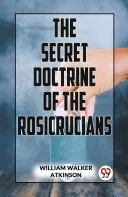
The Secret Doctrine Of The Rosicrucians
 83
83

The Secret Doctrine Of The Rosicrucians
Atkinson's "The Secret Doctrine of the Rosicrucians" offers a systematic if somewhat dated exploration of a perennially fascinating subject. The author, operating under the guise of Magus Incognito, attempts to synthesize fragmented historical accounts and esoteric lore into a coherent narrative. His strength lies in meticulously detailing the various theories surrounding the Order's origins, particularly its alleged 15th-century German roots associated with Christian Rosenkreuz. However, the work's limitation is its reliance on speculative history rather than rigorously verifiable facts, a common pitfall for occult writers of his era. The chapter discussing the "Seven Principles of Rosicrucianism" provides a clear, albeit interpretive, distillation of core tenets that remains accessible. Ultimately, Atkinson provides a solid, if uncritical, introduction for those entering the labyrinth of Rosicrucian studies.
📝 Description
83
### What It Is William Walker Atkinson, writing under the pseudonym Magus Incognito, presents "The Secret Doctrine of the Rosicrucians." This text aims to illuminate the historical origins, philosophical underpinnings, and practical applications attributed to the Rosicrucian Order, a society long veiled in secrecy. The work begins its inquiry into the Order's genesis, a subject marked by historical ambiguity and diverse theories.
### Who It's For This book is intended for students of Western esotericism, particularly those intrigued by the Rosicrucian tradition. It will appeal to individuals seeking to understand the historical narratives and philosophical concepts that have shaped this enigmatic order. Researchers of occult history and comparative religious studies will find it a valuable reference point.
### Historical Context Atkinson's work emerges from a late 19th and early 20th-century surge in occult scholarship and fraternal society exploration. The period saw renewed interest in esoteric traditions, influenced by movements like Theosophy, which Helena Blavatsky founded in 1875. The Rosicrucian Order itself, though its true origins are debated, was often linked to figures like Christian Rosenkreuz and early modern Germany, making it a focal point for historical speculation.
### Key Concepts The book delves into the foundational principles of Rosicrucianism, often exploring its connections to Hermeticism, alchemy, and Christian mysticism. It examines the symbolic language and philosophical tenets that define the Order's teachings, including concepts of spiritual evolution, divine wisdom, and the inner transformation of the adept. The text aims to demystify these elements for the earnest seeker.
💡 Why Read This Book?
• Understand the specific historical theories surrounding the Rosicrucian Order's founding, including its alleged connection to 15th-century Germany, providing a concrete origin point for study. • Grasp the "Seven Principles of Rosicrucianism" as outlined by Atkinson, offering specific philosophical tenets to analyze and potentially apply. • Explore the symbolic language and alchemical connections detailed within the text, giving tangible elements to compare with other Hermetic traditions.
⭐ Reader Reviews
Honest opinions from readers who have explored this book.
❓ Frequently Asked Questions
When was "The Secret Doctrine of the Rosicrucians" first published?
The original publication date for "The Secret Doctrine of the Rosicrucians" by William Walker Atkinson (as Magus Incognito) was August 1, 2023, though it draws on earlier esoteric traditions.
Who was the author William Walker Atkinson?
William Walker Atkinson was a prolific author on occult and New Thought subjects in the late 19th and early 20th centuries, often using pseudonyms like Magus Incognito to explore esoteric topics.
What is the Rosicrucian Order?
The Rosicrucian Order is a secret society, whose historical origins are debated, often linked to early modern Germany and figures like Christian Rosenkreuz, focused on esoteric philosophy, mysticism, and spiritual development.
Does the book discuss Rosicrucian practices?
Yes, the book explores the philosophy and attributed practices of the Rosicrucian Order, aiming to illuminate their methods of spiritual and personal development for the reader.
Is this book suitable for beginners in occult studies?
It is suitable for beginners interested in the historical and philosophical aspects of the Rosicrucian tradition, providing an accessible entry point to Atkinson's interpretation of its doctrines.
What is Hermeticism and its relation to Rosicrucianism?
Hermeticism is an ancient philosophical and religious tradition based on writings attributed to Hermes Trismegistus. This book explores Rosicrucianism's connections to Hermetic principles of wisdom and spiritual alchemy.
🔮 Key Themes & Symbolism
Rosicrucian Origins
The work meticulously examines the historical ambiguity surrounding the Rosicrucian Order's genesis. It details theories linking the order to 15th-century Germany and the legendary figure of Christian Rosenkreuz, presenting these narratives as foundational elements for understanding the order's mystique and purported ancient lineage.
Esoteric Philosophy
Atkinson distills what he presents as the core philosophical tenets of Rosicrucianism. This includes exploring its alignment with Hermeticism, alchemy, and Christian mysticism, focusing on concepts of spiritual evolution, divine knowledge, and the adept's inner transformation through disciplined study and practice.
Symbolic Language
The book delves into the rich symbolic vocabulary employed by the Rosicrucians. It aims to decipher the meaning behind various symbols, interpreting them as keys to unlocking deeper spiritual truths and understanding the Order's esoteric teachings on cosmology and human potential.
Spiritual Development
A central theme is the path of spiritual development or adeptship as understood within the Rosicrucian framework. The text outlines principles and methods intended to guide the practitioner towards higher consciousness and a more profound understanding of universal laws.
💬 Memorable Quotes
“The Rosicrucian Order is a secret society that has been around for centuries.”
— This statement highlights the enduring mystique and historical depth attributed to the Rosicrucian Order, setting the stage for an exploration of its hidden doctrines and longevity.
“The book begins by discussing the origins of the Rosicrucian Order, which is shrouded in mystery.”
— This points to the text's investigative approach, acknowledging the historical uncertainty surrounding the Order's inception and signaling an attempt to clarify its enigmatic beginnings.
“Some believe that the order was founded in Germany in the 16th century, while others believe that it is much older.”
— This highlights the conflicting historical narratives and speculative timelines that surround the Rosicrucian Order, underscoring the challenge in establishing a definitive origin point.
“The story was written by William Walker Atkinson, who wrote under the pen name Magus Incognito.”
— This identifies the author and his chosen pseudonym, indicating a deliberate choice to adopt an esoteric persona for the exploration of occult and mystical subjects.
“The work explores the history, philosophy, and practices of the Rosicrucian Order.”
— This serves as a concise summary of the book's scope, outlining its intention to cover the historical background, theoretical framework, and practical applications associated with the Rosicrucian tradition.
🌙 Esoteric Significance
Tradition
This work fits squarely within the Western Esoteric Tradition, specifically drawing from Hermeticism, Neoplatonism, and Christian mysticism, which are foundational to Rosicrucian thought. Atkinson attempts to present a coherent lineage and philosophical framework for the Rosicrucian Order, positioning it as a key repository of ancient wisdom passed down through adept lineages.
Symbolism
Key symbols explored include the Rose and Cross, representing the union of the spiritual (rose) and material (cross) or the soul's journey through the material plane. The text likely delves into alchemical symbolism, interpreting processes like the transmutation of metals as metaphors for the spiritual transformation of the individual adept.
Modern Relevance
Contemporary practitioners and students of Western esotericism, particularly those interested in organizations like AMORC or FUDOSI-affiliated groups, often consult Atkinson's work for foundational understanding. His accessible synthesis continues to inform modern interpretations of Rosicrucian philosophy and historical narratives.
👥 Who Should Read This Book
• Students of Western Esotericism seeking a foundational text on Rosicrucian history and philosophy, especially those intrigued by the alleged German origins and Christian Rosenkreuz. • Occult history researchers interested in the late 19th/early 20th-century revival of esoteric studies and William Walker Atkinson's contributions under pseudonyms. • Individuals drawn to comparative mysticism and the study of secret societies, looking to understand the core doctrines and symbolic language attributed to the Rosicrucian tradition.
📜 Historical Context
William Walker Atkinson's "The Secret Doctrine of the Rosicrucians" emerged during a period of intense Western esoteric revival, spanning the late 19th and early 20th centuries. This era saw a burgeoning interest in Hermeticism, Kabbalah, alchemy, and spiritualism, partly fueled by the Theosophical Society, founded by Helena Blavatsky in 1875. Atkinson, writing prolifically under various pseudonyms including Magus Incognito, sought to synthesize and popularize these diverse mystical traditions. The Rosicrucian Order, with its roots purportedly in 17th-century Germany and linked to figures like Christian Rosenkreuz, was a particularly potent subject of fascination. Competing schools of thought, such as the Golden Dawn which also explored Rosicrucian themes, existed concurrently, contributing to a vibrant, sometimes contentious, occult landscape. Atkinson's work positioned itself as an accessible interpretation for a growing readership eager to understand these ancient and hidden doctrines.
📔 Journal Prompts
The historical ambiguity of the Rosicrucian Order's origins.
The 'Seven Principles of Rosicrucianism' as presented by Atkinson.
The symbolic meaning of the Rose and Cross.
Atkinson's interpretation of spiritual adeptship.
Connections between Rosicrucianism and Hermetic philosophy.
🗂️ Glossary
Rosicrucian Order
A secret society focused on esoteric philosophy and spiritual development, whose historical origins are subject to much debate and legend, often linked to early modern Germany.
Christian Rosenkreuz
A legendary figure, traditionally considered the founder of the Rosicrucian Order, whose existence and historical details remain a subject of scholarly and esoteric speculation.
Hermeticism
An ancient tradition of wisdom based on the writings attributed to Hermes Trismegistus, emphasizing divine knowledge, spiritual alchemy, and the interconnectedness of the cosmos.
Alchemy
An ancient practice and philosophical tradition concerned with the transmutation of substances, often interpreted allegorically as a process of spiritual purification and transformation of the soul.
Magus Incognito
The primary pseudonym used by William Walker Atkinson for his writings on occult and esoteric subjects, suggesting a hidden master or teacher.
Adept
An individual who has attained a high level of spiritual knowledge and mastery, particularly within esoteric traditions like Rosicrucianism.
Esotericism
Teachings or practices concerned with hidden knowledge, spiritual insight, and mystical experience, often reserved for initiates or those with specific understanding.