The Re-enchantment of the World
 80
80

The Re-enchantment of the World
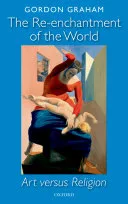
Gordon Graham’s "The Re-enchantment of the World" tackles a significant philosophical quandary: can art offer a substitute for the meaning once provided by religion in an age dominated by scientific explanation? Graham's strength lies in his clear exposition of complex philosophical lineages, particularly his tracing of Enlightenment thought and its consequences. He compellingly argues that art, by engaging with subjective experience and symbolic resonance, provides a vital counterpoint to reductive materialism. A passage discussing the aesthetic experience of nature as a precursor to spiritual awe is particularly effective. However, the book occasionally feels more like a survey of problems than a robust proposal for a new aesthetic theology. While Graham identifies the need for re-enchantment, the practical pathways art might forge could have been explored with greater depth. Nevertheless, it is a sober and intellectually honest appraisal of our cultural predicament.
📝 Description
80
### What It Is Gordon Graham's "The Re-enchantment of the World", first published in 2007, is a rigorous philosophical examination of how art and religion provide meaning in a modern landscape increasingly defined by scientific materialism. Graham scrutinizes the historical trajectory of European thought, contrasting Enlightenment rationalism with the enduring human need for transcendence and wonder. The work posits that art, often sidelined by empirical disciplines, holds a unique capacity to restore a sense of the sacred and meaningful to an often secularized existence.
### Who It's For This volume is geared towards readers interested in the philosophy of art, the sociology of religion, and the critique of scientism. It will appeal to those grappling with existential questions about meaning and value in contemporary society, particularly individuals who feel the limitations of purely materialistic explanations for human experience. Academics in philosophy, theology, and cultural studies will find it a valuable resource for understanding the post-Enlightenment predicament.
### Historical Context Graham's analysis is situated against the backdrop of late 20th and early 21st-century intellectual debates. It engages with thinkers who have questioned the sufficiency of scientific paradigms for understanding human consciousness and culture. The book implicitly responds to the legacy of figures like Nietzsche, who proclaimed the death of God, and later critiques of modernity that have highlighted alienation and the loss of traditional sources of meaning. The early 2000s saw a resurgence of interest in spirituality and alternative belief systems, a cultural undercurrent Graham addresses.
### Key Concepts The central argument revolves around the concept of "re-enchantment" – the process of restoring wonder, value, and a sense of the transcendent to a world perceived as disenchanted and purely mechanical. Graham explores how art, through its capacity for symbolic representation and emotional evocation, can function as a modern surrogate for religious experience. He examines the distinction between empirical knowledge and the kind of qualitative understanding that art provides, suggesting that both are essential for a complete human life.
💡 Why Read This Book?
• Gain a framework for understanding art's role beyond mere aesthetics, specifically how it addresses the human need for meaning, as explored in Graham's discussion of "re-enchantment" in the context of post-Enlightenment thought. • Discover philosophical arguments connecting the decline of religious authority with the potential of art to provide compensatory experiences of transcendence, a core theme discussed in relation to the early 21st century's cultural climate. • Appreciate a reasoned critique of scientism's limitations, learning how Graham contrasts empirical knowledge with the qualitative insights offered by artistic engagement, a concept central to his analysis of European philosophy.
⭐ Reader Reviews
Honest opinions from readers who have explored this book.
❓ Frequently Asked Questions
What is the primary philosophical problem addressed in "The Re-enchantment of the World"?
The book addresses the challenge of finding meaning and transcendence in a world increasingly dominated by scientific materialism, exploring how art and religion have historically fulfilled this need and how art might do so today.
When was "The Re-enchantment of the World" first published?
Gordon Graham's work was first published in November 2007, placing its intellectual context within the early 21st century's ongoing debates on meaning and modernity.
Does the book argue that art can replace religion entirely?
Graham explores art's potential to 're-enchant' an irreligious world, suggesting it can offer analogous experiences of wonder and meaning, rather than arguing for a complete replacement of religion's historical role.
What historical philosophical traditions does Gordon Graham engage with?
The book relates themes from the history of European philosophy, including Enlightenment rationalism and its critiques, to contemporary philosophical discussions about art, religion, and meaning.
What is the core concept of 're-enchantment' as presented by Graham?
Re-enchantment refers to the process of restoring a sense of wonder, value, and the transcendent to a world perceived as disenchanted or solely governed by mechanistic, material principles.
What kind of reader would benefit most from this book?
Readers interested in the philosophy of art, the sociology of religion, critiques of scientism, and existential questions about meaning in contemporary society will find this book particularly relevant.
🔮 Key Themes & Symbolism
Art as a Source of Meaning
Graham investigates the proposition that art, distinct from empirical science, possesses a unique capacity to imbue life with significance. This theme contrasts the quantitative, objective approach of scientific inquiry with the qualitative, subjective experience that art facilitates. The work suggests that aesthetic encounters can provide profound insights into the human condition, offering solace, inspiration, and a sense of connection that transcends purely materialist explanations. It revisits the idea that art functions as a vital, albeit often overlooked, repository of cultural and personal meaning.
The Disenchantment of Modernity
This theme traces the historical roots of what is often termed the 'disenchantment of the world,' a concept linked to the rise of scientific rationality and the decline of traditional religious frameworks, particularly since the Enlightenment. Graham explores how this process has led to a perceived vacuum of meaning and value in contemporary society. The book examines the philosophical and cultural consequences of a worldview that prioritizes empirical evidence above all else, often leaving individuals feeling alienated or existentially adrift.
Critique of Scientism
Graham's work offers a pointed critique of scientism – the view that science is the only or most authoritative way of knowing. He argues that this perspective, while valuable within its domain, is insufficient for addressing the full spectrum of human experience, particularly concerning questions of value, purpose, and beauty. The book advocates for a broader understanding of knowledge that includes the insights offered by art and religion, challenging the notion that only empirically verifiable phenomena are real or significant.
The Role of Religion
While focusing on art's potential, the book also considers the historical and ongoing role of religion as a primary source of meaning and enchantment. Graham acknowledges religion's power to shape worldviews and provide frameworks for understanding existence. The discussion positions art's re-enchanting function as a potentially secularized or parallel response to the spiritual needs that religion traditionally addressed, exploring the shared ground between aesthetic and religious experiences.
💬 Memorable Quotes
“Art has the potential to re-enchant an irreligious world.”
— This central assertion posits that artistic expression can fulfill a spiritual or meaningful void left by declining religious belief, offering wonder and significance through aesthetic engagement.
“The modern world is dominated by science.”
— This highlights the pervasive influence of scientific paradigms and methodologies in contemporary thought and culture, often at the expense of other ways of knowing or experiencing reality.
“European philosophy from the Enlightenment onwards has increasingly prioritized rationalism.”
— Graham points to a historical trend in Western thought that emphasizes logic and empirical evidence, a trajectory that has, in his view, contributed to a less enchanted, more mechanistic understanding of the cosmos.
“Art offers a source of meaning distinct from scientific knowledge.”
— This paraphrase emphasizes the book's argument that art provides a different, yet equally valid, form of understanding and value creation, addressing aspects of human experience that science may not fully capture.
“The search for meaning persists despite secularization.”
— This captures the underlying tension Graham explores: the enduring human desire for purpose and significance, even in societies where traditional religious explanations have lost their dominance.
🌙 Esoteric Significance
Tradition
While not explicitly aligned with a single esoteric lineage, Graham's work resonates with Hermetic and Neoplatonic traditions that posit a deeper, often symbolic, reality underlying the material world. His exploration of art's capacity to evoke transcendence and meaning echoes the Hermetic principle of "As Above, So Below," suggesting a correspondence between the aesthetic realm and a higher order of experience. The departure from strict empiricism aligns with esoteric thought's emphasis on intuition and subjective realization over purely objective measurement.
Symbolism
The central motif of "re-enchantment" itself functions symbolically, representing a return to wonder and a recognition of hidden significance in the mundane. Graham implicitly engages with the symbolism inherent in religious rituals and artistic creation, suggesting these are not merely historical relics but enduring human responses to the mystery of existence. The contrast between the 'disenchanted' scientific worldview and the 'enchanted' world sought through art and religion highlights a symbolic dichotomy between mechanism and vitality, the quantifiable and the qualitative.
Modern Relevance
Graham's ideas find resonance with contemporary movements seeking to integrate spirituality and meaning into secular life, such as certain strands of New Age philosophy, depth psychology (particularly Jungian analysis), and contemporary art theory that emphasizes art's transformative potential. Thinkers exploring the intersection of consciousness, aesthetics, and well-being often draw upon the foundational questions Graham raises about overcoming a purely materialistic worldview through non-empirical means.
👥 Who Should Read This Book
• Students of philosophy and cultural studies: To grasp nuanced arguments about the historical development of thought from the Enlightenment to the present, and the specific role of art in addressing existential concerns. • Individuals questioning the sufficiency of scientific materialism: To find philosophical support for valuing non-empirical sources of meaning, such as art and religion, in their personal worldview. • Art enthusiasts and critics: To deepen their understanding of art's potential impact beyond formal qualities, exploring its capacity for profound existential and even quasi-spiritual significance.
📜 Historical Context
Published in 2007, Gordon Graham's "The Re-enchantment of the World" emerged during a period of significant intellectual ferment concerning the limits of scientific explanation and the search for meaning in secular societies. The work engages with a long lineage of European philosophy, implicitly responding to the critiques of modernity initiated by thinkers like Friedrich Nietzsche and later elaborated by existentialists and postmodernists who questioned grand narratives and the perceived 'death of God.' Graham's analysis situates itself against the backdrop of a pervasive scientism, a worldview that elevates scientific methodology as the ultimate arbiter of truth. While not explicitly engaging with figures like Richard Dawkins, whose popular works aggressively championed atheism and scientific materialism around the same time, Graham's book offers a philosophical counterpoint, arguing for the enduring significance of art and religion. The reception of such works often involves academic debate within philosophy of art and religion departments, rather than widespread public controversy, though they touch upon broader cultural anxieties about values and purpose.
📔 Journal Prompts
The concept of "re-enchantment" and its application to contemporary experience.
Art's role in restoring meaning to an irreligious world.
The limitations of scientific explanation for human values.
Reflecting on moments of aesthetic transcendence and their significance.
The historical trajectory from Enlightenment rationalism to modern existential concerns.
🗂️ Glossary
Re-enchantment
The process of restoring a sense of wonder, value, and the transcendent to a world perceived as disenchanted, mechanistic, and devoid of inherent meaning due to the dominance of scientific materialism.
Scientism
The belief that science is the only or most authoritative way of acquiring knowledge, often leading to the dismissal of non-empirical domains like art, religion, and subjective experience as less valid or illusory.
Disenchantment of the World
A sociological and philosophical concept, often associated with Max Weber, describing the historical process by which magical, religious, and spiritual elements are removed from human societies, leading to a more rationalized and secularized existence.
European Philosophy
Refers to the philosophical traditions originating in Europe, particularly the Enlightenment and subsequent movements, which heavily influenced modern Western thought regarding reason, science, and the nature of reality.
Material World
The physical universe as understood by empirical science, emphasizing matter and energy as the fundamental constituents of reality, often contrasted with spiritual or non-material dimensions.
Aesthetic Experience
The experience of beauty or art; the perception, appreciation, and contemplation of works of art or nature that can evoke emotional, intellectual, and sometimes profound or transformative responses.
Irreligious World
A society or context characterized by a decline in traditional religious belief and practice, where established religious frameworks for meaning and morality may hold less sway.