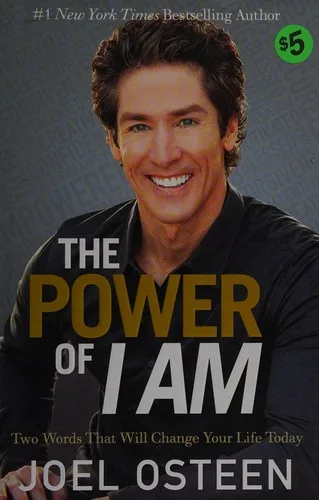
The power of I am
 79
79

The power of I am
Joel Osteen’s "The Power of I AM" offers a familiar, albeit potent, dose of his signature motivational rhetoric. The core argument, that our self-identifying "I AM" statements shape our reality, is a concept with deep roots, echoing New Thought principles from the early 20th century. Osteen’s strength lies in his ability to distill complex psychological and spiritual ideas into easily digestible affirmations. A particularly resonant passage discusses how negative self-talk can become a self-fulfilling prophecy, a point he illustrates with relatable anecdotes.
However, the work sometimes leans heavily on platitudes, and the lack of deeper engagement with potential psychological barriers can feel like a missed opportunity. While the book provides a powerful framework for positive thinking, it offers less in terms of concrete, actionable steps for navigating profound internal resistance. The emphasis remains firmly on belief and affirmation, which, while valuable, may not fully equip all readers for deeply entrenched challenges.
Read more ↓
Ultimately, "The Power of I AM" serves as a robust reminder of the mind's influence, best utilized as a foundational text for cultivating optimism.
📝 Description
79
### What It Is
Joel Osteen's "The Power of I AM" is a self-help text focused on harnessing the latent potential within individuals through affirmations and a positive mindset. Published in 2016, the book draws heavily on Osteen's ministerial background, framing spiritual and psychological self-improvement as interconnected. It posits that the spoken "I AM" declarations can directly influence one's reality, aligning with principles found in various spiritual traditions that emphasize the creative power of thought and word.
### Who It's For
This work is primarily aimed at individuals seeking motivational guidance to overcome personal obstacles, improve their self-esteem, and foster a more optimistic outlook on life. It appeals to those who resonate with Osteen's established pastoral style and his emphasis on faith as a catalyst for change. Readers looking for practical, accessible strategies to reframe their thoughts and cultivate inner strength will find the book’s approach direct and encouraging. It is particularly suited for those in times of personal transition or facing significant challenges.
### Historical Context
The book's publication in 2016 places it within a broader, ongoing discourse on positive psychology and New Thought movements, which have historically emphasized the mind's role in shaping experience. Authors like Wallace Wattles, with his 1910 work "The Science of Getting Rich," explored similar themes of mental creation. Osteen’s work can be seen as a contemporary iteration of these ideas, adapted for a modern audience through accessible language and relatable examples, continuing a lineage of self-affirmation literature that gained prominence in the 20th century.
### Key Concepts
The central tenet of "The Power of I AM" revolves around the concept of "declarations." Osteen argues that the phrases we use to identify ourselves, particularly the "I AM" statements, hold immense creative power. By consciously choosing positive and empowering declarations, readers are encouraged to reprogram their subconscious beliefs and attract desired outcomes. This includes cultivating gratitude, overcoming fear, and embracing a sense of worthiness. The work also touches upon the idea of aligning one's inner state with external goals, suggesting that a strong sense of self-belief is foundational to achieving them.
💡 Why Read This Book?
• Learn to leverage the specific "I AM" declaration technique, a core concept from Osteen’s 2016 publication, to actively reshape your self-perception and attract desired outcomes. • Gain practical strategies for reframing negative self-talk, a key theme explored throughout the book, to build resilience and foster a more positive inner dialogue. • Understand the foundational principles of New Thought as applied by Joel Osteen, offering a contemporary perspective on the mind's creative power, distinct from earlier works like Wallace Wattles' "The Science of Getting Rich."
⭐ Reader Reviews
Honest opinions from readers who have explored this book.
❓ Frequently Asked Questions
What is the central premise of Joel Osteen's "The Power of I AM"?
The book's central premise, published in 2016, is that the "I AM" declarations we make about ourselves possess significant creative power, capable of shaping our reality and outcomes.
How does "The Power of I AM" relate to older self-help philosophies?
It draws upon principles found in New Thought and positive psychology movements, echoing ideas about the mind's power to create reality, similar to works from the early 20th century.
Who is Joel Osteen?
Joel Osteen is an American pastor, televangelist, and author, known for his optimistic and motivational messages. "The Power of I AM" is one of his many bestselling books, first published in 2016.
What are "I AM" declarations?
These are positive affirmations or statements that begin with "I AM," used to consciously declare one's identity, worth, and desired reality, thereby influencing one's mindset and circumstances.
Can this book help with overcoming specific personal challenges?
The book aims to provide a framework for overcoming challenges through positive affirmation and mindset shifts, encouraging readers to believe in their ability to achieve their goals.
When was "The Power of I AM" first published?
Joel Osteen's "The Power of I AM" was first published in 2016, continuing his legacy of motivational and spiritual guidance literature.
🔮 Key Themes & Symbolism
The Creative Power of Declarations
The book posits that "I AM" statements are not mere words but potent creative forces. By consciously choosing to declare positive attributes and outcomes, such as "I AM blessed" or "I AM strong," readers are encouraged to reprogram their subconscious minds. This concept aligns with older esoteric ideas about the spoken word's ability to manifest reality, suggesting that our self-definitions directly influence our experiences and the opportunities that arise. Osteen emphasizes that this is an active process, requiring consistent practice to shift ingrained negative patterns into empowering affirmations.
Mindset as a Foundation for Success
A central theme is the idea that one's internal mindset serves as the bedrock for external achievement. "The Power of I AM" argues that cultivating a positive, expectant attitude is crucial for overcoming obstacles and realizing potential. This involves actively challenging limiting beliefs and replacing them with empowering convictions. The work suggests that by consistently focusing on what one desires and affirming one's capacity to achieve it, individuals can create the internal conditions necessary for success, drawing parallels to metaphysical principles of attraction and manifestation.
Overcoming Limitations Through Belief
The book addresses the common human experience of facing personal limitations and suggests that the primary barrier is often internal belief systems. Osteen encourages readers to identify and dismantle these self-imposed restrictions, positing that true freedom comes from recognizing one's inherent worth and potential. By adopting empowering declarations and maintaining faith in a positive future, individuals can transcend perceived limitations and unlock new possibilities. This theme echoes spiritual teachings that emphasize inner transformation as the key to external change.
The Role of Gratitude and Positivity
Cultivating gratitude is presented as a vital practice for maintaining a positive outlook and reinforcing empowering declarations. The book suggests that appreciating current blessings, no matter how small, opens the door for greater abundance. This focus on positivity is not merely about superficial optimism but about creating a vibrational alignment that attracts favorable circumstances. By consistently focusing on the good and affirming one's blessings, readers are guided towards a more fulfilling and empowered existence, a concept present in many spiritual traditions.
💬 Memorable Quotes
“The words you speak become the house you live in.”
— This highlights the profound impact of our language on our reality. Osteen suggests that our spoken words, especially our self-identifying "I AM" statements, construct the very framework of our lives and experiences.
“You are not designed to be average. You are designed to excel.”
— This quote challenges the reader to reject mediocrity and embrace their inherent potential for greatness. It's an affirmation of innate capability, encouraging a shift from settling for less to striving for higher achievements.
“The biggest mistake is to think that your past determines your future.”
— Osteen argues that past failures or negative experiences do not dictate future outcomes. He emphasizes the power of present choices and declarations to forge a new and better path forward.
“Stop living in the valley of mediocrity and step up to the mountain of blessings.”
— This is a call to action, urging readers to move beyond a state of passive acceptance or limited potential. It frames a proactive, faith-driven approach as the way to attain a more abundant and fulfilling life.
“If you can see it, you can achieve it.”
— This encapsulates the book's core message about the power of visualization and belief. Osteen suggests that a clear mental picture of a desired outcome is a crucial first step towards its realization.
🌙 Esoteric Significance
Tradition
While not explicitly adhering to a single esoteric lineage, "The Power of I AM" draws heavily from the principles of New Thought and Christian metaphysical traditions. These movements, prominent in the late 19th and early 20th centuries, emphasize the divine nature within each individual and the power of thought and affirmation to manifest reality. Osteen's work can be seen as a modern, sermon-style iteration of these ideas, focusing on the creative power of the "I AM" pronouncements, which have echoes in Gnostic concepts of divine self-knowledge and Hermetic principles of mentalism.
Symbolism
The primary symbolic element is the phrase "I AM" itself. In many spiritual and esoteric traditions, "I AM" represents the divine spark, the unmanifested potential, or the ultimate self. By consciously using "I AM" declarations, Osteen suggests readers are tapping into this divine, creative essence within themselves. Another implicit symbol is the 'house' one lives in, representing one's life circumstances and experiences, which the book frames as being constructed by the 'words' (declarations) spoken.
Modern Relevance
The work's emphasis on positive affirmations and mindset shifts continues to be highly relevant in contemporary self-help and wellness circles. It finds resonance with modern mindfulness practices, cognitive behavioral therapy (CBT) techniques that focus on reframing thoughts, and the burgeoning field of manifestation coaching. Thinkers and practitioners in these areas often echo Osteen's core message about the mind's power to shape reality, making "The Power of I AM" a touchstone for those seeking accessible, faith-based tools for personal empowerment.
👥 Who Should Read This Book
• Individuals seeking motivational guidance to overcome personal setbacks and cultivate a more optimistic outlook on life, particularly those who respond well to faith-based encouragement. • Aspiring practitioners of positive psychology and New Thought principles looking for accessible, contemporary interpretations of concepts like mental creation and affirmation. • Readers interested in exploring the intersection of spirituality and personal development, specifically how self-declarations can be used to influence mindset and life circumstances.
📜 Historical Context
Published in 2016, Joel Osteen's "The Power of I AM" emerged within a vibrant landscape of popular psychology and motivational literature. This era saw continued interest in positive psychology, building on the work of figures like Martin Seligman, and the enduring appeal of New Thought principles championed by early 20th-century authors such as Wallace Wattles and Ernest Holmes. Osteen’s approach, while rooted in these traditions, is distinguished by its accessibility and pastoral tone, making concepts of self-affirmation and mental creation widely palatable. Unlike more academic explorations, his work prioritizes direct, faith-based encouragement. While not directly engaging in public debate, Osteen's prolific output and large following represent a significant contemporary voice in the self-help genre, often contrasted with more secular or therapeutically-focused approaches to personal development prevalent at the time.
📔 Journal Prompts
The "I AM" declaration as a tool for self-creation.
Reflecting on the 'house' your words are building.
Identifying and challenging limiting beliefs about your potential.
The practice of gratitude and its role in manifestation.
Shifting from a mindset of mediocrity to one of excellence.
🗂️ Glossary
"I AM" Declarations
Positive affirmations or statements beginning with "I AM," used to consciously declare one's identity, worth, and desired reality, influencing mindset and circumstances.
Mindset
The established set of attitudes held by someone, which fundamentally determines their behavior, perception, and outlook on life.
New Thought
A spiritual movement that emerged in the 19th century, emphasizing the power of thought and belief to influence one's material world and well-being.
Affirmations
Positive statements designed to challenge or overcome self-sabotaging and negative thoughts, used to promote positive changes in one's life.
Limiting Beliefs
Internalized thoughts or assumptions that restrict one's perception of possibilities and hinder personal growth or achievement.
Manifestation
The process by which a person's thoughts or feelings, especially those consciously or unconsciously directed, are expressed or realized in their life.
Gratitude
The quality of being thankful; a readiness to show appreciation for and to return kindness or benefits received.