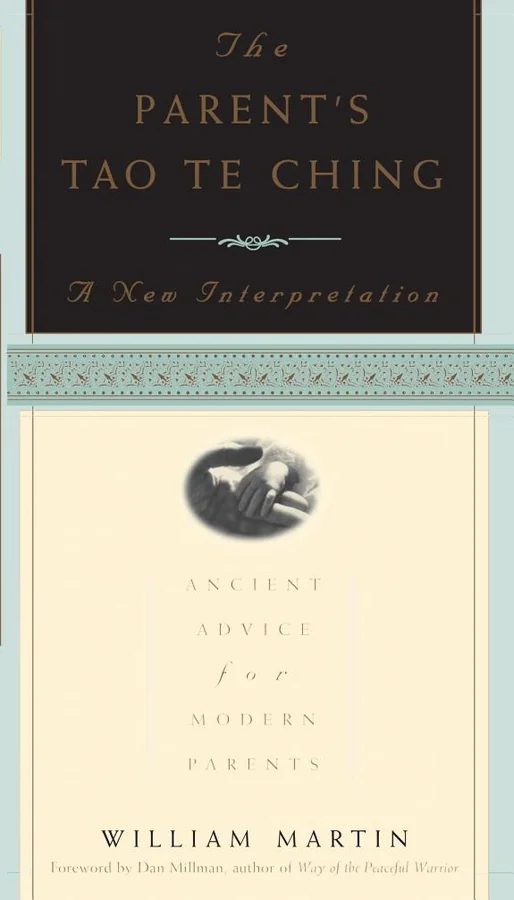
The Parent's Tao Te Ching
 77
77

The Parent's Tao Te Ching
William Martin’s The Parent's Tao Te Ching attempts a delicate feat: translating the philosophical depth of Lao Tzu into the practical, often chaotic, realm of child-rearing. His central thesis, that the Taoist principles of yielding and natural order offer superior guidance to forceful intervention, is compelling. Martin highlights the paradoxical strength found in gentleness, a concept clearly illustrated in his interpretation of Wu Wei applied to parental discipline. The inclusion of 20 illustrations aids in visualizing these abstract principles. However, the book occasionally falters in its direct applicability. While the philosophical underpinnings are sound, some sections feel more like abstract musings on Taoism than actionable advice for parents facing immediate challenges like tantrums or schoolwork. A notable strength is the book's consistent focus on parental self-cultivation as the primary tool for effective parenting, a departure from many external-focused guides. Martin's interpretation of the 'uncarved block' for understanding a child's innate nature is particularly insightful. The work succeeds in offering a contemplative alternative to mainstream parenting literature, though readers seeking step-by-step instructions might find it wanting. It presents a thoughtful, if sometimes diffuse, philosophical approach to family dynamics.
📝 Description
77
### What It Is
The Parent's Tao Te Ching is a 1999 reimagining of Lao Tzu's foundational Taoist text, focusing its ancient wisdom on the practice of parenting. William Martin, drawing on the original teachings of the Tao Te Ching, applies its principles of balance, flow, and non-interference to the dynamic relationship between parents and children. This work is not a literal translation but a creative interpretation, offering guidance for those seeking a more mindful and harmonious approach to raising a family. The book is accompanied by 20 illustrations intended to complement its thematic explorations.
### Who It's For
This book is for parents, guardians, and caregivers who feel overwhelmed by conventional parenting advice or are searching for a spiritual or philosophical framework to guide their family life. It appeals to individuals interested in Eastern philosophies, particularly Taoism, but who may find direct engagement with classical texts challenging. It is also suitable for those seeking to integrate personal growth with their role as parents, looking for ways to cultivate inner peace while nurturing their children's development.
### Historical Context
Published in 1999, The Parent's Tao Te Ching emerged during a period of increasing interest in Eastern spirituality and alternative parenting methods in the West. While the Tao Te Ching itself dates back over two millennia to ancient China, Martin's work placed its tenets within a contemporary Western familial context. This was a time when authors like Penelope Leach and Dr. Spock were dominant, and Martin's approach offered a distinct, philosophical alternative to prescriptive advice, aligning with a broader cultural shift towards mindfulness and self-help rooted in ancient wisdom traditions.
### Key Concepts
The central concepts adapted from the Tao Te Ching include Wu Wei (effortless action or non-forcing), Yin and Yang (balance of opposing forces), and the 'uncarved block' (simplicity and innate potential). Martin translates these into parenting paradigms such as allowing children space to grow without excessive intervention, understanding and balancing parental authority with a child's autonomy, and appreciating a child's natural state before societal influences take hold. The work emphasizes patience, humility, and the power of example in shaping a child's character.
💡 Why Read This Book?
• Understand the concept of Wu Wei, as presented in Chapter 23 of Martin's work, to learn how relinquishing excessive control can foster greater independence and cooperation in your children, a strategy less emphasized in Western child psychology. • Gain insight into balancing Yin and Yang dynamics within the family, drawing from the original Tao Te Ching's principles (circa 6th century BCE) as adapted by Martin to harmonize parental needs with a child's developmental stages. • Explore the 'uncarved block' metaphor, originating from Taoist philosophy, to appreciate and nurture your child's inherent qualities without imposing external expectations, offering a unique perspective on early childhood development.
⭐ Reader Reviews
Honest opinions from readers who have explored this book.
❓ Frequently Asked Questions
What is the primary philosophical basis of The Parent's Tao Te Ching?
The book is primarily based on the Tao Te Ching, a foundational text of Taoism attributed to Lao Tzu. William Martin reinterprets its ancient verses to offer guidance on parenting, emphasizing principles like balance, natural flow, and non-interference.
When was William Martin's The Parent's Tao Te Ching first published?
The Parent's Tao Te Ching was first published on March 31, 1999, reflecting a growing interest in Eastern philosophies within Western parenting circles at the turn of the millennium.
Does the book offer practical, step-by-step parenting advice?
While it offers philosophical guidance and conceptual frameworks derived from the Tao Te Ching, the book leans more towards a mindful, principle-based approach rather than providing prescriptive, step-by-step instructions for specific situations.
What does 'Wu Wei' mean in the context of this book?
In William Martin's interpretation, Wu Wei, often translated as 'effortless action' or 'non-forcing,' encourages parents to act spontaneously and naturally, avoiding excessive control or intervention, and allowing children space to develop organically.
Are there illustrations in The Parent's Tao Te Ching?
Yes, the book includes 20 illustrations that are intended to visually complement the text and help convey the Taoist concepts as applied to parenting.
Who is William Martin?
William Martin is the author of The Parent's Tao Te Ching. He is known for adapting classical Eastern philosophical texts, particularly Taoism, to contemporary Western contexts, focusing on themes of personal growth and family life.
🔮 Key Themes & Symbolism
Wu Wei in Parenting
The principle of Wu Wei, or effortless action, is central to Martin's adaptation. Instead of imposing rigid rules or constant correction, parents are encouraged to act in alignment with the natural flow of a child's development. This involves a subtle form of guidance, much like water finding its course, rather than forceful redirection. It suggests that by reducing unnecessary intervention and trusting the child's innate capacity to learn and grow, parents can foster greater autonomy and a more peaceful home environment. This concept challenges the prevalent notion of active, controlling parenting prevalent in Western culture.
The Uncarved Block
Referencing the Taoist concept of 'Pu' (the uncarved block), Martin applies this to understanding children's inherent nature. Before societal conditioning and external expectations shape them, children are seen as pure potential, analogous to a simple, unadorned block of wood. The book advocates for appreciating and preserving this natural state, encouraging parents to nurture a child's authentic self rather than molding them into a preconceived ideal. This theme emphasizes acceptance, observation, and fostering innate talents.
Balance of Yin and Yang
The dynamic interplay of Yin (passive, receptive) and Yang (active, assertive) energies is a core tenet of Taoism. Martin translates this into parenting by exploring the need for balance between parental authority and a child's independence, between structure and freedom, and between discipline and compassion. Understanding these opposing forces allows parents to navigate the complexities of family life with greater adaptability, recognizing that neither extreme is sustainable and that harmony arises from their interplay.
The Way of Gentleness
Lao Tzu's Tao Te Ching often extols the power of softness and yielding. In The Parent's Tao Te Ching, this translates to a parenting style that prioritizes patience, empathy, and understanding over harshness or rigidity. Martin suggests that a gentle approach, while appearing less powerful, ultimately possesses a greater capacity for positive influence and connection. This theme encourages parents to cultivate inner calm and respond to challenges with grace, fostering a resilient and loving family bond.
💬 Memorable Quotes
“The Master does not preach. He embodies.”
— This interpretation highlights the Taoist emphasis on living by example rather than through explicit instruction. For parents, it suggests that embodying desired virtues like patience, calmness, and integrity is more influential than simply telling children how to behave.
“When the parent does not interfere, the child does not resent.”
— This paraphrased concept speaks to the principle of Wu Wei in parenting. It suggests that excessive parental control or intervention can lead to frustration and rebellion in children, whereas allowing them space fosters a more harmonious relationship.
“True strength is found in yielding.”
— This interpretation captures the paradoxical wisdom of the Tao Te Ching, where apparent weakness or flexibility is presented as a source of profound resilience and effectiveness, applicable to how parents can navigate challenges with children.
“Appreciate the child's natural state before societal pressures.”
— This paraphrased concept relates to the 'uncarved block' idea, encouraging parents to value and nurture a child's innate qualities and potential without premature or excessive molding by external expectations.
“The greatest of all things is the great Tao.”
— This interpretation points to the overarching principle of the Tao – the fundamental, ineffable order of the universe. In parenting, it suggests aligning one's actions with this natural order leads to the most beneficial outcomes for the family.
🌙 Esoteric Significance
Tradition
This work draws directly from Taoism, an ancient Chinese tradition emphasizing living in harmony with the Tao (the Way). While not typically categorized alongside Western esoteric traditions like Hermeticism or Kabbalah, Taoism shares common ground in its focus on natural principles, inner cultivation, and understanding subtle energetic flows. Martin's adaptation bridges this Eastern philosophical system with Western psychological and familial concerns, presenting its core tenets as universally applicable wisdom for personal and familial well-being.
Symbolism
Key symbols include the 'uncarved block' (Pu), representing innate potential and simplicity before external conditioning; water, symbolizing adaptability, yielding strength, and the natural flow of life; and the concept of Yin and Yang, representing the balance of complementary opposites essential for harmony within the family system. These symbols are not merely decorative but are integral to understanding the Taoist worldview Martin applies to parenting.
Modern Relevance
The principles articulated in The Parent's Tao Te Ching remain highly relevant today, particularly within contemporary movements emphasizing mindfulness, conscious parenting, and gentle discipline. Thinkers and practitioners in fields like positive psychology and non-violent communication often echo Taoist themes of acceptance, non-judgment, and fostering intrinsic motivation. The book's enduring appeal lies in its ability to offer a counter-narrative to the often stressful and overly structured approach to modern parenting.
👥 Who Should Read This Book
• Parents seeking a philosophical or spiritual framework for child-rearing beyond conventional advice, particularly those drawn to Eastern thought or contemplative practices. • Individuals interested in applying principles of Taoism, such as Wu Wei and balance, to personal growth and familial relationships, moving away from prescriptive methodologies. • Caregivers looking for ways to cultivate inner peace and model mindful behavior, understanding that parental self-cultivation is key to nurturing children's well-being.
📜 Historical Context
Published in 1999, The Parent's Tao Te Ching arrived at a cultural juncture where Western interest in Eastern spirituality and alternative child-rearing philosophies was gaining significant traction. While the Tao Te Ching itself is a text from ancient China, potentially dating to the 6th century BCE, Martin’s work situated its timeless principles within the late 20th-century Western family context. This era saw a burgeoning market for self-help and spiritual growth literature, often seeking wisdom from non-Western traditions. Martin’s approach provided a philosophical counterpoint to the more prescriptive, behaviorist-oriented parenting manuals prevalent at the time, such as those by Dr. Benjamin Spock or later authors focusing on developmental psychology. Unlike contemporary works that might engage directly with empirical studies, Martin's book drew from a lineage of philosophical inquiry, offering a contemplative, less interventionist model for parents seeking deeper meaning and harmony in their roles, aligning with a broader cultural shift towards mindfulness.
📔 Journal Prompts
The 'uncarved block' within your child: What innate qualities do you observe?
Reflecting on Wu Wei: When did non-interference yield positive results?
Embodying the Master: How can your actions speak louder than words today?
Balancing Yin and Yang: Identify one area of imbalance in your parenting.
The Way of Gentleness: How can you practice yielding in a challenging situation?
🗂️ Glossary
Tao
The fundamental principle of the universe in Taoism; the natural order, the Way. It is ineffable and guides all existence, emphasizing flow, spontaneity, and harmony.
Wu Wei
Literally 'non-action' or 'effortless action.' It refers to acting in accordance with the natural flow of things, without excessive force, manipulation, or striving. In parenting, it means guiding gently rather than controlling rigidly.
Yin and Yang
Two complementary, opposing forces whose dynamic interplay constitutes all phenomena. Yin is associated with passivity, darkness, and femininity; Yang with activity, light, and masculinity. Parenting involves balancing these energies.
The Uncarved Block (Pu)
A Taoist concept representing the natural, original state of things before they are shaped or conditioned by external forces. Applied to children, it signifies their innate potential and pure essence.
The Master
In the context of the Tao Te Ching, 'The Master' often refers to the sage or ideal person who embodies the principles of the Tao, living in harmony and acting with wisdom and non-interference.
De
Often translated as 'virtue' or 'power.' It is the manifestation of the Tao in individual things and beings. A parent's 'De' is their inherent quality and influence derived from living in accordance with the Tao.
Chi (Qi)
Vital life force or energy that flows through all things. While not explicitly a primary focus, the concept underpins the Taoist understanding of natural processes and health, relevant to a child's development.