The making of Stonehenge
 77
77

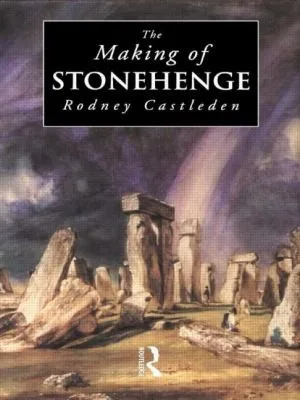
The making of Stonehenge
Castleden’s "The Making of Stonehenge" offers a welcome dose of empirical rigor to a subject often swamped by conjecture. His strength lies in systematically dismantling less substantiated theories by meticulously detailing the archaeological layers and construction phases. He makes a compelling case for understanding Stonehenge as a dynamic, evolving site, rather than a static structure built in one go. The book’s meticulous focus on the practicalities – how the stones were moved, shaped, and erected – is its greatest asset. However, this very focus can sometimes lead to a dryness that might alienate readers hoping for more overt engagement with the site's spiritual or ritualistic dimensions, even when presented through an archaeological lens. A passage discussing the Herculean effort to transport the bluestones from the Preseli Hills, for instance, is informative about logistics but leaves the deeper symbolic resonance of this choice largely unexplored. Ultimately, Castleden provides an indispensable foundation for understanding *how* Stonehenge was built, serving as a critical counterpoint to more fanciful accounts.
📝 Description
77
### What It Is Rodney Castleden's "The Making of Stonehenge," first published in 1993, is a scholarly yet accessible exploration of the prehistoric monument's construction and purpose. Moving beyond speculative theories, Castleden grounds his analysis in archaeological evidence, meticulously detailing the phases of construction, the materials used, and the potential social and ritualistic functions of the site. The work examines the immense human effort and sophisticated organization required to erect such a monumental structure over many centuries.
### Who It's For This book is for serious students of archaeology, ancient history, and megalithic studies. It appeals to those who appreciate rigorous research and evidence-based argumentation, rather than purely mystical interpretations. Readers interested in the practicalities of prehistoric engineering, the social dynamics of large-scale construction projects, and the evolution of ritual landscapes will find substantial material here. It is not for those seeking definitive answers to the 'why' of Stonehenge, but for those who wish to understand the 'how' and the evolving 'what' based on material remains.
### Historical Context "The Making of Stonehenge" emerged during a period when archaeological methods were becoming increasingly sophisticated, moving away from earlier, more speculative ethnological parallels. Castleden’s work builds upon decades of excavation and survey, particularly the extensive work conducted at Stonehenge itself and in the surrounding Wessex landscape. The book positions itself against a backdrop of ongoing debate about the monument's purpose, from astronomical observatory to Druidic temple, and seeks to provide a more grounded, archaeologically informed perspective on its development from the Neolithic period onwards.
### Key Concepts The book meticulously details the successive phases of Stonehenge's construction, beginning with the earliest earthwork enclosure around 3100 BCE. It explores the quarrying and transportation of sarsen stones and the smaller bluestones, which originated from the Preseli Hills in Wales, over 150 miles away. Castleden examines the techniques likely employed for moving and erecting these massive stones, including the use of timber levers, rollers, and possibly A-frames. The work also discusses the arrangement of these stones into the iconic sarsen circle and the inner bluestone circle, and the later addition of the lintels, highlighting the architectural sophistication achieved by prehistoric peoples.
💡 Why Read This Book?
• Gain a concrete understanding of the multi-stage construction of Stonehenge, from the initial earthwork enclosure around 3100 BCE to the final placement of sarsen and bluestone elements, a process detailed through archaeological phases. • Learn about the logistical challenges and engineering solutions involved in quarrying and transporting massive stones, including the sarsen stones and bluestones from the Preseli Hills, over significant distances. • Appreciate the evolving archaeological understanding of Stonehenge, moving beyond singular theories to a model of continuous development and adaptation informed by extensive fieldwork and dating techniques.
⭐ Reader Reviews
Honest opinions from readers who have explored this book.
❓ Frequently Asked Questions
What is the earliest known construction phase of Stonehenge discussed by Castleden?
Castleden details the earliest phase as an earthwork enclosure, including a ditch and bank, which dates to approximately 3100 BCE, predating the arrival of the large sarsen stones.
Where did the bluestones used in Stonehenge originate, according to the book?
The book identifies the Preseli Hills in west Wales as the source of the bluestones, a significant distance of over 150 miles from the Stonehenge site.
Does "The Making of Stonehenge" offer definitive proof of its purpose?
No, Castleden focuses on the archaeological evidence for construction and evolution rather than providing definitive proof of its singular purpose, acknowledging ongoing scholarly debate.
What archaeological evidence does Castleden rely on most heavily?
He relies heavily on stratigraphy, radiocarbon dating, and the analysis of tool marks and stone types found at the site and in its surrounding landscape.
When was "The Making of Stonehenge" first published?
The book was first published in 1993, reflecting archaeological understanding and research available up to that point.
Does the book discuss theories about astronomical alignments at Stonehenge?
While the book acknowledges the possibility of astronomical alignments and the monument's orientation, its primary focus remains on the physical construction and development process.
🔮 Key Themes & Symbolism
Phased Construction
Castleden meticulously outlines the multi-phase development of Stonehenge, demonstrating that it was not built as a single entity. He details the initial earthwork enclosure around 3100 BCE, followed by the introduction of bluestones, and later the arrival and erection of the massive sarsen stones and lintels. This chronological approach emphasizes Stonehenge as a living monument, evolving over centuries, and highlights the consistent human investment and organizational capacity dedicated to its transformation and expansion throughout the Neolithic and Bronze Ages.
Material Sourcing and Transport
A significant focus is placed on the origin and movement of the stones. The book details how the sarsen stones were likely sourced from Marlborough Downs, about 20 miles away, while the more enigmatic bluestones were transported from the Preseli Hills in Wales, over 150 miles distant. Castleden explores the immense logistical undertaking this represented, discussing potential methods such as using rollers, levers, and perhaps even water transport for the bluestones, underscoring the advanced planning and labor mobilization required.
Archaeological Evidence vs. Speculation
Castleden's work is characterized by its adherence to archaeological data, presenting a grounded perspective that contrasts with more speculative theories. He systematically examines excavation reports, radiocarbon dates, and geological analyses to reconstruct the building process. The book serves as a critical assessment of earlier interpretations, prioritizing empirical findings to explain the 'how' of Stonehenge's construction, thereby offering a robust framework for understanding its physical development.
Social Organization and Labor
The sheer scale of Stonehenge implies a high degree of social organization and the mobilization of considerable labor. Castleden's analysis implicitly addresses the societal structures capable of sustaining such a monumental project over generations. The planning, quarrying, transportation, and erection of the stones would have required specialized skills, leadership, and a communal workforce, suggesting a complex society with the capacity for long-term, large-scale communal endeavors.
💬 Memorable Quotes
“The bluestones... came from the Preseli Hills in west Wales, some 150 miles away.”
— This factual statement highlights one of the most remarkable aspects of Stonehenge's construction: the extraordinary distance from which certain key components were sourced, implying significant effort and perhaps ritualistic importance in their selection.
“The sarsen stones were probably brought from the Marlborough Downs.”
— This points to the more local sourcing of the primary building material, contrasting with the bluestones and suggesting a division in procurement strategies based on stone type and availability for the monument's construction.
“Stonehenge was not built all at once, but in a series of stages.”
— This core concept reframes Stonehenge from a singular creation to an evolving structure, emphasizing the passage of time and continuous human activity and adaptation at the site over many centuries.
“The precise methods of erection remain a matter of debate.”
— Acknowledging the limits of current knowledge, this statement reflects Castleden's commitment to scholarly honesty, recognizing areas where archaeological evidence is insufficient to provide definitive answers regarding construction techniques.
“Archaeology provides the evidence for the 'how' of Stonehenge.”
— This encapsulates the book's central thesis: that a grounded, evidence-based approach through archaeology is the most reliable way to understand the physical processes behind Stonehenge's creation.
🌙 Esoteric Significance
Tradition
While Castleden's work is primarily archaeological and empirical, it touches upon themes relevant to esoteric traditions by exploring the monumental effort and potential ritualistic significance behind ancient constructions. It doesn't align with a specific esoteric lineage like Hermeticism or Theosophy but provides a factual basis upon which esoteric interpretations can be built or contrasted. The book's focus on the 'making' allows for contemplation of the human will, ingenuity, and communal effort involved in creating sacred spaces, themes often explored in esoteric philosophy.
Symbolism
Although Castleden avoids overt symbolic interpretation, the sheer scale and arrangement of Stonehenge invite contemplation. The duality of the sarsen circle and the bluestone circle suggests a deliberate dualism, potentially representing earth and sky, or the material and the spiritual. The effort involved in transporting the bluestones from distant Wales can be seen as symbolizing a quest for sacred power or knowledge, a journey that imbues the stones themselves with a potent, albeit archaeologically unexplained, significance.
Modern Relevance
Contemporary neo-paganism, Druidic revivals, and archaeoastronomy continue to engage with Stonehenge. Castleden's meticulous account of the construction phases and material sourcing provides a crucial, evidence-based reference point for these modern interpretations. While these groups may imbue the site with spiritual meaning, Castleden's work grounds discussions in the tangible reality of prehistoric engineering and social organization, offering a necessary counterweight to purely mythopoeic narratives.
👥 Who Should Read This Book
• Students of archaeology and prehistoric Europe seeking a detailed, evidence-based account of Stonehenge's construction phases and logistical challenges. • History enthusiasts interested in understanding the practicalities of megalithic monument building and the social organization required for such projects. • Readers who appreciate scholarly analyses that prioritize empirical data over speculative theories when examining ancient sites.
📜 Historical Context
First published in 1993, Rodney Castleden's "The Making of Stonehenge" arrived at a time when archaeological interpretations of megalithic sites were increasingly informed by scientific dating and refined excavation techniques. This period saw a move away from purely speculative theories, such as those linking Stonehenge directly to Atlantis or advanced lost civilizations, which had been popular in earlier decades and were still circulated by fringe authors. Castleden’s work contributed to a more grounded, empirical understanding, building upon the extensive fieldwork and research conducted throughout the 20th century, notably by figures like Professor Stuart Piggott and later archaeologists. While not engaging directly with contemporaries like Gerald Hawkins, whose 1965 book 'Stonehenge Decoded' emphasized astronomical alignments, Castleden's approach prioritized the material evidence of construction processes over functional interpretations, offering a counterpoint to solely astronomical or ritualistic readings. The book provided a scholarly summary of construction phases and techniques, consolidating existing knowledge for a wider audience.
📔 Journal Prompts
The quarrying and transport of bluestones from the Preseli Hills.
The sequence of construction phases from earthwork to sarsen circle.
The engineering challenges of erecting the sarsen trilithons.
The contrast between local sarsen sources and distant bluestone origins.
The scale of labor mobilization implied by the monument's construction.
🗂️ Glossary
Sarsen Stones
Large sandstone blocks forming the main uprights and lintels of Stonehenge's outer circle and inner trilithons. They were sourced relatively locally, likely from the Marlborough Downs.
Bluestones
Smaller stones, primarily dolerites and rhyolites, that form the inner circle and horseshoe at Stonehenge. Their geological origin has been traced to the Preseli Hills in Wales, over 150 miles away.
Trilithon
A structure consisting of two upright stones supporting a horizontal stone (lintel). Stonehenge features five such trilithons arranged in a horseshoe shape within the sarsen circle.
Earthwork Enclosure
The earliest phase of Stonehenge, consisting of a circular ditch and bank, dating to approximately 3100 BCE. This formed the initial boundary of the sacred site.
Stratigraphy
The study of the layers of soil and deposits at an archaeological site. Analyzing stratigraphy helps determine the chronological sequence of events and construction phases.
Radiocarbon Dating
A scientific method used to determine the age of organic materials by measuring the decay rate of the radioactive isotope carbon-14. Crucial for establishing timelines for prehistoric sites.
Megalithic
Relating to or constituting structures built of large, undressed stones. Stonehenge is a prime example of a megalithic monument.