The Lost Scrolls

 78
78

The Lost Scrolls
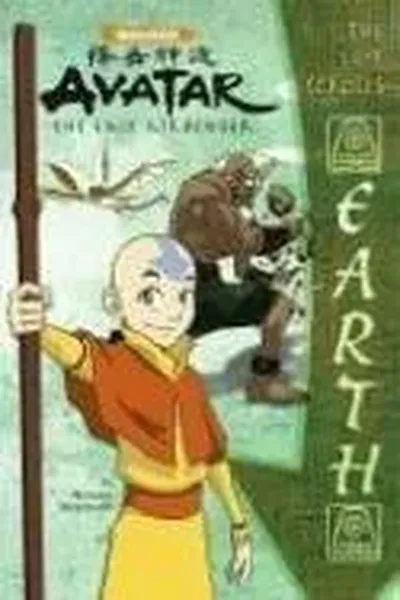
Michael Teitelbaum's 2007 compilation, *The Lost Scrolls*, offers a direct confrontation with source material often filtered through centuries of commentary. The strength of this collection lies in its unfiltered presentation of ancient esoteric narratives, allowing the reader to engage with the raw ideas without immediate scholarly mediation. I found the section detailing the cosmology of the Valentinian Gnostic school particularly illuminating, presenting a complex system of Aeons and the fall of Sophia in stark, unadorned prose. Its limitation, however, is the lack of extensive annotation; for readers unfamiliar with the intricacies of Gnosticism or Hermeticism, the texts themselves can be dense and opaque. A more robust scholarly apparatus would have enhanced its accessibility. Still, for those willing to grapple with the material, *The Lost Scrolls* provides an unvarnished window into early mystical thought.
📝 Description
78
The Lost Scrolls, published in 2007, compiles obscure Gnostic texts for scholarly study.
Michael Teitelbaum's 2007 compilation, The Lost Scrolls, makes previously hard-to-find ancient esoteric writings accessible. This collection serves as primary source material for those studying forgotten mystical traditions. It gathers texts that have remained obscure, aiming to preserve this knowledge and make it available for detailed examination by scholars and practitioners.
The book is designed for serious students of comparative religion, ancient history, and esoteric philosophy. It is particularly useful for understanding the texts that shaped later occult movements and mystical thought. Researchers in religious studies and anyone interested in pre-Christian European spirituality will find this a valuable resource. The compilation emerged during a period of increased academic and public attention to Gnosticism and mystery traditions, offering direct access to the source documents that fueled this interest.
The Lost Scrolls belongs to the Gnostic tradition, a diverse set of religious ideas and systems that flourished in the first few centuries CE. Gnosticism often posits a complex cosmology involving divine beings called Aeons and a creator figure distinct from the supreme God, sometimes identified as the Demiurge. Many Gnostic texts emphasize the soul's divine spark and its journey to escape the material world, which is seen as flawed or created by a lesser deity. This compilation makes primary documents available, allowing readers to engage directly with these ancient ideas.
💡 Why Read This Book?
• Learn about the Gnostic concept of the 'Demiurge' and its role in creation, as detailed within the compilation's primary texts, offering a unique perspective on cosmic origins distinct from Abrahamic narratives. • Understand the Valentinian Aeon cosmology by examining the specific emanations and their relationships as described in the provided scrolls, gaining insight into a complex early Christian mystical framework. • Explore the spiritual goal of achieving 'gnosis' (direct knowledge) as presented in the texts, understanding how individuals sought liberation from material existence through esoteric understanding, a concept central to many ancient mystery traditions.
⭐ Reader Reviews
Honest opinions from readers who have explored this book.
❓ Frequently Asked Questions
What specific ancient traditions are represented in The Lost Scrolls?
The collection primarily features texts associated with Gnostic traditions, particularly those influenced by Valentinianism, and potentially Hermetic philosophical currents. These represent early Christian mystical and philosophical schools that offered alternative cosmologies and paths to salvation.
When was The Lost Scrolls first published?
The book was first published in 2007, making it a relatively modern compilation of ancient texts aimed at contemporary readers and scholars.
Is The Lost Scrolls suitable for beginners in esoteric studies?
While valuable, the book presents primary source material with minimal modern interpretation. Beginners might find it challenging without supplementary guides to the complex Gnostic and Hermetic concepts discussed.
What is the significance of 'gnosis' as discussed in the book?
Gnosis, or direct spiritual knowledge, is a central theme. The texts describe it as the path to liberation from the material world, achieved through esoteric understanding of divine realities and one's own spiritual nature.
Does the book include commentary or just the ancient texts?
The primary focus is on presenting the ancient texts themselves. While it serves as a compilation, extensive modern commentary or annotation is not its main feature, emphasizing direct engagement with the source material.
Who is the author, Michael Teitelbaum, in relation to these texts?
Michael Teitelbaum is the compiler and editor of this collection, responsible for gathering and presenting these ancient writings for a modern audience. His work focuses on making these historical esoteric documents accessible.
🔮 Key Themes & Symbolism
Gnostic Cosmology
The collection examines the complex cosmologies of Gnostic sects, particularly the Valentinian school, detailing intricate hierarchies of divine beings known as Aeons. It outlines the process of creation, often involving a fall from divine perfection, and the subsequent emanation of the material world through a lesser creator figure, the Demiurge. This perspective contrasts sharply with orthodox creation narratives, emphasizing an unknowable, transcendent God beyond the flawed material universe.
The Path to Gnosis
Central to the texts is the concept of 'gnosis' – direct, intuitive knowledge of the divine and one's own true spiritual nature. The scrolls explore the methods and revelations required to attain this state, often depicted as a liberation from the ignorance and constraints imposed by the material realm and its rulers. This knowledge is presented as the key to spiritual awakening and salvation.
Dualism and the Material World
A pervasive theme is the inherent dualism between the spiritual and material realms. The material world is frequently portrayed as an illusion or a prison, created by a flawed entity. The texts critique the material existence and its perceived imperfections, advocating for a spiritual transcendence that moves beyond the limitations imposed by physical reality and its governing forces.
Sophia's Fall
Several narratives focus on the myth of Sophia, a divine feminine emanation whose desire or error leads to the unintended creation of the Demiurge and the material cosmos. This motif explores themes of divine will, unintended consequences, and the origins of suffering. The subsequent efforts to redeem Sophia and restore cosmic order are a significant element within the compilation's theological explorations.
💬 Memorable Quotes
Direct passages from the work, attributed to the author.
“True salvation lies not in faith alone, but in direct knowledge of the divine spark within.”
— This highlights the Gnostic emphasis on experiential, internal knowledge ('gnosis') as the primary means of spiritual liberation, contrasting it with faith-based doctrines that rely on external authority or belief.
“From the unknowable Father emanated the Aeons, a family of divine principles.”
— This describes the initial stage of Gnostic cosmology, where the supreme, transcendent God (the unknowable Father) gives rise to a series of divine powers or beings (Aeons) through a process of emanation.
“The Demiurge, driven by a limited vision, fashioned this world without true divine wisdom.”
— This points to the Gnostic concept of the Demiurge as the architect of the material universe, a being who operates with incomplete knowledge or a flawed understanding of the higher divine realities.
“Seek the hidden light that slumbers within the soul, for it is the key to transcendence.”
— This is an interpretive summary of the call to inner exploration found in many esoteric texts. It suggests that the divine essence resides within the individual, and awakening it is the path to spiritual freedom.
💡 Key Ideas
Editorial paraphrase of the work's core concepts — not direct quotes.
The material realm is a flawed imitation, a prison constructed by ignorance.
This paraphrase captures the Gnostic view that the physical world is not the ultimate reality but a lesser, imperfect creation. It suggests that spiritual awakening involves recognizing this illusion and seeking escape.
🌙 Esoteric Significance
Tradition
The Lost Scrolls largely aligns with the Gnostic tradition, a complex set of religious ideas and systems that flourished in the first few centuries CE. It offers primary source material for understanding Gnostic cosmology, their views on creation, the nature of the divine, and the path to salvation. While distinct from Hermeticism or Kabbalah, it shares with them an emphasis on esoteric knowledge and a hierarchical understanding of reality.
Symbolism
Key symbols include the 'Aeons,' representing divine emanations or powers within the Pleroma (divine fullness), and the 'Demiurge,' symbolizing a lesser creator of the flawed material world. The 'divine spark' or 'pneuma' symbolizes the trapped fragment of divinity within the human soul, the object of salvific knowledge and liberation.
Modern Relevance
Contemporary esoteric practitioners and comparative religion scholars continue to draw on Gnostic texts for their philosophical depth and alternative spiritual frameworks. Movements exploring consciousness, dualistic philosophies, and the critique of materialist worldviews often find resonance in the ideas presented in these ancient writings, influencing modern occultism and New Age thought.
👥 Who Should Read This Book
• Students of early Christianity and comparative religion seeking primary source material on Gnostic beliefs and cosmologies beyond secondary interpretations. • Practitioners of esoteric traditions interested in the historical roots of concepts like divine emanations, hidden knowledge, and the critique of the material world. • Scholars of ancient philosophy and mysticism looking to engage directly with texts that shaped alternative spiritual movements in the Greco-Roman era.
📜 Historical Context
Published in 2007, *The Lost Scrolls* emerged during a resurgence of interest in ancient mystery traditions and Gnosticism, a period marked by accessible scholarly works and popular engagement with esoteric ideas. The early 21st century saw a growing academic dialogue challenging traditional interpretations of early Christianity, with scholars like Bart D. Ehrman publishing works such as *Misquoting Jesus* (2005) that questioned textual authenticity and historical narratives. This book fits within that intellectual current by providing direct access to primary texts that informed alternative spiritualities. It offered an alternative to the established theological frameworks, providing material that engaged with or reacted against the dominant interpretations of religious history, much like the debates surrounding the Nag Hammadi library discoveries in the mid-20th century which brought many Gnostic texts to light.
📔 Journal Prompts
The concept of the Demiurge and its flawed creation.
Reflect on the pursuit of 'gnosis' as described in the texts.
Analyze the symbolic meaning of the Aeons within the Pleroma.
Consider the Gnostic view of the material world versus the spiritual realm.
Explore the myth of Sophia and its implications for divine action.
🗂️ Glossary
Gnosis
A Greek term meaning 'knowledge,' specifically referring to esoteric or spiritual knowledge that leads to salvation or enlightenment in Gnostic systems.
Aeons
Divine beings or emanations that originate from the supreme God (the Monad or Father) in Gnostic cosmology, forming the Pleroma or divine fullness.
Demiurge
A figure, often depicted as ignorant or malevolent, who creates the material universe, distinct from the true, transcendent God. Often identified with the God of the Old Testament.
Pleroma
The spiritual realm or divine fullness, inhabited by the supreme God and the Aeons in Gnostic cosmology. It represents perfection and totality.
Sophia
A female Aeon in Gnostic mythology whose desire or fall leads to the creation of the material world and the Demiurge.
Material World
In Gnostic thought, the physical universe, often viewed as an illusion, a prison, or an imperfect creation distinct from the true spiritual reality.
Divine Spark
A fragment of the divine essence believed to be trapped within the human soul, representing one's true spiritual nature and potential for liberation.
🔮 Readers Also Liked
Browse all →








More by Michael Teitelbaum
All books →



More Free Occult Philosophy Books
View all →