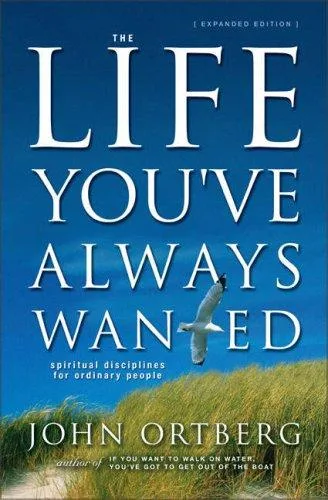
The life you've always wanted
 77
77

The life you've always wanted
John Ortberg’s The life you've always wanted offers a welcome counter-narrative to the relentless pursuit of external validation. His strength lies in dissecting the often-unexamined desires that drive modern life, particularly the relentless quest for more, better, and faster. Ortberg effectively uses relatable analogies, such as the allure of advertising, to expose the superficiality of many of our aspirations. However, while the critique is sharp, the book occasionally feels overly focused on the internal without providing a robust framework for how this internal shift translates into tangible action in the world, especially for those grappling with systemic issues. A particularly insightful section explores the paradox of desiring a life of peace while actively creating internal turmoil through constant striving. Ultimately, Ortberg provides a valuable, though sometimes narrowly focused, theological redirection for the spiritually discontented.
📝 Description
77
### What It Is The life you've always wanted by John Ortberg, first published in 1997, is not a self-help manual in the conventional sense. Instead, it presents a theological exploration of the nature of the "good life" as understood through Christian scripture and tradition. Ortberg challenges readers to reconsider their pursuit of happiness, suggesting that true fulfillment is found not in external achievements or circumstances, but in a deep, internal alignment with God's purposes. The book examines common misconceptions about the desired life and offers a framework for understanding spiritual transformation.
### Who It's For This work is intended for individuals seeking a deeper spiritual understanding beyond superficial interpretations of success and contentment. It will appeal to those who are questioning conventional notions of a fulfilling existence and are open to a more contemplative, faith-based approach. Readers who appreciate theological reflection, historical Christian thought, and a challenge to societal norms surrounding personal achievement will find value here. It is particularly suited for those in a period of spiritual searching or re-evaluation.
### Historical Context Published in 1997, The life you've always wanted emerged during a period of increasing interest in personal growth and spirituality, often alongside a growing critique of materialistic values prevalent in Western culture. While not explicitly an esoteric text, its theological underpinnings and focus on internal transformation align with broader movements exploring the inner life. It existed in dialogue with various streams of Christian thought, including those emphasizing spiritual disciplines and the pursuit of character development, differentiating itself from purely psychological or self-actualization approaches gaining traction at the time.
### Key Concepts The book delves into several core concepts that redefine the reader's understanding of "the life you've always wanted." Ortberg critiques the common pursuit of external markers of success—wealth, status, happiness—as ultimately hollow. He posits that the "desired life" is one characterized by spiritual fruitfulness, inner peace, and alignment with divine will. Central to his argument is the idea that this transformation is not a result of effort alone but a byproduct of a surrendered relationship with God, emphasizing grace and the ongoing work of the Holy Spirit in shaping character. The work explores the contrast between a life lived according to human desires and one lived according to divine design.
💡 Why Read This Book?
• Gain a reframed understanding of fulfillment by exploring Ortberg's concept of the "desired life" as rooted in spiritual alignment rather than external achievement, a perspective distinct from secular self-help trends. • Understand the critique of modern consumerism and its impact on personal aspirations, drawing from the book’s examination of the superficiality of commonly pursued goals. • Discover a theological approach to personal transformation that emphasizes grace and surrender, offering an alternative to achievement-based models of spiritual growth referenced throughout the text.
⭐ Reader Reviews
Honest opinions from readers who have explored this book.
❓ Frequently Asked Questions
What is the primary theological perspective of The life you've always wanted?
The book is grounded in a Christian theological framework, viewing the "life you've always wanted" not through the lens of worldly success, but as a life of spiritual fruitfulness and deep connection with God, first published in 1997.
How does John Ortberg define the 'good life' in his book?
Ortberg defines the 'good life' as one characterized by spiritual maturity, internal peace, and obedience to divine will, rather than by material possessions or societal status, as explored in his 1997 work.
What common desires does Ortberg challenge readers to re-examine?
He challenges the pursuit of happiness through external means such as wealth, recognition, and constant achievement, suggesting these are often misguided and lead to dissatisfaction, a theme prominent since its 1997 release.
What is the role of spiritual disciplines in Ortberg's view?
Spiritual disciplines are presented not as means to earn favor, but as pathways to deeper communion with God and as catalysts for the internal transformation that leads to the desired life.
Does the book offer practical steps for achieving this 'desired life'?
While not a step-by-step guide, the book encourages a reorientation of desires and a commitment to spiritual practices that foster alignment with God's purposes, as outlined in its 1997 publication.
Who is John Ortberg, and what is his background relevant to this book?
John Ortberg is an American author and evangelical Christian speaker, known for his theological reflections on faith and life. His background as a pastor and writer informs the devotional and pastoral tone of the book, originally published in 1997.
🔮 Key Themes & Symbolism
The Misconception of Success
Ortberg systematically dismantles the prevalent cultural definition of success, which equates it with material wealth, status, and constant personal advancement. He argues that this paradigm is inherently flawed and leads to a perpetual state of dissatisfaction, a "hunger that can never be filled." The book contrasts this with a spiritual understanding of a life well-lived, one characterized by inner peace and divine alignment, rather than external accolades. This theme is crucial for understanding the book's departure from conventional self-help literature.
Spiritual Hunger and Fulfillment
A central theme is the innate human desire for something more, a "spiritual hunger." Ortberg posits that this hunger is often misdirected towards temporal and superficial goals. True fulfillment, according to his theological perspective, comes from satisfying this hunger through a relationship with God. The work explores how this divine connection transforms one's entire outlook and experience of life, providing a lasting satisfaction that worldly pursuits cannot offer.
The Nature of the 'Desired Life'
Ortberg redefines what it means to live the life one has always wanted. It is not a life free from challenges or difficulties, but one characterized by spiritual depth, resilience, and purpose. This involves embracing a path of surrender and obedience, allowing for internal transformation rather than seeking external control. The book encourages readers to consider a life aligned with God's will as the ultimate source of genuine contentment and joy, first published in 1997.
Transformation Through Grace
The book emphasizes that the "desired life" is not achieved through sheer human effort or willpower alone. Instead, it is a product of God's grace working in and through the believer. Ortberg explores the concept of spiritual transformation as an ongoing process, facilitated by faith, prayer, and a willingness to be shaped by divine influence. This perspective offers a hopeful alternative to self-reliance models, highlighting dependence on a higher power for genuine change.
💬 Memorable Quotes
“The desire for the life you've always wanted is the desire for God.”
— This statement encapsulates Ortberg's core argument: that our deepest longings and aspirations are ultimately directed towards a spiritual fulfillment that only a relationship with the divine can provide.
“We are pursuing happiness, but we are often pursuing it in the wrong places.”
— This paraphrased concept highlights the book's critique of consumer culture and the relentless pursuit of external markers of success as a misguided path to contentment.
“True satisfaction comes not from having more, but from becoming more like Christ.”
— This interpretation emphasizes the book's theological focus on internal transformation and spiritual character development as the source of genuine fulfillment, rather than material acquisition.
“The challenges we face are opportunities for spiritual growth.”
— This reflects the book's perspective that difficulties are not mere obstacles but are integral to the process of spiritual maturation and the development of a resilient, desired life.
“Our deepest needs are spiritual, not material.”
— This paraphrased concept underscores the book's argument that the "life you've always wanted" addresses a profound spiritual hunger that cannot be satisfied by worldly goods or achievements.
🌙 Esoteric Significance
Tradition
While primarily a work of Christian theology, The life you've always wanted touches upon themes common in contemplative traditions that seek inner transformation. It aligns with the Christian mystical emphasis on union with the divine and the pursuit of spiritual virtues. It departs from more overtly esoteric systems by grounding its framework firmly within orthodox Christian doctrine and scripture, eschewing practices or cosmologies found in Hermeticism or Gnosticism, yet sharing a common goal of inner reorientation.
Symbolism
The book doesn't rely on overt esoteric symbols but uses metaphorical language to convey spiritual truths. The concept of 'thirst' or 'hunger' can be seen as a symbol for the innate spiritual longing for God, a motif found across many mystical traditions. 'Alignment' with God's will symbolizes a state of harmony and integration, akin to the concept of 'Ma'at' in ancient Egyptian religion or 'Tao' in Taoism, representing a right ordering of one's inner and outer life.
Modern Relevance
Ortberg's work continues to be relevant for contemporary seekers interested in a more profound, less superficial approach to personal well-being. It speaks to modern anxieties about meaning and fulfillment in a hyper-consumerist society. Thinkers and practitioners in the Christian contemplative movement, as well as those exploring the intersection of psychology and spirituality, find value in its theological depth and critique of shallow happiness metrics.
👥 Who Should Read This Book
• Individuals questioning the conventional pursuit of success and happiness, seeking a deeper, spiritually grounded alternative to secular self-help. • Christian readers looking for theological reflection on personal growth that emphasizes grace and transformation over mere self-effort. • Anyone experiencing a sense of dissatisfaction or spiritual longing, who is open to exploring the idea that true fulfillment lies in alignment with divine purpose.
📜 Historical Context
Published in 1997, John Ortberg's The life you've always wanted emerged in a cultural landscape increasingly preoccupied with self-help and the pursuit of happiness, often through consumerism. While not an esoteric text in the vein of occultism, it offered a distinct theological counterpoint to the prevailing secular self-improvement narratives. It engaged with evangelical Christian thought, particularly streams focusing on spiritual disciplines and character formation, differentiating itself from the more psychological self-actualization trends popular at the time, championed by figures like Stephen Covey whose "The 7 Habits of Highly Effective People" was a bestseller in the early 90s. The book resonated with those questioning a purely achievement-driven or materialistic definition of a good life, positioning itself within a broader conversation about meaning and purpose that spanned religious and philosophical circles.
📔 Journal Prompts
The perceived 'life you've always wanted' versus the life God desires for you.
The nature of spiritual hunger and its potential misdirections.
Identifying external markers of success versus internal spiritual fruitfulness.
The role of surrender in achieving true contentment.
Reflecting on the concept of transformation through divine grace.
🗂️ Glossary
Spiritual Hunger
An innate human desire for meaning, purpose, and connection with the divine, which Ortberg argues is often misdirected towards worldly pursuits.
Desired Life
Ortberg's redefinition of the ideal existence, not as one free from hardship, but as one characterized by spiritual maturity, inner peace, and alignment with God's will.
Spiritual Disciplines
Practices such as prayer, meditation, and scripture study that, in Ortberg's view, facilitate a deeper relationship with God and personal transformation.
Grace
The unmerited favor of God, presented as the essential element in spiritual transformation, rather than human effort alone.
Alignment
A state of harmony and congruence between one's will and God's will, leading to authentic fulfillment and peace.
Fruitfulness
The outward manifestation of an inner spiritual life, characterized by qualities like love, joy, peace, and righteousness.
Worldly Success
The common cultural metrics for a good life, including wealth, status, power, and achievement, which Ortberg critiques as ultimately superficial.