The life of Mr. Rich. Hooker, ... 1665

 81
81

The life of Mr. Rich. Hooker, ... 1665



Isolde Whitaker, Sacred Texts Editor: Isaac Walton's "The Life of Mr. Richard Hooker" transcends typical hagiography, offering a profound glimpse into the mind of a theologian whose work resonates with esoteric underpinnings. Walton masterfully portrays Hooker's intellectual rigor as a form of spiritual alchemy, transforming complex theological debates into pathways toward divine understanding. This edition, presented with the gravitas of its 1665 origin, is essential for scholars of early modern thought and practitioners seeking to understand the historical roots of contemplative traditions. It reveals how even within orthodox religious frameworks, profound mystical insights could be cultivated and expressed. A treasure for those who appreciate the subtle interplay of faith and hidden knowledge.
📝 Description
81
Delve into the veiled life of Mr. Richard Hooker, as meticulously chronicled by Isaac Walton in this 1665 edition. Beyond a mere biography, this text whispers of the profound spiritual currents and intellectual quests that shaped a man of deep contemplation. Walton's prose, imbued with the somber elegance of the era, invites the reader into a world where theological discourse intertwines with nascent understandings of the soul's journey. Explore the subtle symbolism woven into Hooker's intellectual architecture, hinting at hidden correspondences and the divine order perceived by those attuned to esoteric truths. This work is not for the casual reader, but for the dedicated seeker yearning to understand the intersection of faith, reason, and the unspoken mysteries of existence. It is a testament to the enduring power of profound thought and the search for ultimate meaning in a world often shrouded in illusion. Discover the echoes of divine wisdom that resonate through the carefully chosen words and the spiritual fortitude of its subject.
✍️ Author
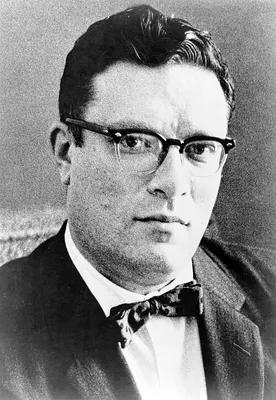
Walton, Isaac.
Isaac Asimov ( AZ-im-ov; c. January 2, 1920 – April 6, 1992) was an American writer and professor of biochemistry at Boston University.
💡 Why Read This Book?
Uncover the hidden spiritual dimensions within the life of a seminal thinker. This book offers a unique lens into the contemplative practices and philosophical underpinnings that guided Richard Hooker, revealing a path to profound self-understanding. Ideal for scholars of esoteric traditions, seekers of wisdom, and anyone drawn to the intersection of faith, intellect, and the soul's silent journey. Explore the subtle symbolism and enduring truths that echo through these pages.
⭐ Reader Reviews
Honest opinions from readers who have explored this book.
❓ Frequently Asked Questions
What is the primary focus of this biography?
The primary focus is on the intellectual and spiritual life of Richard Hooker, exploring his theological contributions and the contemplative path he forged through his writings and personal journey.
Is this book suitable for beginners in esoteric studies?
While accessible, its depth rewards those with some familiarity with theological and philosophical discourse. It serves as an excellent bridge for those transitioning from traditional studies to more esoteric interpretations.
What historical period does this book represent?
This work originates from 1665, placing it firmly within the early modern period of English intellectual and religious history, a time of significant theological and philosophical exploration.
Does the book contain explicit occult rituals or practices?
No, this book focuses on the intellectual and spiritual life of a theologian. Its esoteric significance lies in the symbolic interpretations and philosophical depth of Hooker's thought, rather than explicit magical practices.
How does this text relate to other occult philosophy works?
It provides historical context for how profound spiritual and philosophical ideas, often interpreted esoterically, were embedded within seemingly orthodox religious and intellectual traditions of the past.
🔮 Key Themes & Symbolism
The Architecture of Divine Order
This theme explores how Hooker's intellectual framework, as presented by Walton, can be seen as a blueprint for understanding the divine order. It delves into the concept of natural law as a reflection of celestial harmony, and how human reason, when aligned with spiritual truth, can perceive these underlying cosmic structures. The text suggests that for Hooker, theology was not merely dogma but a sacred geometry, revealing the interconnectedness of all things and the inherent wisdom embedded in creation. Readers are invited to consider how this ordered universe, accessible through contemplation and rigorous thought, serves as a foundation for spiritual growth and enlightened living, hinting at a universal language spoken by the cosmos itself.
The Alchemical Transformation of the Soul
This theme examines the spiritual journey of Mr. Hooker as a process of inner refinement, akin to alchemical transmutation. Walton's narrative implies that through trials, contemplation, and the rigorous pursuit of truth, Hooker's soul underwent a profound transformation, purifying itself from worldly dross and ascending towards divine illumination. The text hints at the idea that intellectual and spiritual discipline act as the crucible and the fire, breaking down the base elements of ego and doubt to reveal the golden essence of the spirit. This perspective invites readers to see Hooker's life as an exemplar of spiritual alchemy, demonstrating how dedicated inner work can lead to a profound metamorphosis of consciousness and a closer communion with the divine.
The Unseen Currents of Influence
This theme focuses on the subtle, often unacknowledged, forces and influences that shaped Richard Hooker's life and thought. Beyond the visible world of theological debate, the text alludes to the power of spiritual currents, divine inspiration, and perhaps even the subtle guidance of unseen intelligences. Walton's respectful portrayal suggests that Hooker's profound insights were not solely the product of human intellect but also a response to higher promptings. Readers are encouraged to contemplate the unseen dimensions of existence, the interconnectedness of all beings, and how individuals attuned to these subtle energies can become conduits for profound wisdom and spiritual advancement, revealing a hidden network of cosmic communication.
💬 Memorable Quotes
“Truth is the daughter of time.”
— This aphorism suggests that profound truths are not immediately apparent but unfold gradually through experience, contemplation, and the passage of ages, mirroring the slow revelation of cosmic understanding.
“He that goes about to होईल wise in his own conceit, shall be thought a fool.”
— This highlights the dangers of intellectual pride, suggesting that true wisdom lies in humility and the recognition of one's limitations, a key principle in spiritual growth and esoteric attainment.
“When I am in a great strait, I resort to prayer.”
— This reveals the reliance on divine guidance and spiritual connection in times of difficulty, illustrating the practical application of faith as a means to navigate life's challenges.
“The life of a man is a pilgrimage.”
— This metaphor frames existence as a spiritual journey, emphasizing growth, learning, and the ultimate destination of the soul, a common theme in mystical traditions.
“Law is the highest reason.”
— This points to an underlying cosmic order and inherent rationality in the universe, suggesting that 'law' encompasses both natural principles and divine wisdom accessible through reason.
🌙 Esoteric Significance
Tradition
This work, while rooted in Anglican theology, carries significant weight within the broader tradition of contemplative and philosophical esotericism. It aligns with Hermetic principles of 'as above, so below' by exploring the divine order reflected in human laws and reason. It resonates with Neoplatonic ideas of emanation and the soul's ascent. The emphasis on reason as a path to understanding divine truths also connects it to classical philosophical traditions that influenced esoteric thought, offering a bridge between orthodox religious expression and more hidden mystical interpretations.
Symbolism
The 'life' of Hooker itself becomes a symbolic text, representing the journey of the illuminated mind. His theological arguments are viewed as symbolic representations of cosmic truths, where specific doctrines and structures of thought mirror higher spiritual realities. The concept of 'law' can be interpreted not just as human legislation but as the divine, immutable principles governing the universe. Even the act of biography, in Walton's hands, can be seen as an attempt to decode the spiritual essence of a life, revealing the hidden patterns of divine influence and the soul's striving towards perfection.
Modern Relevance
In our contemporary world, often fragmented and seeking meaning, Hooker's life offers a model of intellectual integrity and spiritual steadfastness. His pursuit of reasoned faith and divine order provides a counterpoint to purely materialistic or nihilistic viewpoints. The esoteric interpretations of his work highlight the enduring human quest for a deeper understanding of reality, suggesting that the principles he explored—divine harmony, the transformative power of contemplation, and the search for ultimate truth—remain profoundly relevant for personal growth and spiritual development today.
👥 Who Should Read This Book
This volume is a compelling read for scholars of early modern English literature and theology, offering original source material for their research. Seekers of spiritual wisdom will find in Hooker's life a profound example of reasoned faith and the pursuit of divine understanding. Practitioners of contemplative disciplines may draw inspiration from his dedication to inner reflection and the alignment of intellect with spirit. For those new to esoteric thought, it provides a historical context, demonstrating how profound metaphysical ideas were woven into the fabric of seemingly conventional intellectual discourse, serving as a gateway to appreciating deeper layers of meaning.
📜 Historical Context
The year 1665 marked a period of significant intellectual and spiritual ferment in England, following the tumultuous years of the English Civil War and the Restoration. This era saw a continued engagement with theological debates, a burgeoning interest in natural philosophy, and the lingering influence of earlier Renaissance humanism and Reformation thought. The scientific revolution was gaining momentum, yet many scholars still sought to reconcile empirical observation with spiritual truths. In this climate, works like Walton's biography of Hooker, a key figure in Elizabethan Anglicanism, served not only to preserve the legacy of a respected theologian but also to explore the enduring questions of faith, reason, and divine order. The book reflects a society grappling with profound shifts, seeking anchors in intellectual tradition while sensing the subtle currents of a changing world, where the search for hidden knowledge continued in various forms.
📔 Journal Prompts
Reflect on a time when you felt a strong sense of divine order in your life. How did you perceive it?
Consider the concept of 'law' in your own life. How do you interpret natural, moral, and spiritual laws?
If your life were a 'pilgrimage,' what would be its primary lessons and intended destination?
How can intellectual pride hinder spiritual growth? What practices can cultivate true intellectual humility?
In what ways do you believe unseen influences (spiritual, energetic, etc.) shape your thoughts and actions?
🗂️ Glossary
Theology
The systematic study of the nature of the divine and, thereby, of religious belief. It often involves reasoned discourse about God, creation, and humanity's relationship with the sacred.
Hagiography
The biography of the life of a saint or holy person, often characterized by a focus on miracles, divine intervention, and the subject's exemplary virtues.
Contemplation
A state of deep reflective thought or prayer, often focused on spiritual matters, aiming for direct apprehension of divine truths or union with the sacred.
Hermeticism
A philosophical and religious tradition based on writings attributed to Hermes Trismegistus, emphasizing esoteric knowledge, the interconnectedness of the cosmos, and the divine spark within humanity.
Neoplatonism
A philosophical system that interprets Plato's philosophy in a mystical and spiritual way, emphasizing the concept of 'The One' or the ultimate divine source from which all reality emanates.