The heart of redness
 82
82

The heart of redness
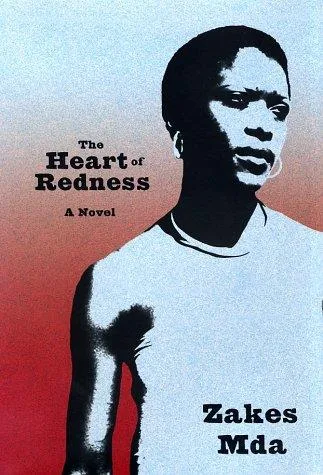
Zakes Mda's "The Heart of Redness" is an ambitious excavation of the Mlanjeni Cattle-Killing movement, moving beyond a mere historical chronicle to explore the psychological and spiritual dimensions of disaster. The novel's strength lies in its intricate narrative structure, which presents the events of 1857 through multiple perspectives, offering a nuanced view of how prophecy can ignite both fervent belief and devastating action. Mda masterfully captures the atmosphere of crisis, where faith and desperation intertwine. A particular triumph is the portrayal of the prophetess Nongqawuse, depicted not as a simple charlatan or a saint, but as a figure caught in a maelstrom of forces beyond her control. However, the sheer scope of the narrative, while rich, occasionally diffuses the emotional impact. The focus shifts between numerous characters and subplots, which, while providing breadth, can sometimes dilute the intensity of the central tragedy. The work grapples with the very nature of belief and its terrifying power when it leads to self-destruction. "The Heart of Redness" stands as a significant contribution to the literature of historical trauma and spiritual reckoning.
📝 Description
82
Zakes Mda's 2001 novel, The Heart of Redness, examines the Xhosa Cattle-Killing movement of 1857.
First published in 2001, Zakes Mda's The Heart of Redness revisits a critical juncture in South African history: the Great Trek and its aftermath. The novel centers on the prophetess Nongqawuse and her 1857 calls for the destruction of cattle and crops. These prophecies precipitated a devastating famine and the mass migration of the Xhosa people. Mda, however, moves beyond a simple historical account. He builds a detailed narrative that intertwines factual events with the lives of fictional characters. These individuals wrestle with profound questions of faith, the nature of prophecy, and the struggle for survival amidst societal collapse.
The book is set against the backdrop of the mid-19th century Eastern Cape, a region rife with conflict between the Xhosa, British colonialists, and Boer settlers. The Mlanjeni Cattle-Killing movement, a complex phenomenon driven by spiritual conviction, resistance to colonization, and desperation, forms the story's core crisis. Its impact was catastrophic, leading to widespread hunger and displacement, ultimately weakening Xhosa resistance against encroaching powers. Mda's writing captures the human cost of these historical forces.
While not explicitly a work of occult fiction, The Heart of Redness engages with esoteric themes through its depiction of prophecy and spiritual movements. Nongqawuse's visions and the ensuing mass action are presented not just as historical events but as manifestations of deep spiritual currents influencing collective destiny. The novel scrutinizes how belief systems, especially those operating outside established religious structures, can mobilize populations and lead to profound societal shifts, both constructive and destructive. It touches on the power of visionary experience to reshape reality and the complex relationship between the sacred and the material world, particularly under conditions of extreme social and political pressure.
💡 Why Read This Book?
• Understand the profound impact of prophecy on historical events, as exemplified by Nongqawuse's 1857 prophecies that led to the Xhosa Cattle-Killing movement and widespread famine. • Gain insight into the complex interplay between spiritual belief, colonial pressure, and collective action during a period of intense crisis in 19th-century South Africa. • Explore the psychological and social ramifications of mass delusion and its consequences through Mda's character-driven narrative, which offers a unique lens on human response to disaster.
⭐ Reader Reviews
Honest opinions from readers who have explored this book.
❓ Frequently Asked Questions
What historical event does "The Heart of Redness" reimagine?
The novel reimagines the Mlanjeni Cattle-Killing movement of 1856-1857 in the Eastern Cape of South Africa, triggered by the prophecies of Nongqawuse.
Who is Nongqawuse in the book?
Nongqawuse is the central prophetic figure whose visions in 1857 inspired the Xhosa people to destroy their cattle and crops, leading to widespread famine.
What is the significance of 'redness' in the novel?
The 'redness' is a complex motif in "The Heart of Redness", potentially symbolizing blood, sacrifice, spiritual intensity, or the violent transformation that the prophecies promised.
What literary tradition does Zakes Mda's work belong to?
Mda's work is often categorized within post-colonial African literature, focusing on historical reimagining and the exploration of indigenous cultures under duress.
When was "The Heart of Redness" first published?
The novel was first published in 2001, offering a contemporary perspective on a pivotal 19th-century South African event.
What is the primary setting for the novel's events?
The primary setting is the Eastern Cape region of South Africa during the mid-19th century, specifically around the time of the Mlanjeni Cattle-Killing movement.
🔮 Key Themes & Symbolism
Prophecy and Collective Action
The novel intensely examines how prophecy, particularly that of Nongqawuse, can galvanize entire communities into action, even when that action leads to self-destruction. The narrative illustrates the potent psychological force of belief and the potential for spiritual conviction to override rational self-preservation. This theme is explored through the reactions of various characters to Nongqawuse's pronouncements in 1857, showcasing how faith can become a catalyst for immense societal change, for better or worse. The work examines the societal mechanisms by which such prophecies gain traction and lead to events like the Xhosa Cattle-Killing movement.
Colonialism and Cultural Impact
"The Heart of Redness" portrays the profound disruption caused by colonial expansion on indigenous cultures and belief systems. The arrival of settlers and the imposition of foreign governance created an environment ripe for spiritual and social upheaval. The narrative suggests that the desperation and existential threat posed by colonialism may have contributed to the fertile ground for Nongqawuse's prophecies to take root. It explores how indigenous communities navigated these pressures, leading to the catastrophic events of the mid-19th century in the Eastern Cape.
The Nature of Faith and Desperation
This theme interrogates the fine line between fervent faith and utter desperation. The Xhosa people, facing persistent conflict and displacement, were in a precarious position. The novel presents Nongqawuse's prophecies as a potential response to this dire situation, offering a vision of salvation and renewal. It questions whether the actions taken were purely spiritual or also a desperate gamble for survival and liberation from oppressive forces. The narrative explores the human capacity for belief in the face of overwhelming adversity.
Historical Reimagining and Narrative Voice
Mda uses historical events as a foundation for literary exploration, employing multiple narrative voices to construct a complex understanding of the past. The novel is not a straightforward historical account but a literary interpretation that gives voice to those affected by the events of 1857. By combining different perspectives, Mda challenges singular historical narratives and highlights the subjective nature of experience, particularly during times of crisis and cultural collision.
💬 Memorable Quotes
Direct passages from the work, attributed to the author.
“She saw the spirits of her ancestors, and they told her that the world was to be reborn.”
— This represents the spiritual justification behind the destructive prophecies. It frames the cataclysm as a divinely ordained event, a necessary cleansing for a promised rebirth, which underscores the depth of belief involved.
“The famine was a terrible thing. People ate grass, they ate roots, they ate their own children.”
— This starkly describes the devastating consequences of the Cattle-Killing movement. It moves beyond the prophecy itself to illustrate the horrific reality of starvation and societal breakdown that followed the widespread destruction of resources in 1857.
“Some believed, and some did not. But the fear of missing out on the promised salvation was great.”
— This interpretation points to the social dynamics at play. It suggests that even those who might have harbored doubts were compelled by the collective fervor and the potent promise of a better future, illustrating the power of social pressure and hope.
💡 Key Ideas
Editorial paraphrase of the work's core concepts — not direct quotes.
The cattle must be killed. The fields must be burned. Then the ancestors will return, and the white man will be driven into the sea.
This paraphrased statement captures the core of Nongqawuse's prophecy, which promised a return of the ancestors and a miraculous rejuvenation of the Xhosa nation if they sacrificed their material wealth. It highlights the radical, self-destructive nature of the call to action.
The land was broken, and the people were scattered.
This paraphrased sentiment reflects the ultimate outcome of the events. It speaks to the profound and lasting impact of the prophecies and their fulfillment, resulting in the devastation of the land and the dispersal of the Xhosa people.
🌙 Esoteric Significance
Tradition
While not adhering strictly to a single Western esoteric lineage, "The Heart of Redness" speaks to themes common in ecstatic traditions and shamanic practices that involve altered states of consciousness and communication with ancestral or spiritual realms. The narrative explores the power of prophecy and divine revelation, a concept central to many spiritual traditions, including those with Gnostic or ecstatic elements. Mda focuses on the African indigenous spiritual context, where ancestors play a vital role in the living world, and where prophecy can be a direct channel for divine or ancestral will, influencing societal direction.
Symbolism
The pervasive 'redness' in the title and motif is a potent symbol, potentially representing blood, sacrifice, spiritual fervor, or the violent transformation promised by Nongqawuse's prophecies. The cattle themselves are not just economic assets but sacred entities, their destruction symbolizing a profound spiritual act of faith and a rejection of the material world under colonial duress. Ancestral return is another key symbol, representing hope for renewal and a restoration of a lost order, a powerful spiritual concept within many African cosmologies.
Modern Relevance
Contemporary spiritual movements that explore ancestral veneration, ecstatic prophecy, and the psychological impact of collective belief systems can find parallels in Mda's work. Thinkers interested in the intersection of spirituality, trauma, and post-colonial identity might draw insights from the novel's nuanced portrayal of how indigenous belief systems are challenged and transformed under external pressures. It remains relevant for understanding how spiritual movements can arise in times of crisis and lead to profound societal shifts.
👥 Who Should Read This Book
• Students of African history and post-colonial studies seeking a literary exploration of the Xhosa Cattle-Killing movement and its impact. • Readers interested in the psychology of mass belief, prophecy, and how spiritual movements can intersect with socio-political events. • Those who appreciate complex historical fiction that examines the human experience of crisis, faith, and cultural resilience during periods of immense upheaval.
📜 Historical Context
Published in 2001, Zakes Mda's "The Heart of Redness" engages with the tumultuous history of the Eastern Cape in the mid-19th century, specifically the Xhosa Cattle-Killing movement of 1856-1857. This period was characterized by intense conflict between the Xhosa people and encroaching colonial powers, including the British and Boer settlers. The movement, ostensibly initiated by the prophetess Nongqawuse, involved the destruction of cattle and crops based on prophecies of supernatural intervention and the return of ancestors. This led to widespread famine, population displacement, and a significant weakening of Xhosa resistance, estimated to have caused the death of tens of thousands and the emigration of over 100,000 people. The novel situates itself within a tradition of post-colonial literature that seeks to reclaim and reinterpret historical narratives from indigenous perspectives. Mda's work engages with the spiritual and psychological dimensions of this catastrophic event, offering a counterpoint to purely colonial or simplistic accounts. The historical reception of the Cattle-Killing movement itself was largely framed by colonial administrators and missionaries as a sign of 'native barbarism' or delusion, a perspective Mda implicitly challenges by exploring the complex socio-political and spiritual factors at play.
📔 Journal Prompts
Nongqawuse's prophecies and the subsequent Cattle-Killing movement in 1857.
The symbolism of 'redness' as depicted in the narrative.
The tension between faith and desperation among the Xhosa people.
The impact of colonial pressures on indigenous spiritual practices.
The role of ancestral return as a motif for hope and renewal.
🗂️ Glossary
Mlanjeni Cattle-Killing movement
A catastrophic series of events in the Eastern Cape of South Africa from 1856-1857, initiated by prophecies from Nongqawuse, which led to the destruction of cattle and crops in anticipation of supernatural renewal.
Nongqawuse
The Xhosa prophetess whose visions in 1857 inspired the Xhosa people to kill their cattle and burn their crops, leading to widespread famine and population decline.
Great Trek
Although the novel focuses on the Cattle-Killing, it is set against the backdrop of increased tensions and migrations involving European settlers (Boers) and indigenous populations in South Africa during the 19th century.
Eastern Cape
A region in South Africa that was a significant frontier area during the 19th century, marked by numerous conflicts between Xhosa nations and colonial powers.
Ancestral return
A spiritual concept central to many African cosmologies, where the spirits of deceased relatives can intervene in the lives of the living, often bringing guidance or blessings.
Post-colonial literature
Literary works that engage with the aftermath of colonialism, exploring themes of identity, culture, history, and resistance from the perspective of formerly colonized societies.
Prophecy
A prediction of future events, often attributed to divine inspiration or supernatural insight, that can profoundly influence individual and collective behavior.
🔮 Readers Also Liked
Browse all →







More by Zakes Mda
All books →
More Free Occult Philosophy Books
View all →