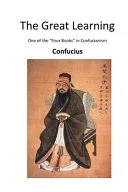
The Great Learning
 80
80

The Great Learning
The directness with which The Great Learning connects individual moral rectitude to the stability of the state is striking. Its structure, moving from 'investigation of things' to 'bringing peace to the world,' offers a clear, albeit demanding, blueprint for ethical action. The commentary chapters, attributed to Zengzi, provide necessary elaboration on Confucius's core ideas, particularly regarding the cultivation of virtue and the sincere intention of the mind. A limitation for modern readers might be the inherent assumption of a hierarchical social structure, which can feel distant. However, the passage on 'sincerity of the will' remains potent, urging a profound alignment between inner thought and outer action. It is a text that demands introspection rather than passive consumption.
📝 Description
80
### What It Is
The Great Learning, attributed to Confucius and expanded by his disciple Zengzi, is a foundational text within Confucianism, originally a chapter within the Classic of Rites. It presents a concise philosophical framework for self-cultivation leading to societal order. The work comprises a core message on learning and moral development, followed by ten commentary chapters that elaborate on its principles. Its enduring influence stems from its structured approach to ethical living and governance.
### Who It's For
This work is essential for students of East Asian philosophy, particularly those interested in Confucianism's ethical and political dimensions. It appeals to scholars of classical Chinese thought seeking to understand the roots of its moral philosophy. Individuals focused on self-improvement, ethical leadership, and the principles of good governance will find its systematic approach valuable.
### Historical Context
Emerging from the Warring States period (c. 475–221 BCE), The Great Learning reflects a time of intellectual ferment and philosophical debate in China. It was later elevated to canonical status by Zhu Xi in the Song Dynasty (960–1279 CE) as one of the "Four Books," which became central to civil service examinations. Its precursor, the Classic of Rites, was itself a compilation of ritual and philosophical texts from earlier periods, demonstrating a long lineage of ethical and social thought.
### Key Concepts
The text outlines a progression from personal cultivation to universal peace, beginning with the investigation of things and the sincerity of intentions. It emphasizes the importance of moral self-discipline as the prerequisite for governing a family and then a state. The core ideal is that personal virtue is the foundation upon which all social and political stability rests.
💡 Why Read This Book?
• Gain a structured method for personal and societal improvement, starting with the "investigation of things" as outlined in the text. • Understand the Confucian principle that personal cultivation is the necessary precursor to effective governance, as detailed in the commentary chapters. • Explore the concept of "sincerity of the will" and its role in achieving moral integrity, a central tenet emphasized throughout the work.
⭐ Reader Reviews
Honest opinions from readers who have explored this book.
❓ Frequently Asked Questions
What are the "Four Books" in Confucianism?
The "Four Books" are foundational texts in Confucianism: The Great Learning, The Doctrine of the Mean, The Analects, and Mencius. They were compiled by Zhu Xi in the 12th century CE and became central to the civil service examinations.
Who was Zengzi and what is his role in The Great Learning?
Zengzi was a prominent disciple of Confucius. The Great Learning consists of a main text attributed to Confucius and ten chapters of commentary accredited to Zengzi, who elaborates on the core teachings.
What does "investigation of things" mean in The Great Learning?
The "investigation of things" (格物, géwù) is the initial step in the text's progression, implying the thorough examination and understanding of principles and phenomena in the world to achieve knowledge and sincerity.
How does The Great Learning connect personal virtue to state governance?
The book posits a direct causal link: cultivating personal virtue, sincerity, and self-discipline enables one to govern their family, which in turn allows them to govern the state and bring peace to the world.
Is The Great Learning a religious text?
While deeply influential in East Asian ethics and philosophy, The Great Learning is primarily a philosophical and ethical treatise focused on self-cultivation and good governance, rather than a religious scripture.
When was The Great Learning first published in English translation?
While the original text is ancient, James Legge's influential translation, which includes The Great Learning, was published in the 19th century, with modern editions appearing later, such as the 2016 publication mentioned.
🔮 Key Themes & Symbolism
Self-Cultivation as Foundation
The work posits that the path to ordering society begins with the individual. It details a progression: cultivating oneself, regulating the family, ordering the state, and bringing peace to the world. This emphasizes that external order is a direct consequence of internal moral development and self-mastery. The emphasis is on continuous learning and ethical refinement as the bedrock of all effective action.
Investigation of Things
This concept, 格物 (géwù), is the crucial starting point. It involves the thorough examination and understanding of principles within the world and within oneself. It's not merely empirical observation but a deep inquiry into the nature of things to gain true knowledge, which then informs sincere intentions and subsequent actions.
Sincerity of the Will
Following the investigation of things, one must achieve sincerity of the will. This means ensuring one's intentions are pure and aligned with truth, without self-deception. It’s about internal honesty and conviction, which then allows for the proper regulation of one's household and, by extension, the state. This internal alignment is paramount.
Moral Progression
The text outlines a clear, linear progression of moral and political development. It moves from personal introspection and self-improvement to familial harmony, then to effective governance of the state, and finally to universal peace. This structured approach highlights the interconnectedness of personal ethics and public order.
💬 Memorable Quotes
“The ancients who wished to cultivate their inner virtue first regulated their states. Wishing to regulate their states, they first regulated their families. Wishing to regulate their families, they first regulated themselves.”
— This highlights the core Confucian tenet that societal order is built from the ground up, starting with individual moral development. It presents a hierarchical but interconnected model of ethical responsibility, emphasizing self-mastery as the essential prerequisite for broader influence.
“From the Son of Heaven down to the mass of the people, all must consider the cultivation of the person the root of everything besides.”
— This statement underscores the universal applicability of self-cultivation within the Confucian framework. Regardless of social status, the fundamental importance of personal moral development is presented as the root from which all other societal achievements and responsibilities grow.
“What is meant by 'the investigation of things' is the extension of knowledge.”
— This concise interpretation links the practical act of examining the world to the abstract pursuit of knowledge. It suggests that understanding the principles and phenomena around us is the direct path to acquiring the wisdom needed for ethical living and governance.
“What is meant by 'making the will sincere' is allowing no self-deception.”
— This defines sincerity not as mere politeness, but as profound internal honesty and freedom from duplicity. It requires a deep self-awareness and commitment to truth, ensuring that one's motivations and desires are pure and uncorrupted.
“The superior man, when resting in the proper place, will not neglect any part of his conduct.”
— This emphasizes the importance of consistent ethical behavior and mindfulness in all circumstances. It suggests that true virtue is not situational but a constant state of being, where one remains grounded in their responsibilities and moral principles.
🌙 Esoteric Significance
Tradition
While not typically categorized within Western esoteric traditions like Hermeticism or Kabbalah, The Great Learning occupies a significant place in East Asian philosophical and ethical systems that possess esoteric dimensions. Its emphasis on inner cultivation, the alignment of the mind, and the progression towards universal order can be seen as a form of spiritual or moral technology, aiming for a transformed individual and society.
Symbolism
The progression from self-cultivation to world peace can be viewed symbolically as a map of spiritual ascent or ethical realization. The 'investigation of things' (géwù) symbolizes the process of awakening to true reality, while 'sincerity of the will' represents the purification of the inner self. The ultimate goal of 'peace throughout the world' symbolizes a state of universal harmony achieved through the widespread adoption of these principles.
Modern Relevance
Contemporary thinkers and practitioners in fields ranging from leadership studies and organizational development to mindfulness and ethical philosophy draw upon The Great Learning. Its structured approach to personal development and its emphasis on integrity continue to inform modern discussions on effective leadership, character building, and the pursuit of societal well-being in an increasingly complex world.
👥 Who Should Read This Book
• Students of classical Chinese philosophy and Confucianism seeking foundational texts on ethics and governance. • Leaders and aspiring leaders interested in a philosophical framework for personal integrity and effective public service. • Individuals engaged in self-improvement and ethical inquiry looking for systematic principles to guide their personal development.
📜 Historical Context
The Great Learning emerged during a period of profound social and political upheaval in ancient China, likely the Warring States period (c. 475–221 BCE). This era was characterized by intellectual dynamism, with various schools of thought, including Confucianism, Mohism, and Legalism, vying for influence. Confucius himself, living in the Spring and Autumn period (771–476 BCE), laid the groundwork for ethical governance and social harmony. The Great Learning, initially part of the Classic of Rites, was later singled out and championed by Neo-Confucian scholar Zhu Xi in the Song Dynasty (960–1279 CE). Zhu Xi's compilation of The Great Learning, along with The Doctrine of the Mean, The Analects, and Mencius, into the "Four Books" transformed the educational and examination system, making these texts central to the training of scholar-officials for centuries.
📔 Journal Prompts
The progression from 'cultivation of the person' to 'bringing peace to the world'.
The concept of 'investigation of things' (géwù).
The meaning of 'sincerity of the will' in personal conduct.
The relationship between regulating the family and ordering the state.
The role of self-deception and its avoidance.
🗂️ Glossary
The Four Books
A collection of Confucian texts compiled by Zhu Xi, consisting of The Great Learning, The Doctrine of the Mean, The Analects, and Mencius. They formed the core curriculum for traditional Chinese civil service examinations.
Classic of Rites (Liji)
An ancient Chinese collection of ritual and ceremonial texts, one of the Five Classics of Confucianism. The Great Learning was originally a chapter within this larger work.
Zengzi
A prominent disciple of Confucius, traditionally credited with writing the ten commentary chapters of The Great Learning, elaborating on Confucius's core teachings.
Investigation of things (格物, géwù)
The foundational step in the text's ethical progression, involving the thorough examination and understanding of principles and phenomena to acquire true knowledge.
Sincerity of the will
The state of having one's intentions free from self-deception and aligned with truth. It is a crucial step in personal cultivation before extending influence to others.
Cultivation of the person
The process of moral self-improvement and ethical refinement, considered by Confucianism to be the essential root of all other societal achievements and responsibilities.
Son of Heaven
A title traditionally used for the Emperor of China, signifying his divine mandate to rule and maintain cosmic harmony.