The Field
 78
78

The Field
Lynne McTaggart’s "The Field" attempts a bold synthesis, aiming to bridge the gap between cutting-edge quantum physics and ancient notions of interconnectedness. The book’s strength lies in its ambitious scope and McTaggart’s clear prose, which makes complex scientific ideas more approachable. She adeptly compiles research suggesting that the vacuum is not empty but a vibrant, energetic medium. However, the work’s primary limitation is its tendency to extrapolate heavily from preliminary or contested scientific findings, presenting speculative interpretations as established fact. For instance, the discussion around healing and consciousness effects, while intriguing, often lacks the rigorous empirical backing to fully support its claims. A particularly memorable section details experiments suggesting that focused intention can influence physical systems, a concept that, while debatable, sparks significant contemplation about mind-matter interaction. Ultimately, "The Field" is a provocative exploration that opens doors to new ways of thinking about reality, though readers should approach its more extraordinary claims with a critical eye.
📝 Description
78
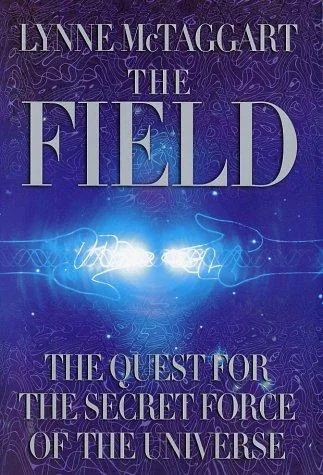
Lynne McTaggart's 2001 book, 'The Field,' proposes a quantum field connecting all existence.
Published in 2001, Lynne McTaggart's 'The Field' argues for the existence of a universal quantum field that links everything. McTaggart synthesizes research from quantum physics and biology to suggest this field is more than a theory; it is a real phenomenon affecting everything from the smallest particles to human consciousness. The book questions standard materialist views, asserting that empty space is actually a vibrant energy field. This perspective challenges the idea that consciousness is solely a product of the brain, proposing instead that it arises from this universal field.
McTaggart's work is for readers interested in the connection between science and spirituality, especially those who feel current scientific models are insufficient. It appeals to people who want to grasp existence's interconnectedness and consider alternative realities that include consciousness. Those familiar with physics might find the scientific analysis engaging, while newcomers will appreciate the clear explanations that avoid overly technical language. The book aims to bridge the gap between scientific discovery and a more holistic understanding of the universe.
Emerging in the early 2000s, 'The Field' aligns with a tradition of inquiry that seeks to reconcile scientific findings with spiritual or metaphysical understandings of reality. It follows in the lineage of works that explore the idea of a unified cosmic consciousness or energy, drawing parallels with concepts found in ancient philosophies and more recent New Age thought. McTaggart's approach, however, is distinct in its explicit attempt to ground these ideas in contemporary quantum physics, differentiating it from earlier speculative or purely philosophical treatments of interconnectedness.
💡 Why Read This Book?
• Gain an understanding of the Zero Point Field (ZPF) as presented by McTaggart, a concept that challenges the idea of a purely material universe and suggests a foundational energetic layer connecting all existence. • Explore the implications of quantum entanglement, as detailed in the book, to grasp how seemingly separate entities might remain interconnected on a fundamental level. • Consider the role of consciousness in shaping physical reality, a theme McTaggart develops by referencing the observer effect in quantum mechanics, offering a different perspective on mind-matter interaction.
⭐ Reader Reviews
Honest opinions from readers who have explored this book.
❓ Frequently Asked Questions
What is the primary scientific concept explored in "The Field"?
The primary concept is the Zero Point Field (ZPF), a quantum field of fluctuating energy present throughout the universe. McTaggart argues this field is not empty but a dynamic medium that connects all matter and energy.
How does "The Field" relate quantum physics to consciousness?
The book explores how phenomena like the observer effect in quantum mechanics might indicate consciousness's active role in shaping reality, suggesting a connection between the observer and the ZPF.
What is quantum entanglement according to Lynne McTaggart's "The Field"?
McTaggart explains quantum entanglement as the phenomenon where particles remain linked, influencing each other instantaneously regardless of distance, suggesting a non-local connection that underlies the ZPF.
When was "The Field" by Lynne McTaggart first published?
"The Field" was first published in 2001, a period when popular science books began to explore the metaphysical implications of quantum mechanics more widely.
Does "The Field" offer practical applications?
While not a how-to manual, the book explores potential applications in areas like healing and collective consciousness, stemming from the idea of influencing the ZPF through focused intention.
Is "The Field" considered mainstream science?
No, "The Field" is considered speculative science or proto-science by many mainstream physicists. It synthesizes existing research but often draws interpretations that go beyond established scientific consensus.
🔮 Key Themes & Symbolism
The Zero Point Field
The central thesis of "The Field" is the existence of the Zero Point Field (ZPF), a concept derived from quantum physics. McTaggart posits that this field is the fundamental substratum of reality, a plenum of fluctuating energy permeating all of space. Far from being empty, this field is presented as the source of all matter and energy, and the conduit through which all phenomena, including consciousness, are interconnected. The book cites various experiments and theories to support its existence, moving it from a purely theoretical construct to a tangible, albeit unseen, influence on the universe.
Quantum Entanglement and Non-Locality
McTaggart extensively discusses quantum entanglement, the phenomenon where two or more particles become linked and share the same fate, no matter how far apart they are separated. This interconnectedness, defying classical notions of space and time, is presented as direct evidence for the non-local nature of reality. The book interprets entanglement as a manifestation of the underlying ZPF, suggesting that all things are fundamentally connected through this unified field, which allows for instantaneous influence across vast distances without any discernible signal.
Consciousness and the Observer Effect
A significant aspect of "The Field" involves the role of consciousness. McTaggart explores the observer effect in quantum mechanics, where the act of measurement seems to influence the outcome of an experiment. She proposes that consciousness itself may play an active role in interacting with and shaping the ZPF. This perspective challenges the purely materialistic view of consciousness as merely an epiphenomenon of brain activity, suggesting instead that consciousness might be fundamental and capable of influencing the physical world through its connection to the field.
Implications for Healing and Collective Phenomena
Building upon the concept of an interconnected field, "The Field" ventures into areas such as healing and collective consciousness. McTaggart examines studies suggesting that focused intention, prayer, and even collective consciousness can have measurable effects on biological systems and distant recipients. These phenomena are explained through the lens of the ZPF, proposing that individuals can consciously interact with this field to promote healing or influence events, thereby suggesting a scientific basis for phenomena often relegated to the field of the mystical.
💬 Memorable Quotes
Direct passages from the work, attributed to the author.
“The Zero Point Field is the source of all matter and energy.”
— This statement captures the book's central premise: that the vacuum of space is not empty but a dynamic, energetic foundation from which everything in the universe originates and through which all interactions occur.
“Entangled particles remain connected regardless of distance.”
— This highlights the principle of non-locality, a key concept used to argue for a unified field that transcends spatial separation, suggesting a fundamental interconnectedness of all things.
“The observer effect implies consciousness influences physical reality.”
— This interpretation of quantum mechanics suggests that the act of observation is not passive but actively participates in shaping quantum outcomes, hinting at a profound link between mind and matter.
“Space is not empty but a plenum of energy.”
— This directly challenges the classical view of the universe, proposing that the 'void' is, in fact, a sea of quantum fluctuations that underpins the material world and all its phenomena.
“Our thoughts may influence the interconnected field.”
— This idea posits that human consciousness is not isolated but can interact with the fundamental field, opening up possibilities for intentional influence on physical and biological systems.
🌙 Esoteric Significance
Tradition
While not strictly adhering to a single esoteric lineage, "The Field" draws heavily on concepts that echo Hermetic and Neoplatonic ideas of a unified, underlying reality or 'All.' Its emphasis on interconnectedness and a universal field of energy aligns with perennialist philosophies that suggest a common source for all existence. McTaggart's work attempts to provide a scientific framework for concepts traditionally explored through mysticism and metaphysics, acting as a bridge for those seeking rational explanations for spiritual experiences and universal oneness.
Symbolism
The primary symbol explored, though not explicitly visual, is the 'field' itself – representing the plenum, the interconnected web of existence, and the void filled with potential. This can be seen as a modern interpretation of the 'Akashic Records' or the 'World Soul' found in various esoteric traditions. The concept of entanglement also symbolizes the breakdown of perceived separation, mirroring motifs of cosmic unity and the illusory nature of discrete phenomena found in Gnostic or Vedantic thought.
Modern Relevance
McTaggart's work continues to be influential among contemporary thinkers exploring consciousness, quantum physics, and holistic healing. It informs discussions in fields like quantum mysticism, consciousness studies, and the burgeoning area of intention-based healing research. Modern practitioners of energy medicine and those interested in the scientific underpinnings of mindfulness and interconnectedness often cite "The Field" as a foundational text that validates their perspectives and encourages further exploration of mind-matter interaction.
👥 Who Should Read This Book
• Individuals interested in scientific explanations for interconnectedness: Those seeking to understand how quantum physics might provide a framework for the idea that everything in the universe is fundamentally linked. • Skeptics exploring alternative paradigms: Readers who are open to challenging purely materialistic views of reality and are looking for scientific arguments that support a more holistic or energetic model of existence. • Students of consciousness studies: Anyone investigating the relationship between the mind and the physical world, particularly those interested in the potential role of consciousness in observable phenomena.
📜 Historical Context
Published in 2001, "The Field" emerged during a period of heightened public fascination with quantum physics and its potential to explain phenomena beyond conventional materialism. It followed in the footsteps of popular science books like Gary Zukav's "The Dancing Wu Li Masters" (1979) and Fritjof Capra's "The Tao of Physics" (1975), which had already begun to draw parallels between quantum mechanics and Eastern philosophies. McTaggart’s work distinguished itself by focusing specifically on the concept of a unified field and attempting to synthesize a broad range of experimental results, from quantum physics to biology and consciousness studies, into a cohesive argument. While not a direct engagement, the work implicitly responded to the prevailing reductionist and materialist scientific worldview that dominated academic discourse, offering a more holistic and interconnected model of reality. The reception of such books often involved a divide between popular enthusiasm and skepticism from the scientific establishment, which generally viewed these interpretations as speculative.
📔 Journal Prompts
Reflection on the implications of the Zero Point Field for personal interconnectedness.
Consider how the concept of quantum entanglement might alter your perception of relationships.
Explore the observer effect's potential role in your daily interactions with the physical world.
Meditate on the idea of consciousness as an active force influencing reality, as suggested by the field concept.
How might the unified field theory presented in "The Field" inform your understanding of synchronicity?
🗂️ Glossary
Zero Point Field (ZPF)
A quantum field predicted by quantum physics that permeates all of space. It is characterized by fluctuating energy, even at absolute zero temperature, and is proposed as the fundamental substrate of reality from which all matter and energy arise.
Quantum Entanglement
A phenomenon where two or more quantum particles become linked in such a way that they share the same fate, instantaneously influencing each other regardless of the distance separating them. This implies a non-local connection.
Observer Effect
In quantum mechanics, the principle that the act of measuring or observing a quantum system can influence its state or outcome, suggesting a role for the observer in shaping reality at the quantum level.
Non-locality
The concept that events at one location can have an instantaneous effect on events at another location, regardless of the distance between them. Quantum entanglement is a primary example.
Plenum
A philosophical or scientific concept referring to a space or medium that is entirely filled, as opposed to being empty. In the context of "The Field," it describes the ZPF as a full, energetic substrate.
Consciousness Field
A concept explored in the book suggesting that consciousness itself may operate within or interact with a field, potentially enabling collective consciousness or influencing the ZPF.
Materialism
The philosophical belief that matter is the fundamental substance in nature, and that all phenomena, including mental states and consciousness, can be explained by the interactions of matter.
🔮 Readers Also Liked
Browse all →








More by Lynne McTaggart, Lynne Mctaggart
All books →
More Free Occult Philosophy Books
View all →