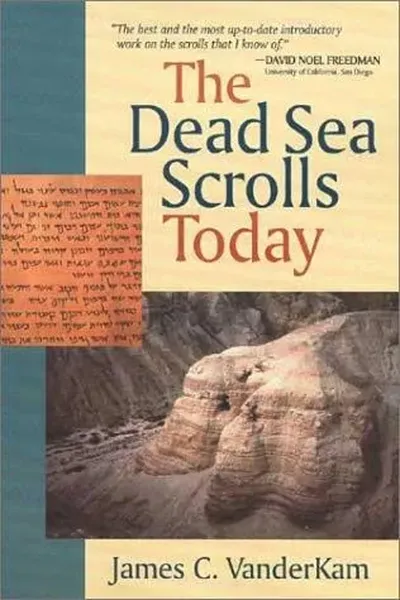
The Dead Sea Scrolls Today

 79
79

The Dead Sea Scrolls Today
James C. VanderKam’s "The Dead Sea Scrolls Today" avoids the sensationalism that often surrounds these ancient texts, opting instead for a grounded, scholarly exposition. His strength lies in presenting a vast amount of complex information with clarity, particularly in detailing the different categories of scrolls and the archaeological evidence from Qumran. A notable section discusses the textual variants found in biblical manuscripts, illustrating how the scrolls inform our understanding of the transmission of scripture. However, for readers seeking a more esoteric or spiritual interpretation of the scrolls' potential mystical implications, this work might feel too strictly academic. While it meticulously details the historical and textual realities, it leaves the deeper speculative possibilities largely unexplored. It serves as an excellent primer on what we *know*, but less so on what the scrolls *might mean* beyond their immediate historical context. A solid, if dry, introduction for the serious student.
📝 Description
79
### What It Is
"The Dead Sea Scrolls Today" by James C. VanderKam, first published in 2010, offers a scholarly yet accessible examination of the most significant archaeological and textual discoveries of the 20th century. It moves beyond sensationalism to provide a clear overview of the scrolls' content, their historical context, and their enduring impact on biblical studies and our understanding of ancient Judaism and early Christianity. The work systematically addresses key questions surrounding the scrolls, from their discovery in the caves near Qumran to their eventual decipherment and publication.
### Who It's For
This book is primarily intended for students of biblical studies, ancient history, and religious origins. It also serves those with a general interest in archaeology and the historical Jesus movement who seek a reliable guide to the complex world of the Dead Sea Scrolls. Readers expecting speculative theories or mystical interpretations will find instead a rigorous, fact-based presentation. It is suitable for individuals beginning their study of the scrolls or those seeking to consolidate their knowledge with a comprehensive overview.
### Historical Context
The discovery of the Dead Sea Scrolls, beginning in 1947, occurred during a period of intense scholarly debate surrounding the origins of both Judaism and Christianity. These ancient manuscripts, dating from the 3rd century BCE to the 1st century CE, provided unprecedented insight into the diversity of Jewish thought and practice in the Second Temple period. They offered primary source material that directly engaged with texts that would later form the Hebrew Bible, as well as sectarian writings that illuminated the beliefs of groups like the Essenes. VanderKam situates these findings within the ongoing academic conversations of the late 20th and early 21st centuries.
### Key Concepts
The book meticulously unpacks central concepts related to the scrolls. This includes detailed discussions on the various textual families found, such as biblical manuscripts, apocryphal texts, and sectarian documents. VanderKam clarifies the linguistic landscape, exploring the Hebrew, Aramaic, and Greek found within the collection. He also delves into the community presumed to have produced many of the scrolls, critically evaluating the evidence for its identification with the Essenes. The process of scroll preservation, discovery, and scholarly engagement is also a significant theme.
💡 Why Read This Book?
• Gain a factual understanding of the Dead Sea Scrolls' discovery in 1947 and their significance as primary sources for Second Temple Judaism, moving beyond popular speculation. • Learn about the different types of texts found, including biblical, sectarian, and apocryphal works, and how they illuminate diverse ancient Jewish beliefs. • Understand the scholarly debate surrounding the Qumran community and its connection to the Essenes, based on archaeological and textual evidence presented by VanderKam.
⭐ Reader Reviews
Honest opinions from readers who have explored this book.
❓ Frequently Asked Questions
When were the Dead Sea Scrolls discovered, and where?
The Dead Sea Scrolls were discovered by Bedouin shepherds beginning in 1947 in caves near the ancient settlement of Qumran, on the northwest shores of the Dead Sea.
What languages are present in the Dead Sea Scrolls?
The majority of the scrolls are written in Hebrew, with significant portions in Aramaic. A smaller number are preserved in Greek, reflecting the linguistic diversity of the region during the Second Temple period.
What is the approximate date range of the Dead Sea Scrolls?
The scrolls were composed and used roughly between the 3rd century BCE and the 1st century CE, providing a crucial window into Jewish life and thought leading up to and during the time of early Christianity.
Who is James C. VanderKam?
James C. VanderKam is a prominent scholar of Hebrew Bible and Second Temple Judaism, known for his extensive work on the Dead Sea Scrolls and their interpretation.
What is the significance of the Qumran site in relation to the scrolls?
The Qumran site, excavated extensively, is believed by many scholars to be the settlement where the scribes who produced or collected many of the Dead Sea Scrolls lived and worked.
Are the Dead Sea Scrolls related to early Christian texts?
While not Christian texts themselves, the scrolls provide essential context for understanding the Jewish world in which Christianity emerged, illuminating shared concepts and differing interpretations.
🔮 Key Themes & Symbolism
Textual Variety
VanderKam meticulously categorizes the scrolls into biblical texts, sectarian documents unique to the Qumran community, and other non-biblical Jewish writings. This classification is crucial for understanding the intellectual and religious landscape of Second Temple Judaism. The book highlights how these distinct categories offer different perspectives, from established scriptural traditions to the specific theological concerns and practices of a particular Jewish sect, challenging monolithic views of ancient Judaism.
The Qumran Community
A central focus is the identification of the community responsible for many of the scrolls. VanderKam examines the evidence linking the scrolls to the Essenes, a Jewish sect known from other ancient sources. He discusses archaeological findings at Qumran, such as communal structures and pottery, alongside textual clues from documents like the 'Community Rule' (1QS) to reconstruct aspects of their daily life, organization, and beliefs.
Scriptural Transmission
The book addresses the profound implications of the Dead Sea Scrolls for understanding the history of the Hebrew Bible. VanderKam explores the textual variations found in biblical manuscripts discovered at Qumran compared to later Masoretic texts. This comparison sheds light on the process of scriptural standardization and transmission, demonstrating that the biblical text was more fluid in the Second Temple period than previously assumed.
Historical and Religious Context
VanderKam places the scrolls within the broader historical milieu of the Hellenistic and early Roman periods. He explains how the scrolls reflect the diverse religious currents within Judaism, including apocalyptic expectations, messianic fervor, and debates over purity laws. This context is vital for understanding the environment from which both Rabbinic Judaism and early Christianity eventually emerged.
💬 Memorable Quotes
“The discovery of the scrolls in caves near Qumran began a revolution in biblical studies.”
— This statement underscores the transformative impact of the Dead Sea Scrolls, emphasizing that their finding was not merely an archaeological event but a pivotal moment that fundamentally altered scholarly approaches to ancient texts and religious history.
“Understanding the scrolls requires careful attention to both textual content and archaeological context.”
— This highlights the interdisciplinary nature of scroll studies. It suggests that neither the texts themselves nor the physical evidence from Qumran can be fully understood in isolation; their combined analysis is essential for accurate interpretation.
“The scrolls reveal a spectrum of Jewish belief and practice in the Second Temple period.”
— This interpretation points to the diversity found within the scrolls, countering any notion of a single, uniform Judaism at the time. It emphasizes the scrolls as evidence for multiple theological viewpoints and communal expressions.
“Scholarly debate continues regarding the precise identity of the Qumran community.”
— This acknowledges the ongoing nature of academic inquiry surrounding the scrolls. It indicates that while strong theories exist, such as the Essene hypothesis, definitive consensus has not been reached on every aspect of the scrolls' origins and authorship.
“The biblical manuscripts from Qumran offer crucial data for tracing the history of the Hebrew Bible's text.”
— This focuses on the scrolls' importance for textual criticism. It suggests that these ancient copies provide invaluable evidence for understanding how biblical texts were written, copied, and potentially altered over centuries.
🌙 Esoteric Significance
Tradition
While "The Dead Sea Scrolls Today" primarily functions as a historical and textual analysis, its subject matter deeply intersects with esoteric traditions that seek hidden meanings in ancient scriptures. The scrolls are foundational to understanding the Jewish mystical milieu from which Kabbalah later emerged, and they provide context for Gnostic interpretations of Jewish scripture. Esotericists often view the sectarian scrolls, particularly those detailing purity laws and communal rituals, as preserving coded wisdom or early forms of contemplative practice that resonate with later mystical disciplines.
Symbolism
Within the scrolls, symbols like the 'Rule of the Community' (1QS) offer insights into communal organization and eschatological beliefs that hold symbolic weight for esoteric study. The emphasis on light versus darkness, purity, and the 'sons of light' can be interpreted through lenses of dualism found in Gnosticism and other mystical paths. The very act of hiding these texts in caves for preservation can be seen symbolically as a deliberate act of safeguarding sacred knowledge from profane eyes, a common motif in esoteric lore.
Modern Relevance
Contemporary esoteric thinkers and practitioners, particularly those interested in the historical roots of Western esotericism, Gnosticism, and early Christian mysticism, frequently engage with the Dead Sea Scrolls. Groups exploring ancient wisdom traditions, comparative mysticism, and the historical Jesus movement often cite VanderKam's work as a key resource for understanding the complex religious landscape of the period. The scrolls continue to inspire discussions on spiritual purity, communal living, and apocalyptic thought, themes that remain relevant in various modern spiritual and philosophical circles.
👥 Who Should Read This Book
• Students of ancient religions and biblical studies seeking a factual grounding in the most significant manuscript discovery of the 20th century. • History enthusiasts interested in the Second Temple period and the origins of Judaism and Christianity, who appreciate a scholarly approach. • Individuals curious about the Qumran community and the Essenes, wanting to understand the primary evidence and scholarly interpretations.
📜 Historical Context
The discovery of the Dead Sea Scrolls, commencing in 1947, occurred in the wake of World War II and the establishment of the State of Israel, a period marked by intense geopolitical shifts and a renewed focus on ancient Near Eastern history. Intellectually, the mid-20th century saw robust debates in biblical archaeology and religious studies, with scholars grappling with the relationship between Judaism and nascent Christianity. The scrolls provided primary source material that directly challenged and enriched existing theories. For instance, they offered a counterpoint to minimalist views on the development of Jewish law and messianic expectation. While figures like William F. Albright hailed the discoveries, controversies arose concerning the speed of publication and access for scholars, with some critics initially suggesting the scrolls might be modern forgeries before their antiquity was firmly established. The reception was largely one of scholarly excitement, though access and interpretation became subjects of significant contention throughout the late 20th century.
📔 Journal Prompts
The spectrum of Jewish belief revealed by the scrolls.
The significance of the 'Community Rule' (1QS) for understanding sectarian life.
How the scrolls challenge or confirm existing narratives about biblical texts.
The role of archaeology in interpreting ancient religious documents.
The Essene hypothesis: evaluating the evidence presented.
🗂️ Glossary
Second Temple Period
The era of Jewish history from the rebuilding of the Second Temple in Jerusalem (c. 516 BCE) to its destruction by the Romans in 70 CE. This period saw significant religious and political developments.
Qumran
An archaeological site near the Dead Sea where numerous caves containing the Dead Sea Scrolls were discovered. It is widely believed to have been inhabited by a Jewish sect.
Essenes
A Jewish sect prominent in the Second Temple period, known for their asceticism, communal living, and apocalyptic beliefs. Many scholars associate them with the Qumran community.
Masoretic Text
The standardized medieval Hebrew text of the Jewish Bible, established by Jewish scholars known as the Masoretes. It serves as the primary basis for most modern translations of the Old Testament.
Sectarian Documents
Texts found among the Dead Sea Scrolls that are believed to originate from a specific Jewish sect (likely the Essenes) and detail their unique beliefs, rules, and interpretations.
Apocrypha
A collection of ancient Jewish religious writings that are not part of the canonical Hebrew Bible but are often included in Christian Bibles (especially Orthodox and Catholic traditions).
Paleography
The study of ancient handwriting. It is a crucial tool for dating ancient manuscripts like the Dead Sea Scrolls based on the evolution of letter forms.