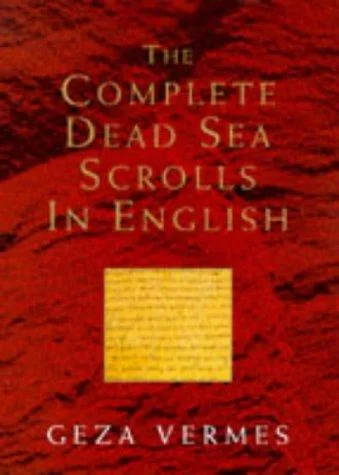
The complete Dead Sea scrolls in English
 82
82

The complete Dead Sea scrolls in English
Géza Vermès's translation of the Dead Sea Scrolls offers a valuable service by consolidating these fragmented texts into a coherent English presentation. The clarity of the translation is a significant strength, making complex Hebrew and Aramaic accessible to a broader audience. However, the volume's value is somewhat limited by its initial publication date of 2011; since then, further scholarly consensus and new interpretations have emerged, which are not reflected here. A specific passage that stands out is the community rule (1QS), which lays bare the stringent organizational structure and dualistic worldview of the Qumran sect, offering concrete evidence of their distinct theological positions. While Vermès provides extensive commentary, the sheer volume and diversity of the scrolls mean that any single translation will inevitably focus on certain aspects over others. This collection serves as a solid, if not entirely current, gateway to one of archaeology's most significant finds.
📝 Description
82
### What It Is
The Complete Dead Sea Scrolls in English presents a comprehensive collection of ancient Jewish manuscripts discovered between 1947 and 1956 near the Dead Sea. This edition, translated and edited by Géza Vermès, offers a unified English rendering of these pivotal texts, encompassing biblical, apocryphal, and sectarian writings. The scrolls provide an unparalleled window into Jewish life and thought during the Second Temple period, a critical era for the development of both Judaism and early Christianity.
### Who It's For
This volume is essential for scholars of ancient history, religious studies, and textual criticism. It is also vital for anyone seeking direct access to the foundational documents that shaped early religious discourse in the ancient Near East. Readers interested in the historical context of biblical texts and the diversity of Jewish belief systems before the Common Era will find this translation indispensable.
### Historical Context
The discovery of the Dead Sea Scrolls, beginning in 1947 in caves near Qumran, revolutionized the understanding of Second Temple Judaism. These texts, dating primarily from the 3rd century BCE to the 1st century CE, illuminate the religious landscape that gave rise to both Rabbinic Judaism and Christianity. The scrolls reveal a complex environment with various Jewish sects, including the Essenes, whose beliefs and practices are detailed in some of the documents. Their content predates and sometimes parallels early Christian writings, offering crucial comparative material.
### Key Concepts
The scrolls introduce readers to concepts such as Messianism, apocalyptic visions, purity laws, and sectarian interpretations of biblical prophecy. They reveal diverse views on the end times, the nature of the divine, and the organization of religious communities. The texts include commentaries on existing scriptures, original legal codes, and hymns, painting a vivid picture of a dynamic religious milieu.
💡 Why Read This Book?
• Gain direct access to the biblical and sectarian texts discovered near the Dead Sea, understanding the historical milieu of figures like John the Baptist, as detailed in documents predating 70 CE. • Explore the concept of 'dualism' as presented in texts like the Community Rule (1QS), contrasting it with other contemporary Jewish thought and understanding its potential influence. • Examine Vermès's scholarly approach to translating and interpreting these ancient manuscripts, appreciating the challenges and decisions involved in rendering texts from the Hellenistic period into modern English.
⭐ Reader Reviews
Honest opinions from readers who have explored this book.
❓ Frequently Asked Questions
When were the Dead Sea Scrolls discovered?
The Dead Sea Scrolls were discovered between 1947 and 1956 in caves near the ancient settlement of Qumran on the northwest shores of the Dead Sea.
What languages are the Dead Sea Scrolls written in?
The majority of the Dead Sea Scrolls are written in Hebrew, with a significant portion in Aramaic and a few in Greek. Géza Vermès's work focuses on the English translation of these.
Who was Géza Vermès?
Géza Vermès (1924-2013) was a Hungarian-born Israeli scholar and rabbi, renowned for his extensive work on the Dead Sea Scrolls and early Jewish Christianity.
What is the significance of the Community Rule (1QS)?
The Community Rule (1QS) is one of the most important scrolls, detailing the strict regulations, beliefs, and organizational structure of the Qumran community, believed by many scholars to be the Essenes.
Do the Dead Sea Scrolls contain the entire Hebrew Bible?
While not all books of the Hebrew Bible are present, fragments or complete copies of almost every book, except Esther, have been found among the Dead Sea Scrolls, providing crucial textual evidence.
What is the historical period covered by the Dead Sea Scrolls?
The scrolls date from the 3rd century BCE to the 1st century CE, offering a unique perspective on Judaism during the Second Temple period and the time leading up to the emergence of Christianity.
🔮 Key Themes & Symbolism
Sectarian Judaism
The scrolls offer unprecedented insight into the diversity of Jewish belief and practice during the Second Temple period. Texts like the Community Rule (1QS) reveal the stringent doctrines and organizational framework of the Qumran sect, often identified with the Essenes. This includes their emphasis on ritual purity, communal living, and a distinct calendar, setting them apart from other Jewish groups of the era, such as the Pharisees and Sadducees. The sheer variety of manuscripts indicates a complex religious landscape rather than a monolithic Judaism.
Messianic Expectations
A central theme across many Dead Sea Scrolls is the fervent expectation of a coming messiah, or multiple messianic figures. Some texts speak of a priestly and a royal messiah, while others focus on a single, divinely appointed leader. These expectations provide critical context for understanding the emergence of Jesus of Nazareth and the early Christian movement. The scrolls illuminate the diverse hopes and interpretations circulating within Judaism at the time, showing that the concept of the Messiah was not uniform.
Apocalypticism and Dualism
Many scrolls, such as the War Scroll (1QM), reflect a strong apocalyptic worldview, envisioning a cosmic struggle between forces of good and evil culminating in divine judgment and a new age. This dualistic framework, often pitting the 'Sons of Light' against the 'Sons of Darkness,' is a prominent feature of the Qumran community's theology. It suggests a profound sense of crisis and an imminent divine intervention that would reshape the world and establish God's righteous kingdom.
Biblical Interpretation
The scrolls include commentaries (pesharim) on various books of the Hebrew Bible, offering ancient interpretations that differ significantly from later rabbinic traditions. These commentaries often apply biblical prophecies directly to the history and experiences of the Qumran community, demonstrating an active and often polemical engagement with scripture. This method of interpretation provides valuable evidence for how biblical texts were understood and utilized in the centuries preceding the Common Era.
💬 Memorable Quotes
“The interpretation of the teachings of holiness and of righteousness.”
— This phrase, often appearing in the context of sectarian documents like the Community Rule, highlights the Qumran community's self-perception as possessors of true divine instruction and a righteous path, distinct from mainstream Judaism.
“The law is in the hand of the master.”
— This concept underscores the hierarchical structure and the authoritative role of leadership within the Qumran community, where the 'master' or overseer held significant sway over the interpretation and application of religious law.
“To return to the law is to do the good things that are commanded.”
— This reflects the emphasis on adherence to divine commandments and the restorative aspect of returning to the 'law' as understood by the community, suggesting that obedience was the path to righteousness and divine favor.
“The appointed times of the nations.”
— This phrase points to an awareness of and perhaps a calendrical dispute with the practices of surrounding gentile nations, reflecting a desire to maintain distinct Jewish identity and religious observance.
“You shall love truth and righteousness.”
— This ethical imperative, found in various forms, encapsulates a core value of the Qumran sect, emphasizing the virtues of honesty and justice as fundamental to their spiritual and communal life.
🌙 Esoteric Significance
Tradition
While not belonging to a single, named esoteric lineage like Hermeticism or Kabbalah, the Dead Sea Scrolls, particularly the Qumran texts, exhibit elements that resonate with mystical and dualistic worldviews found in various esoteric traditions. Their emphasis on hidden knowledge, divine illumination, strict communal discipline, and apocalyptic prophecies aligns with Gnostic and early mystical Jewish movements. The scrolls can be seen as a precursor or parallel development to later Kabbalistic ideas concerning divine emanations and cosmic struggle.
Symbolism
The scrolls are rich with symbolism, notably the 'Sons of Light' versus 'Sons of Darkness,' representing a fundamental dualism of cosmic and moral forces. Light symbolizes divine truth, purity, and the elect community, while darkness signifies impurity, evil, and the forces opposing God. The concept of the 'Teacher of Righteousness' functions as a messianic or prophetic archetype, a divinely appointed guide leading the community through a period of spiritual corruption.
Modern Relevance
Contemporary esoteric thinkers and groups often draw parallels between the Dead Sea Scrolls' communal ideals and their own structures. The scrolls' exploration of dualistic cosmology and apocalyptic timelines informs modern interpretations of spiritual warfare and transformative societal change. Scholars and practitioners interested in the historical roots of Western esotericism, the development of early Christian mysticism, and the origins of Gnostic ideas find the scrolls' unique blend of scriptural exegesis and sectarian doctrine to be a vital point of reference.
👥 Who Should Read This Book
• Scholars of ancient religions and biblical studies: To access primary source material offering unparalleled insight into the diversity of Jewish belief and practice during the Second Temple period. • Students of early Christianity: To understand the historical and theological landscape from which Christianity emerged, examining Jewish messianic expectations and sectarian views. • Mystics and comparative religion enthusiasts: To explore ancient dualistic cosmologies, apocalyptic visions, and communal disciplines that have influenced later esoteric thought.
📜 Historical Context
The discovery of the Dead Sea Scrolls, beginning in 1947, occurred during a period of intense scholarly interest in the origins of Christianity and the nature of Second Temple Judaism. These manuscripts, dating from roughly the 3rd century BCE to the 1st century CE, illuminated a Jewish world far more diverse than previously understood, challenging the monolithic view often inferred from later rabbinic sources. The scrolls provided direct textual evidence for groups like the Essenes, whose ascetic practices and unique theology were detailed in texts such as the Community Rule (1QS). Their existence and content offered crucial comparative material for biblical studies, Hebrew philology, and the historical Jesus research that was actively debated by scholars like William F. Albright and Yigael Yadin during that era. The scrolls' reception was initially marked by excitement and subsequent controversy over their interpretation and potential implications for Christian origins.
📔 Journal Prompts
The community rule's emphasis on purity: How does this concept manifest in contemporary spiritual practices?
The Teacher of Righteousness's role: Reflect on figures who serve as guides in periods of perceived societal or spiritual decline.
Apocalyptic visions in the War Scroll: Analyze the symbolic language used to describe the cosmic struggle between good and evil.
The interpretation of biblical texts within the scrolls: Consider how ancient communities engaged with scripture to understand their present.
The concept of 'Sons of Light' versus 'Sons of Darkness': Explore the implications of such stark dualistic frameworks in personal ethics.
🗂️ Glossary
Pesher
A method of biblical interpretation found in the Dead Sea Scrolls, where a specific passage is interpreted as directly relating to the history and experiences of the Qumran community.
Community Rule (1QS)
A key sectarian document outlining the regulations, beliefs, and organizational structure of the community that inhabited Qumran, often identified with the Essenes.
Sons of Light
A term used in the Dead Sea Scrolls, particularly in the Community Rule and the War Scroll, referring to the righteous members of the Qumran community in their cosmic struggle against the 'Sons of Darkness'.
Teacher of Righteousness
A mysterious figure central to the Qumran sect's theology, believed to be a divinely appointed spiritual leader and interpreter of scripture, possibly a persecuted priest.
Second Temple Period
The historical era in Judea from the rebuilding of the Jerusalem Temple around 516 BCE to its destruction by the Romans in 70 CE. The Dead Sea Scrolls largely date from this period.
Dualism
A philosophical or theological concept that posits a fundamental division between two opposing principles, such as good and evil, spirit and matter, or light and darkness, prominent in some Qumran texts.
Messianism
Belief in a future savior figure (Messiah) who will bring about a period of salvation and divine rule. The scrolls reveal diverse messianic expectations within Judaism.