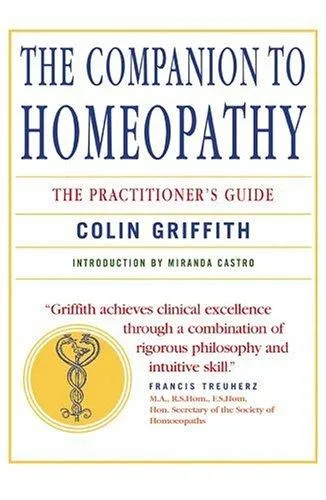
The Companion to Homeopathy
 74
74

The Companion to Homeopathy
Colin Griffith's The Companion to Homeopathy presents a robust case for homeopathy's holistic approach, differentiating it from symptom-focused allopathy. Griffith rightly points out that many conditions are exacerbated by unaddressed mental or emotional distress, a point often sidelined by conventional medicine. The strength of this work lies in its detailed explanation of how homeopathic remedies are chosen to match not just physical complaints but also the patient's psychological and energetic state. A notable aspect is the exploration of hereditary predispositions, or miasms, which offers a lens for understanding chronic illness. However, the book could benefit from a more critical examination of the scientific evidence base for homeopathy's efficacy, a point of contention that frequently arises in discussions of the practice. Its detailed case examples, while illustrative, sometimes lack the counterpoint of potential placebo effects. Nevertheless, for those predisposed to accepting homeopathic principles, Griffith provides a thorough and well-argued exposition.
📝 Description
74
### What It Is
The Companion to Homeopathy offers a comprehensive exploration of homeopathic principles, moving beyond symptom-based treatments to address the individual holistically. It details how homeopathy views the body's vital force and its capacity for self-healing, emphasizing the connection between mental, emotional, and spiritual states and physical well-being. The text serves as a guide for understanding how to select remedies that match the totality of a person's experience.
### Who It's For
This volume is designed for practitioners of homeopathy, students seeking a deeper understanding of its philosophical underpinnings, and individuals interested in alternative health systems. It is particularly beneficial for those who feel that conventional medical approaches overlook the mental and emotional dimensions of illness, offering a framework for treating the whole person rather than just isolated symptoms.
### Historical Context
Homeopathy, as developed by Samuel Hahnemann in the late 18th century, emerged as a direct challenge to the harsh and often ineffective medical practices of its time. Hahnemann's principle of 'like cures like' (similia similibus curentur) and his meticulous provings of medicinal substances laid the groundwork for this system. The Companion situates itself within this lineage, acknowledging the evolution of homeopathic thought and practice through figures and movements that expanded upon Hahnemann's original framework.
### Key Concepts
The book elaborates on several core homeopathic concepts, including the vital force (vis vitalis), the law of similars, the process of potentization, and the importance of individualization in remedy selection. It discusses how inherited weaknesses (miasms) and environmental factors contribute to disease states. The work also addresses the therapeutic process, guiding the reader on how to observe and interpret the patient's response to treatment, aiming for a complete and lasting cure.
💡 Why Read This Book?
• You will learn how homeopathy's principle of 'like cures like' extends to mental and emotional states, not just physical symptoms, offering a unique perspective on healing that conventional medicine often overlooks, as detailed in the section on the Law of Similars. • You will gain an understanding of miasms, the concept of inherited constitutional weaknesses that predispose individuals to certain conditions, providing a framework for chronic disease management not commonly found elsewhere. • You will discover the significance of the vital force (vis vitalis) in health and disease, and how homeopathic treatment aims to stimulate this internal healing capacity, a core tenet explained throughout the book.
⭐ Reader Reviews
Honest opinions from readers who have explored this book.
❓ Frequently Asked Questions
What is the core principle of homeopathy discussed in The Companion to Homeopathy?
The core principle is 'similia similibus curentur,' or 'like cures like.' The Companion to Homeopathy explains how a substance that causes symptoms in a healthy person can, in highly diluted form, treat similar symptoms in a sick person.
How does this book address mental and emotional blocks in healing?
The book emphasizes that homeopathy treats the 'whole person.' It details how mental and emotional states, personal history, and hereditary factors are considered when selecting a remedy, aiming to clear these deeper impediments to recovery.
When was The Companion to Homeopathy first published?
The Companion to Homeopathy by Colin Griffith was first published in 2005, making it a relatively modern text within the long history of homeopathic literature.
What are miasms in the context of this book?
Miasms, as discussed in the book, refer to fundamental, inherited constitutional weaknesses or underlying disease patterns that predispose an individual to chronic illness. They are considered a key aspect of homeopathic case-taking for long-term health issues.
Is this book suitable for beginners in homeopathy?
Yes, the book serves as a comprehensive guide. While it delves into complex concepts, its structured approach and clear explanations make it accessible for students and those new to the detailed philosophy of homeopathy.
What is the 'vital force' according to this homeopathic text?
The 'vital force' (vis vitalis) is described as the inherent, intelligent, self-healing power of the organism. Homeopathy posits that disease arises when this force is disturbed, and remedies aim to restore its healthy functioning.
🔮 Key Themes & Symbolism
Holistic Healing Paradigm
The central theme is homeopathy's fundamental departure from symptom-specific treatment. Griffith meticulously explains how the system views health as a state of balance across physical, mental, and spiritual dimensions. The book elaborates on the practitioner's role in discerning the individual's unique energetic and symptomatic picture to select a matching remedy, thereby facilitating the body's innate capacity for self-repair. This approach underscores the interconnectedness of a person's entire being in the healing process.
The Vital Force (Vis Vitalis)
A cornerstone of homeopathic philosophy, the vital force is presented as the animating principle that governs life and health. The Companion to Homeopathy explores how this dynamic energy is believed to be disturbed in illness, leading to symptoms. Homeopathic remedies are understood not as chemical agents but as stimuli that invigorate and rebalance the vital force, enabling it to overcome disease and restore well-being from within.
Miasms and Hereditary Factors
The work delves into the concept of miasms, theorized by Hahnemann and further developed by later homeopaths, as underlying, inherited constitutional predispositions to chronic disease. Griffith explains how understanding these deep-seated patterns is crucial for effectively treating long-standing or recurring health issues. The book details how these hereditary vulnerabilities interact with environmental influences and lifestyle to manifest as specific ailments.
Individualization in Remedy Selection
A critical theme is the absolute necessity of individualizing treatment in homeopathy. The Companion to Homeopathy details the process of case-taking, where personal history, emotional state, physical sensations, and even preferences are meticulously recorded. This comprehensive picture allows for the selection of a single remedy that most closely matches the totality of the patient's unique symptom complex, a stark contrast to standardized medical protocols.
💬 Memorable Quotes
“Homeopathy treats the whole person, taking into account personal history, environmental factors, and any hereditary vulnerabilities.”
— This statement encapsulates the holistic ethos of homeopathy. It highlights that effective treatment requires a comprehensive understanding of the patient's life context, genetic predispositions, and past experiences, moving beyond a narrow focus on immediate physical symptoms.
“Mental, emotional, and spiritual blocks can inhibit a patient's full recovery.”
— This highlights a core tenet of homeopathic philosophy: that well-being is multi-faceted. It suggests that physical ailments are often intertwined with or exacerbated by psychological and spiritual disharmony, and that addressing these deeper levels is essential for complete healing.
“The body's capacity to heal itself is extraordinarily powerful.”
— This concept underscores homeopathy's fundamental belief in the inherent self-regulatory and restorative abilities of the human organism. The role of homeopathic intervention is seen as assisting and stimulating this natural healing power, rather than imposing an external cure.
“Orthodox medicine focuses on the physical body.”
— This comparison frames homeopathy's unique selling proposition. By contrasting its approach with conventional medicine's primary focus on physical pathology, the text positions homeopathy as a system that offers a more comprehensive, mind-body-spirit perspective on health and illness.
“Homeopathy is an increasingly popular health care system.”
— This observation indicates the growing global interest and adoption of homeopathic practices. It suggests a societal shift towards seeking alternative or complementary health solutions that resonate with a more integrated view of human well-being.
🌙 Esoteric Significance
Tradition
Homeopathy, while often presented as a medical system, contains significant esoteric underpinnings rooted in vitalism and the concept of an animating life force, aligning it with broader Hermetic and vitalist traditions. Its emphasis on the interconnectedness of mind, body, and spirit, and the idea that 'like cures like' can be seen as a manifestation of sympathetic magic or energetic resonance. The practice operates on principles that extend beyond purely materialist explanations, touching upon energetic signatures and the body's subtle energies.
Symbolism
The potentized remedy itself can be viewed symbolically, representing the amplification of an essence or energetic pattern. The human silhouette often used in diagrams or on covers symbolizes the complete individual—physical, mental, and spiritual—that homeopathy seeks to address. The concept of the 'vital force' (vis vitalis) is a core symbolic representation of the unseen animating principle of life, the restoration of which is the ultimate goal of homeopathic healing.
Modern Relevance
Contemporary holistic health practitioners, energy healers, and those exploring consciousness studies often draw upon homeopathic principles. Modern schools of integrative medicine and functional medicine, while not always directly employing homeopathic remedies, adopt its holistic philosophy of treating the whole person. Thinkers in subtle energy fields and quantum healing modalities sometimes find resonance with homeopathy's non-materialistic approach to intervention.
👥 Who Should Read This Book
• Homeopathic students and practitioners seeking to deepen their understanding of the philosophical underpinnings and case-management strategies outlined by Griffith. • Individuals interested in complementary and alternative medicine who wish to explore a system that explicitly addresses the mental and emotional aspects of illness alongside physical symptoms. • Holistic health advocates and researchers looking to understand historical and contemporary approaches to vitalistic healing and the concept of the body's innate self-healing capacities.
📜 Historical Context
Published in 2005, Colin Griffith's *The Companion to Homeopathy* arrived at a time when homeopathy, though established for over two centuries since Samuel Hahnemann's initial work in the late 18th century, continued to face scrutiny from the scientific establishment. The early 21st century saw ongoing debates between proponents highlighting anecdotal evidence and clinical experience, and critics demanding rigorous, randomized controlled trials. This period also witnessed the continued rise of complementary and alternative medicine (CAM) as a significant sector within healthcare, with books like Griffith's aiming to educate practitioners and the public. While figures like Dana Ullman were actively promoting homeopathy in the US, and established homeopathic journals continued to publish research, mainstream medical institutions often remained skeptical. Griffith's work positioned itself within this ongoing discourse, providing a detailed explication of homeopathic principles for a contemporary audience.
📔 Journal Prompts
The totality of symptoms in homeopathic case-taking: How might your personal history inform your current physical or emotional state?
The concept of the vital force: Reflect on moments when you felt your own inner energy or life force was particularly strong or depleted.
Miasms as hereditary vulnerabilities: Consider how generational patterns, not just genetic, might influence health.
The principle of 'like cures like': Explore parallels in everyday life where similar experiences lead to understanding or resolution.
Holistic healing: Identify one non-physical factor (stress, environment, relationships) that significantly impacts your physical well-being.
🗂️ Glossary
Vital Force (Vis Vitalis)
The animating, intelligent energy of the organism that maintains life and health. Homeopathy posits that disease arises from a disturbance of this force, and remedies aim to restore its healthy functioning.
Law of Similars (Similia Similibus Curentur)
The fundamental principle of homeopathy, meaning 'like cures like.' It states that a substance capable of producing symptoms in a healthy person can, in a highly diluted form, treat similar symptoms in a sick person.
Miasm
A term used in homeopathy to describe a fundamental, often inherited, constitutional predisposition or underlying disease pattern that underlies chronic illnesses. The main miasms are Psora, Sycosis, and Syphilis.
Potentization
The process of preparing homeopathic remedies through serial dilution and succussion (vigorous shaking). It is believed to increase the energetic potency of the substance while reducing its material toxicity.
Totality of Symptoms
In homeopathy, this refers to the complete picture of a patient's condition, including physical, mental, and emotional symptoms, as well as personal history and modalities (factors that make symptoms better or worse).
Allopathy
A term used by homeopaths to refer to conventional Western medicine, which they contrast with homeopathy's 'like cures like' principle, often characterized by the use of treatments that produce effects different from or opposite to those of the disease.
Hereditary Vulnerabilities
Conditions or predispositions to illness that are passed down from parents to offspring. In homeopathy, these are often discussed in relation to miasms.