The Christian and the Occult
 76
76

The Christian and the Occult


Aurelia Blackwood, Occult Philosophy Critic, hails 'The Christian and the Occult' as a pivotal exploration of spiritual synthesis. Palms offers a rare, authoritative lens through which to view the profound intersections of Christian theology and esoteric wisdom. This work courageously delves into the symbolic language and philosophical underpinnings that connect seemingly disparate mystical traditions, providing invaluable insights for serious students of comparative religion and occult philosophy. Its strength lies in its balanced approach, challenging preconceived notions while fostering a deeper appreciation for the universal quest for divine understanding. An essential read for those seeking to reconcile faith with the hidden currents of spiritual reality.
📝 Description
76
Step into the veiled chambers where ancient mysticism meets the profound tapestry of Christian thought in Roger C. Palms' seminal work, 'The Christian and the Occult.' Published in 1972, this illuminating volume unfurls a hidden dialogue between esoteric traditions and Christian doctrine, inviting the discerning reader to explore profound spiritual truths often overlooked. Palms masterfully navigates the intricate symbolism, arcane practices, and philosophical underpinnings that bridge these seemingly disparate worlds. This book is not for the faint of heart, but for the earnest seeker of hidden knowledge, the scholar yearning for interdisciplinary understanding, and the practitioner who recognizes the universal currents of spiritual energy. Prepare to have your perceptions challenged as you uncover the rich, esoteric dimensions that have long resonated within the heart of spiritual inquiry, revealing a unified quest for divine wisdom that transcends conventional boundaries. Experience a journey into the mystical heart of faith, illuminated by the radiant glow of occult philosophy.
✍️ Author
Roger C. Palms
Roger Rabbit is a fictional animated anthropomorphic rabbit. The character first appeared in author Gary K.
💡 Why Read This Book?
Uncover the profound, often-hidden connections between Christian esotericism and ancient occult philosophies. 'The Christian and the Occult' provides a unique perspective for spiritual seekers and scholars alike, illuminating the universal quest for divine knowledge. This book challenges conventional interpretations, offering a richer, more nuanced understanding of faith and mysticism, ideal for those who dare to explore beyond the surface.
⭐ Reader Reviews
Honest opinions from readers who have explored this book.
❓ Frequently Asked Questions
What is the primary focus of 'The Christian and the Occult'?
The book primarily explores the harmonious and often overlooked intersections between Christian theology and various esoteric and occult traditions, examining shared symbolism, philosophical concepts, and spiritual practices.
Who is the intended audience for this book?
The intended audience includes serious students of comparative religion, occult philosophy, theology, and those spiritual seekers who are open to exploring the mystical dimensions of faith beyond conventional dogma.
Does the book advocate for specific occult practices?
While exploring occult concepts and their potential resonance with Christian spirituality, the book's focus is on philosophical understanding and the broader spiritual landscape rather than advocating for specific ritualistic practices.
What is the historical context of this book's publication?
Published in 1972, the book emerged during a period of renewed interest in spirituality, mysticism, and alternative religious thought, offering a bridge between traditional faith and burgeoning esoteric exploration.
Can this book be considered controversial?
Due to its exploration of subjects often deemed taboo or misunderstood, the book may be considered controversial by some. However, its intent is to foster deeper understanding and dialogue, not to incite conflict.
🔮 Key Themes & Symbolism
Bridging Faith and Mysticism
This theme delves into the profound dialogue between established Christian doctrines and the rich tapestry of esoteric traditions. It highlights how seemingly disparate spiritual paths often share a common root in the human quest for divine understanding and transcendence. The book meticulously examines shared archetypes, symbolic languages, and philosophical underpinnings that suggest a universal spiritual current flowing through diverse belief systems, encouraging readers to see beyond superficial differences and embrace the deeper unity of spiritual exploration.
The Language of Symbolism
Central to the work is the exploration of how symbols act as a universal conduit for spiritual knowledge. Palms unpacks the rich symbolic lexicon present in both Christian scripture and various occult traditions, demonstrating how these visual and conceptual keys unlock deeper layers of meaning. From alchemical imagery to numerological patterns, the book reveals how symbols serve as bridges, allowing for a profound, intuitive understanding of divine principles that often elude purely rational discourse, fostering a more holistic engagement with spiritual truths.
Esoteric Christian Traditions
This theme focuses on the often-overlooked mystical and Gnostic undercurrents within Christianity itself. The book illuminates how certain Christian lineages and thinkers have historically engaged with esoteric concepts, offering a counterpoint to purely exoteric interpretations. It explores the spiritual disciplines, hidden teachings, and mystical experiences that have been preserved and practiced within these traditions, revealing a vibrant, secret stream of spiritual wisdom that complements and enriches the broader Christian spiritual landscape and its connection to universal occult principles.
💬 Memorable Quotes
“The veil between the seen and the unseen is thinner than we often dare to believe.”
— This quote emphasizes the accessible nature of spiritual realities, suggesting that the boundaries we perceive are often self-imposed, and that with intention and awareness, the hidden dimensions of existence can be apprehended.
“True wisdom lies not in accumulation, but in illumination.”
— This highlights a core esoteric principle: that spiritual growth is not about collecting knowledge, but about experiencing inner transformation and divine enlightenment.
“The symbols of faith are keys to unlock the divine.”
— This points to the power of symbolic language in spiritual practice, suggesting that sacred symbols are not mere representations but active conduits for accessing higher spiritual truths and divine consciousness.
“In the heart of every tradition, a universal echo resides.”
— This speaks to the interconnectedness of all spiritual paths, suggesting that beneath the diverse forms and doctrines, a singular, underlying spiritual reality or truth is present, resonating across all traditions.
“The occult is not a rejection of faith, but a deeper exploration of its mysteries.”
— This reframes the relationship between occultism and religion, positing that esoteric study can enhance and deepen one's understanding and experience of faith, rather than being in opposition to it.
🌙 Esoteric Significance
Tradition
This work deeply engages with the esoteric traditions that have historically intertwined with or run parallel to mainstream Christianity, including Gnosticism, Hermeticism, and certain forms of Christian mysticism. It posits that these traditions offer vital keys to understanding the deeper, symbolic, and transformative dimensions of Christian faith, suggesting a continuous lineage of hidden knowledge and spiritual practice that complements and enriches orthodox theology.
Symbolism
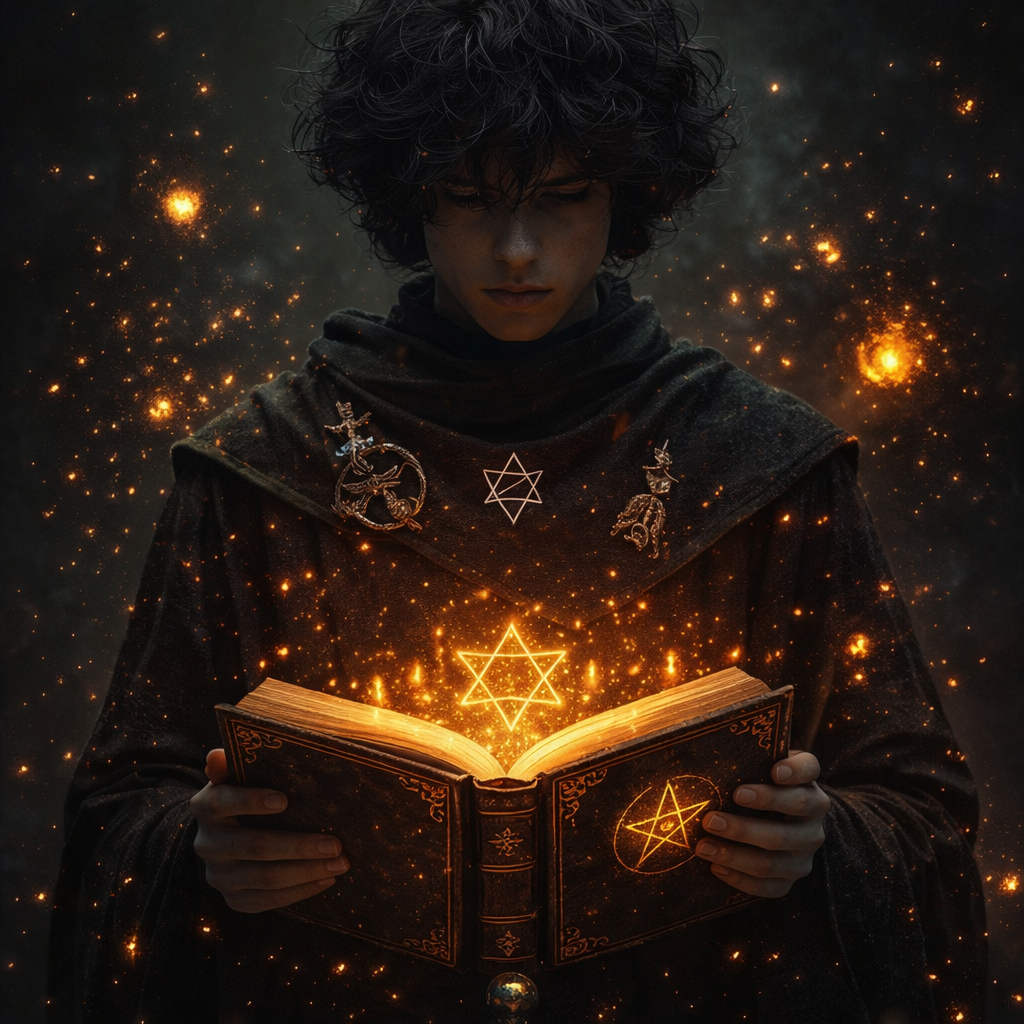
The book places significant emphasis on the profound power of symbolism as a universal language of the spirit. It meticulously analyzes key symbols found in both Christian scripture and occult traditions, interpreting their multi-layered meanings related to divine principles, spiritual evolution, and the nature of reality. From the cross and the resurrection to alchemical imagery and numerological constructs, Palms reveals how these symbols serve as potent conduits for accessing higher consciousness and understanding the hidden architecture of the cosmos.
Modern Relevance
In an age often characterized by spiritual seeking and a desire for deeper meaning, 'The Christian and the Occult' remains remarkably relevant. It offers a valuable framework for individuals grappling with reconciling their faith with broader spiritual inquiries, providing intellectual and philosophical tools to explore the mystical dimensions often sidelined in conventional religious discourse. Its insights into symbolism and universal spiritual currents continue to resonate with those seeking a more integrated and profound understanding of their spiritual journey.
👥 Who Should Read This Book
This illuminating text is essential for the spiritual scholar seeking to understand the historical and philosophical bridges between diverse faith traditions. It is invaluable for the earnest seeker who feels a resonance with both Christian teachings and esoteric wisdom, offering a pathway to reconcile these seemingly disparate worlds. Practitioners of occult arts will find a rich context for understanding the spiritual underpinnings of their practices within a broader, historically significant framework. Even those new to these concepts will find a compelling invitation to explore the profound mysteries that lie at the heart of human spiritual experience.
📜 Historical Context
Published in 1972, 'The Christian and the Occult' emerged during a pivotal era of cultural and spiritual flux. The late 20th century witnessed a burgeoning interest in Eastern religions, mysticism, and alternative spiritualities, often fueled by counter-cultural movements and a questioning of traditional institutions. This period saw a significant cross-pollination of ideas, with many individuals seeking to reconcile their existing faith traditions with a newfound awareness of esoteric philosophies and practices. Palms' work resonated within this milieu, offering a scholarly yet accessible bridge between the established Christian paradigm and the growing fascination with the occult, providing a framework for understanding how these seemingly divergent paths could inform and enrich one another in a world ripe for spiritual re-evaluation.
📔 Journal Prompts
Reflect on a Christian symbol that holds personal significance for you. How might its meaning be expanded through an esoteric lens?
Consider the concept of 'hidden knowledge' in your spiritual journey. Where have you encountered it, and how has it influenced your understanding?
Explore the idea of universal spiritual currents. Can you identify common threads in different religious or philosophical systems you've encountered?
How does the concept of divine illumination resonate with your personal experience of spiritual growth or understanding?
In what ways might the exploration of occult principles enrich, rather than contradict, one's faith tradition?
🗂️ Glossary
Gnosticism
A complex religious and philosophical movement characterized by the belief that salvation is achieved through secret knowledge (gnosis), often involving a dualistic worldview and a divine spark within humanity.
Hermeticism
A philosophical and religious tradition based on writings attributed to Hermes Trismegistus, emphasizing divine wisdom, the interconnectedness of all things, and the pursuit of spiritual enlightenment through study and contemplation.
Esotericism
Teachings or practices that are intended for or understood by a select group of people who are initiated into them, often involving hidden knowledge, spiritual disciplines, and symbolic interpretation.
Archetype
A universal, archaic pattern or image that is part of the collective unconscious, often recurring in myths, dreams, and religious symbolism across cultures.
Illumination
A state of spiritual enlightenment or understanding, often experienced as a sudden influx of divine insight, clarity, or spiritual awakening.