The book of talismans, amulets and zodiacal gems

 79
79

The book of talismans, amulets and zodiacal gems
William Thomas Pavitt's 1922 compendium, *The Book of Talismans, Amulets and Zodiacal Gems*, presents a fascinating if somewhat dry, survey of ancient magical objects. Its strength lies in its encyclopedic cataloging of correspondences – linking specific gems, metals, and astrological signs to desired outcomes. Pavitt meticulously details the historical lineage of these practices, drawing from a vast array of classical and medieval sources. However, the prose, while informative, lacks the evocative spark one might hope for in a text on such mystical subjects. The sections on the construction of talismans, while detailed, can feel like a technical manual rather than an invitation to arcane practice. A particular highlight is the exploration of planetary hours and their specific uses in talismanic creation, underscoring the intricate astrological framework. While it offers a robust historical overview, its critical distance prevents it from feeling truly alive for the modern practitioner.
This work is a valuable historical resource for the serious student of esoteric lore.
📝 Description
79
### What It Is
The Book of Talismans, Amulets and Zodiacal Gems, first published in 1922 by William Thomas Pavitt, is a compendium exploring the historical and symbolic significance of enchanted objects. It details the construction, purpose, and perceived efficacy of talismans and amulets across various cultures and epochs. The work meticulously examines the relationship between celestial bodies, gemstones, and their alleged influence on human affairs, drawing from a wide array of occult and esoteric traditions. It serves as a guide to understanding the intricate lore surrounding these ancient protective and empowering artifacts.
### Who It's For
This volume is suited for students of comparative religion, occult history, and ancient symbolism. Those interested in the practical application of esoteric principles, particularly in the creation and understanding of magical objects, will find substantial material. It appeals to researchers of early 20th-century esoteric movements and individuals seeking a deeper comprehension of the historical underpinnings of amuletic and talismanic practices. It is not a modern grimoire but a historical and theoretical exploration.
### Historical Context
Pavitt's work emerged during a period of intense interest in the occult, following the rise of Theosophy and the Hermetic Order of the Golden Dawn. Published in 1922, it reflects the era's engagement with spiritualism, ceremonial magic, and ancient wisdom traditions. The book’s detailed examination of planetary correspondences and zodiacal influences places it within the broader context of astrological resurgence occurring at the time. Its comprehensiveness aimed to consolidate scattered knowledge, making it accessible to a burgeoning readership eager to explore non-mainstream spiritual and magical systems that often ran counter to Victorian rationalism.
### Key Concepts
The book dissects the foundational principles behind the creation and activation of talismans and amulets. It explores the concept of sympathetic magic, where an object is imbued with the qualities of another through symbolic representation or shared essence. Celestial correspondences are central, with specific planets, signs of the zodiac, and stars linked to particular metals, stones, days, and hours, dictating the opportune moments for crafting and consecrating these items. The inherent power attributed to specific gemstones, not just for their physical properties but for their energetic signatures, is a recurring theme, alongside the importance of precise inscriptions and ritualistic preparation to ensure their efficacy.
✍️ Author
William Thomas Pavitt
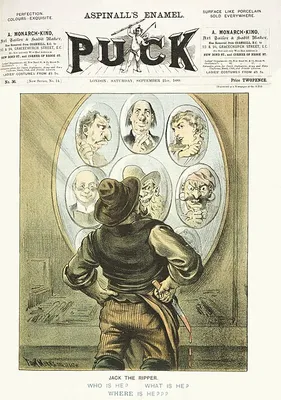
A series of murders that took place in the East End of London between August and November 1888 have been attributed to an unidentified assailant nicknamed Jack the Ripper. Since then, the identity of the Ripper has been widely debated, with over 100 suspects named.
💡 Why Read This Book?
• Gain specific knowledge on the historical construction of talismans and amulets, understanding the precise correspondences between zodiacal gems, metals, and planetary hours as detailed in the text. • Explore the practical, historical applications of sympathetic magic and planetary astrology in creating objects intended for specific purposes, as outlined in Pavitt's research. • Understand the foundational esoteric principles that informed early 20th-century occultism, particularly how concepts like gem efficacy and celestial influence were systematically cataloged.
⭐ Reader Reviews
Honest opinions from readers who have explored this book.
❓ Frequently Asked Questions
When was William Thomas Pavitt's 'The Book of Talismans, Amulets and Zodiacal Gems' first published?
The book was first published in 1922, reflecting a period of significant interest in occult and esoteric subjects.
What is the primary focus of 'The Book of Talismans, Amulets and Zodiacal Gems'?
It focuses on the historical and symbolic significance of talismans and amulets, detailing their construction, purpose, and the astrological and gemological correspondences associated with them.
Does the book provide instructions for creating modern talismans?
While it details historical methods and principles, the book is primarily a historical and theoretical exploration rather than a contemporary grimoire for creating new talismans.
What historical traditions does Pavitt draw upon in his work?
Pavitt references a wide array of traditions, including classical antiquity, medieval alchemy, astrology, and various occult and esoteric practices prevalent at the turn of the 20th century.
Are gemstones discussed in relation to astrological signs in the book?
Yes, a significant portion of the book is dedicated to exploring the specific relationships between zodiacal signs, their ruling planets, and corresponding gemstones and their purported influences.
Is 'The Book of Talismans, Amulets and Zodiacal Gems' considered an occult text?
Yes, it is categorized as an occult and esoteric text due to its in-depth examination of magical objects, symbolism, and historical occult practices.
🔮 Key Themes & Symbolism
Planetary and Zodiacal Correspondences
The work meticulously charts the intricate web of correspondences linking celestial bodies and zodiacal signs to specific gemstones, metals, days, and hours. This system forms the bedrock for understanding how and when talismans and amulets were believed to derive their power. Pavitt details which planetary influences are best harnessed through particular stones, and during which astrological periods their efficacy is amplified, providing a framework for the symbolic language of magic objects.
The Nature of Talismans and Amulets
Pavitt distinguishes between talismans, designed to attract or bestow specific qualities, and amulets, intended for protection against harm. He delves into the historical beliefs surrounding their creation, emphasizing the importance of intention, material selection, and precise inscription or carving. The book explores how these objects were seen not merely as decorative items but as conduits for cosmic energies, capable of influencing events and the wearer's destiny.
Gemstone Symbolism and Power
Central to the book is the exploration of the inherent virtues and symbolic meanings attributed to various gemstones throughout history. Pavitt examines how specific gems were associated with particular planets, deities, or virtues, and how these associations dictated their use in talismans and amulets. The perceived energetic properties of stones like the ruby, sapphire, and emerald are discussed in the context of their historical use for healing, protection, and the attraction of fortune.
Historical Esoteric Practices
The book serves as a historical archive of esoteric practices related to magical objects. It draws upon a diverse range of sources, from ancient Mesopotamian and Egyptian traditions to medieval European magic and Renaissance occultism. Pavitt's compilation offers insights into the evolution of talismanic art and amuletic traditions, reflecting the enduring human desire to harness unseen forces through tangible means.
💬 Memorable Quotes
“The talisman is a magical figure wrought under certain constellated influences, and bearing the sign of the celestial body to which it is attributed.”
— This defines a talisman as an object whose power is derived from specific astrological conditions and symbolic representation, directly linking its creation to celestial events and planetary associations.
“Amulets are generally worn to ward off evil, sickness, and danger.”
— This highlights the protective function of amulets, contrasting them with talismans. It emphasizes their role as shields against negative influences, a common application in historical magical practices.
“The choice of materials, such as gold for the sun or silver for the moon, was integral to a talisman's effectiveness.”
— This points to the crucial role of sympathetic resonance in talismanic construction, where the material itself mirrors the celestial body or influence being invoked.
“Each planet has its own day, hour, and associated gems, which must be observed for proper magical operation.”
— This underscores the importance of astrological timing and specific gemological knowledge in the successful creation and use of magical objects, as understood within the esoteric traditions discussed.
“The inscription of sacred names or symbols further empowered the object.”
— This emphasizes that the efficacy of a talisman or amulet was not solely dependent on materials and timing, but also on the addition of potent symbols or divine names through inscription.
🌙 Esoteric Significance
Tradition
This work sits firmly within the Western Esoteric Tradition, drawing heavily from Hermeticism, Kabbalah, Neoplatonism, and medieval astrological and magical practices. It acts as a bridge, consolidating fragmented knowledge from these diverse streams into a coherent, accessible format. Pavitt’s approach, while scholarly, aligns with the practical aims of ceremonial magic and talismanic art, seeking to understand and potentially utilize the energetic forces described in these ancient systems.
Symbolism
Central symbols include the specific gemstones, each imbued with planetary or zodiacal energies, and the geometric or symbolic inscriptions placed upon talismans. For instance, a talisman might feature the sigil of Jupiter inscribed on Lapis Lazuli during Jupiter's hour to invoke wisdom and authority. The recurring motif of celestial bodies and their associated signs represents the cosmic order that practitioners sought to align with or draw power from.
Modern Relevance
Contemporary practitioners of Western esotericism, particularly those involved in the creation of magical tools and the study of astrological magic, frequently reference Pavitt's work. Its systematic cataloging of correspondences remains a valuable resource for modern occultists, witchcraft practitioners, and scholars of magical history seeking to understand the historical underpinnings of their craft and explore traditional methods.
👥 Who Should Read This Book
• Students of Western Esotericism: Those seeking to understand the historical development and theoretical framework of talismanic magic and amuletic traditions will find detailed information. • Occult Historians and Researchers: Individuals interested in the early 20th-century occult revival and the systematization of magical knowledge will appreciate the historical context and extensive cataloging. • Aspiring Gemologists with an Esoteric Interest: Readers fascinated by the historical and symbolic significance of gemstones beyond their material properties will find extensive lore on their perceived virtues and uses.
📜 Historical Context
William Thomas Pavitt's *The Book of Talismans, Amulets and Zodiacal Gems*, published in 1922, emerged from a fertile ground of occult revival in late Victorian and Edwardian England. This era witnessed the proliferation of societies like the Hermetic Order of the Golden Dawn and the popularization of Theosophical ideas by Helena Blavatsky. Pavitt's work synthesized disparate historical and magical traditions, presenting them in a systematic manner that appealed to a public increasingly drawn to spiritualism and alternative belief systems. It engaged with a long lineage of Western esotericism, from the Grimoires of the 17th century to earlier classical and medieval magical texts. The book’s detailed cataloging of correspondences reflects the period's scholarly interest in ancient magic and astrology, often pursued alongside more mainstream academic disciplines. It stood as a comprehensive reference in a field where knowledge was often fragmented, providing a structured approach to the study of enchanted objects.
📔 Journal Prompts
The specific planetary hour for inscribing a talisman.
Reflect on the symbolism of a particular zodiacal gem discussed in the text.
Consider the distinction between talismans and amulets as presented by Pavitt.
How might the concept of sympathetic magic, as applied to talismans, inform modern intentions?
Analyze the connection between a chosen gemstone and its attributed celestial influence from the book.
🗂️ Glossary
Talisman
A magical object, often inscribed with symbols or figures, created under specific astrological conditions to attract or bestow certain powers or influences upon the wearer.
Amulet
An object, typically worn, believed to possess protective qualities, warding off evil, sickness, or harm.
Zodiacal Gem
A gemstone associated with one of the twelve signs of the zodiac, believed to derive power or influence from that sign and its ruling planet.
Planetary Hour
A division of the day and night into twelve unequal periods, each governed by one of the seven classical planets, considered significant for magical operations.
Sympathetic Magic
A form of magic based on the principle that like affects like, or that a connection can be established between two things through their resemblance or association.
Celestial Influences
The purported effects or energies emanating from celestial bodies (planets, stars, constellations) that can be harnessed or invoked through magical practices.
Correspondences
The systematic linking of elements, symbols, or objects (like gems, colors, herbs) to specific planets, signs, or deities, forming the basis of magical systems.