The Ark
 83
83

The Ark
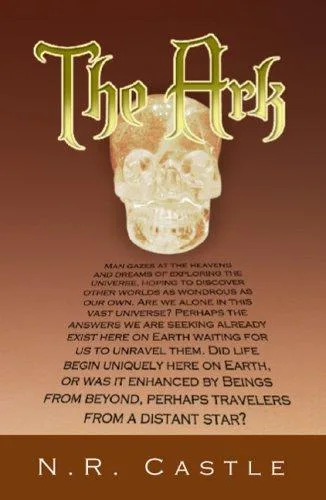
N.R. Castle's "The Ark" is an ambitious work that attempts to synthesize arcane symbolism into a coherent narrative framework. The strength of the book lies in its intricate symbolic language, which, when deciphered, offers a compelling map for inner exploration. Castle's portrayal of the 'Threshold Guardians' is particularly effective, presenting them not as mere obstacles but as necessary initiatory figures. However, the narrative's density can at times become a hindrance; certain passages, particularly those detailing the 'Labyrinthine Paths,' feel overly abstract and could benefit from more direct exposition. The central metaphor of the Ark, while potent, is stretched to its limits, occasionally leading to a feeling of repetition. Despite these limitations, "The Ark" offers a unique and challenging perspective for dedicated students of esoteric thought. It's a text that demands careful study rather than casual perusal.
📝 Description
83
### What It Is
"The Ark" by N.R. Castle, first published in 2007, presents a unique exploration within the esoteric tradition. It is not a historical account nor a straightforward self-help manual, but rather a symbolic narrative designed to guide the reader through complex metaphysical concepts. The work uses allegorical structures to represent internal journeys and the search for hidden knowledge, drawing parallels with ancient wisdom texts while forging its own path.
### Who It's For
This book is aimed at individuals who are already familiar with or are actively seeking to understand deeper metaphysical and esoteric principles. Readers who appreciate allegorical storytelling and symbolic interpretation will find fertile ground here. It is particularly suited for those engaged in personal spiritual development, comparative mythology studies, or those interested in the intersection of ancient symbolism and modern consciousness.
### Historical Context
Emerging in the early 21st century, "The Ark" arrived during a period of renewed interest in esoteric studies, partly fueled by the internet's accessibility to diverse philosophical and mystical traditions. The early 2000s saw a growing academic and popular engagement with Jungian psychology, Gnosticism, and Hermeticism, creating an environment receptive to works that explored these themes through narrative. The book can be seen as a response to, or participation in, this intellectual milieu, offering a contemporary lens on perennial questions.
### Key Concepts
The core of "The Ark" revolves around the concept of the "Ark" itself, functioning as a vessel for spiritual preservation and transformation. It explores themes of initiation, the journey of the soul, and the revelation of hidden truths. The narrative employs archetypal imagery, suggesting that profound spiritual understanding is attainable through disciplined inner work and the deciphering of symbolic language. The text emphasizes the idea of a hidden order or divine plan that underpins existence.
💡 Why Read This Book?
• Gain a unique perspective on spiritual transformation through the central metaphor of the "Ark," understanding it as a vessel for preserving and evolving consciousness. • Explore the concept of "Threshold Guardians" as symbolic initiatory forces, learning how to recognize and engage with them in your own spiritual development. • Decipher the "Labyrinthine Paths" as a representation of complex inner journeys, providing a symbolic framework for navigating challenges on the path to hidden knowledge.
⭐ Reader Reviews
Honest opinions from readers who have explored this book.
❓ Frequently Asked Questions
What is the primary allegorical meaning of 'The Ark' in N.R. Castle's work?
'The Ark' in N.R. Castle's 2007 book primarily symbolizes a vessel for spiritual preservation and transformation, representing the inner journey and the safeguarding of essential knowledge through periods of profound change or initiation.
Who are the 'Threshold Guardians' mentioned in 'The Ark'?
The 'Threshold Guardians' in 'The Ark' are symbolic figures or forces that represent initiatory challenges and tests encountered on the path of spiritual development. They are not external enemies but internal or archetypal aspects that must be understood and overcome.
When was 'The Ark' by N.R. Castle first published?
'The Ark' by N.R. Castle was first published in 2007, placing it within the early 21st-century resurgence of interest in esoteric and metaphysical literature.
Does 'The Ark' require prior knowledge of esoteric traditions?
While prior knowledge of esoteric traditions can enhance the reading experience, 'The Ark' is designed to be accessible to dedicated seekers. Its allegorical nature allows readers to engage with its concepts even if they are new to specific terminology.
What kind of symbolic language does N.R. Castle employ in 'The Ark'?
N.R. Castle employs a rich symbolic language in 'The Ark,' drawing on archetypal imagery and allegorical structures. Key symbols include the Ark itself, the 'Labyrinthine Paths,' and the 'Threshold Guardians,' all serving to map an inner, spiritual journey.
Is 'The Ark' a historical text or a fictional narrative?
'The Ark' is best understood as a symbolic or allegorical narrative, rather than a historical account or pure fiction. Its purpose is to convey esoteric truths and metaphysical concepts through a structured, symbolic story.
🔮 Key Themes & Symbolism
The Ark as a Vessel
The central motif of 'The Ark' functions as more than a mere narrative device; it is presented as a profound symbol of consciousness itself, capable of preserving essential spiritual truths through periods of upheaval. Castle positions the Ark as a microcosm, a self-contained universe where the principles of spiritual evolution are enacted. Readers are invited to understand their own inner lives as such a vessel, capable of containing and transforming fundamental aspects of being. This theme explores the idea of maintaining spiritual integrity amidst external chaos, a concept resonant with various mystical traditions that speak of a sacred inner space.
Initiation and Threshold Guardians
A significant theme is the process of initiation, depicted through encounters with 'Threshold Guardians.' These entities represent the challenges, fears, and limitations that one must confront and integrate to progress on the esoteric path. Castle's approach suggests that these guardians are not external adversaries but projections of the self, embodying aspects of the psyche that require recognition and understanding. The successful navigation of these encounters signifies a crucial stage of spiritual growth, moving the aspirant closer to hidden knowledge and self-realization.
Labyrinthine Paths of Consciousness
The narrative frequently references 'Labyrinthine Paths,' symbolizing the complex and often non-linear journey of consciousness. This theme highlights the intricate nature of inner exploration, where direct routes are rare and progress often involves cycles of seeming confusion or disorientation. Castle uses this imagery to convey that the path to esoteric understanding is not a simple linear progression but a process of unfolding, requiring patience, discernment, and a willingness to engage with the intricate patterns of the psyche. The labyrinth becomes a metaphor for the profound depths of the mind.
The Unveiling of Hidden Knowledge
Central to 'The Ark' is the pursuit and eventual unveiling of hidden knowledge. Castle suggests that this knowledge is not merely intellectual but experiential, attainable through the symbolic journey described in the text. The Ark itself can be seen as containing these secrets, which are revealed progressively as the protagonist navigates the symbolic landscape. This theme connects to perennial philosophies that posit an underlying order or truth accessible to those who undertake the necessary inner work and purification of perception.
💬 Memorable Quotes
“The true Ark is not built of wood, but of understanding.”
— This paraphrase highlights the book's central metaphor, suggesting that the 'Ark' is not a physical object but a state of inner awareness and comprehension necessary for spiritual preservation and advancement.
“To pass the guardians, one must first see oneself within them.”
— This interpretation of a conceptual passage emphasizes the theme of self-recognition in overcoming spiritual obstacles. It implies that the challenges presented by 'Threshold Guardians' are internal and require introspective understanding to transcend.
“The paths twist not to deceive, but to reveal the nature of the seeker.”
— This conceptual quote underscores the idea that the complexity of the 'Labyrinthine Paths' serves a pedagogical purpose. The apparent disorientation is a tool for self-discovery, forcing the aspirant to confront their own psychological landscape.
“Within the confines of the Ark, the universe unfolds its silent language.”
— This paraphrase suggests that the 'Ark' is a space where profound cosmic truths are not overtly stated but are communicated through subtle, symbolic means, accessible to those attuned to its inner workings.
“Knowledge sought without the vessel of wisdom is but scattered dust.”
— This conceptual interpretation emphasizes the importance of integrating intellectual knowledge with practical wisdom and spiritual maturity. It suggests that true esoteric understanding requires more than mere accumulation of facts; it demands a cultivated inner state.
🌙 Esoteric Significance
Tradition
"The Ark" draws heavily from the Western Esoteric tradition, particularly Gnostic and Hermetic currents, while also incorporating archetypal psychology. It functions less as a manual for a specific ritualistic practice and more as a symbolic map of the soul's journey. The work departs from strict adherence to any single lineage by synthesizing these influences into a unique allegorical narrative, emphasizing inner transformation and the pursuit of gnosis—direct, experiential knowledge of the divine.
Symbolism
Key symbols include the 'Ark' itself, representing the container of consciousness, spiritual essence, or the perfected self, capable of weathering cosmic or personal storms. The 'Threshold Guardians' symbolize the psychic barriers and initiatory tests one must face to progress spiritually. 'Labyrinthine Paths' denote the complex, non-linear nature of the soul's journey, where apparent confusion serves as a catalyst for deeper understanding and self-discovery.
Modern Relevance
Contemporary practitioners of Jungian psychology and those exploring archetypal symbolism find resonance in "The Ark's" depiction of the psyche's inner landscape. Its allegorical structure appeals to modern seekers interested in personal mythology and the integration of spiritual concepts into daily life. Thinkers in the field of consciousness studies and comparative mysticism also engage with its symbolic language as a means to explore perennial philosophical questions through a contemporary narrative lens.
👥 Who Should Read This Book
• Seekers of symbolic narratives: Individuals who appreciate allegorical storytelling as a vehicle for understanding complex metaphysical and spiritual concepts will find "The Ark" particularly rewarding. • Students of Western Esotericism: Those studying Gnosticism, Hermeticism, or archetypal psychology can use this book to explore how these traditions are synthesized into a modern symbolic framework. • Introspective individuals: Readers undertaking their own inner journeys and seeking a symbolic map to navigate challenges and stages of spiritual development will find value in its conceptual maps.
📜 Historical Context
Published in 2007, N.R. Castle's "The Ark" emerged during a period of significant resurgence in esoteric and metaphysical literature, a trend amplified by digital access to previously obscure texts. This era saw a growing popular and academic interest in Jungian archetypes, Gnosticism, and Hermetic philosophy, with authors like Richard Smoley and Tobias Churton actively engaging with these traditions. "The Ark" can be seen as participating in this intellectual climate, offering a narrative framework for complex symbolic ideas. While it did not face overt censorship, the niche nature of its subject matter meant its reception was largely confined to specialized circles, distinct from mainstream literary criticism. Its allegorical style positions it alongside contemporary works that sought to reinterpret ancient wisdom for modern consciousness, diverging from the more overtly academic or historical approaches to esotericism.
📔 Journal Prompts
The Ark as a vessel: How does its symbolic containment relate to your own inner life?
Confronting the Threshold Guardians: What internal barriers do you perceive as protectors of your growth?
Navigating the Labyrinthine Paths: Reflect on a time when confusion led to unexpected insight.
The nature of hidden knowledge: What does 'unveiling' mean in the context of your personal quest?
Interpreting the silent language: What subtle messages has your inner world communicated recently?
🗂️ Glossary
The Ark
In the context of N.R. Castle's work, 'The Ark' is a symbolic vessel representing consciousness, the soul, or a protected inner space essential for spiritual preservation and transformation.
Threshold Guardians
Symbolic figures or forces encountered on the spiritual path that represent initiatory challenges, psychic barriers, or aspects of the self that must be understood and integrated for progress.
Labyrinthine Paths
Metaphorical representations of the complex, non-linear, and often confusing journey of consciousness and spiritual development. The twists and turns symbolize internal exploration and unfolding.
Gnosis
A Greek term signifying direct, experiential knowledge, particularly of a spiritual or divine nature. In esoteric traditions, it represents intuitive insight and liberation through understanding.
Archetype
A universal, archaic pattern or image derived from the collective unconscious, holding significant symbolic meaning. Common in psychology and mythology studies.
Perennial Philosophy
The concept that all religions and spiritual traditions share a common core of wisdom or truth about the fundamental nature of reality and the human condition.
Esotericism
Systems of thought, belief, or practice characterized by secrecy, initiation, and the pursuit of hidden knowledge or spiritual enlightenment, often outside mainstream religious or philosophical structures.