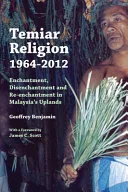
Temiar Religion, 1964-2012
 83
83

Temiar Religion, 1964-2012
Geoffrey Benjamin’s ‘Temiar Religion, 1964-2012’ offers a sobering corrective to romanticized Western notions of indigenous spiritual practice. Benjamin meticulously dismantles the popular ‘Senoi Dreamwork’ myth, tracing its origins to misinterpretations that detached Temiar practices from their socioreligious context. His strength lies in the sheer ethnographic rigor, presenting a nuanced picture of Temiar belief systems, cosmology, and ritual life that is far richer and more complex than the simplified accounts that preceded it. A particularly illuminating section details the concept of *semangat*, demonstrating its multifaceted role beyond mere psychological states. However, the book’s academic density, while its primary asset, may pose a barrier for readers unfamiliar with anthropological terminology. The extensive footnotes and detailed analyses, though invaluable for scholars, occasionally slow the narrative pace. Nevertheless, Benjamin’s work stands as a vital scholarly intervention, essential for understanding both the Temiar themselves and the history of Western engagement with their culture.
📝 Description
83
### What It Is This volume presents Geoffrey Benjamin's extensive ethnographic research into the religious and social structures of the Temiar people, an indigenous group residing in the northern Malaysian highlands. It meticulously documents their belief systems, rituals, and social organization, offering a detailed account of a complex society. The work critically examines popular Western interpretations of Temiar practices, particularly the notion of 'Senoi Dreamwork', demonstrating how these were often based on misunderstandings or misrepresentations.
### Who It's For This book is essential for anthropologists, ethnographers, and scholars of Southeast Asian studies seeking an accurate, scholarly depiction of the Temiar. It will also appeal to readers interested in the history of religious studies and the anthropology of altered states of consciousness, particularly those curious about the origins and critiques of concepts like dream analysis as practiced by indigenous groups. Students of comparative religion and cultural studies will find the detailed case study invaluable.
### Historical Context Geoffrey Benjamin's research, culminating in this 2014 publication based on work spanning decades, engages directly with the mid-20th century Western fascination with non-Western psychotherapeutic techniques. It follows a period where figures like Kilton Stewart popularized simplified notions of indigenous dream practices, often detached from their original cultural contexts. Benjamin's work provides a crucial corrective, situating Temiar beliefs within their specific historical and cultural milieu, a necessary counterpoint to the more generalized and sometimes sensationalized accounts emerging in the 1960s and 70s.
### Key Concepts The book delves into the Temiar concept of *semangat* (spirit or soul), its various manifestations, and its role in health, ritual, and social life. It explores their cosmology, including the intricate relationship between the physical and spiritual realms, and the practices associated with maintaining balance. Benjamin also analyzes the structure of Temiar ritual, including shamanic practices and communal ceremonies, contrasting these with external, often inaccurate, interpretations that gained traction in Western esoteric circles.
💡 Why Read This Book?
• Gain an accurate understanding of Temiar religious practices, moving beyond popular myths like ‘Senoi Dreamwork’ to appreciate the complex *semangat* concept as detailed by Benjamin’s research from 1964-2012. • Understand the historical development of Western ethnographic interest in Southeast Asian cultures, particularly how interpretations of indigenous psychotherapeutic techniques evolved and were sometimes distorted before 2014. • Acquire insights into indigenous cosmologies and ritual structures, learning how Benjamin’s detailed ethnography of the Temiar challenges simplistic anthropological frameworks.
⭐ Reader Reviews
Honest opinions from readers who have explored this book.
❓ Frequently Asked Questions
What is the main criticism of 'Senoi Dreamwork' presented in Geoffrey Benjamin's book?
Benjamin argues that the popular Western concept of 'Senoi Dreamwork,' widely discussed in the mid-20th century, was a misrepresentation based on a misunderstanding of actual Temiar religious and social practices.
When was Geoffrey Benjamin's research on Temiar religion first published?
The book 'Temiar Religion, 1964-2012' was first published on September 12, 2014, though Benjamin's fieldwork and analysis spanned many years prior.
What is the meaning of 'semangat' in the context of Temiar religion?
'Semangat' refers to the Temiar concept of spirit or soul, which Benjamin explores in its various manifestations and its crucial role in their cosmology, health, and ritual life.
Where do the Temiar people live?
The Temiar are an indigenous society of the Mon-Khmer-speaking Orang Asli, living in the uplands of northern Peninsular Malaysia.
How does this book differ from popular accounts of Temiar practices?
It offers a scholarly, ethnographically grounded perspective, correcting sensationalized or simplified narratives by detailing the actual complexity of Temiar religion and society as observed by Benjamin.
What academic disciplines would find this book most valuable?
Anthropology, ethnography, religious studies, Southeast Asian studies, and cultural studies scholars and students would find this detailed case study particularly valuable.
🔮 Key Themes & Symbolism
Critique of Western Misinterpretations
This work systematically deconstructs the popular Western notion of 'Senoi Dreamwork', which gained traction in esoteric circles from the mid-20th century. Benjamin demonstrates how this concept was a significant misreading of the Temiar people's actual religious and social practices. He meticulously traces the origins of these misunderstandings, highlighting how external observers often imposed their own frameworks, leading to a distorted understanding of indigenous belief systems and therapeutic approaches.
Temiar Cosmology and Semangat
Central to the book is an in-depth examination of the Temiar understanding of the cosmos and the concept of *semangat* (spirit or soul). Benjamin elucidates the multifaceted nature of *semangat*, detailing its connection to health, ritual, and the individual's place within the spiritual and physical world. This exploration provides a rich, nuanced view of Temiar metaphysics, far removed from simplistic psychological interpretations.
Ethnographic Rigor and Social Structure
The book is a testament to rigorous ethnographic methodology, presenting a detailed account of Temiar society beyond their spiritual beliefs. Benjamin analyzes their social organization, kinship systems, and daily life, providing a holistic view. This approach ensures that religious practices are understood within their complete cultural and social context, underscoring the interconnectedness of belief, ritual, and community life among the Temiar.
Indigenous Ritual Practices
Benjamin offers a scholarly analysis of various Temiar ritual practices, including shamanic activities and communal ceremonies. He contrasts these observed practices with the often-inaccurate portrayals found in Western literature. The focus is on understanding the function and meaning of these rituals within the Temiar worldview, emphasizing their role in maintaining social cohesion and spiritual balance.
💬 Memorable Quotes
“The popular notion of 'Senoi Dreamwork' was based on a serious misrepresentation of Temiar practice.”
— This core assertion by Benjamin highlights the book's primary scholarly objective: to correct widespread Western misunderstandings that detached Temiar spiritual practices from their authentic cultural context and complexity.
“The reality of Temiar religion and society is even more fascinating than that popular portrayal.”
— This statement underscores Benjamin's conviction that the true depth and intricacy of Temiar beliefs and social structures, as revealed through his research, far surpass the simplified or sensationalized accounts prevalent in Western discourse.
“Benjamin's work critically examines the concept of *semangat*.”
— This refers to the book's detailed exploration of the Temiar understanding of spirit or soul, positioning it as a central element of their cosmology and a key area where external interpretations often fell short.
“The fieldwork spanned from 1964 to 2012.”
— This factual anchor emphasizes the long-term, dedicated nature of Benjamin's research, indicating the depth of data and understanding gathered over several decades of engagement with the Temiar people.
“The book contrasts observed Temiar practices with external, often inaccurate, interpretations.”
— This highlights the book's methodological approach: comparing direct ethnographic observation with existing literature, particularly Western esoteric writings, to expose discrepancies and provide a more accurate depiction.
🌙 Esoteric Significance
Tradition
This work does not fit neatly into a single Western esoteric lineage like Hermeticism or Kabbalah. Instead, it functions as a critical examination of how such traditions, particularly those focused on psychological exploration and altered states (like certain branches of Theosophy or New Age thought), have often misinterpreted or selectively adopted elements from non-Western cultures. Benjamin's contribution lies in providing an accurate ethnographic baseline against which esoteric claims can be measured.
Symbolism
The concept of *semangat* (spirit/soul) is a primary symbolic motif, representing the vital life force and consciousness that permeates Temiar existence. Benjamin explores its connection to dreams, health, and the shamanic journey, illustrating how this single concept encapsulates a complex spiritual ecology. Another symbolic area is the Temiar cosmology, which likely involves layered realms and spirit beings, providing a framework for understanding their relationship with the unseen world.
Modern Relevance
Contemporary scholars and practitioners interested in genuine indigenous psychologies, ethical cross-cultural engagement, and the critique of spiritual appropriation find Benjamin's work invaluable. It informs current debates in anthropology regarding ethnographic accuracy and the legacy of colonial perspectives. Thinkers in fields like critical psychology and comparative religion use it to ground discussions about consciousness and healing practices, ensuring a more informed and respectful dialogue with non-Western traditions.
👥 Who Should Read This Book
• Anthropologists and ethnographers studying Southeast Asian cultures, seeking detailed, accurate data on the Temiar people and their religious systems. • Scholars of comparative religion and indigenous spiritualities, interested in critically assessing Western interpretations of non-Western beliefs and practices. • Readers concerned with the ethics of cultural representation, who wish to understand how indigenous traditions have been misunderstood or misrepresented in popular and esoteric literature.
📜 Historical Context
Geoffrey Benjamin's 'Temiar Religion, 1964-2012' emerged in an academic landscape shaped by post-colonial anthropology and a mid-20th century Western fascination with non-Western spiritual and psychotherapeutic techniques. The period saw popularizations of indigenous practices, notably Kilton Stewart's influential, though later contested, writings on the Senoi people and their dream practices, which began appearing in the 1950s and 60s. Benjamin’s work, published in 2014 but rooted in decades of fieldwork beginning in the 1960s, directly confronts these earlier, often romanticized or essentialized, interpretations. It engages with a growing scholarly critique of ethnographic misrepresentation and the appropriation of cultural practices. While figures like Claude Lévi-Strauss were revolutionizing structural anthropology, Benjamin focused on detailed ethnography within a specific cultural context, providing a crucial counter-narrative to generalized theories about indigenous psychology and spirituality prevalent at the time.
📔 Journal Prompts
The concept of *semangat* and its role in Temiar life.
Benjamin's critique of the 'Senoi Dreamwork' narrative.
The ethical implications of cross-cultural interpretation in religious studies.
Temiar cosmology as presented in the ethnography.
The relationship between social structure and religious practice among the Temiar.
🗂️ Glossary
Orang Asli
The collective term for indigenous peoples of Peninsular Malaysia, encompassing diverse ethnic groups including the Temiar.
Mon-Khmer
A language family spoken by various ethnic groups in Southeast Asia, including the Temiar people of Malaysia.
Semangat
A core concept in Temiar belief, referring to spirit, soul, or life force, integral to their cosmology, health, and rituals.
Senoi Dreamwork
A popular, though critically examined, Western concept associated with indigenous dream analysis practices, often erroneously attributed to the Temiar or related groups.
Ethnography
The scientific description of the customs of individual peoples and cultures, based on fieldwork and direct observation.
Cosmology
The branch of astronomy that deals with the origin and development of the universe; a particular view of the order of the universe.
Shamanism
A practice characterized by the belief that a practitioner can communicate with the spirit world, often involving healing and divination.