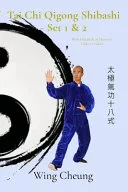
Tai Chi Qigong Shibashi - Set 1 & 2
 77
77

Tai Chi Qigong Shibashi - Set 1 & 2
Wing Cheung's compilation of Tai Chi Qigong Shibashi, Sets 1 & 2, offers a clear presentation of a practice rooted in established Chinese movement arts. The strength lies in its directness; it distills complex Tai Chi principles into a manageable 18-movement sequence (across both sets) that promises relaxation and gentle strengthening. The book successfully conveys the fluid, meditative quality of Shibashi, making it accessible to beginners. However, its primary limitation is a lack of deeper historical or philosophical context that might enrich the practice for those seeking more than just physical movement. A passage detailing the 'Raising the Hands' movement, for instance, effectively describes the physical action but could benefit from elaborating on its energetic implications. The work serves as a competent primer for Shibashi, but advanced practitioners may find it less illuminating.
📝 Description
77
### What It Is Tai Chi Qigong Shibashi: Set 1 & 2 presents a selection of effective movements derived from the broader Tai Chi system. This routine is designed for accessibility, offering a gentle, flowing sequence that is both aesthetically pleasing and profoundly calming. It aims to integrate the core principles of Tai Chi into a concise and easily learned Qigong practice, suitable for daily cultivation.
### Who It's For This work is intended for individuals seeking a gentle yet potent method for stress reduction and energy cultivation. It appeals to those new to Qigong or Tai Chi, as well as experienced practitioners looking for a supplementary routine that emphasizes grace and tranquility. Anyone interested in improving physical well-being through mindful movement will find value here.
### Historical Context The Shibashi form itself is a modern construct, created by Lin Hou Sheng in the 1970s, drawing inspiration from the established movements of Yang-style Tai Chi. This book situates the practice within the lineage of Qigong, an ancient Chinese practice of coordinating breath, movement, and mind for health and spirituality. While Tai Chi's origins stretch back centuries, Shibashi offers a distilled, accessible interpretation.
### Key Concepts The practice centers on the harmonious integration of breath and movement, a core tenet of Qigong. It emphasizes relaxation, balance, and the cultivation of internal energy (Qi). The routine involves specific postures and fluid transitions, each designed to open energy pathways, strengthen the body, and quiet the mind. The focus is on effortless motion and cultivating a state of present-moment awareness.
💡 Why Read This Book?
• Learn the 18 specific movements of Shibashi Sets 1 & 2, designed for deep relaxation and gentle energy cultivation, a direct benefit from Wing Cheung's instruction. • Understand the core principle of coordinating breath with effortless motion, a foundational Qigong concept clearly demonstrated through the Shibashi sequences. • Gain practical methods for stress reduction by engaging in a flowing routine that draws from the established principles of Tai Chi, as presented in this accessible guide.
⭐ Reader Reviews
Honest opinions from readers who have explored this book.
❓ Frequently Asked Questions
What is the origin of the Shibashi Qigong routine presented?
Shibashi Qigong was developed by Lin Hou Sheng in the 1970s, extracting effective movements from the broader system of Tai Chi to create a more accessible practice.
How many movements are included in Tai Chi Qigong Shibashi - Set 1 & 2?
The compilation covers Set 1 and Set 2 of Shibashi, comprising a total of 18 distinct movements designed for holistic health benefits.
Is this book suitable for complete beginners to Qigong?
Yes, the book is designed to be accessible, focusing on gentle, flowing movements that are easy to learn and practice, making it ideal for newcomers.
What are the primary benefits of practicing Shibashi Qigong?
Practicing Shibashi Qigong promotes deep relaxation, stress reduction, improved balance, and the cultivation of vital energy (Qi) through mindful movement.
Does the book explain the connection between Shibashi and Tai Chi?
Yes, the book clarifies that Shibashi is derived from select movements within the Tai Chi system, offering a condensed and gentle form.
When was Tai Chi Qigong Shibashi - Set 1 & 2 first published?
The book was first published on December 16, 2024, making it a recent contribution to Qigong literature.
🔮 Key Themes & Symbolism
Mindful Movement and Relaxation
The central theme revolves around the cultivation of tranquility and well-being through precise, gentle physical movements. Wing Cheung's work details sequences designed to harmonize the body and mind, drawing from Tai Chi's principles. The emphasis is on slow, deliberate actions that encourage practitioners to release tension, quiet mental chatter, and foster a deep sense of calm, making it a potent tool for stress management in modern life.
Qi Cultivation and Flow
This book explores the practical application of cultivating and circulating vital energy, or Qi, within the body. The Shibashi movements are presented as a method to unblock stagnant energy pathways and promote a smooth, unimpeded flow of Qi. By synchronizing breath with specific postures and transitions, practitioners can enhance their internal vitality, leading to improved health and a greater sense of energetic balance.
Accessibility of Ancient Practices
A significant theme is making sophisticated ancient Chinese health and spiritual practices accessible to a contemporary audience. Shibashi Qigong, derived from Tai Chi, is presented in a simplified form, removing barriers to entry. The book's focus on clarity and ease of learning empowers individuals from diverse backgrounds to engage with these profound techniques for self-improvement and holistic health.
Bridging Tai Chi and Qigong
The work occupies a unique space by extracting key elements from the expansive art of Tai Chi and presenting them as a distinct Qigong routine. It highlights how the core principles of Tai Chi—balance, fluidity, and internal awareness—can be effectively channeled into a shorter, more focused Qigong practice. This offers a focused entry point for those interested in Tai Chi's benefits without committing to its more complex forms.
💬 Memorable Quotes
“A gentle, beautiful and flowing Qigong routine that is both a joy to do and deeply relaxing.”
— This statement captures the essence of the Shibashi practice, emphasizing its aesthetic appeal and profound calming effects. It suggests that the routine is not merely therapeutic but also an enjoyable and aesthetically pleasing activity.
“Tai Chi Qigong Shibashi is a Qigong which extracts some of the best movements from Tai Chi.”
— This highlights the selective nature of the Shibashi form, indicating that it distills the most effective and beneficial movements from the broader Tai Chi system for a more concentrated practice.
“The focus is on effortless motion and cultivating a state of present-moment awareness.”
— This interpretation underscores the meditative aspect of Shibashi, suggesting that the practice encourages practitioners to let go of striving and instead immerse themselves fully in the current moment through fluid movement.
“Shibashi offers a distilled, accessible interpretation of Tai Chi principles.”
— This paraphrased concept points to the book's role in simplifying complex Tai Chi concepts into a learnable Qigong sequence, making its benefits more readily available to a wider audience.
“Synchronizing breath with specific postures and transitions enhances internal vitality.”
— This concept emphasizes the energetic dimension of the practice, explaining how the coordinated action of breathing and movement is key to improving one's fundamental life force or Qi.
🌙 Esoteric Significance
Tradition
Shibashi Qigong, as presented in Wing Cheung's work, fits within the broader Taoist and Buddhist traditions of China, which have long emphasized the cultivation of Qi (vital energy) through mind-body practices. While not strictly Hermetic or Kabbalistic, its principles of internal alchemy—transforming stagnant energy into vitality—share conceptual parallels with Western esoteric traditions focused on spiritual development and energetic refinement.
Symbolism
The movements themselves carry symbolic weight. For instance, 'Raising the Hands' can symbolize the opening of the upper energy centers and the connection between heaven and earth. 'Pushing the Mountains' may represent the practitioner's ability to move internal blockages and exert gentle, directed energy. The overall flowing, circular nature of Shibashi symbolizes the continuous cycle of energy and life, mirroring concepts found in Taoist philosophy.
Modern Relevance
Contemporary practitioners of holistic health, mindfulness, and somatic therapies often draw upon Qigong forms like Shibashi. Its emphasis on gentle movement, breathwork, and stress reduction makes it relevant for modern wellness movements, yoga instructors seeking complementary practices, and therapists incorporating mind-body techniques. Thinkers in fields exploring embodied cognition and psychosomatic well-being find practical application in such structured yet fluid exercises.
👥 Who Should Read This Book
• Individuals seeking a gentle, low-impact exercise routine for stress relief and improved physical balance, particularly those new to movement practices. • Practitioners of Tai Chi looking to supplement their training with a more focused Qigong set that emphasizes fluidity and relaxation. • Anyone interested in exploring traditional Chinese health cultivation methods as a pathway to enhanced mental clarity and physical vitality.
📜 Historical Context
The creation of Shibashi Qigong in the 1970s by Lin Hou Sheng occurred during a period of renewed interest in traditional Chinese health practices, both within China and internationally. Following the Cultural Revolution, there was a movement to preserve and popularize aspects of Chinese culture, including martial arts and health exercises. Shibashi emerged as a modern synthesis, drawing directly from the established Yang-style Tai Chi, which itself has roots stretching back centuries, likely to the 18th century. This period also saw figures like Robert C. Li popularizing Qigong in the West through academic channels, though Shibashi's approach was more direct and movement-focused than some earlier, more spiritually-oriented Qigong systems. Unlike the more complex Yang-style Tai Chi, Shibashi was designed for ease of learning and therapeutic benefit, aligning with a broader global trend towards accessible wellness practices.
📔 Journal Prompts
The concept of effortless motion in Shibashi: how does it translate to daily challenges?
Reflection on the 'Raising the Hands' movement and its energetic implications.
Compare the feeling of tension release during Shibashi with everyday stress.
How does synchronizing breath with movement alter your perception of time?
Consider the Taoist principle of 'Wu Wei' (non-action) as applied to the flowing movements.
🗂️ Glossary
Qigong
An ancient Chinese practice involving coordinated breathing, movement, and meditation to cultivate and balance vital energy (Qi) for health and spirituality.
Shibashi
A specific Qigong routine composed of 18 movements, derived from Tai Chi, designed for ease of learning and promoting relaxation and health.
Tai Chi
A Chinese martial art practiced for both its defensive applications and its health benefits, characterized by slow, flowing movements and deep breathing.
Qi (Chi)
In traditional Chinese medicine and philosophy, the vital life force or energy believed to animate all living beings.
Set 1 & 2
Refers to the two distinct sequences within the Shibashi routine, each containing specific sets of movements that build upon foundational principles.
Movement
In the context of Shibashi, refers to a specific posture or sequence of postures performed with coordinated breath and intention.
Relaxation
A state of reduced physical and mental tension, actively cultivated through the gentle and flowing nature of the Shibashi practice.