Sylvester and the magic pebble
 82
82

Sylvester and the magic pebble
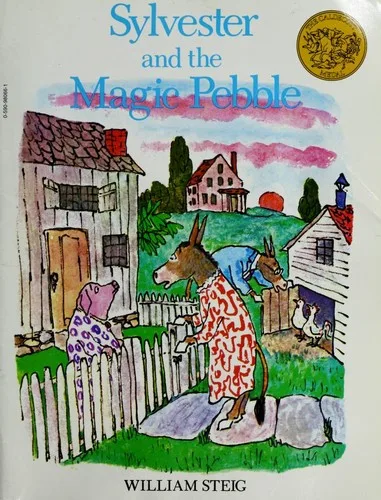
William Steig’s *Sylvester and the Magic Pebble* presents a deceptively simple premise that carries significant weight. The narrative's strength lies in its unflinching portrayal of a child’s immediate, often irrational, fear and subsequent desire for escape. When Sylvester wishes himself into a stone, Steig captures the panic of utter isolation with remarkable clarity, a moment that transcends the book’s target audience. The limitation, however, is the somewhat abrupt resolution. While the reunion is emotionally satisfying, the mechanics of Sylvester’s final, crucial wish for his family feel a touch too convenient, slightly undermining the preceding emotional depth.
Steig’s illustration style, with its characteristic expressive lines and muted palette, perfectly complements the story’s emotional arc. The visual depiction of Sylvester as a stone, indistinguishable from the other rocks, is particularly striking. The book offers a potent, albeit brief, exploration of longing and the importance of home.
Read more ↓
Ultimately, *Sylvester and the Magic Pebble* remains a potent, if brief, exploration of longing and the importance of home.
📝 Description
82
### What It Is Sylvester and the Magic Pebble is a 1969 children's book by William Steig. It recounts the tale of Sylvester Duncan, a young donkey who, while on a picnic with his parents, encounters a bright red, smooth, magic pebble. This pebble possesses the power to grant any wish.
### Who It's For This work is suitable for young readers and adults interested in allegorical storytelling. It appeals to those who appreciate whimsical narratives with underlying moral lessons about appreciating what one has. The book also offers points of interest for scholars of early modern children's literature and narrative structure.
### Historical Context Published in 1969, the book emerged during a period of significant social and cultural change. William Steig, already an acclaimed cartoonist for The New Yorker, began writing and illustrating children's books in the late 1930s. His work often featured anthropomorphic animals and explored themes of self-discovery and emotional maturity. The era saw a rise in magical realism within children's literature, though Steig's approach remained distinctly his own.
### Key Concepts The narrative centers on the concept of desire and its consequences. Sylvester’s impulsive wishes, fueled by fear and loneliness, lead him to transformative experiences. The magic pebble itself serves as a potent symbol of unearned power and the illusory nature of external solutions to internal problems. The story implicitly critiques the pursuit of superficial desires over genuine connection and contentment.
💡 Why Read This Book?
• Gain insight into the nature of desire and its consequences, as demonstrated by Sylvester's misadventures with the magic pebble, which highlights how immediate gratification can lead to unforeseen difficulties. • Understand the power of focused intention and familial connection, exemplified by Sylvester’s eventual wish to return to his parents, underscoring the importance of home and belonging. • Appreciate the sophisticated use of symbolism in children's literature, particularly the magic pebble itself as a metaphor for superficial solutions and the profound impact of fear on decision-making.
⭐ Reader Reviews
Honest opinions from readers who have explored this book.
❓ Frequently Asked Questions
When was Sylvester and the Magic Pebble first published?
Sylvester and the Magic Pebble was first published in 1969 by William Steig, making it a product of late 1960s children's literature.
What is the main theme of Sylvester and the Magic Pebble?
The central themes revolve around the consequences of wishes, the importance of home and family, and the understanding that true happiness often lies in appreciating what one already possesses.
Who illustrated Sylvester and the Magic Pebble?
The book was both written and illustrated by William Steig, known for his distinctive style developed over decades as a cartoonist for The New Yorker.
What kind of magic does the pebble possess?
The magic pebble is a wish-granting object. Any wish made while holding the pebble is immediately fulfilled, as Sylvester discovers when he wishes himself into a stone.
What is the significance of Sylvester turning into a stone?
Sylvester turning into a stone represents his desperate attempt to escape his fear and loneliness. It also symbolizes his profound isolation and the loss of his identity, forcing him to confront his situation.
Does William Steig have other notable children's books?
Yes, William Steig authored and illustrated many other beloved children's books, including *Shrek!*, *Amos and Boris*, and *Doctor DeSoto*.
🔮 Key Themes & Symbolism
The Nature of Wishes
The story critically examines the nature of wishes, not as simple desires fulfilled, but as potent forces with often unforeseen and complex repercussions. Sylvester's initial wish, born of panic, transforms him into an inanimate object, highlighting how impulsive desires can lead to profound loss of self and connection. The narrative implicitly suggests that the most powerful wishes are those rooted in genuine need and understanding, rather than immediate emotional reactions.
The Comfort of Home
Home and familial bonds are presented as the ultimate sanctuary. Sylvester's desperate longing for his parents while trapped as a stone underscores the intrinsic human need for belonging and security. The reunion, facilitated by his parents' unwavering love and Sylvester's final, heartfelt wish, emphasizes that true contentment is found not in external magic, but in the warmth and acceptance of one's family.
Fear and Self-Discovery
Sylvester’s journey is fundamentally one of confronting fear. His initial fear of the snake prompts the first wish, leading to greater isolation and fear as a stone. This enforced stillness becomes a crucible for self-reflection. Through his silent, stone existence, Sylvester learns the value of what he lost, a profound lesson in self-awareness that he could not have achieved through simple wish fulfillment.
The Symbolism of the Pebble
The magic pebble itself serves as a potent symbol. Its vibrant red color suggests both passion and danger. It represents ultimate power and the temptation of easy solutions. However, the story demonstrates that such power, when wielded without wisdom or true understanding, leads not to happiness but to deeper problems. The pebble is a metaphor for external aids that distract from internal growth and genuine connection.
💬 Memorable Quotes
“I wish I had my home.”
— This pivotal wish encapsulates Sylvester's ultimate realization. After experiencing isolation and the hollowness of immediate gratification, his deepest desire becomes the simple, profound comfort of his family and the security of his home.
“He wished he had his home.”
— This paraphrase captures the essence of Sylvester's yearning. It signifies a shift from wanting magical solutions to recognizing the irreplaceable value of familial connection and belonging.
“Sylvester turned himself into a stone.”
— This phrase highlights the extreme consequence of his initial panicked wish. It represents a complete loss of identity and agency, a desperate measure born from overwhelming fear, setting the stage for his subsequent journey.
“He was a stone. He could not move. He could not speak.”
— This stark description emphasizes Sylvester's complete helplessness and isolation. It conveys the profound existential dread of being trapped and unable to communicate his plight or desires.
“He was the loneliest stone in the world.”
— This evocative phrase captures the depth of Sylvester's despair. Even amidst other stones, his unique predicament and longing for connection make his isolation absolute and deeply felt.
🌙 Esoteric Significance
Tradition
While not explicitly tied to a single esoteric lineage, *Sylvester and the Magic Pebble* resonates with Hermetic principles, particularly the concept of "As Above, So Below" and the power of thought and intention. The magic pebble acts as a potent, albeit crude, manifestation tool, demonstrating how focused mental energy (the wish) can alter external reality. The narrative implicitly explores the Hermetic idea that true power lies not in external objects but in understanding and controlling one's own inner state, a lesson Sylvester ultimately learns.
Symbolism
The central symbol is the magic pebble, representing immediate gratification and external power that ultimately proves insufficient for true happiness. Sylvester's transformation into a stone symbolizes a profound ego-death or state of isolation, a necessary period of stillness for introspection. The vibrant red of the pebble signifies passion, desire, and potential danger, while the donkey, often a symbol of stubbornness or humility, here represents a child grappling with overwhelming emotions and the consequences of his actions.
Modern Relevance
Contemporary mindfulness and manifestation practices often draw parallels to the power of focused intention, though *Sylvester* serves as a cautionary tale. Modern therapists and educators might use the story to discuss emotional regulation and the difference between superficial desires and genuine needs. The book's enduring appeal lies in its simple yet profound exploration of how external circumstances are often a reflection of our internal states, a concept explored in various psychological and self-help traditions today.
👥 Who Should Read This Book
• Parents and educators seeking to discuss themes of desire, consequences, and the importance of home with young children. • Students of children's literature interested in the evolution of narrative and illustration in the late 20th century, particularly works by William Steig and his contemporaries. • Individuals exploring the symbolic nature of wishes and the psychological impact of fear, offering a gentle introduction to concepts of manifestation and emotional intelligence.
📜 Historical Context
Published in 1969, *Sylvester and the Magic Pebble* emerged during a period when children's literature was increasingly exploring more complex emotional landscapes, moving beyond simple moral fables. William Steig, already a celebrated cartoonist for *The New Yorker* since the 1940s, began his prolific career in children's books in 1939 with *The Lonely Ones*. His distinctive, expressive line work and his willingness to tackle themes of anxiety, fear, and self-discovery set him apart. The late 1960s saw a rise in works that embraced magical realism and psychological depth, exemplified by authors like Maurice Sendak, whose *Where the Wild Things Are* (1963) also explored a child's complex emotions. While Steig’s style was unique, his success with *Sylvester* contributed to this broader trend of more nuanced children's storytelling. The book garnered critical acclaim, including the Caldecott Medal in 1970, solidifying its place in the literary landscape.
📔 Journal Prompts
Sylvester's fear of the snake prompting his first wish.
The transformation into a stone and its implications for identity.
The significance of the magic pebble as a tool of desire.
The emotional reunion between Sylvester and his parents.
The concept of 'home' as a sanctuary.
🗂️ Glossary
Magic Pebble
A smooth, red stone possessing the power to grant any wish spoken while holding it. It represents immediate gratification and external magical solutions to problems.
Sylvester Duncan
The protagonist, a young donkey who finds the magic pebble and uses it impulsively, leading to his transformation and subsequent journey of self-discovery.
Wish
A spoken desire or intention directed towards the magic pebble, which causes it to manifest the desired outcome, often with unintended consequences.
Stone
Sylvester's transformed state after wishing himself into an inanimate object. It symbolizes profound isolation, loss of agency, and a period of forced introspection.
Picnic
The outing where Sylvester finds the magic pebble. It represents a moment of normalcy and family togetherness before his magical misadventures begin.
Donkey
The species of Sylvester, often associated with stubbornness but here representing a child navigating complex emotions and making significant life lessons.
Caldecott Medal
An annual award presented in the United States to the illustrator of the most distinguished American picture book for children. Steig won it for this book in 1970.