Stonehenge
 78
78

Stonehenge
Meaden's "Stonehenge" presents a focused argument for the monument's astronomical significance, a perspective that has informed later studies. His meticulous examination of the sarsen stones and the surrounding Aubrey Holes, particularly concerning their alignment with the midsummer sunrise, offers a compelling rationale for a sophisticated understanding of celestial cycles by its creators. The book's strength lies in its systematic approach, attempting to ground interpretation in observable facts and geometric relationships.
However, the work sometimes feels constrained by its singular focus. While the astronomical hypothesis is well-supported, it can overshadow other potential functions or meanings the site may have held for its builders and users. The 1997 publication date also means it predates some later discoveries and reinterpretations of Stonehenge, though its foundational arguments remain relevant. It is a valuable contribution for those seeking a scientifically-oriented analysis of the monument's design and purpose.
📝 Description
78
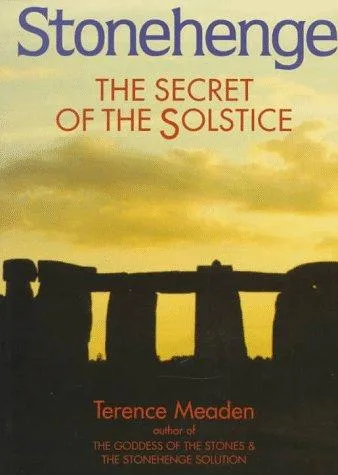
### What It Is Stonehenge, by Terence Meaden, first published in 1997, examines the ancient megalithic monument in Wiltshire, England. It approaches the site not just as a static ruin, but as a complex structure with astronomical and possibly ritualistic functions. The work scrutinizes the monument's alignment with celestial events, proposing theories on its construction and purpose based on archaeological and astronomical evidence.
### Who It's For This book is geared towards serious students of archaeoastronomy, ancient history, and prehistoric European cultures. Readers interested in the scientific and analytical approaches to understanding megalithic sites, rather than purely speculative or mythological interpretations, will find value here. It appeals to those who appreciate detailed analysis of physical evidence and its correlation with astronomical phenomena.
### Historical Context The late 20th century saw a growing interest in re-evaluating prehistoric sites through scientific lenses. Meaden's work emerged during a period where archaeoastronomy was solidifying as a discipline, challenging older theories of construction and purpose. This era also saw significant archaeological fieldwork and dating techniques improving, providing new data for researchers like Meaden to interpret and integrate into their hypotheses about structures like Stonehenge.
### Key Concepts Meaden's analysis centers on the astronomical orientations of Stonehenge, particularly its alignment with the solstices. The book discusses the challenges of interpreting the intentions of prehistoric builders and the potential for a calendrical or observational purpose. It explores the physical evidence of the monument, considering the placement of stones and their relationship to the surrounding landscape and celestial cycles.
💡 Why Read This Book?
• Understand the precise astronomical alignments of Stonehenge, specifically its solstice orientations, to grasp how prehistoric peoples tracked celestial movements. • Learn about Terence Meaden's specific theories regarding the monument's construction and its potential function as an astronomical observatory, detailed through his analysis of the sarsen stones. • Gain insight into the scientific methodology applied to prehistoric sites, moving beyond myth to a data-driven interpretation of megalithic structures.
⭐ Reader Reviews
Honest opinions from readers who have explored this book.
❓ Frequently Asked Questions
What specific astronomical event is Stonehenge primarily aligned with, according to Terence Meaden?
Terence Meaden's analysis in "Stonehenge" highlights the monument's primary alignment with the midsummer solstice sunrise. This orientation is presented as a key piece of evidence for its astronomical purpose.
When was Terence Meaden's book on Stonehenge first published?
Terence Meaden's influential work on Stonehenge was first published in 1997, contributing to the discourse on archaeoastronomy during that period.
What is archaeoastronomy?
Archaeoastronomy is the interdisciplinary study of how people in the past perceived and used astronomical phenomena and integrated them into their cultures, often through the analysis of ancient sites and artifacts.
Does the book discuss the builders of Stonehenge?
While the book focuses on the monument's function and construction, it addresses the challenges of inferring the specific intentions and knowledge of the prehistoric builders who erected Stonehenge.
What are the Aubrey Holes and why are they significant?
The Aubrey Holes are a ring of 56 pits discovered around Stonehenge. Meaden's work explores their potential role in astronomical observations or calendrical calculations, contributing to the site's interpretive complexity.
What kind of evidence does Meaden use to support his theories?
Meaden utilizes a combination of archaeological observations of the monument's physical structure, its relationship to the landscape, and detailed calculations of its alignments with celestial events like the solstices.
🔮 Key Themes & Symbolism
Celestial Alignments
The book meticulously details Stonehenge's orientation towards significant celestial events, particularly the midsummer solstice sunrise. Meaden argues that these alignments are not accidental but deliberate, suggesting a sophisticated understanding of astronomy by its builders. This theme explores the proposition that the monument functioned as a large-scale observatory or calendar, allowing prehistoric societies to track seasons and celestial cycles with considerable accuracy.
Megalithic Engineering
Meaden examines the practicalities and potential astronomical motivations behind the construction of Stonehenge. This includes analyzing the placement of the sarsen stones and bluestones, and considering how these elements were utilized in conjunction with the surrounding landscape. The focus is on the functional design of the monument, proposing that its engineering was driven by a need to observe and record astronomical phenomena.
Prehistoric Calendrics
A central concept explored is Stonehenge's role in calendrical systems. Meaden posits that the monument's structure, including features like the Aubrey Holes, facilitated the tracking of solar and possibly lunar cycles. This theme delves into how ancient peoples might have used such monumental architecture to manage time, agriculture, and ritual observances, providing a framework for understanding their worldview.
Interpreting Intent
The work grapples with the inherent difficulty of understanding the precise intentions of prehistoric peoples. Meaden's approach prioritizes observable evidence and logical deduction, aiming to move beyond speculative interpretations. This theme addresses the scholarly challenge of reconstructing past beliefs and practices from material remains, emphasizing a scientific rather than purely intuitive methodology.
💬 Memorable Quotes
“The monument's axis is set for the midsummer sunrise.”
— This statement encapsulates the core argument for Stonehenge's astronomical purpose. It suggests a deliberate design choice, aligning the structure with a specific, observable celestial event crucial to understanding its function as a potential calendar or observatory.
“The Aubrey Holes may have served calendrical purposes.”
— This highlights a specific feature of Stonehenge, the Aubrey Holes, and proposes a functional interpretation linked to timekeeping. It suggests these pits were not merely decorative but integral to the monument's role in tracking cycles.
“Meaden emphasizes the need for empirical evidence in Stonehenge studies.”
— This interpretation reflects the author's methodological stance, advocating for a scientific and evidence-based approach to understanding the monument, moving away from unsupported conjecture.
“The construction reflects a sophisticated knowledge of celestial mechanics.”
— This points to the advanced understanding of astronomical movements attributed to the builders of Stonehenge. It suggests a level of scientific insight that challenges assumptions about prehistoric capabilities.
“Stonehenge's design is intrinsically linked to solar observations.”
— This paraphrase reinforces the central thesis that the physical layout and construction of Stonehenge were intentionally designed to facilitate the observation of the sun, particularly during key solar events.
🌙 Esoteric Significance
Tradition
While not strictly adhering to a single esoteric lineage like Hermeticism or Kabbalah, Meaden's work taps into the broader esoteric interest in ancient wisdom and celestial mysteries. It aligns with traditions that seek hidden knowledge within natural phenomena and ancient structures. The book's scientific yet interpretive approach can be seen as a modern manifestation of seeking deeper meaning beyond the material, connecting contemporary analytical methods with ancient symbolic landscapes.
Symbolism
The primary symbols explored are the stones themselves, representing enduring connection to the earth and cosmos, and the celestial bodies (sun, moon), symbolizing cycles, time, and divine order. The alignment of the stones with the solstices transforms the physical monument into a grand solar clock, symbolizing humanity's ancient attempt to harmonize with cosmic rhythms and understand universal laws.
Modern Relevance
Contemporary practitioners of geomancy, sacred geometry, and archaeoastronomy continue to draw on Meaden's detailed analyses. His focus on scientific observation and the potential calendrical functions of megalithic sites informs modern approaches to understanding sacred landscapes and the built environment as expressions of cosmic principles. Thinkers exploring the intersection of ancient technology and spirituality find his work a foundational text.
👥 Who Should Read This Book
["• Students of archaeoastronomy and ancient European history seeking detailed analysis of Stonehenge's potential astronomical functions and construction.", '• Readers interested in the scientific methodology applied to prehistoric sites, looking for evidence-based interpretations beyond myth and speculation.', '• Individuals fascinated by the calendrical and observational capabilities of ancient cultures, particularly their relationship with celestial cycles.']
📜 Historical Context
Terence Meaden's "Stonehenge," first published in 1997, arrived during a period of intense scholarly interest in archaeoastronomy. The late 20th century saw a shift towards more empirical and scientific methods for analyzing prehistoric sites, moving away from earlier, more speculative theories. This era was marked by advancements in dating techniques, such as radiocarbon dating, which provided more precise timelines for monument construction. Meaden's work contributed to this scientific re-evaluation, proposing specific astronomical functions for Stonehenge. He engaged with a growing body of research that included figures like Gerald Hawkins, whose 1973 book "Stonehenge Decoded" had previously argued for astronomical alignments. Meaden's approach, however, often focused more narrowly on solar alignments and the physical structure. While not without its critics, the book was part of a broader intellectual current seeking to understand the cognitive and scientific capabilities of prehistoric societies through their monumental architecture.
📔 Journal Prompts
Stonehenge's solstice alignment: what ancient calendrical functions does this suggest?
The significance of the Aubrey Holes: how might they have been used for timekeeping?
Meaden's interpretation of megalithic engineering: what does it reveal about prehistoric capabilities?
The challenge of inferring intent: how can we approach understanding the builders' motivations?
Reconstructing prehistoric cosmologies: what role did celestial observation play?
🗂️ Glossary
Archaeoastronomy
The interdisciplinary study of how ancient cultures understood astronomical phenomena and integrated them into their societies, often through the analysis of archaeological sites and artifacts.
Megalithic
Relating to or denoting prehistoric structures, built of large undressed stones, such as Stonehenge or Hadrian's Wall.
Solstice
The time when the sun reaches its highest or lowest point in the sky at noon, marked by the longest and shortest days of the year. Stonehenge is famously aligned with the midsummer solstice sunrise.
Sarsen Stones
The large sandstone blocks used in the main circle and trilithons of Stonehenge, quarried locally in Wiltshire.
Aubrey Holes
A ring of 56 pits discovered on the inner chalk bank at Stonehenge, named after antiquary John Aubrey. Their exact purpose is debated but often linked to astronomical or calendrical functions.
Trilithon
A structure consisting of two vertical stones supporting a horizontal stone, forming a monumental doorway or arch. Two sets of trilithons form the central horseshoe at Stonehenge.
Celestial Mechanics
The branch of astronomy that deals with the motions of celestial bodies, governed by the laws of physics and mathematics. The book suggests prehistoric builders had a practical understanding of these principles.