Shadow
 71
71

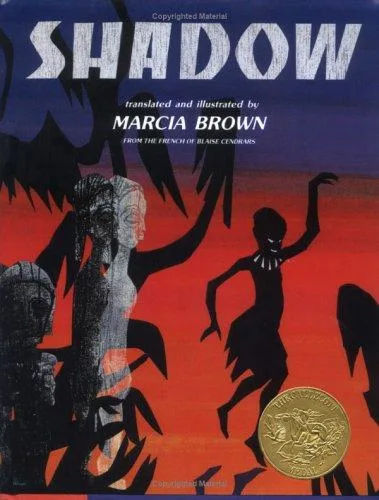
Shadow
Marcia Brown and Blaise Cendrars' 'Shadow' presents an intriguing exploration of its titular concept, but its success hinges entirely on the reader's willingness to engage with its abstract nature. The work’s strength lies in its evocative prose, which manages to imbue the mundane with a sense of mystery. A particularly effective passage describes the way a shadow can alter the perceived shape of an object, transforming it into something alien and unfamiliar, a moment that crystallizes the book's central thesis. However, the book's primary limitation is its lack of concrete narrative anchors, which can at times render the experience overly diffuse and difficult to grasp. The reliance on impressionistic descriptions, while artistically valid, may leave some readers yearning for a more defined structure or clearer thematic progression. Ultimately, 'Shadow' offers a contemplative, if occasionally elusive, meditation on perception.
📝 Description
71
### What It Is 'Shadow' is a literary work that explores the interplay of light, darkness, and perception through a unique narrative structure. Originally published in 2017, it draws upon literary traditions to present a multifaceted view of its central theme. The book doesn't offer a single, definitive perspective but rather a series of impressions and contemplations on the nature of what is seen and unseen.
### Who It's For This text will appeal to readers interested in experimental literature and philosophical inquiry. Those who appreciate works that challenge conventional storytelling and delve into abstract concepts surrounding visibility, presence, and absence will find 'Shadow' particularly engaging. It is suited for individuals who enjoy literature that prompts introspection and offers room for personal interpretation.
### Historical Context The publication of 'Shadow' in 2017 places it within a contemporary literary landscape that often revisits and recontextualizes classic themes. While its specific influences are not explicitly detailed, the work appears to engage with a lineage of avant-garde literature and philosophical explorations of perception that have roots in early 20th-century movements like Surrealism and Existentialism. Its emergence follows decades of academic and artistic discourse on the subjective nature of reality.
### Key Concepts The book centers on the concept of shadow not merely as an absence of light but as an active entity. It examines how shadows define form, create mystery, and influence our understanding of the world. The work also touches upon themes of duality – the seen versus the unseen, the known versus the unknown – and how these opposing forces shape experience and consciousness.
💡 Why Read This Book?
• Understand the philosophical concept of shadow as an active force, distinct from mere absence of light, as explored through the unique narrative of 'Shadow'. • Experience how the book's prose can transform ordinary perceptions of form and presence, offering a new way to see everyday objects and spaces. • Engage with a literary approach that echoes early 20th-century avant-garde movements, providing a specific artistic context for contemporary experimental writing.
⭐ Reader Reviews
Honest opinions from readers who have explored this book.
❓ Frequently Asked Questions
What is the core philosophical idea behind 'Shadow' by Marcia Brown and Blaise Cendrars?
The book explores shadow not as a void but as an active, formative element that defines perception and reality. It questions how the unseen influences our understanding of the visible world, drawing on literary and philosophical traditions.
When was 'Shadow' first published and who are the authors?
'Shadow' was first published in 2017. The work is attributed to Marcia Brown and Blaise Cendrars, suggesting a collaboration or a posthumous compilation.
Does 'Shadow' contain a traditional plot or characters?
No, 'Shadow' is not structured as a conventional narrative with a plot or distinct characters. It functions more as a series of meditations and literary impressions on its central theme.
What literary movements or traditions might have influenced 'Shadow'?
While not explicitly stated, the book's experimental nature and focus on perception suggest potential connections to early 20th-century movements like Surrealism and Existentialism, as well as broader philosophical inquiries into subjectivity.
Who would benefit most from reading 'Shadow'?
Readers interested in experimental literature, philosophical explorations of perception, and those who appreciate works that invite subjective interpretation will find 'Shadow' particularly rewarding.
What makes 'Shadow' different from other books on similar themes?
Its distinction lies in its unique literary execution, using evocative prose and a non-linear structure to explore the concept of shadow, offering a distinct artistic rather than purely academic approach.
🔮 Key Themes & Symbolism
The Active Nature of Shadow
This work posits shadow not as a passive absence of light but as a dynamic entity that shapes our perception of form and space. It explores how shadows define boundaries, create depth, and can even imbue objects with a sense of mystery or altered identity. The text examines instances where the shadow itself becomes the primary focus, influencing our understanding of the object casting it. This concept challenges a purely optical understanding, suggesting a deeper, almost metaphysical role for darkness and obscurity in our experience of reality.
Duality and Perception
A central theme is the interplay between opposing forces: light and shadow, presence and absence, the seen and the unseen. The book suggests that these dualities are not merely opposites but are interdependent, with each defining the other. Perception is presented as a subjective process, heavily influenced by what is not immediately apparent. The work invites readers to consider how our understanding of the world is constructed through these contrasts, and how the unrevealed aspects of reality hold as much significance as the manifest.
The Metaphysics of Visibility
Beyond a simple visual phenomenon, shadow is explored as a concept touching upon the nature of existence and consciousness. The book questions what it means for something to 'be' when it is obscured or only partially perceived. It touches upon the idea that true understanding might lie not just in direct observation but in contemplating the implied, the hidden, and the suggested. This elevates the discussion of shadow from optics to a more profound consideration of being and knowing.
Literary Form and Subjectivity
The book's structure and style are integral to its thematic exploration. By employing a non-linear, impressionistic approach, the authors mirror the subjective and fluid nature of perception itself. The deliberate avoidance of a straightforward narrative encourages readers to actively participate in constructing meaning, reflecting the idea that reality is not a fixed entity but is experienced and interpreted individually. This formal choice underscores the book's engagement with avant-garde literary traditions.
💬 Memorable Quotes
“Shadow is not merely absence, but a presence that defines.”
— This statement encapsulates the book's core argument: that shadows possess an active quality, shaping our perception of objects and spaces rather than simply being a void.
“The form is understood by its dark twin.”
— This highlights the theme of duality, suggesting that the true nature or form of something is only fully comprehended in relation to its shadow, its hidden counterpart.
“What is seen is only half the truth of what is.”
— This interpretation emphasizes the book's exploration of subjective perception and the idea that reality extends beyond immediate visibility, incorporating the implied and the unseen.
“Light reveals, but shadow conceals and creates.”
— This contrasts the perceived functions of light and shadow, presenting shadow not just as obscuring but as a creative force that can alter perception and define form.
“The edges blur where light meets its dark reflection.”
— This evokes the liminal space between light and shadow, suggesting that understanding emerges from the ambiguity and interplay of these forces, rather than from clear-cut distinctions.
🌙 Esoteric Significance
Tradition
While not explicitly aligned with a single esoteric lineage, 'Shadow' engages with themes common in Gnostic and Hermetic thought concerning hidden knowledge and the nature of reality. The Gnostic emphasis on the material world as a realm of illusion or incomplete perception resonates with the book's exploration of shadow as a definer of form. Similarly, Hermetic principles concerning correspondence ('As above, so below') can be seen in how the book suggests that the unseen (shadow) directly influences the seen (form). It departs from more dogmatic traditions by focusing on a poetic and literary exploration rather than a structured system of belief.
Symbolism
The primary symbol is, of course, the 'shadow' itself. In esoteric traditions, shadow can represent the unconscious, the hidden aspects of the self, or the veils that obscure divine light. The book uses this symbol to explore the limits of empirical knowledge, suggesting that true understanding requires acknowledging what is not immediately apparent. Light, its counterpart, symbolizes consciousness, revelation, or the manifest world. The interplay between them symbolizes the fundamental duality of existence and the process of perception.
Modern Relevance
Contemporary thinkers and practitioners exploring consciousness studies, phenomenology, and depth psychology often engage with how subjective experience shapes reality. The book's focus on perception and the power of the unseen aligns with modern artistic practices that explore liminal spaces and the psychological impact of environment. Its literary approach offers a non-academic pathway into contemplating complex ideas about reality, making it relevant for artists, writers, and anyone interested in the philosophical underpinnings of subjective experience.
👥 Who Should Read This Book
• Literary scholars and students of experimental fiction interested in post-2000 avant-garde writing, particularly those examining themes of perception and subjectivity. • Philosophically inclined readers seeking to explore abstract concepts of duality, reality, and consciousness through a poetic and non-dogmatic lens. • Artists and visual thinkers who are drawn to explorations of light, shadow, and form, and how these elements influence aesthetic and psychological perception.
📜 Historical Context
Published in 2017, 'Shadow' emerged in a contemporary literary scene that continued to grapple with existential themes and experimental forms, building on legacies from the 20th century. While its specific reception is not widely documented, its publication date places it after the peak of movements like Surrealism, which profoundly explored the subconscious and the irrational, and Existentialism, which emphasized individual freedom and the search for meaning in an absurd world. The work can be seen as participating in a broader cultural dialogue that, in the early 21st century, saw renewed interest in subjective experience and the critique of empirical reality. It implicitly engages with philosophical currents that question objective truth, a discourse that had been significantly shaped by thinkers like Jean-Paul Sartre and Albert Camus decades prior. The book's focus on the ephemeral and the subjective aligns with artistic trends that prioritize internal experience over external representation.
📔 Journal Prompts
The shadow as a definer of form, and its implications for perceived reality.
Reflect on moments where an object's shadow altered your perception of its substance.
The duality of light and shadow in constructing understanding.
How does the book's literary style mirror the subjective nature of perception?
Consider the 'unseen' elements in your own life and their formative influence.
🗂️ Glossary
Shadow
In the context of this work, shadow is conceptualized not merely as an absence of light but as an active, formative element that defines form, influences perception, and contributes to the understanding of reality.
Duality
Refers to the interplay and interdependence of opposing forces, such as light and shadow, presence and absence, seen and unseen, which are central to constructing our experience of the world.
Perception
The process by which sensory information is organized, identified, and interpreted to represent and understand the environment. This book emphasizes the subjective and often elusive nature of perception.
Form
The shape, structure, or outward appearance of an object or entity. The book explores how shadow plays a crucial role in defining and altering our perception of form.
Visibility
The state of being able to be seen. The work extends this concept to explore the metaphysical implications of what remains unseen or obscured.
Avant-garde
Innovative or experimental work in art, literature, or music, often challenging established conventions. This book is described as engaging with avant-garde literary traditions.
Subjectivity
The quality of existing in someone's mind rather than the external world; personal experience and perspective. The book highlights the role of subjectivity in understanding reality.