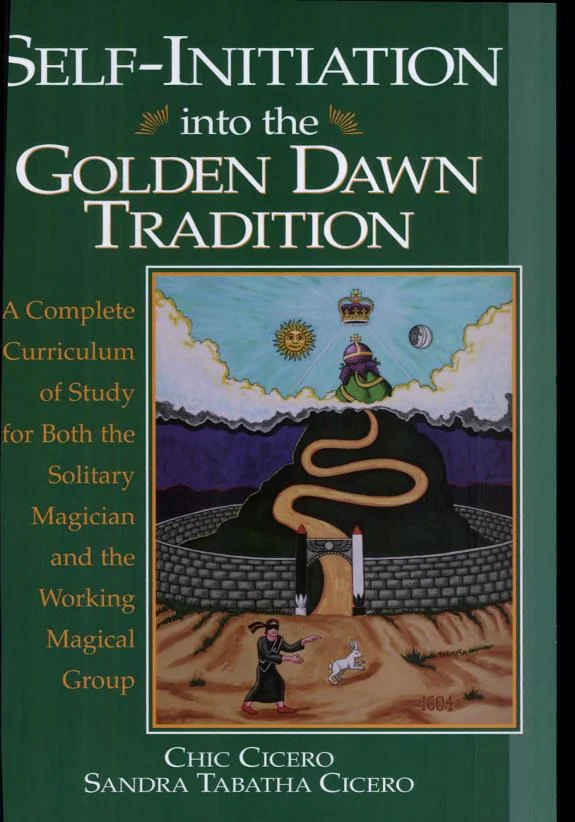
Self-Initiation Into the Golden Dawn Tradition
 72
72

Self-Initiation Into the Golden Dawn Tradition
Chic and Sandra Tabatha Cicero’s *Self-Initiation Into the Golden Dawn Tradition* is a work of significant ambition, aiming to democratize access to one of Western esotericism’s most structured magical systems. Its primary strength lies in its meticulous translation of the Golden Dawn’s initiatory framework into a format suitable for solitary practice. The detailed explanations of the Lesser Ritual of the Pentagram, the construction of talismans, and the symbolic language of the Tarot grades are particularly commendable. However, the book’s extensive nature, while thorough, can be daunting for absolute novices. The sheer volume of concepts and rituals presented requires considerable dedication and study. A particular passage that stands out is the detailed breakdown of the symbolic meanings within the Outer Court rituals, which illuminates the didactic intent behind each gesture and invocation. The Ciceros have produced an indispensable resource for the self-directed student, though it demands a serious commitment.
This manual serves as a vital bridge for those outside formal Golden Dawn temples.
📝 Description
72
### What It Is Self-Initiation Into the Golden Dawn Tradition provides a comprehensive manual for individuals seeking to engage with the foundational teachings and rituals of the Hermetic Order of the Golden Dawn. Unlike prior works that focused on theoretical aspects or historical accounts, this text offers a practical pathway for solitary practitioners. It details the core initiatory structure, spiritual development exercises, and magical techniques that define the Golden Dawn system, making it accessible outside of a formal temple structure. The authors guide readers through a series of progressive initiations, mirroring the traditional grades of the Order.
### Who It's For This book is intended for serious students of Western esotericism, occultism, and ceremonial magic who wish to study the Golden Dawn system without direct affiliation with a modern Order. It caters to both beginners seeking a structured magical education and experienced practitioners looking to integrate Golden Dawn principles into their existing work. Individuals interested in Kabbalah, Hermetic philosophy, astrology, and Tarot, as these are integral components of the Golden Dawn curriculum, will find this guide particularly relevant. It is for the self-disciplined individual committed to personal spiritual growth through magical practice.
### Historical Context The Hermetic Order of the Golden Dawn, founded in 1888, represented a pivotal moment in the revival of Western esotericism. It synthesized elements from Rosicrucianism, Kabbalah, Freemasonry, and Hermeticism, creating a highly influential magical system. Early members included prominent figures like William Wynn Westcott, Samuel Liddell MacGregor Mathers, and William Robert Woodman. The Order's teachings, though partially published, were largely intended for internal transmission through temple initiations. This book, first published in 2002, addresses the desire for direct access to these initiatory structures, which had previously been exclusive to Order members, challenging the traditional gatekeeping of such esoteric knowledge.
💡 Why Read This Book?
• Gain direct, practical instruction on the initiatory rituals of the Golden Dawn, a system largely kept secret until this publication, enabling solitary practice of its core ceremonies. • Understand the symbolic language and correspondences central to the Golden Dawn curriculum, including detailed explorations of the Tarot grades and the Lesser Ritual of the Pentagram, crucial for magical efficacy. • Acquire a structured path for personal spiritual development within a recognized esoteric lineage, beginning with the foundational knowledge presented in the Outer Court grades, offering a clear progression for dedicated students.
⭐ Reader Reviews
Honest opinions from readers who have explored this book.
❓ Frequently Asked Questions
Can I really be 'initiated' into the Golden Dawn tradition on my own?
This book provides a practical guide for self-initiation, allowing individuals to perform the symbolic rituals and internalize the teachings of the Golden Dawn tradition independently. While not a formal temple initiation, it offers a structured path for personal spiritual progression within the system's framework.
What are the core components of the Golden Dawn system covered in this book?
The book covers essential Golden Dawn elements such as the Lesser Ritual of the Pentagram, the symbolism of the Tarot grades (from 0=2ℤ to 5=6ℤ), basic ceremonial magic techniques, the construction of magical tools, and the underlying Hermetic and Kabbalistic principles.
Is this book suitable for someone with no prior magical experience?
Yes, the authors designed the book for a broad audience, including beginners. It starts with foundational concepts and progresses through the initiatory grades, offering detailed explanations and exercises that assume minimal prior knowledge of ceremonial magic.
What is the significance of the year 1888 in relation to the Golden Dawn?
The year 1888 marks the official founding of the Hermetic Order of the Golden Dawn in London by William Robert Woodman, William Wynn Westcott, and Samuel Liddell MacGregor Mathers. This was the year the Order began its formal operations and initiated its first members.
How does this book differ from other Golden Dawn literature?
Unlike purely historical or theoretical books on the Golden Dawn, this text focuses on practical application and self-initiation. It translates the Order's initiatory structure and ritual practices into a format usable by individuals studying outside of a temple setting.
What knowledge base does the Golden Dawn tradition draw upon?
The tradition synthesizes Hermeticism, Kabbalah, Rosicrucianism, Freemasonry, and ceremonial magic. This book explores these interconnected streams, providing context for the rituals and teachings presented.
🔮 Key Themes & Symbolism
Practical Initiation Structure
This work systematically outlines the initiatory grades of the Golden Dawn, from the Neophyte (0=2ℤ) through the Adeptus Minor (5=6ℤ). It provides the ritual structures, symbolic language, and practical exercises necessary for individuals to undertake these initiatory steps in a solitary context. The emphasis is on internalizing the spiritual lessons and magical principles associated with each grade, transforming the practitioner's understanding and magical abilities without reliance on a physical temple or external guru.
Hermetic Kabbalah and Tarot
Central to the Golden Dawn system is the integration of Hermetic Kabbalah and the Tarot. The book details how the Tree of Life serves as a map for spiritual ascent and how each Tarot card corresponds to specific paths and Sephiroth. This symbolic framework is applied to the initiatory grades, providing a rich interpretive lens for understanding cosmic principles, divine names, and the practitioner's own soul structure.
Ceremonial Magic Techniques
The text elaborates on the practical application of ceremonial magic as taught by the Golden Dawn. This includes detailed instructions for performing foundational rituals like the Lesser Ritual of the Pentagram (VLHR), the construction and consecration of magical tools (wand, cup, dagger, pentacle), and the development of astral projection and visualization skills. These techniques are presented as essential tools for spiritual transformation and effective magical work.
Esoteric Development
Beyond ritual mechanics, the book focuses on the inner transformation of the practitioner. It guides the student in developing willpower, astral senses, and a deeper connection to the divine. The initiatory process is framed as a journey of self-discovery and spiritual evolution, aiming to awaken latent potentials and foster a conscious relationship with the subtle forces of the universe.
💬 Memorable Quotes
“The knowledge of the Golden Dawn is not meant to be hoarded but to be lived.”
— This sentiment underscores the authors' intent to make the Golden Dawn system accessible. It suggests that the tradition's true value lies in its practical application and integration into one's life, rather than remaining an purely academic or theoretical pursuit.
“Each ritual is a key that unlocks a specific door within the psyche.”
— This highlights the psychological and spiritual efficacy of Golden Dawn rituals. It frames the ceremonies not merely as symbolic performances, but as active agents of inner transformation, designed to reveal and activate hidden aspects of consciousness.
“The Tarot grades provide a symbolic map of the soul's journey.”
— This interpretation emphasizes the use of the Tarot within the Golden Dawn initiatory structure. It suggests that the cards represent stages or archetypes encountered in the process of spiritual development and self-understanding.
“The Lesser Ritual of the Pentagram is the foundation upon which much Golden Dawn magic is built.”
— This statement points to the fundamental importance of the VLHR. It signifies that mastering this basic ritual is a prerequisite for engaging with more complex magical operations and understanding the underlying principles of energy manipulation and invocation within the tradition.
“Solitary practice requires immense self-discipline and inner resolve.”
— This acknowledges the challenges of self-initiation. It implies that while the book provides the structure, the success of the practitioner hinges on their personal commitment, perseverance, and ability to maintain focus without external oversight.
🌙 Esoteric Significance
Tradition
This work is firmly rooted in the Western Esoteric Tradition, specifically within the lineage of the Hermetic Order of the Golden Dawn. It represents a modern interpretation and adaptation of a complex magical system that synthesizes Hermetic philosophy, Kabbalah, Rosicrucianism, and ceremonial magic. The Ciceros' contribution lies in making the initiatory structure and core teachings of this lineage accessible to solitary practitioners, thereby expanding its reach beyond traditional temple-based organizations.
Symbolism
Key symbols explored include the Pentagram, fundamental to the Lesser Ritual of the Pentagram (VLHR) for invoking and banishing elemental forces; the Tree of Life, serving as a cosmic map and framework for spiritual progression through its ten Sephiroth and twenty-two paths; and the Tarot cards, which are intricately linked to the Qabalistic paths and grades, providing symbolic representations of archetypal energies and initiatory stages.
Modern Relevance
The Ciceros' approach to self-initiation continues to influence contemporary magical practitioners and students of esotericism. Schools and individuals exploring Western ceremonial magic, Qabalah, and Hermeticism often reference this text as a foundational guide. Its practical methodology makes the complex Golden Dawn system approachable, contributing to its enduring legacy in modern occult studies and spiritual development practices.
👥 Who Should Read This Book
• Aspiring ceremonial magicians seeking a structured, step-by-step initiatory curriculum that outlines core magical principles and rituals. • Students of Western Esotericism interested in understanding the historical and practical dimensions of the Hermetic Order of the Golden Dawn's teachings beyond theoretical accounts. • Solitary practitioners looking for a comprehensive manual to guide their personal spiritual development through a recognized and potent magical system.
📜 Historical Context
The Hermetic Order of the Golden Dawn emerged in London during a late Victorian era burgeoning with spiritual and occult interests, a period marked by societies like the Theosophical Society (founded 1875) and various Rosicrucian revivals. Established in 1888 by William Robert Woodman, William Wynn Westcott, and Samuel Liddell MacGregor Mathers, it synthesized Kabbalah, Hermeticism, Rosicrucianism, and ceremonial magic into a structured system of magical training. The Order’s teachings, though influential, were largely confined to its members through temple initiations. While figures like Aleister Crowley famously passed through its ranks, the Order itself fractured by the early 20th century due to internal disputes. The Ciceros' work, published over a century after the Order's founding, directly addresses the desire for access to this initiatory curriculum, which had previously been exclusive, offering a practical manual for those unable to join a contemporary Golden Dawn temple.
📔 Journal Prompts
The symbolic meaning of the Rose Cross Lamen and its personal significance.
Reflections on the elemental balancing achieved through the Lesser Ritual of the Pentagram.
The correspondence between the Tarot Major Arcana and the initiatory grades.
Personal application of the principles of the Middle Pillar exercise.
The purpose and practice of consecrating magical tools for solitary work.
🗂️ Glossary
0=2ℤ (Neophyte)
The first initiatory grade in the Golden Dawn system, representing the beginning of the magical path and foundational learning of basic principles and rituals.
5=6ℤ (Adeptus Minor)
A significant initiatory grade within the Golden Dawn structure, often considered the gateway to the 'inner order' and signifying mastery over the terrestrial plane and elemental forces.
Lesser Ritual of the Pentagram (VLHR)
A foundational ritual in Golden Dawn practice used for invoking or banishing the five elements (Spirit, Fire, Water, Air, Earth), crucial for purifying space and balancing energies.
Tree of Life
A central diagram in Kabbalah, representing the structure of the cosmos and the pathway of creation. In the Golden Dawn, it serves as a map for spiritual ascent and understanding divine attributes.
Sephiroth
The ten spheres or emanations on the Kabbalistic Tree of Life, representing different aspects of the divine and stages of creation.
Qabalah
An esoteric system of Jewish mysticism that forms a core component of the Golden Dawn's teachings, focusing on the divine nature, creation, and spiritual development.
Talismans
Magical objects imbued with specific energies or intentions, often created through ritual consecration, used for protection, attraction, or manifestation.