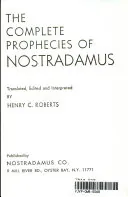
Secrets of the Great Pyramid

 73
73

Secrets of the Great Pyramid
Tompkins and Stecchini’s *Secrets of the Great Pyramid* is a sprawling, ambitious undertaking that attempts to synthesize esoteric traditions with hard data concerning the Giza plateau. The book’s strength lies in its exhaustive compilation of disparate sources, from ancient papyri to geological strata, painting a picture of the pyramid as a nexus of lost knowledge. The authors meticulously detail the mathematical and astronomical correlations they perceive, particularly concerning the pyramid's dimensions and their relationship to terrestrial and celestial constants. However, the work often strains credulity, particularly in its leaps from correlation to causation, and its reliance on interpretations that lie far outside accepted academic discourse. The extensive discussion of the pyramid's alleged connection to a global flood narrative and Atlantean origins, while fascinating, borders on pure speculation. Despite these limitations, the book remains a significant text for those exploring the more unconventional theories surrounding ancient Egypt, offering a dense counterpoint to mainstream Egyptology.
📝 Description
73
### What It Is Secrets of the Great Pyramid, first published in 1997 by Peter Tompkins and Livio Catullo Stecchini, presents a comprehensive and controversial re-evaluation of the Great Pyramid of Giza. It moves beyond standard Egyptology to explore its potential as a repository of ancient knowledge, advanced technology, and sophisticated astronomical and mathematical systems. The authors compile evidence from diverse sources, including ancient texts, archaeological findings, and geological surveys, to construct a case for the pyramid’s builders possessing a wisdom far exceeding conventional historical understanding.
### Who It's For This work is intended for serious students of ancient civilizations, esoteric sciences, and alternative history. Readers interested in the possibilities of lost ancient technologies, advanced mathematics in antiquity, and the intersection of myth, science, and spirituality will find substantial material. It appeals to those who question established narratives and seek a deeper, more complex understanding of humanity's past, particularly concerning monumental architecture and its potential hidden purposes.
### Historical Context The book emerged during a period of growing interest in fringe archaeology and ancient mysteries, a trend exemplified by authors like Graham Hancock and Erich von Däniken. While mainstream Egyptology focused on dynastic timelines and funerary practices, Tompkins and Stecchini contributed to a counter-narrative suggesting the pyramids held purposes beyond royal tombs, potentially linked to global knowledge systems or even extraterrestrial influence. Their work challenged conventional dating and interpretations prevalent in the late 20th century.
### Key Concepts Central to the book is the idea that the Great Pyramid embodies a sophisticated system of weights, measures, and astronomical alignments that predate known civilizations. The authors propose that its dimensions and construction encode precise data about Earth’s geography, celestial cycles, and even the speed of light. They also explore theories about a global flood and a lost Atlantean civilization, suggesting the pyramid serves as a Noah's Ark of knowledge, preserved from a cataclysmic past.
💡 Why Read This Book?
• Gain an understanding of the proposed geometric and astronomical encoding within the Great Pyramid's dimensions, as detailed in chapters discussing its proportional relationships to Earth measurements. • Explore the authors' theory linking the pyramid's construction to a pre-diluvian global civilization and a lost Atlantean epoch, offering a radical departure from standard historical timelines. • Examine the extensive compilation of ancient texts and geological evidence presented by Tompkins and Stecchini, which they argue supports a sophisticated, pre-Egyptian understanding of science and cosmology.
⭐ Reader Reviews
Honest opinions from readers who have explored this book.
❓ Frequently Asked Questions
What specific alternative measurements does the book suggest for the Great Pyramid?
The book explores theories suggesting the pyramid's measurements encode units like the 'sacred cubit' and relate to the Earth's circumference and polar radius, proposing a sophisticated metrology far beyond simple construction needs.
Who were Peter Tompkins and Livio Catullo Stecchini?
Peter Tompkins was an author known for esoteric subjects, while Livio Catullo Stecchini was an Italian historian specializing in ancient metrology and economics, bringing a scholarly, albeit unconventional, perspective.
Does the book propose a specific purpose for the Great Pyramid?
Yes, it suggests the pyramid served multiple purposes beyond a tomb, including acting as an astronomical observatory, a repository of ancient knowledge, and a geodetic marker for Earth's dimensions.
What evidence does the book cite for a lost global civilization?
The authors reference global flood myths, ancient megalithic structures worldwide, and proposed advanced mathematical constants within the pyramid to suggest a common, technologically advanced civilization predating known historical records.
How does this book differ from standard Egyptological accounts?
Unlike Egyptology, which focuses on dynastic history and funerary rites, this book posits the pyramid’s construction and dimensions reveal advanced scientific knowledge and a purpose linked to universal constants and lost ancient wisdom.
When was Secrets of the Great Pyramid first published?
The original publication date for *Secrets of the Great Pyramid* by Peter Tompkins and Livio Catullo Stecchini was 1997.
🔮 Key Themes & Symbolism
The Pyramid as a Scientific Instrument
The work posits the Great Pyramid was not merely a tomb but a sophisticated instrument designed to record and transmit precise scientific data. Tompkins and Stecchini meticulously detail how the pyramid's dimensions, angles, and geographical placement allegedly encode information about Earth's circumference, polar radius, and astronomical cycles. They propose that the builders possessed advanced knowledge of geometry, astronomy, and metrology, using units of measurement that reflect a global standard predating recorded history, suggesting a scientific purpose far beyond its perceived function by mainstream Egyptology.
Lost Pre-Diluvian Civilization
A central thesis is the existence of a highly advanced global civilization that flourished before a catastrophic flood event. The authors interpret the Great Pyramid as a surviving repository of this lost knowledge, a Noah's Ark of wisdom and technology preserved from annihilation. They draw parallels between the pyramid's alleged design principles and similar megalithic sites worldwide, suggesting a common origin and a shared scientific understanding among these ancient cultures, all pointing to a unified, antediluvian world order.
Esoteric Metrology and Cosmology
The book delves into the concept of 'esoteric metrology,' arguing that ancient systems of weights and measures were imbued with cosmological and spiritual significance. Tompkins and Stecchini examine various ancient cubits and units, proposing they are not arbitrary but are derived from natural constants and celestial observations. This perspective suggests that ancient construction was guided by a sacred geometry and a cosmology that integrated the physical world with divine principles, viewing the pyramid as a microcosm of the universe.
Challenging Historical Timelines
Tompkins and Stecchini fundamentally challenge conventional chronologies of ancient Egypt and human civilization. By suggesting the pyramid's construction predates the accepted dynastic periods by millennia and linking it to a lost Atlantean or pre-diluvian epoch, they propose a radical revision of history. This temporal displacement allows for the possibility of advanced civilizations and technologies that are otherwise dismissed by mainstream archaeology, positioning the pyramid as evidence of a forgotten Golden Age.
💬 Memorable Quotes
“The pyramid is a monument to the knowledge of a lost world.”
— This statement encapsulates the book's core argument that the Great Pyramid is not just an ancient structure but a vessel of wisdom from a civilization that predates our current historical understanding, possibly lost to a cataclysm.
“Its dimensions encode the very measure of the Earth.”
— This highlights the authors' assertion that the pyramid's size and proportions are not accidental but were deliberately designed to reflect precise geographical and astronomical data, functioning as a geodetic and cosmic map.
“The builders possessed a science we have yet to rediscover.”
— This interpretation points to the authors' belief in the advanced technological and scientific capabilities of the pyramid's creators, suggesting their understanding of physics, mathematics, and engineering surpassed modern achievements in certain respects.
“Ancient myths speak of a universal flood that erased a great civilization.”
— This paraphrased concept refers to the authors' use of global flood narratives as evidence for a cataclysm that destroyed a preceding advanced culture, with the pyramid serving as a testament to its existence.
“The sacred cubit relates terrestrial and celestial measures.”
— This interpretation reflects the book's exploration of ancient units of measurement, suggesting that the 'sacred cubit' was intentionally designed to bridge the physical dimensions of Earth with cosmic constants and heavenly cycles.
🌙 Esoteric Significance
Tradition
The work draws heavily from Hermetic and Gnostic traditions, particularly in its emphasis on sacred geometry, cosmic order, and the idea of hidden knowledge preserved from a primordial, enlightened age. It aligns with the Hermetic principle of 'As Above, So Below,' suggesting the Great Pyramid acts as a terrestrial reflection of celestial truths. While not strictly Kabbalistic, its focus on numerical and geometrical symbolism echoes numerological aspects found within Kabbalistic studies, viewing the structure as a manifestation of divine mathematics.
Symbolism
The pyramid itself is the primary symbol, representing not only a tomb or temple but a microcosm of the universe, a map of cosmic knowledge, and a repository of lost wisdom. Its precise orientation to the cardinal directions symbolizes order and alignment with cosmic forces. The authors also interpret the alleged 'sacred cubit' as a symbol of a lost universal language and measurement system, connecting humanity, Earth, and the heavens through divine proportion and mathematics.
Modern Relevance
Contemporary proponents of ancient astronaut theories, sacred geometry, and alternative archaeology frequently cite Tompkins and Stecchini's research. Thinkers exploring consciousness, ancient technologies, and non-linear historical models often reference the book's hypotheses. Its influence can be seen in online communities dedicated to Giza plateau mysteries and in authors who propose sophisticated pre-diluvian civilizations, continuing the dialogue on the pyramid's potential as a repository of forgotten scientific and spiritual knowledge.
👥 Who Should Read This Book
• Students of esoteric history and ancient mysteries seeking to understand theories that challenge conventional timelines and interpretations of monumental structures like the Great Pyramid. • Researchers interested in sacred geometry, ancient metrology, and the possibility of lost advanced civilizations, who will find extensive data and speculative connections presented. • Skeptics of mainstream Egyptology looking for detailed arguments and compiled evidence supporting the view of the pyramid as a repository of advanced scientific and cosmological knowledge from a forgotten era.
📜 Historical Context
Published in 1997, *Secrets of the Great Pyramid* emerged within a late 20th-century intellectual climate receptive to alternative historical theories and ancient mysteries, partly fueled by works like Erich von Däniken's *Chariots of the Gods?* (1968). While mainstream Egyptology, represented by figures like Zahi Hawass, continued to emphasize dynastic origins and funerary purposes for the pyramids, Tompkins and Stecchini contributed to a counter-current that posited advanced, pre-dynastic civilizations. Their work engaged with theories of lost continents and global catastrophes, aligning with a broader interest in pseudoarchaeology and speculative history. This approach stood in contrast to the strictly empirical methodologies favored by academic archaeology, positioning the book as a significant text within the esoteric and fringe history communities, challenging established chronologies and interpretations of ancient Egyptian civilization.
📔 Journal Prompts
The precise dimensions of the Great Pyramid and their alleged encoding of Earth's measurements.
The concept of a pre-diluvian civilization and its connection to the pyramid's construction.
The proposed function of the Great Pyramid as a scientific instrument rather than a tomb.
The significance of the 'sacred cubit' in bridging terrestrial and celestial knowledge.
The implications of advanced mathematical and astronomical knowledge in ancient Egypt.
🗂️ Glossary
Sacred Cubit
A unit of measurement proposed by the authors, believed to be derived from natural constants and celestial observations, used to encode scientific and cosmological data within the Great Pyramid's dimensions.
Pre-Diluvian Civilization
A hypothetical advanced civilization that existed before a global flood event, believed by the authors to have built the Great Pyramid and other megalithic structures.
Geodetic Marker
A structure or monument intended to precisely mark geographical locations or record Earth's dimensions, a function the authors attribute to the Great Pyramid.
Esoteric Metrology
The study of ancient systems of measurement that are believed to contain hidden, spiritual, or cosmological significance beyond their practical application.
Sacred Geometry
The belief that certain geometric forms and proportions possess divine or mystical significance, often used in the design of religious and ceremonial structures.
The Great Pyramid
The largest of the three pyramids in Giza, Egypt, which Tompkins and Stecchini re-interpret not as a tomb but as a complex scientific and cosmological instrument.
Atlantean Epoch
A period associated with the mythical island of Atlantis, often invoked in esoteric literature to represent a highly advanced, lost civilization.