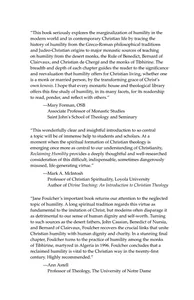
Scritti ermetici in copto

 80
80

Scritti ermetici in copto
Alberto Camplani's Scritti ermetici in copto offers a rigorous academic engagement with the intersection of Hermetic thought and early Coptic Christian writings. The strength of the work lies in its meticulous dissection of Coptic manuscripts, revealing subtle continuities and transformations of philosophical concepts. Camplani's focus on the figure of Sophia, for example, provides a compelling case study of how pre-Christian wisdom traditions were integrated and adapted. However, the text's dense academic prose and reliance on specialized Coptic scholarship may present a barrier for non-specialists. A particular passage detailing the reception of the Poimandres in a Coptic context highlights the book's value for understanding cross-cultural transmission of ideas. While invaluable for specialists, its accessibility is limited. The work serves as a significant, albeit specialized, contribution to understanding ancient religious syncretism.
📝 Description
80
### What It Is Scritti ermetici in copto presents a scholarly examination of Coptic texts pertaining to Hermeticism. Published in 2000 by Alberto Camplani, this work offers an in-depth analysis of early Christian and Gnostic writings that exhibit Hermetic influences or parallel certain Hermetic philosophical concepts. It is not a translation of Hermetic texts themselves, but rather an academic study of their reception and transformation within a specific early Christian milieu.
### Who It's For This volume is aimed at scholars of ancient religion, Coptic studies, Gnosticism, and the history of Hermeticism. It is particularly suited for those interested in the complex interplay between pagan philosophical traditions and emergent Christian thought in late antiquity. Readers should possess a background in classical languages and religious studies to fully appreciate the detailed textual analysis.
### Historical Context The early Christian centuries were a period of intense intellectual and theological ferment, where various philosophical schools, including Hermeticism, interacted with nascent Christian doctrines. The discovery and study of Coptic texts, particularly from the Nag Hammadi library, have shed light on Gnostic and other heterodox Christian movements that often incorporated or reinterpreted pagan philosophical ideas. Camplani's work situates itself within this ongoing scholarly effort to understand the syncretic nature of ancient religious thought.
### Key Concepts The book explores the concept of Sophia (Wisdom) as it appears in both Hermetic and Gnostic traditions, examining how this figure is conceptualized and its role in cosmic narratives. It also investigates the interpretation of key Hermetic cosmological ideas, such as the divine Mind and the nature of creation, as they are refracted through Coptic Christian lenses. The textual analysis focuses on specific Coptic manuscripts that preserve these syncretic ideas.
💡 Why Read This Book?
• Gain a nuanced understanding of how Hermetic philosophical concepts, such as the nature of divine Mind, were reinterpreted within early Coptic Christian texts, moving beyond superficial comparisons. • Explore the specific academic context of Coptic studies and ancient religious history, as illuminated by Camplani's 2000 publication, situating current research. • Analyze the complex figure of Sophia as presented in both Hermetic and Coptic traditions, offering a concrete example of syncretism in late antiquity.
⭐ Reader Reviews
Honest opinions from readers who have explored this book.
❓ Frequently Asked Questions
What is the primary focus of Scritti ermetici in copto?
The book focuses on the scholarly analysis of Coptic texts that demonstrate the influence or parallel development of Hermetic philosophical ideas within early Christian and Gnostic contexts.
Who is Alberto Camplani and what is his contribution?
Alberto Camplani is an academic scholar whose 2000 publication, Scritti ermetici in copto, contributes detailed textual analysis to the study of ancient religious syncretism.
Are there translations of Hermetic texts in this book?
No, this book is not a collection of translations. It is an academic study examining how Hermetic concepts appear within existing Coptic Christian literature.
What specific historical period does the book cover?
The book primarily deals with the period of late antiquity, focusing on the early Christian centuries when Hermeticism and Gnosticism were interacting with emerging Christian doctrines.
What is the significance of Coptic texts in relation to Hermeticism?
Coptic texts offer insights into how pagan philosophical and religious ideas, including those from Hermeticism, were absorbed, transformed, or debated by early Christian communities in Egypt.
What kind of reader would benefit most from Scritti ermetici in copto?
Scholars and advanced students of ancient religions, Coptic language, Gnosticism, and Hermeticism would find this book most beneficial due to its specialized, textual focus.
🔮 Key Themes & Symbolism
Sophia in Coptic Traditions
The work meticulously examines the concept of Sophia (Wisdom) as it manifests in Coptic Christian literature, drawing parallels and distinctions with her representation in Hermetic cosmology. Camplani analyzes how this figure, often a divine emanation or intermediary, is portrayed in creation myths and salvific narratives within texts originating from the early Christian period in Egypt. The book offers a deep dive into the theological and philosophical underpinnings of these portrayals, highlighting the syncretic nature of thought in late antiquity.
Hermetic Influence on Early Christianity
Scritti ermetici in copto investigates the textual evidence for the transmission and adaptation of Hermetic philosophical ideas into early Christian discourse, specifically through Coptic writings. It addresses how concepts like the divine Mind (Nous), the nature of the material world, and the path to spiritual ascent were integrated or contested by authors in the nascent Christian milieu. This theme explores the dynamic intellectual exchange that characterized the religious landscape of the Roman Empire.
Coptic Textual Analysis
The core of Camplani's contribution lies in its detailed philological and theological analysis of specific Coptic manuscripts. The book focuses on interpreting the language and meaning within these ancient documents to uncover layers of philosophical and religious influence, particularly Hermetic and Gnostic. This theme underscores the importance of primary source material in understanding the development of esoteric traditions.
Syncretism in Late Antiquity
This theme underpins the entire work, demonstrating how different religious and philosophical systems, namely Hermeticism and early Christianity, did not develop in isolation. The Coptic texts studied serve as crucial evidence for the syncretic processes at play, where ideas were borrowed, transformed, and synthesized to create new expressions of spiritual and intellectual thought during the period of late antiquity.
💬 Memorable Quotes
“The reception of Hermetic ideas in Coptic literature.”
— This highlights the book's central argument: that Coptic texts are vital for understanding how pre-Christian philosophical frameworks, like Hermeticism, were integrated into early Christian thought systems.
“The figure of Sophia as a bridge between traditions.”
— This points to a key analytical thread in Camplani's work, focusing on how personifications of wisdom served as a locus for syncretic theological development in late antiquity.
“Textual evidence for philosophical parallels.”
— This emphasizes the scholarly methodology employed, focusing on the close reading of Coptic manuscripts to identify and interpret specific instances of Hermetic influence or conceptual resonance.
“The transformation of pagan concepts in Christian discourse.”
— This concept encapsulates the book's exploration of how ancient philosophical ideas were not merely copied but actively reshaped and recontextualized within the emerging Christian theological landscape.
“Gnostic interpretations of Hermetic cosmology.”
— This suggests a specific area of focus within the book, examining how Gnostic cosmologies, often expressed in Coptic, engaged with or diverged from established Hermetic views of the universe.
🌙 Esoteric Significance
Tradition
This work is situated within the scholarly analysis of Hermetic and Gnostic traditions, particularly as they intersect with early Christianity in Egypt. It explores how elements of the Hermetic corpus, a body of ancient Greek writings attributed to Hermes Trismegistus, were interpreted and integrated into Coptic Christian texts. The book examines the lineage of esoteric wisdom that sought to bridge the divine and human realms, and how this lineage was adapted by Christian Gnostic communities.
Symbolism
Key symbols explored include Sophia (Wisdom), often depicted as a divine being or emanation crucial for creation and salvation, and the concept of the divine Mind (Nous). Camplani analyzes how these motifs, prevalent in Hermeticism, were recontextualized within Coptic Christian narratives, serving as focal points for understanding the nature of reality, the origins of the cosmos, and the path to spiritual knowledge.
Modern Relevance
Contemporary scholars of comparative religion, Gnosticism, and Western esotericism continue to draw upon the detailed textual analyses presented in Scritti ermetici in copto. The book's insights into the historical syncretism of late antiquity inform modern discussions on the fluid boundaries between philosophical traditions and the ways in which esoteric ideas are transmitted and transformed across cultures and eras.
👥 Who Should Read This Book
• Scholars of Coptic language and literature seeking to understand its philosophical and religious dimensions beyond purely theological contexts. • Researchers of Gnosticism and early Christian movements interested in the specific textual evidence for Hermetic influences in Egypt. • Students of Hermeticism wanting to explore the reception history of its concepts in non-traditional, early Christian settings.
📜 Historical Context
Published in 2000, Alberto Camplani's Scritti ermetici in copto emerged during a period of sustained scholarly interest in the Nag Hammadi library and other Coptic discoveries, which had revolutionized the study of Gnosticism and early Christian heterodoxies since the mid-20th century. This era saw intensified efforts to understand the complex intellectual currents of late antiquity, a time marked by the dynamic interaction between Hellenistic philosophy, Hermeticism, and the burgeoning Christian faith. Camplani's work directly engages with the scholarship that followed figures like Walter Till and James M. Robinson, who championed the study of these Coptic texts. The book contributes to a broader academic conversation about religious syncretism, often contrasted with more exclusivist theological claims arising within dominant Christian schools of thought.
📔 Journal Prompts
The concept of Sophia in Coptic texts.
Hermetic cosmology as reflected in early Christian writings.
Identifying textual parallels between Hermeticism and Coptic literature.
The role of the divine Mind (Nous) in ancient Egyptian Christian thought.
Analyzing syncretic elements in late antique religious discourse.
🗂️ Glossary
Coptic
The final stage of the Egyptian language, written using a modified Greek alphabet. Coptic texts are crucial for understanding early Christianity and Gnosticism in Egypt.
Hermeticism
A religious, philosophical, and esoteric tradition based on writings attributed to Hermes Trismegistus, dealing with cosmology, alchemy, astrology, and divine wisdom.
Gnosticism
A complex and diverse set of religious movements in late antiquity characterized by a belief in a transcendent God and the existence of a divine spark within humans that can achieve salvation through secret knowledge (gnosis).
Sophia
Greek for 'Wisdom.' In Gnostic and some Hermetic traditions, Sophia is often a divine emanation or figure central to creation and salvation, sometimes depicted with complex mythologies.
Nous
Greek for 'Mind' or 'Intellect.' In Hermetic and Gnostic thought, Nous often refers to the divine intellect, the source of creation, or the highest aspect of the human mind.
Syncretism
The merging or blending of different, often contradictory, religious or philosophical beliefs, symbols, and practices.
Late Antiquity
The historical period generally spanning from the 3rd to the 8th century CE, characterized by significant religious, cultural, and political transformations in the Mediterranean world.