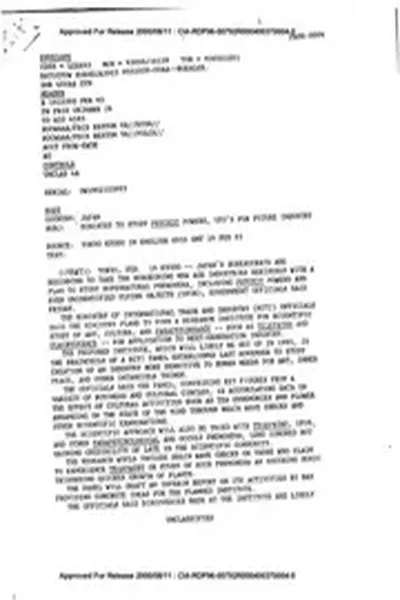
Reiki
 77
77

Reiki
Pamela Miles's "Reiki" offers a grounded perspective on a practice often shrouded in nebulous claims. Her strength lies in demystifying Reiki, presenting it as an accessible form of conscious presence and energetic awareness rather than arcane magic. The emphasis on intention, particularly in the section discussing the practitioner's inner state, is a significant contribution. However, the book could benefit from a more robust engagement with the historical debates surrounding Reiki's Western adaptations; it tends to present a singular, idealized lineage. The repeated focus on "conscious presence" is well-articulated, but at times feels like a rephrasing of common mindfulness tenets, potentially underselling the unique energetic mechanics often associated with Reiki. Nevertheless, Miles succeeds in framing Reiki as a spiritual discipline applicable to daily life. For those seeking a clear, intention-focused introduction to Reiki's spiritual dimension, this work provides a solid foundation.
📝 Description
77
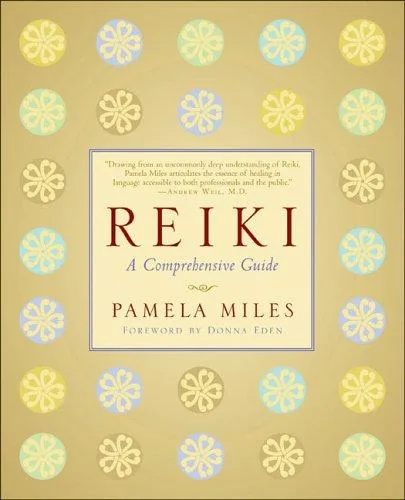
Pamela Miles's 2008 book clarifies Reiki as a spiritual discipline, not just a healing modality.
Pamela Miles's 2008 book presents Reiki as a practice rooted in spiritual discipline, intended to cultivate presence and intention. It is accessible to newcomers to esoteric concepts, detailing Reiki's origins and underlying philosophy. The work moves beyond simple interpretations to discuss its potential for personal growth and awareness of subtle energies.
This book suits individuals interested in self-development and energy work, whether they seek practical stress reduction techniques or are drawn to the spiritual side of healing. Beginners will find clear explanations, while those familiar with esoteric ideas might find new ways to integrate Reiki into their spiritual paths. It addresses anyone curious about how focused awareness can affect personal states.
Miles's "Reiki" appeared in 2008 when alternative healing gained traction. Since its introduction to the West by Hawayo Takata in the early 20th century, Reiki had developed many interpretations. Miles's book emphasizes the spiritual and meditative aspects, distinguishing it from purely physical healing methods.
Reiki, introduced to the West in the early 20th century, evolved considerably before Pamela Miles's 2008 publication. Her work places itself within this evolving tradition, focusing on the practice's spiritual and meditative dimensions. It distinguishes itself from interpretations that emphasize only physical or somatic healing. Miles's approach centers on cultivating conscious presence and intention, aligning with broader spiritual development traditions that use focused awareness for well-being.
💡 Why Read This Book?
• Learn to cultivate "conscious presence" as a foundation for energetic work, understanding how focused awareness, as detailed in the early chapters, can be applied beyond hand placements for personal well-being. • Grasp the pivotal role of "intention" in Reiki practice, recognizing how a practitioner's inner state, a concept explored in the sections on ethical principles, influences the energetic exchange. • Discover how the "five Reiki principles" can serve as practical daily guidance for fostering compassion and self-awareness, offering a structured approach to integrating spiritual discipline into everyday life.
⭐ Reader Reviews
Honest opinions from readers who have explored this book.
❓ Frequently Asked Questions
When was Pamela Miles's book 'Reiki' first published?
Pamela Miles's book 'Reiki' was first published in 2008, a period when interest in energy healing modalities had significantly grown in Western contexts.
What is the core philosophy of Reiki presented by Pamela Miles?
Miles presents Reiki as a practice of conscious presence and intention, emphasizing its spiritual discipline aspect over purely physical healing, accessible to all.
Are the 'five Reiki principles' explained in the book?
Yes, the book explains the 'five Reiki principles,' framing them as ethical and meditative guidelines for daily reflection and cultivating specific virtues.
Is this book suitable for beginners with no prior knowledge of energy work?
Absolutely. The book provides clear explanations for beginners exploring energy practices, while also offering new perspectives for those with existing esoteric knowledge.
How does Miles's approach to Reiki differ from other interpretations?
Miles emphasizes the spiritual and meditative dimensions of Reiki, focusing on conscious presence and intention, differentiating it from purely somatic or physically-focused approaches.
What historical figure is credited with introducing Reiki to the West?
Hawayo Takata is credited with introducing Reiki to the West in the early 20th century, paving the way for its subsequent development and adaptation.
🔮 Key Themes & Symbolism
Conscious Presence
This theme underscores the book's approach to Reiki as a practice of being fully present, not just physically but energetically and mentally. Miles suggests that cultivating this state of awareness is fundamental to the effectiveness of Reiki, enabling a deeper connection with oneself and the energy being channeled. It's about developing an intentional stillness that allows for subtle energetic shifts to occur, transforming the practitioner's internal landscape as much as potentially influencing external states.
Intention as a Healing Force
Miles highlights that the practitioner's focused intention is a crucial component of Reiki. This isn't about forceful will, but rather a compassionate, clear direction of energy. The book explores how setting a positive and supportive intention prior to and during a Reiki session can shape the energetic exchange, fostering a more profound and beneficial outcome for both giver and receiver. It positions intention as a conscious act of co-creation in the healing process.
The Five Reiki Principles
Central to the spiritual discipline of Reiki, the five principles serve as a framework for ethical conduct and personal development. Miles expounds on each principle, presenting them not as rigid rules, but as contemplative guides for living a more balanced and harmonious life. These principles encourage a daily practice of self-reflection, fostering gratitude, and cultivating a sense of peace and integrity, thereby reinforcing the spiritual foundation of the Reiki practice.
Energetic Flow and Balance
The book explains Reiki as a means of facilitating the natural flow of life force energy, often referred to as 'ki' or 'chi'. Miles describes this energy as inherent and abundant, with Reiki practice serving to clear blockages and restore balance. The focus is on working with this subtle energy to promote well-being, emphasizing that it is a natural phenomenon to be supported rather than a force to be manipulated, leading to holistic restoration.
💬 Memorable Quotes
Direct passages from the work, attributed to the author.
“Reiki is a spiritual discipline. It is not just a healing modality.”
— This statement reframes Reiki from a simple technique to a deeper practice involving spiritual growth and self-awareness. It suggests that the benefits extend beyond the physical, encompassing personal transformation and a more conscious way of being.
“Conscious presence is the foundation of all effective Reiki practice.”
— This emphasizes that being fully aware and centered during Reiki sessions is paramount. It implies that intention and mindful attention are as critical as the physical hand placements, guiding the energy flow effectively.
“The intention behind the practice is as vital as the technique itself.”
— This highlights the power of the practitioner's mental and emotional state. A clear, compassionate intention can significantly enhance the energetic exchange and the perceived benefits of Reiki.
“The five Reiki principles offer a path to living with gratitude and peace.”
— This interpretation focuses on the ethical and contemplative aspects of the principles. They are presented not merely as guidelines for practice, but as tools for cultivating a more serene and appreciative daily existence.
“Energetic balance is a natural state that Reiki helps to restore.”
— This suggests that Reiki works by removing impediments to the body's natural energetic harmony. It positions the practice as a facilitator of inherent wellness rather than an external imposition of energy.
🌙 Esoteric Significance
Tradition
Miles's work situates Reiki within a broader spiritual discipline, drawing parallels to contemplative practices found across various traditions that emphasize focused intention and energetic awareness. While not strictly aligning with a single Western esoteric lineage like Hermeticism or Kabbalah, it shares common ground with the emergent field of subtle energy studies that gained traction in the late 19th and early 20th centuries, influenced by movements like Theosophy and the growing interest in Eastern philosophies. The emphasis on 'life force energy' and its manipulation for healing aligns with vitalistic philosophies prevalent in esoteric thought.
Symbolism
The primary symbolic motif is the "conscious presence" itself, representing a state of awakened awareness and centeredness that acts as a conduit for healing energy. Hand placements, while practical, also symbolize connection and compassionate touch, acting as points of energetic focus. The "five Reiki principles" function as symbolic anchors for ethical and spiritual development, representing ideals like living in the moment, practicing gratitude, and cultivating non-judgment, each serving as a guiding star for the practitioner's inner journey.
Modern Relevance
Miles's approach to Reiki as a spiritual discipline and a practice of conscious presence remains highly relevant today. It speaks to contemporary interest in mindfulness, stress reduction, and integrated well-being. Therapists, coaches, and individuals seeking non-pharmacological methods for managing anxiety and promoting emotional balance often turn to such grounded approaches to energy work. Her emphasis on intention finds echoes in modern concepts of positive psychology and manifestation, albeit framed within a more traditional energetic context.
👥 Who Should Read This Book
• Individuals new to energy healing modalities seeking a clear, non-dogmatic introduction to Reiki, particularly those interested in its spiritual and meditative dimensions. • Experienced practitioners of other energy work or mindfulness techniques looking to understand Reiki's unique focus on conscious presence and intention. • Personal development enthusiasts interested in practical methods for cultivating inner peace, reducing stress, and fostering a greater sense of well-being through a structured spiritual discipline.
📜 Historical Context
Pamela Miles's "Reiki" arrived in 2008, a significant period for alternative and complementary therapies. The early 21st century saw a burgeoning public interest in mind-body practices, energy work, and holistic health, fueled by a growing dissatisfaction with purely conventional medical approaches for chronic stress and illness. Reiki, introduced to the West by Hawayo Takata in the mid-20th century, had by this time diversified considerably, spawning numerous schools and interpretations. Miles's work emerges within this milieu, emphasizing the spiritual underpinnings and meditative aspects of the practice, differentiating itself from the more purely somatic or therapeutic interpretations that were also gaining prominence. While figures like Mikao Usui established the system in Japan, its Western reception involved significant adaptation. Miles's contribution lies in presenting a clear, intention-focused framework that sought to reconnect the practice with its spiritual roots amidst a rapidly expanding and sometimes commercialized landscape.
📔 Journal Prompts
Your experience of cultivating conscious presence during a moment of daily activity.
The intention you most readily bring to your interactions, and how it shapes them.
Reflecting on the five Reiki principles and their personal application.
An instance where you felt an energetic flow or imbalance, and your awareness of it.
How the concept of 'life force energy' manifests in your understanding of well-being.
🗂️ Glossary
Reiki
A Japanese practice for stress reduction and relaxation that also promotes healing. It is described as a spiritual discipline involving channeling 'life force energy' through focused intention and presence.
Conscious Presence
A state of heightened awareness and focused attention on the present moment, both internally and externally. It is presented as foundational to effective Reiki practice.
Intention
The focused, compassionate will or aim behind an action. In Reiki, it is considered a vital component that directs and shapes the energetic exchange.
Life Force Energy
The vital energy that animates all living beings. In Reiki, it is understood as a universal, abundant energy that can be channeled to promote balance and healing.
Five Reiki Principles
A set of ethical and spiritual guidelines intended to foster personal growth, peace, and integrity. They serve as contemplative tools for daily practice.
Energetic Balance
A state of harmony and free flow within an individual's energy system. Reiki is presented as a method to help restore this natural balance.
Hawayo Takata
A Japanese-American woman credited with bringing Reiki to the Western world, beginning in the mid-20th century, and establishing its initial framework outside of Japan.
🔮 Readers Also Liked
Browse all →








More by Pamela Miles
All books →
More Free Occult Philosophy Books
View all →