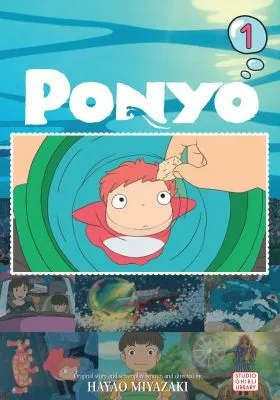
Ponyo
 79
79

Ponyo
Miyazaki’s "Ponyo" presents a deceptively simple tale that unfolds with the elemental force of the ocean it depicts. The animation, a hallmark of Studio Ghibli, is nothing short of breathtaking, particularly in its rendering of aquatic environments and Ponyo's fluid transformations. The film's strength lies in its unadorned depiction of purity and desire; Ponyo's singular focus on becoming human and her bond with Sosuke is genuinely affecting. However, the narrative occasionally strains under the weight of its own magical mechanics, particularly the explanation of the world-ending magical surge, which feels somewhat less integrated than the story's core emotional arc. A passage where Sosuke calmly accepts Ponyo's magical presence, despite her obvious non-human form, highlights the film's remarkable ability to ground the fantastical in emotional truth. Ultimately, Ponyo is a visually stunning, emotionally resonant fable that, despite minor narrative fumbles, captures the wonder of childhood and the power of unconditional connection.
📝 Description
79
### What It Is Ponyo, a 2008 animated film by Hayao Miyazaki and Studio Ghibli, is presented here in its original publication form, offering a glimpse into a narrative rich with folkloric and elemental themes. While ostensibly a children's story about a goldfish princess who yearns to become human, its underlying currents explore profound philosophical questions about the relationship between humanity and nature, the consequences of imbalance, and the nature of love.
### Who It's For This work will appeal to those who appreciate allegorical storytelling and a gentle, yet potent, exploration of environmentalism and spiritual transformation. Readers interested in mythology, particularly tales involving water spirits and transformative journeys, will find resonance here. It is suitable for individuals seeking narratives that blend fantastical elements with thoughtful commentary on societal impact and personal growth.
### Historical Context First published in 2009, Ponyo emerged during a period when Hayao Miyazaki was solidifying his reputation as a master storyteller capable of weaving complex themes into accessible narratives. The film's release followed other Ghibli successes like Spirited Away (2001) and Howl's Moving Castle (2004), continuing a trend of works that often engaged with Japanese folklore and Shinto animist principles. Its reception was largely positive, praised for its visual artistry and thematic depth, though some critics noted its departure from more complex character arcs found in earlier works.
### Key Concepts The narrative is steeped in concepts of elemental magic, particularly concerning the sea and its inherent power. The transformation of Ponyo from a fish-like being to a human girl mirrors alchemical processes of transmutation and the striving for a higher state of being. The film also addresses the concept of balance, illustrating how human actions can disrupt natural harmony and the subsequent need for restoration and understanding.
💡 Why Read This Book?
• Gain insight into the concept of 'magical realism' as applied in animation, specifically how the film integrates fantastical elements like Ponyo's transformation into the mundane world of Sosuke's village. • Understand the Shinto-influenced animism present in Miyazaki's work, as exemplified by the depiction of the sea goddess Gran Mamare and the reverence for natural forces. • Explore the theme of 'balance' as it relates to environmentalism, observing how human actions in the film disrupt the natural world and the consequences that follow.
⭐ Reader Reviews
Honest opinions from readers who have explored this book.
❓ Frequently Asked Questions
What is the original publication year of Ponyo?
Ponyo was first published in 2009, coinciding with the theatrical release of Hayao Miyazaki's animated film of the same name.
What are the primary esoteric themes explored in Ponyo?
The film explores themes of elemental magic, transformation, the balance between humanity and nature, and the spiritual connection between beings, drawing parallels to animistic beliefs and alchemical concepts.
How does Ponyo relate to Japanese folklore?
Ponyo draws inspiration from Japanese folklore, particularly the legend of the 'Ningyo' (merfolk or merman), and incorporates elements of Shinto beliefs regarding spirits inhabiting natural phenomena like the sea.
Who is the author of the Ponyo publication?
The publication is based on the work of Hayao Miyazaki, the acclaimed director and animator behind Studio Ghibli, who conceived and directed the animated film.
What is the significance of the sea in Ponyo?
The sea in Ponyo represents a powerful, primal force, teeming with life and magic. It is the domain of Ponyo's mother, the goddess Gran Mamare, and its balance is shown to be vulnerable to human pollution.
What is the core message of Ponyo regarding humanity's relationship with nature?
The film suggests that humanity's actions have a direct impact on the natural world, and that a harmonious relationship requires respect, understanding, and a restoration of balance, often initiated by acts of love and acceptance.
🔮 Key Themes & Symbolism
Elemental Transformation
Ponyo’s journey from a sentient goldfish to a human girl is a central theme, mirroring alchemical concepts of transmutation. This transformation is driven by her desire for connection and love, illustrating a profound shift in being. The elemental magic of the sea, embodied by her mother Gran Mamare, facilitates this change, highlighting the fluid boundaries between different states of existence and the power of will and affection to bridge them.
Humanity and Nature's Balance
The narrative critically examines the impact of human activity on the natural world. The pollution of the sea by discarded plastic and waste is depicted as a grave disruption, leading to an imbalance that threatens both the human and spirit realms. Ponyo’s magical surge is a direct consequence of this imbalance, emphasizing the interconnectedness of all life and the necessity of respecting and protecting the environment.
The Nature of Love and Acceptance
Love is presented as a potent, transformative force, capable of bridging divides between species and worlds. Ponyo's unwavering affection for Sosuke, and his reciprocal acceptance of her, are the catalysts for much of the story's resolution. This theme underscores the idea that true connection transcends superficial differences, suggesting that love is a fundamental principle that can restore harmony when all else fails.
Animism and Spirit Worlds
Ponyo is deeply rooted in Shinto animist traditions, where spirits inhabit natural elements. Gran Mamare, Ponyo's mother, is a sea goddess, and the ocean itself is portrayed as a living entity with its own consciousness and power. The film suggests a world where the veil between the mundane and the spiritual is thin, and where respect for nature is akin to reverence for the divine.
💬 Memorable Quotes
“Ponyo, fly!”
— This simple exclamation, often directed at Ponyo as she transforms or moves with unnatural speed, encapsulates her boundless energy and her ability to transcend normal physical limitations. It signifies a moment of pure, unadulterated magical potential being unleashed.
“I want to be a human girl.”
— This declaration, made repeatedly by Ponyo, is the core of her motivation and her transformative journey. It represents a deep yearning for connection, belonging, and a different form of existence, driving the narrative forward with earnest desire.
“The sea is angry.”
— This statement, often uttered in response to the rising waters and storms, highlights the film's environmental message. It personifies the ocean, suggesting that the natural world reacts with force when its balance is disturbed by human carelessness.
“Sosuke, you're the best.”
— This phrase, spoken by Ponyo to Sosuke, signifies the profound bond and mutual adoration between them. It emphasizes the simple yet powerful nature of their connection, which serves as an anchor amidst the magical chaos.
“Magic is a double-edged sword.”
— While not a direct quote, the narrative implies this concept through the consequences of Gran Mamare's magic. The power that allows Ponyo to become human also unleashes potentially world-ending floods, demonstrating that great power carries great responsibility and risk.
🌙 Esoteric Significance
Tradition
Ponyo aligns significantly with Shinto animism and, to a lesser extent, with Gnostic ideas of immanent divinity and the interconnectedness of spirit and matter. The depiction of Gran Mamare as a powerful sea goddess and the reverence for natural elements echo Shinto’s belief in kami residing in all things. It moves away from hierarchical structures, presenting a fluid, immanent spiritual reality where transformation and balance are key concerns, rather than rigid dogma.
Symbolism
The ocean symbolizes the primordial, unconscious realm, a source of both immense power and potential chaos, reflecting its role in creation myths across cultures. Ponyo herself embodies pure, unadulterated life force and the yearning for integration, her transformation symbolizing the alchemical process of perfecting the base into the spiritual. The overflowing sea represents the consequences of ecological imbalance, a potent metaphor for how human actions disrupt the natural cosmic order.
Modern Relevance
In an era grappling with climate change and environmental degradation, Ponyo's message about ecological balance and the reverence for nature finds profound resonance. Contemporary eco-philosophers and animist practitioners often cite Studio Ghibli's works, including Ponyo, as accessible examples of pre-modern spiritual perspectives being relevant to modern challenges. The film's gentle yet firm illustration of interconnectedness speaks to current discussions in ecopsychology and deep ecology.
👥 Who Should Read This Book
• Students of comparative mythology and folklore: To analyze the incorporation of Japanese Ningyo legends and Shinto animistic concepts into a modern narrative. • Aspiring animators and visual storytellers: To study Miyazaki's mastery of visual storytelling, character design, and the creation of magical realism through animation. • Individuals interested in ecocriticism and environmental philosophy: To explore allegorical representations of ecological imbalance and humanity's relationship with the natural world.
📜 Historical Context
Published in 2009, "Ponyo" arrived as Hayao Miyazaki was at the zenith of his international acclaim, following the successes of "Spirited Away" (2001) and "Howl's Moving Castle" (2004). The early 21st century saw a growing global awareness of environmental issues, a theme deeply woven into "Ponyo's" narrative about oceanic pollution and natural imbalance. Studio Ghibli's output during this period often engaged with Japanese folklore and Shinto animism, setting it apart from the more anthropocentric narratives prevalent in Western animation. While "Ponyo" was lauded for its visual beauty and thematic sincerity, some critics, like those at The New Yorker, noted its departure from the more intricate character development seen in Miyazaki’s earlier works, preferring the thematic complexity of, for instance, "Princess Mononoke" (1997). Despite this, the film was a commercial success and further cemented Ghibli's reputation for artistic integrity and thoughtful storytelling.
📔 Journal Prompts
The imbalance caused by pollution and its effect on Gran Mamare's magic.
Sosuke's unwavering acceptance of Ponyo, regardless of her form.
Ponyo's desire to become human and its implications for identity.
The symbolism of the overflowing sea and its connection to elemental forces.
Reflect on the concept of 'balance' as depicted through the interaction between the human and spirit realms.
🗂️ Glossary
Gran Mamare
The benevolent sea goddess and mother of Ponyo. She represents the immense, life-giving, and potentially destructive power of the ocean, embodying the primal forces of nature.
Ningyo
A term from Japanese folklore referring to merfolk or mermen. Ponyo's origins are inspired by this legend, depicting a creature from the sea with an affinity for humans.
Shinto Animism
A spiritual tradition originating in Japan that believes spirits (kami) inhabit all things, including natural elements like the sea, mountains, and trees. It emphasizes reverence for nature and the interconnectedness of the spiritual and physical worlds.
Alchemical Transformation
In a broad sense, the process of changing or refining something into a higher or purer form. Ponyo's change from fish to human mirrors this concept, driven by desire and love.
Elemental Magic
Magic derived from and controlling the fundamental forces of nature, such as water, fire, earth, and air. Ponyo's abilities and her mother's power are examples of this.
Ecological Imbalance
A disruption in the natural state of an ecosystem, often caused by human activity, leading to negative consequences for both the environment and its inhabitants.
The Great Sea Flood
A magical event unleashed by Gran Mamare's sorrow and anger, causing the ocean to surge inland and flood the town, symbolizing nature's overwhelming response to human disruption.