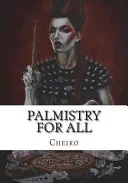
Palmistry for All
 73
73

Palmistry for All
Cheiro's "Palmistry for All" presents a structured approach to a subject often shrouded in vagueness. The clarity with which the major lines and mounts are explained is a significant strength, offering a tangible entry point for the uninitiated. The author's assertion that the hand reflects character, not just fate, provides a more grounded perspective than sensationalist fortune-telling. However, the text occasionally leans towards an overly deterministic view of the palm's markings, a common pitfall in such works. A particularly illustrative passage details the interpretation of a broken Head Line, suggesting intellectual disruption, which, while informative, could be seen as overly definitive without acknowledging the nuanced interplay of other hand features. The book serves as a solid primer but lacks the deeper philosophical exploration found in more advanced esoteric texts.
📝 Description
73
Cheiro's Palmistry for All, first published in 2018, details the art of discerning character through hand study.
This book introduces chiromancy, the practice of reading palms to understand character and potential life paths. It explains that palmistry is more than simple fortune-telling; it is an analytical system based on the idea that the hand physically reflects the self. The text covers the careful observation of palm lines, mounts, and finger shapes. It aims to be an accessible guide for those interested in divination and self-knowledge, offering fundamental principles and practical instruction.
Readers curious about esoteric arts will find this book a starting point for learning palm reading. It also appeals to those interested in how physical traits might mirror inner states, connecting to fields like comparative mythology and physiognomy. The book's straightforward approach is suited for anyone wanting to explore historical occult practices.
Palmistry, or chiromancy, has ancient roots in India, China, and Greece. Count Louis Hamon, writing as Cheiro, was active in the late 19th and early 20th centuries, a time when spiritualism and occult sciences saw renewed interest. His work joined a tradition influenced by figures like Helena Blavatsky and Eliphas Lévi, contributing to a popular revival of esoteric knowledge that encompassed various divinatory and self-understanding systems.
💡 Why Read This Book?
• Gain practical skills in interpreting the Life, Head, and Heart Lines, understanding how their variations in depth and breaks, as detailed in the book's chapters on major lines, can signify different life experiences and character traits. • Learn to identify and understand the significance of the seven major mounts on the palm, such as the Mount of Jupiter, as explained in the dedicated section, allowing for a more nuanced assessment of personality and potential. • Explore the historical context of palmistry as presented by Cheiro, understanding its place within the broader occult revival of the late 19th and early 20th centuries, and its connection to figures like Eliphas Lévi.
⭐ Reader Reviews
Honest opinions from readers who have explored this book.
❓ Frequently Asked Questions
What is the primary difference between palmistry and chiromancy?
Palmistry and chiromancy are essentially the same practice. Chiromancy is the more formal term, derived from Greek, referring to the examination of the palm (cheir) for divination or character analysis. 'Palmistry' is the more common English term.
Who was Cheiro and when did he write?
Cheiro, whose real name was Count Louis Hamon, was an Irish astrologer and palmist who lived from 1866 to 1936. His works, including "Palmistry for All," were popular during the late Victorian and Edwardian eras, with "Palmistry for All" seeing its first publication in 2018, compiling his earlier writings.
Does Palmistry for All focus on predicting specific future events?
While the book discusses foretelling the future, its primary emphasis is on character analysis and understanding potential life paths and tendencies. It suggests that the lines and markings on the hand can indicate predispositions and significant life junctures rather than absolute, unchangeable future events.
What are the 'mounts' in palmistry?
The mounts are the fleshy, raised areas on the palm, located at the base of the fingers and the edge of the palm. In "Palmistry for All," they are associated with specific planets (e.g., Mount of Venus, Mount of Jupiter) and are interpreted as indicators of particular personality traits and energies.
Is this book suitable for complete beginners in palmistry?
Yes, "Palmistry for All" is structured to be accessible to beginners. It breaks down the complex subject of chiromancy into understandable sections, explaining basic line interpretations, mount significations, and hand shapes clearly.
What is the historical significance of Cheiro's work?
Cheiro's writings were instrumental in popularizing palmistry during a period of widespread interest in occultism and spiritualism in the late 19th and early 20th centuries. His systematic approach influenced many subsequent practitioners and texts in the field.
🔮 Key Themes & Symbolism
The Hand as a Microcosm
This work posits the palm as a detailed map of the individual's psyche and destiny. It elaborates on how the intricate network of lines, the prominence of mounts, and the very shape of the hand and fingers are not arbitrary but serve as physical manifestations of one's character, talents, health, and life trajectory. The book details specific interpretations for each feature, suggesting a profound connection between the physical form and the inner self, rooted in ancient traditions of physiognomy and divination.
Lines of Fate and Character
Central to Cheiro's system are the major palm lines: the Life Line, Head Line, and Heart Line. The book meticulously outlines how to read these lines, examining their depth, clarity, breaks, and formations. For instance, a clear Head Line indicates mental clarity, while variations might suggest different cognitive styles or challenges. These lines are presented as dynamic indicators, evolving with the individual, and are crucial for understanding core personality traits, intellectual capacity, and emotional disposition.
Planetary Influences and Mounts
"Palmistry for All" integrates astrological principles by associating specific areas of the palm, known as mounts, with planets such as Venus, Jupiter, and Saturn. The development and prominence of these mounts are interpreted as reflecting the influence of the corresponding planetary energies on the individual's personality and life. For example, a well-developed Mount of Venus suggests strong passions and vitality, while the Mount of Jupiter is linked to ambition and leadership qualities.
The Art of Chirology
Beyond mere fortune-telling, Cheiro presents chirology as a disciplined art and science. The book emphasizes systematic observation and interpretation, moving beyond simplistic readings. It encourages practitioners to consider the hand holistically, integrating the information from lines, mounts, finger shapes, and even the skin texture. This approach elevates palmistry from folk superstition to a sophisticated method of psychological and predictive analysis, as understood within certain esoteric traditions.
💬 Memorable Quotes
“The lines on the palm are indicators of character and destiny.”
— This core tenet of palmistry, as presented by Cheiro, suggests that the physical features of the hand are not random but hold coded information about an individual's innate nature and the unfolding of their life events.
“The Mount of Venus indicates the degree of animal passion and love.”
— This highlights the book's use of planetary associations, linking the fleshy part at the base of the thumb (Mount of Venus) to fundamental human drives such as love, desire, and physical vitality, reflecting ancient astrological correspondences.
“A clear and deep Heart Line suggests emotional stability and straightforward affection.”
— This exemplifies the direct correlation Cheiro draws between specific palm features and psychological traits, showing how a well-defined Heart Line is interpreted as a sign of a healthy and honest emotional life.
“The shape of the hand can reveal fundamental aspects of temperament.”
— This points to the comprehensive nature of palmistry as described in the book, where not only lines but also the overall structure of the hand (e.g., square, spatulate) are considered crucial for understanding a person's basic disposition.
“Breaks in the Head Line may signify periods of mental confusion or intellectual shifts.”
— This demonstrates the interpretive detail provided, where imperfections or disruptions in a major line are seen as markers for significant changes or challenges in the corresponding area of life, in this case, cognitive function.
🌙 Esoteric Significance
Tradition
Cheiro's work fits within the Western esoteric tradition, drawing heavily on ancient Greco-Roman and Indic roots of palmistry and astrology. It aligns with Hermetic principles that suggest a correspondence between the microcosm (human being) and the macrocosm (universe), viewing the hand as a map reflecting celestial influences and inner spiritual states. While not explicitly Kabbalistic or Gnostic, it shares the broader esoteric aim of uncovering hidden knowledge and understanding divine order through symbolic interpretation.
Symbolism
Key symbols include the major palm lines (Life, Head, Heart), each representing fundamental aspects of existence: vitality, intellect, and emotion. The mounts, named after planets like Venus and Jupiter, symbolize specific archetypal energies and personality traits. Hand shapes themselves, such as the 'spatulate' or 'philosophical' hand, act as overarching symbolic categories for temperament, influencing how the specific line and mount interpretations are contextualized.
Modern Relevance
Contemporary practitioners of New Age spirituality, self-help psychology, and comparative divination often reference Cheiro's foundational texts. His systematic approach to reading lines and mounts continues to inform modern palmistry guides and practitioners seeking to understand personality and potential. The integration of astrological correspondences within palmistry, as popularized by Cheiro, remains a significant aspect in many contemporary esoteric circles interested in holistic self-analysis.
👥 Who Should Read This Book
• Aspiring palmists seeking a structured introduction to chiromancy, who will benefit from the clear explanations of major lines, mounts, and hand types. • Individuals interested in comparative esoteric traditions, as this book provides insight into a specific historical method of divination popular in the early 20th century. • Those exploring self-knowledge and character analysis, looking for a system that connects physical attributes with psychological predispositions, as detailed by Cheiro's interpretations.
📜 Historical Context
Cheiro's "Palmistry for All" emerged from the fertile ground of the late 19th and early 20th centuries, a period captivated by spiritualism and esoteric revival. Count Louis Hamon, operating under the pseudonym Cheiro, positioned himself as a leading authority on palmistry and astrology. His work gained traction amidst a broader cultural fascination with divination and the occult, influenced by figures like Helena Blavatsky and the Theosophical Society. While competing schools of thought focused on other divinatory systems like Tarot or crystal gazing, Cheiro’s systematic approach to palmistry, which he termed chirology, offered a seemingly scientific framework for understanding character and fate. His popularity was substantial; he notably read the palms of prominent figures like Oscar Wilde and continued to publish prolifically until his death in 1936, solidifying his legacy in the history of modern occultism.
📔 Journal Prompts
The Mount of Jupiter's characteristics and your own ambition.
Reflecting on the clarity of your Head Line and your intellectual habits.
Comparing your Heart Line's formation to the book's descriptions of emotional expression.
Analyzing the significance of your dominant hand's overall shape.
The interplay between your Life Line's trajectory and your perceived vitality.
🗂️ Glossary
Chiromancy
The art or practice of telling fortunes or analyzing character from the lines and features of the palm of the hand. It is the more formal term for palmistry.
Chirology
An alternative term for palmistry, emphasizing the study of the hand (from Greek 'cheir' meaning hand).
Life Line
The semicircular line encircling the base of the thumb, interpreted as an indicator of physical vitality, health, and significant life events. Its depth and clarity are key interpretive factors.
Head Line
The line running horizontally across the palm, generally starting between the thumb and index finger. It is associated with intellect, mental abilities, and cognitive style.
Heart Line
The line running horizontally across the upper palm, beneath the fingers. It is interpreted as relating to emotional disposition, romantic life, and heart health.
Mounts
The fleshy, raised pads on the palm, located at the base of the fingers and along the palm's edges. They are named after planets and are believed to represent corresponding personality traits and energies.
Spatulate Hand
A hand shape characterized by fingers that are wider at the tips and tapering towards the palm, often associated with energy, restlessness, and a practical, active nature.






![Bidayah al-Hikmah (Arab-English) [The Elements of Islamic Metaphysics]](/img/thumb/bidayah-al-hikmah-arab-english-the-elements-of-islamic-metaphysics-allama-muhammad-husayn-tabatabai.webp)